
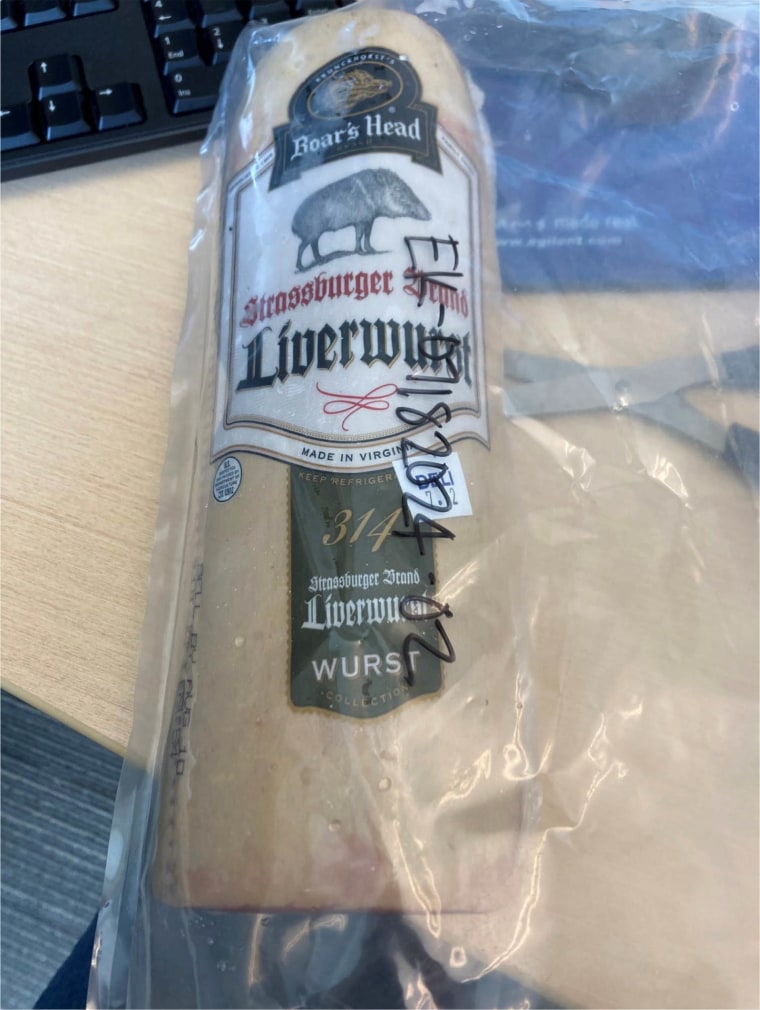
When a company synonymous with quality, heritage, and “premium” status suddenly finds itself at the epicenter of a public health crisis, the fallout is rarely limited to lost revenue. For Boar’s Head, the recent listeria outbreak and the subsequent shuttering of its Jarratt, Virginia plant represent more than a localized safety failure; they represent a catastrophic collapse of brand equity. In the world of corporate identity, trust is the invisible currency that justifies a premium price point. When that currency is devalued, the long-term impact on a brand’s positioning can be irreversible.

The Fragility of the “Premium” Brand Promise
The Boar’s Head value proposition has historically been built on the pillars of craftsmanship, high-quality ingredients, and a rigorous commitment to freshness. Unlike generic supermarket deli meats, Boar’s Head marketed itself as an artisanal alternative, justifying its higher price point through the narrative of family ownership and superior standards. This “premiumization” strategy is the cornerstone of their brand equity.
The Illusion of Indestructibility
Consumers often associate premium status with safety and meticulous oversight. When a brand sells itself on the basis of being “the best,” the public holds it to an exponentially higher standard than a budget-tier competitor. A recall involving a value-brand meat product might be perceived as an unfortunate, yet expected, industry risk. However, when a brand that positions itself as the gold standard fails, the psychological distance between the consumer and the brand narrows. The “premium” label—usually a shield—becomes a liability.
Marketing versus Reality
The crisis revealed a disconnect between the brand’s marketing messaging and its operational reality. For years, Boar’s Head leaned into the imagery of the “old-world deli,” evoking nostalgia and trust. When inspectors uncovered egregious sanitation failures, the visual and narrative disconnect caused immediate cognitive dissonance among loyal customers. The brand wasn’t just selling meat; it was selling an assurance of quality. Once that assurance was proven false, the marketing veneer didn’t just crack—it shattered.
The Architecture of a Corporate Reputation Crisis
A brand is not merely a logo or a slogan; it is the sum total of every touchpoint a consumer has with a company. For Boar’s Head, the “Boar’s Head” name was stamped on every refrigerated case in thousands of grocery stores. Each time a consumer saw that familiar, upscale logo, they were reminded of their trust in the brand. The destruction of this reputation happened in three distinct phases: the discovery, the admission, and the silence.
From Incident to Institutional Failure
The transition from a “product recall” to a “corporate identity crisis” occurred when the reports regarding the Jarratt facility began to surface. It wasn’t just a bad batch; it was a systemic failure of sanitation protocols that had been ignored over a prolonged period. This transformed the narrative from “an unfortunate accident” to “negligence.” In the eyes of the consumer, this turned Boar’s Head from a victim of circumstance into an active participant in their own downfall.

The Communication Vacuum
During a crisis, the entity that controls the narrative defines the outcome. Boar’s Head remained largely silent during the most critical windows of public fear. In modern brand strategy, silence is interpreted as indifference or guilt. By failing to provide a transparent, empathetic, and rapid response, the company allowed external media outlets, government reports, and social media influencers to fill the void. The result was a brand identity that felt cold, corporate, and detached from the very families it claimed to serve for decades.
The Long-Term Impact on Market Positioning
The most difficult challenge facing Boar’s Head moving forward is not the cleanup of the facility; it is the restoration of the “Boar’s Head” label as a symbol of quality. Brand strategy dictates that once a consumer loses trust in a food product, they rarely return to it. The “loyalty loop” is broken, and the cost of re-acquisition—convincing a wary consumer to purchase the product again—is monumental.
The Erosion of Retailer Confidence
Boar’s Head relies heavily on the deli counters of third-party retailers. These retailers—supermarkets and specialty shops—have their own reputations to maintain. When a major supplier becomes a source of liability, retailers are forced to reconsider the partnership. The loss of shelf space is the silent killer of a brand. If grocery chains decide that the “premium” label no longer offsets the risk of being associated with a safety scandal, Boar’s Head faces a structural decline in distribution that may never be fully recovered.
The Psychology of “Disgusted” Loyalty
Consumer behavior research suggests that when a brand is associated with health and safety failures, the emotional response is “disgust” rather than just “disappointment.” Disgust is a powerful, visceral emotion that is significantly harder to overcome than rational dissatisfaction. It creates a psychological barrier that prevents the consumer from even considering the brand in the future. As long as the logo is associated with the memory of the listeria outbreak, that visceral reaction will persist, effectively disqualifying the product from the consumer’s “mental shelf.”
Strategies for Brand Recovery (And Their Limitations)
Can a brand recover from such a public disintegration of its core value proposition? History provides examples of both successful and failed turnarounds. For Boar’s Head, the path forward requires more than a simple public relations campaign or a series of commercials emphasizing safety. It requires a fundamental shift in corporate identity and operational transparency.
Radical Transparency as a Marketing Tool
To rebuild, Boar’s Head must move toward “radical transparency.” This involves inviting third-party audits, making sanitation reports public in real-time, and inviting scrutiny rather than avoiding it. This is a painful and expensive process, but it is the only way to demonstrate that the company is no longer the entity that allowed the Jarratt facility to fall into disrepair. However, this is a long-game strategy that takes years to bear fruit.
The Risk of Rebranding
Some analysts might suggest a complete rebrand or a secondary “value” line to distance the company from the incident. However, for a heritage brand, this often backfires. Attempting to hide behind a new name or a new look is often viewed as deceptive. Boar’s Head must own its history, warts and all, if it hopes to eventually regain the stature it once held. The danger here is that “owning the mistake” requires admitting that the premium label was not, in fact, an ironclad guarantee of safety.
The Verdict on Brand Equity
Boar’s Head serves as a cautionary tale for any company that builds its identity on a promise of excellence. In the digital age, a brand’s reputation is only as strong as its weakest link—quite literally, in the case of the Jarratt plant. The company must now navigate a marketplace where its premium price point is no longer a justification, but a target. Their future depends not on the quality of their meats, but on their ability to convince a cynical public that the “Boar’s Head” name is once again worth the premium—a task that will define the next decade of their corporate existence. The brand survives by the grace of its distribution network, but its soul, its status as a trusted household name, has been permanently altered.
aViewFromTheCave is a participant in the Amazon Services LLC Associates Program, an affiliate advertising program designed to provide a means for sites to earn advertising fees by advertising and linking to Amazon.com. Amazon, the Amazon logo, AmazonSupply, and the AmazonSupply logo are trademarks of Amazon.com, Inc. or its affiliates. As an Amazon Associate we earn affiliate commissions from qualifying purchases.