
American Express Membership Rewards points are a highly valuable and flexible currency in the world of personal finance. Unlike many proprietary points systems tied to a single airline or hotel chain, Amex points offer a vast array of redemption options, each with varying financial implications for your bottom line. Understanding how to effectively use these points is crucial for maximizing their value and ensuring your financial decisions align with your goals, whether that’s saving on travel, reducing everyday expenses, or enjoying exclusive experiences.
Understanding Your American Express Membership Rewards Points
Before diving into redemption strategies, it’s essential to grasp what Membership Rewards points are and how their inherent flexibility positions them as a premier financial asset.
What Are Membership Rewards Points?
Membership Rewards are the proprietary loyalty points earned through eligible spending on various American Express credit and charge cards. These aren’t just loyalty points; they’re a form of deferred value, allowing cardholders to accumulate significant purchasing power that can be deployed across a diverse ecosystem of partners and services. The program is designed to reward a broad spectrum of spending, making them accessible to a wide range of consumers and businesses.
Earning Points: Beyond Everyday Spending
While everyday purchases on your Amex card contribute to your point balance, the true power of earning often lies in strategic maneuvers. Welcome bonuses, often requiring a certain spending threshold within the first few months, can instantly boost your points by tens of thousands, or even hundreds of thousands. Furthermore, many Amex cards offer bonus categories for specific spending types—think 4x points on groceries and dining with the Amex Gold Card, or 5x points on flights booked directly with airlines or through Amex Travel with the Amex Platinum Card. Understanding and leveraging these bonus categories is fundamental to accelerating your point accumulation and building a robust financial asset.
The Core Value Proposition: Flexibility
The primary financial advantage of Membership Rewards points is their unparalleled flexibility. Unlike points restricted to a single loyalty program, Amex points can be transferred to over a dozen airline and hotel loyalty programs, used to book travel directly, applied as statement credits, or even redeemed for gift cards and merchandise. This versatility means you’re not locked into a single redemption path, allowing you to choose the option that provides the highest financial return or best meets your current needs. This flexibility is a key differentiator, empowering cardholders to adapt their point strategy to economic shifts or personal financial goals.
Maximizing Value Through Strategic Redemptions
Not all point redemptions are created equal. In the world of personal finance, understanding the varying “cents per point” (CPP) value of each option is crucial for making financially astute decisions. Your goal should generally be to extract the highest possible value from your hard-earned points.
The Gold Standard: Transferring to Travel Partners
Consistently, the most financially rewarding way to use American Express Membership Rewards points is by transferring them to one of Amex’s airline or hotel loyalty partners. This strategy often unlocks premium travel experiences or significantly reduces the cash cost of flights and stays that would otherwise be prohibitively expensive.
Airline Partners: Unlocking Premium Travel
Amex has an extensive list of airline transfer partners, including major carriers like Delta SkyMiles, Air Canada Aeroplan, British Airways Executive Club, ANA Mileage Club, and Virgin Atlantic Flying Club, among others. By transferring points, you can book award flights, often securing business or first-class seats that can cost thousands of dollars, for a fraction of the cash price. For example, transferring points to ANA for a round-trip business class flight to Japan can yield a CPP value of 3-5 cents or even higher, far surpassing the typical 0.5-1 cent value of other redemption methods. The key here is to research award availability and understand the award charts of the various airline programs before transferring, as transfers are almost always irreversible.
Hotel Partners: Enhanced Stays
While typically offering slightly lower CPP value than premium airline redemptions, transferring points to hotel partners like Marriott Bonvoy or Hilton Honors can still provide substantial savings, especially for luxury stays or extended trips. Redeeming points for a high-end resort or an expensive city hotel can often save hundreds, if not thousands, of dollars in cash costs, enhancing your travel experience without impacting your budget.
Navigating Transfer Ratios and Bonuses
It’s vital to be aware of the transfer ratios, which vary by partner (e.g., 1 Amex point to 1 airline mile, or 1 Amex point to 2 Hilton points). Furthermore, American Express frequently offers transfer bonuses, where you get extra miles or points when transferring to a specific partner during a promotional period (e.g., a 25% bonus to Virgin Atlantic). Timing your transfers with these bonuses can dramatically increase the value of your points, stretching your financial resources further.
Booking Travel Directly via Amex Travel
Another viable option is to use your points directly through the Amex Travel portal. While this often yields a fixed value of 1 cent per point for flights and a slightly lower value for hotels and other travel components, it offers convenience. You don’t need to navigate partner loyalty programs, and you can apply points directly to your booking. This can be a good option for straightforward economy flights or when award space isn’t available through transfer partners. It serves as a solid backup or a simple solution when the complexities of partner programs outweigh the potential for slightly higher value.
Practical Redemptions: Statement Credits and Gift Cards
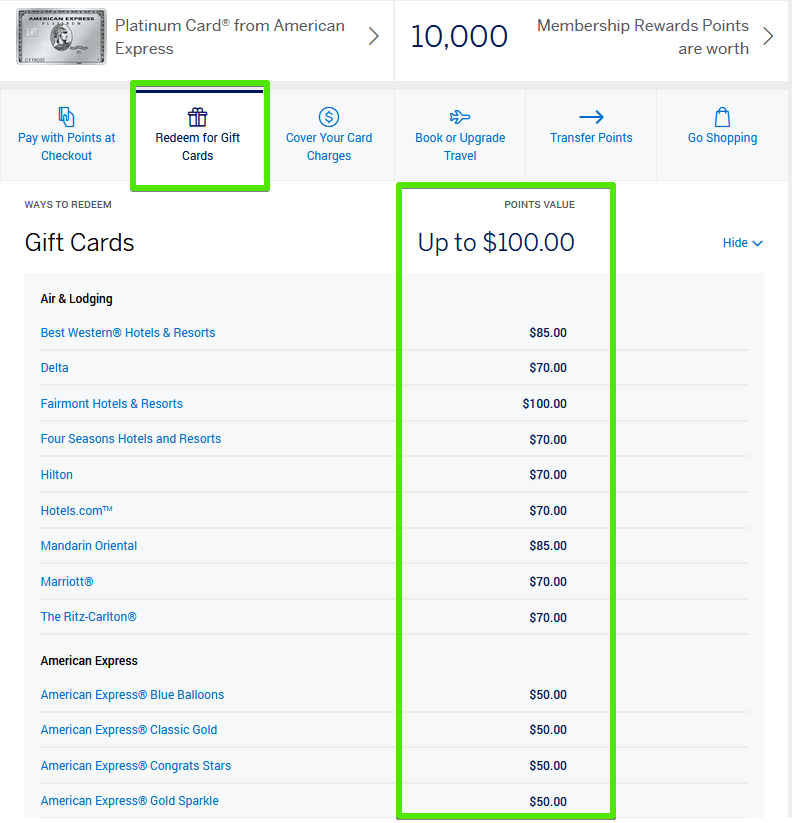
For those not focused on travel, or for situations where cash liquidity is preferred, Amex offers redemptions for statement credits or gift cards. However, these options generally provide a lower CPP value, typically around 0.6 to 0.7 cents per point for statement credits and slightly higher for gift cards depending on the merchant. While these redemptions offer direct financial relief or access to specific products, they represent a significant reduction in the potential value you could extract through travel redemptions. It’s crucial to weigh the immediate cash benefit against the opportunity cost of sacrificing potentially higher value.
Redemptions to Generally Avoid (and Why)
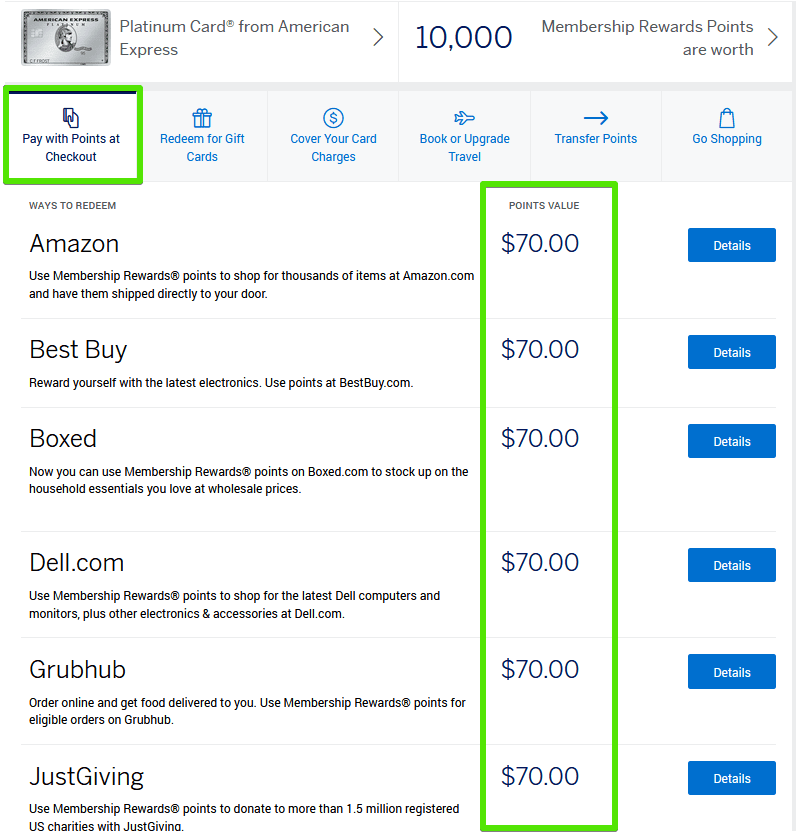
Certain redemption options offer such poor value that they should generally be avoided from a financial perspective. These include using points for merchandise through the Amex shopping portal or paying with points at checkout with partners like Amazon. These options often yield a CPP value as low as 0.5 cents, meaning your points are effectively worth half a cent each. While convenient, this is a financially inefficient use of a highly valuable asset. Always consider the opportunity cost; using 10,000 points for a $50 item on Amazon means you’ve forgone the potential to put $200-$500 towards a flight by transferring those same points.
Advanced Strategies for Earning and Managing Your Points
Optimizing your American Express points is not just about redemption; it’s also about strategic earning and diligent management, ensuring your financial portfolio is structured for maximum gain.
Choosing the Right American Express Card
Your choice of American Express card should align with your spending habits and financial goals. If you spend heavily on groceries and dining, the Amex Gold Card is unparalleled for earning points (4x on eligible purchases). For frequent flyers and those seeking premium travel benefits, the Amex Platinum Card’s 5x points on flights and numerous travel credits can easily offset its annual fee. Business owners might find value in cards like the Business Platinum or Business Gold. A well-curated Amex card portfolio can significantly accelerate your point accumulation and unlock a broader range of benefits, acting as a financial tool tailored to your lifestyle.
Leveraging Welcome Offers and Spending Categories
The most efficient way to quickly build a substantial point balance is by strategically applying for new cards to capitalize on lucrative welcome offers. However, it’s essential to meet minimum spending requirements responsibly, ensuring you don’t overspend just to hit a bonus. Beyond welcome offers, consistently using the right card for specific spending categories (e.g., the Amex Gold for restaurant bills) is key to a high-yield earning strategy. This disciplined approach transforms everyday spending into a continuous stream of valuable points.
Pooling Points and Managing Account Health
American Express allows cardholders to combine Membership Rewards points from different cards under the same account holder. Furthermore, you can sometimes transfer points to another Amex cardholder in your household, allowing families to pool resources for larger redemptions. However, be mindful of the implications of closing an Amex card; generally, you want to ensure you have another active Membership Rewards-earning card to retain your points, or redeem them before closure to avoid forfeiture. Proper account management is a critical financial safeguard.
Long-Term Point Strategy and Market Awareness
The value of points, like any financial asset, can fluctuate. A robust long-term strategy involves more than just immediate gratification; it requires an understanding of market dynamics and an adaptive approach.
Understanding Point Valuations Beyond the Average
While 1.5-2 cents per point is often cited as a “good” redemption value for travel, the true value is highly subjective and depends on what you value most. A business class flight might technically yield 5 CPP, but if you’d never pay cash for it, that high valuation is less meaningful. Conversely, using points for an emergency flight could save you significant cash, even if the CPP is lower, because it fulfills an immediate financial need. Your personal financial situation and preferences dictate the true value of your points.
Adapting to Program Changes
Loyalty programs, including Amex Membership Rewards and its partners, are subject to change. Devaluations, changes in transfer ratios, or new redemption options can impact your point strategy. Staying informed through financial news outlets and loyalty blogs can help you anticipate changes and adjust your strategy, ensuring your points maintain their maximum potential value. Proactive adaptation is key to protecting your financial asset.
The Opportunity Cost of Unused Points
While accumulating points for a grand redemption can be exciting, it’s important to consider the opportunity cost of letting points sit untouched for too long. Devaluations can erode their value over time. Like any investment, points should be strategically deployed. Regularly assess your point balance and financial goals, redeeming points for high-value options when they align with your needs, rather than indefinitely hoarding them. This active management ensures your American Express points remain a dynamic and valuable part of your financial toolkit.
aViewFromTheCave is a participant in the Amazon Services LLC Associates Program, an affiliate advertising program designed to provide a means for sites to earn advertising fees by advertising and linking to Amazon.com. Amazon, the Amazon logo, AmazonSupply, and the AmazonSupply logo are trademarks of Amazon.com, Inc. or its affiliates. As an Amazon Associate we earn affiliate commissions from qualifying purchases.