
The departure of Bill Belichick from his role as head coach of the New England Patriots marked the end of an era, not just for the storied franchise, but for the very definition of consistent, dominant success in professional sports. While the headlines have largely focused on the on-field outcomes, the true story of “what happened to Bill Belichick” is fundamentally a narrative of a brand that, while once unassailable, eventually faced the inevitable pressures of evolution, adaptation, and the relentless march of time. This analysis will delve into the brand of Bill Belichick, examining its foundational pillars, the subtle shifts that occurred, and the factors that ultimately led to the dissolution of his long-standing partnership with the Patriots, framed through the lens of brand strategy and identity.

The Unshakeable Foundation: Building the Belichick Brand
The brand of Bill Belichick, much like the Patriots dynasty he cultivated, was not built overnight. It was forged through a meticulous, almost monastic, dedication to process, discipline, and a singular, unwavering focus on winning. His personal brand became intrinsically linked to the organizational brand, creating a symbiotic relationship where each amplified the other.
The “Patriot Way”: A Monolithic Identity
At its core, Belichick’s brand was defined by the “Patriot Way.” This wasn’t a catchy slogan; it was a deeply ingrained philosophy that permeated every aspect of the organization. It emphasized:
- Process Over Personality: Belichick famously prioritized players who understood and executed the system, often over those with flashy individual talents who couldn’t fit the mold. This fostered a sense of collective identity where the team’s success was paramount, transcending any single player.
- Discipline and Execution: A hallmark of Belichick’s teams was their near-flawless execution and minimal penalties. This translated into a brand image of control, intelligence, and strategic superiority. Opponents and fans alike knew what to expect: a meticulously prepared team that would exploit any weakness.
- Emotional Stoicism: Belichick himself was the embodiment of this. His stoic demeanor, often bordering on inscrutable, created an aura of unflappability. This projected an image of a coach who was always in control, unaffected by external pressures or the emotional highs and lows of the game. This, in turn, infused the team with a similar composure.
- Ruthless Efficiency: The Patriots under Belichick were known for their ability to make difficult personnel decisions, trade away star players, or draft strategically to fill needs, all in service of maintaining long-term success. This projected a brand image of pragmatism and a commitment to the greater good of the team, even if it meant sacrificing individual narratives.
Strategic Communication: The Power of Silence
Belichick’s approach to media and public relations was itself a strategic branding tool. He rarely offered lengthy explanations or indulged in emotional outbursts. His press conferences were exercises in concise, often terse, answers. This strategy achieved several key branding objectives:
- Control of the Narrative: By offering limited information, Belichick prevented external narratives from taking root and distracting his team. The focus remained squarely on football.
- Projecting Authority: His deliberate silence and measured responses conveyed an image of deep thought and conviction. He was the ultimate authority, and his pronouncements, however brief, carried immense weight.
- Creating an Enigma: This enigmatic persona made him and his teams even more fascinating. The less the public understood, the more they were compelled to dissect and analyze. This generated a constant buzz around the brand.
The Shifting Sands: Challenges to the Established Brand
While the “Belichick brand” achieved unprecedented success, no brand, however strong, is immune to the passage of time and the changing landscape. Several factors began to subtly erode the monolithic image, leading to questions about the future.
The Dynasty’s Natural Cycle: Obsolescence and Succession
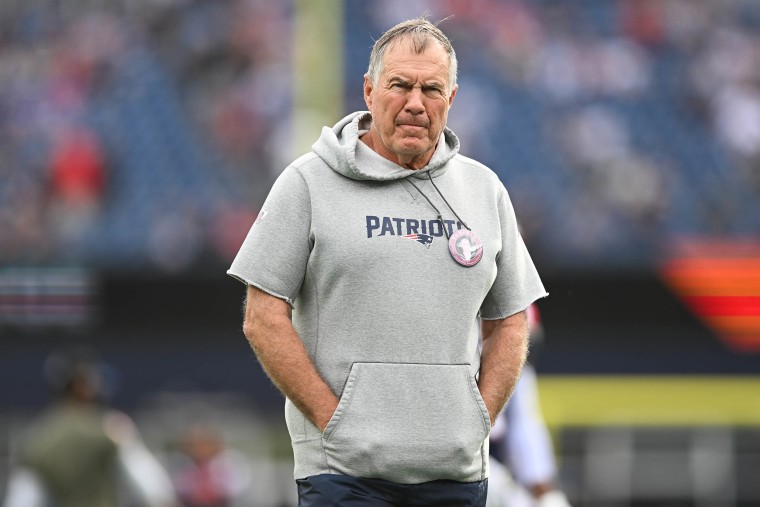
Every dominant brand eventually faces the challenge of reinvention or the inevitability of succession. The Patriots dynasty, while extending for an astonishing two decades, could not defy the natural lifecycle of sporting success.
- Talent Attrition and Rebuilding: The departure of key personnel, particularly Tom Brady, was a seismic event. While Belichick had proven his ability to adapt and win with different quarterback situations, the loss of a generational talent created a void that was immensely difficult to fill, impacting the team’s on-field performance and, consequently, its brand perception.
- The “Post-Brady” Era: The struggle to find consistent offensive success without Brady became a defining narrative. The brand, once synonymous with seamless operation, began to be associated with offensive struggles and a perceived lack of dynamism. This was a direct challenge to the “efficient execution” aspect of the brand.
- Evolving Coaching Philosophies: The NFL is a league that constantly innovates. While Belichick’s strategic brilliance was undeniable, younger coaches began to adopt more modern offensive schemes and a more outwardly communicative approach. This created a subtle contrast, suggesting that the “Patriot Way,” while effective for its time, might not be as adaptable to the league’s evolving playbook.
The Erosion of Control: External Pressures and Internal Dynamics
Belichick’s brand was built on a foundation of control. However, external forces and internal shifts began to chip away at this perceived invincibility.
- Increased Scrutiny and Media Demands: In the modern media landscape, even the most private figures are subject to constant scrutiny. The relentless demand for content and analysis meant that every decision, every performance, was dissected, leading to increased pressure on the established brand.
- The Influence of Player Empowerment: While the “Patriot Way” prioritized team over individual, the broader trend of player empowerment in the NFL meant that individual voices and brands within the team gained more prominence. This subtly challenged the monolithic nature of the Belichick brand.
- Perceived Stagnation: As the team struggled to recapture Super Bowl glory, the brand began to be associated with a certain level of stagnation. The consistent success that once defined the brand became a benchmark against which current struggles were starkly measured, leading to a perception of decline rather than evolution.
Re-evaluating the Legacy: A Brand Transformed, Not Defeated
The departure of Bill Belichick from the Patriots is not a story of failure, but one of a brand that, after achieving unparalleled dominance, eventually encountered the natural limitations of time and the ever-changing competitive landscape. His legacy is not diminished, but it has certainly transformed.
The Enduring Power of Process and Discipline
Despite the recent challenges, the core tenets of the Belichick brand – process, discipline, and strategic thinking – remain profoundly influential. His impact on coaching methodology and team building is undeniable and will continue to be studied and emulated.
- A Template for Success: For a generation of coaches and players, the “Patriot Way” served as a blueprint for achieving consistent success. The emphasis on fundamentals, preparation, and team cohesion remains a valuable lesson, even as the game evolves.
- The Importance of Brand Consistency: Belichick’s career is a masterclass in maintaining a consistent brand identity. Even when facing adversity, his core principles remained intact, projecting an image of unwavering conviction. This consistency, while admirable, also contributed to the perception of inflexibility in later years.

The Inevitability of Evolution: A New Chapter for a Legendary Brand
The question of “what happened to Bill Belichick” is ultimately about the natural arc of any enduring brand. Success breeds expectation, and sustained success breeds an even higher bar.
- The Next Frontier: Belichick’s departure opens up a new chapter, not just for the Patriots, but for his personal brand. The challenge now is to see how he reinvents himself and applies his proven leadership principles to a new environment. Will he be able to adapt his brand to a different organizational culture?
- Learning from the Dynasty’s Decline: The Patriots’ later years offer valuable case studies for brand managers everywhere. They highlight the importance of anticipating generational shifts, embracing innovation, and understanding when a dominant brand strategy needs to evolve rather than merely persist. The brand of Bill Belichick, like any great brand, will be judged not only by its peak achievements but by its ability to navigate the inevitable transitions that define a long and storied existence. His influence on how winning brands are built and maintained in professional sports is indelible, even as the chapter with the Patriots draws to a close.