
When we examine the conclusion of F. Scott Fitzgerald’s The Great Gatsby, literary scholars often focus on the tragic romance or the death of the American Dream. However, from a strictly financial and economic perspective, the ending of the novel represents one of the most poignant case studies in high-risk asset management, market volatility, and the “sunk cost fallacy” ever recorded in American narrative. Jay Gatsby did not just lose his life; he suffered a total systemic collapse of a personal financial empire built on speculation, social climbing, and lack of diversification.

To understand what happened at the end of the story, we must look past the green light and the yellow car and instead analyze the balance sheets of West Egg and East Egg. The climax is not merely a sequence of unfortunate events; it is the inevitable result of an unsustainable financial strategy.
The High-Risk Portfolio of Jay Gatsby: Speculation and Illegitimacy
The ending of the novel is the “market crash” following a period of irrational exuberance. Gatsby’s entire life in West Egg was built on a foundation of high-risk, high-reward ventures. To understand his downfall, we must first look at how his “startup” was funded and why his capital was fundamentally unstable.
Bootlegging and the “Gray Market” Economy
Jay Gatsby was an entrepreneur of the shadow economy. His wealth was derived from “drugstores” that sold grain alcohol—a classic example of a business model designed to exploit regulatory loopholes (Prohibition). While highly lucrative, this type of income is characterized by high volatility and zero legal protection. At the end of the novel, Tom Buchanan “short-circuits” Gatsby’s business by exposing his illegal ties to Meyer Wolfsheim. In financial terms, this was a massive regulatory crackdown that rendered Gatsby’s social currency worthless. When the source of wealth is delegitimized, the brand value of the individual evaporates instantly.
Over-Leveraged Assets: The Mansion as a Liability
In modern personal finance, we distinguish between assets and liabilities. Gatsby’s mansion was a massive liability masquerading as an asset. He didn’t buy the house for its appreciation potential; he bought it as “marketing spend” to attract a single “client”—Daisy Buchanan. By the end of the book, the “burn rate” of his lifestyle (the parties, the hydroplane, the staff) had yielded a zero percent return on investment. When Daisy refused to leave Tom, Gatsby was left holding an illiquid, expensive asset that served no further purpose. He was “over-leveraged” on a single emotional outcome, and when that outcome failed to materialize, he had no hedge to protect his remaining capital.
Old Money vs. New Money: The Invisible Barriers to Entry
The end of The Great Gatsby is a stark reminder that wealth is not just about the numbers in a bank account; it is about “social capital” and generational wealth preservation. The conflict between East Egg (Old Money) and West Egg (New Money) illustrates the concept of “Barriers to Entry” in the most elite tiers of the economy.
The Buchanans and Generational Wealth Preservation
Tom and Daisy Buchanan represent “Old Money,” which operates under a different set of financial rules. Their wealth is diversified, protected by trusts, and shielded by a long-standing social network. At the end of the novel, after the hit-and-run accident that kills Myrtle Wilson, Tom and Daisy do something Gatsby cannot: they “retreat into their money.” This is a classic move in wealth management—using capital to insulate oneself from legal and social consequences. They had the “liquidity” (both financial and social) to relocate and start over, leaving the mess for others to clean up.
Why Gatsby’s “Market Entry” Strategy Failed
Gatsby’s strategy was to “buy his way in.” He believed that if he acquired enough “Veblen goods”—luxury items whose demand increases as their price increases, such as his shirts from London or his customized car—he would be accepted as a peer by the Buchanans. However, the end of the novel proves that social class is a “closed market.” Despite his millions, Gatsby was viewed as a “common swindler.” From a business perspective, he failed to perform proper market research. He assumed the “market” (the elite class) was meritocratic or at least purchasable, when in fact, it was an oligaxy protected by birthright.
The Sunk Cost Fallacy: Why Gatsby Couldn’t Liquidate His Past
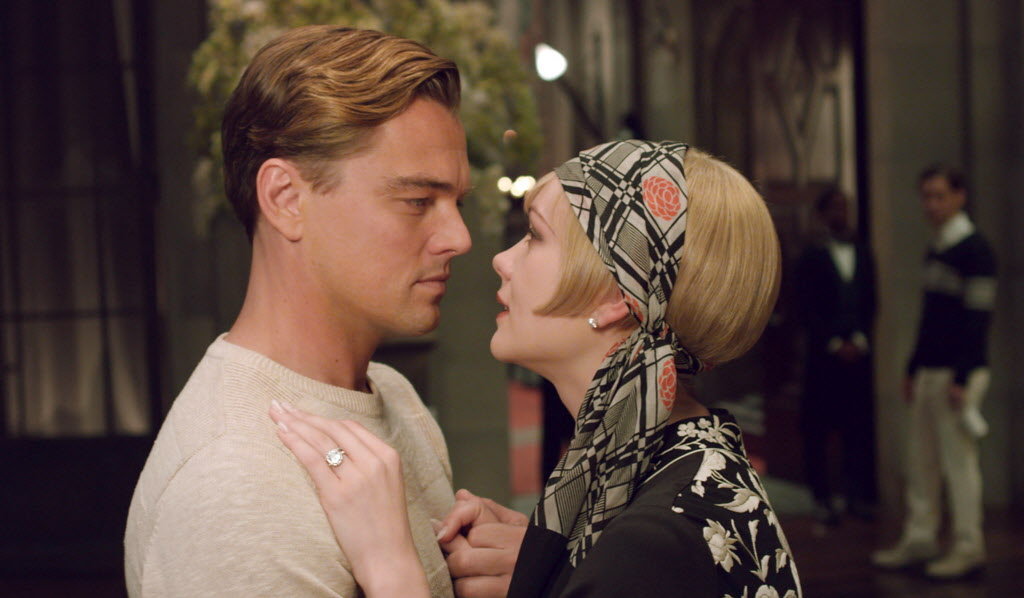
The most significant financial error Gatsby makes leading up to the finale is falling victim to the “Sunk Cost Fallacy.” This is the phenomenon where a person continues an investment or endeavor as a result of previously invested resources (time, money, or effort), even when it is clear that the future costs outweigh any potential benefits.
Chasing the Green Light: The Danger of Emotional Investing
Gatsby spent five years and an astronomical amount of money to “repeat the past.” In the world of investing, the past is a “sunk cost.” You cannot recover it. A rational actor would have looked at the situation in the hotel room in New York—where Daisy admits she loved Tom once—and “cut his losses.” Instead, Gatsby doubled down. He took the blame for the car accident, essentially taking on the “toxic debt” of Daisy’s mistake. This led to his total insolvency (and death) because he refused to accept that his investment in the “Daisy Asset” had reached a valuation of zero.
The “Daisy” Asset: An Overvalued Commodity
In financial terms, Daisy was an overvalued asset. Gatsby projected onto her a value she did not possess. He saw her as the “Golden Girl,” a symbol of everything he wanted. However, by the end of the novel, the “market realization” hits: Daisy is a person of limited moral character who prioritizes her own financial safety over Gatsby’s devotion. Gatsby’s failure to conduct “due diligence” on the object of his obsession led him to invest all his resources into a depreciating asset that ultimately liquidated his life.
The Final Audit: Consequences of a Moral Bankruptcy
The conclusion of the book serves as a “final audit” of the characters’ lives. In the world of finance, an audit reveals the true state of an entity’s health. For Gatsby, the audit revealed that his “empire” was a hollow shell.
The Valley of Ashes: The Externalities of Unchecked Capitalism
The “Valley of Ashes” represents the “negative externalities” of the 1920s boom. In economics, an externality is a cost or benefit that affects a third party who did not choose to incur that cost or benefit. George and Myrtle Wilson are the human externalities of the Buchanans’ and Gatsby’s lifestyles. The end of the book shows that when the wealthy play high-stakes games, the “working class” or the “lower-tier service providers” are the ones who pay the ultimate price. George Wilson’s murder-suicide of Gatsby is the “Black Swan event”—an unpredictable occurrence that brings down the entire system.
Wealth Without Legacy: The Solitary Funeral as a Financial Statement
The most telling moment at the end of the story is Gatsby’s funeral. Despite the thousands of people who “consumed” his parties, only Nick Carraway, an owl-eyed man, and Gatsby’s father attend. This is the ultimate sign of a failed business model. In terms of “Legacy Planning,” Gatsby failed. He built no community, no lasting institutions, and no genuine partnerships. His wealth was “transactional” rather than “relational.” When the “cash flow” (the parties) stopped, the “customers” (the guests) disappeared. He died in a state of social bankruptcy, proving that a high net worth does not equate to a high net value in the eyes of the community.

Conclusion: Lessons for the Modern Investor
What happened at the end of The Great Gatsby was a total market failure. It serves as a cautionary tale for anyone in the world of finance, business, or personal wealth management.
- Diversify Your Identity: Gatsby tied his entire worth to one person. In any portfolio, such a lack of diversification leads to ruin.
- Beware of Illegal Liquidity: Wealth built on “gray markets” or unethical practices is inherently unstable and subject to sudden seizure or social devaluation.
- Recognize Sunk Costs: Knowing when to walk away from a losing investment is the hallmark of a sophisticated investor. Gatsby’s inability to “liquidate” his obsession led to his demise.
- Social Capital Matters: True wealth is not just what you own, but who stands by you when the “market” crashes.
Ultimately, Jay Gatsby was a brilliant but flawed “fund manager” who forgot the most important rule of finance: never invest more than you can afford to lose. At the end of the day, he lost everything because he bet on the one thing that was never for sale: the past.
aViewFromTheCave is a participant in the Amazon Services LLC Associates Program, an affiliate advertising program designed to provide a means for sites to earn advertising fees by advertising and linking to Amazon.com. Amazon, the Amazon logo, AmazonSupply, and the AmazonSupply logo are trademarks of Amazon.com, Inc. or its affiliates. As an Amazon Associate we earn affiliate commissions from qualifying purchases.