
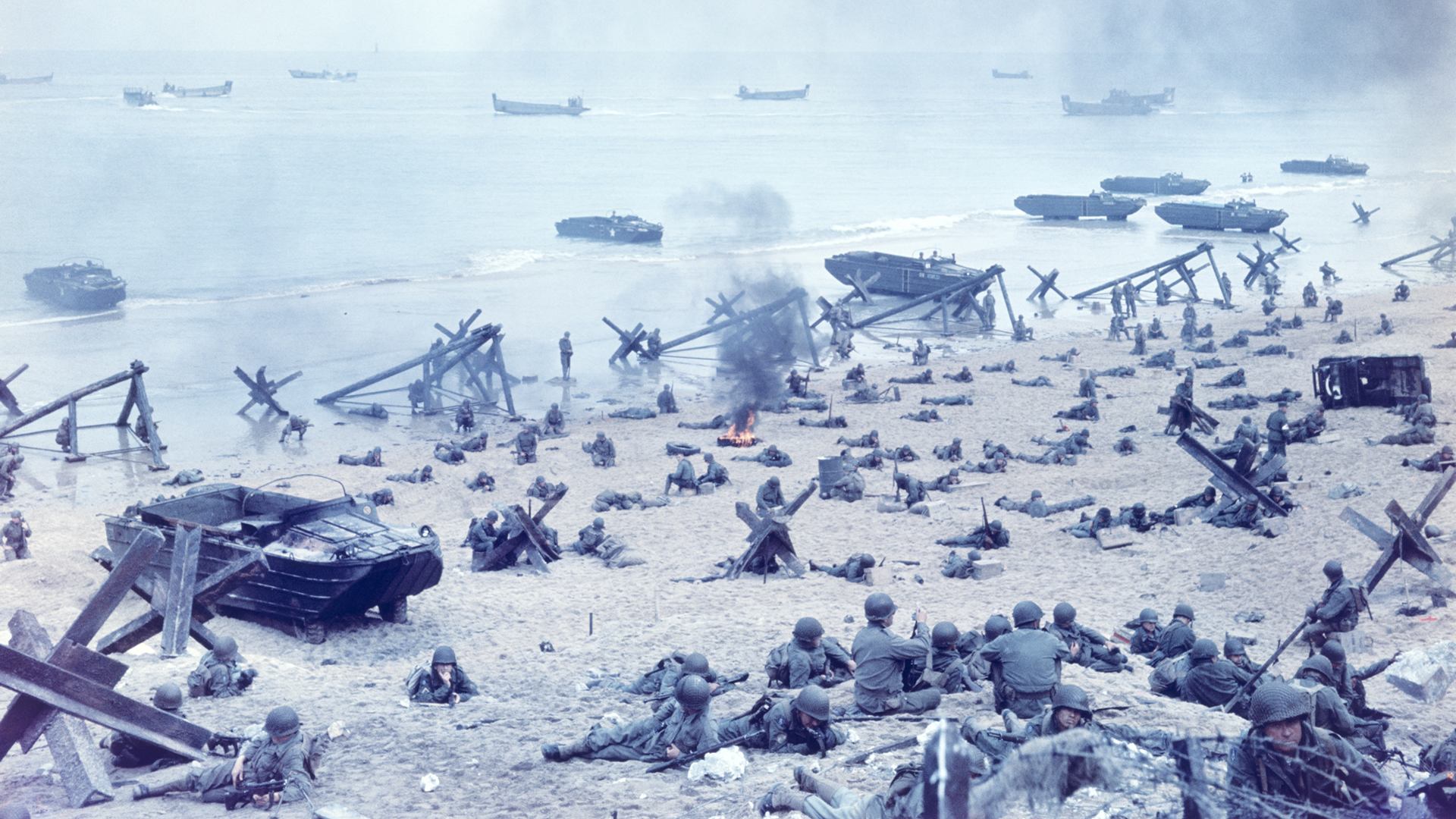
June 6, 1944, a date etched into the annals of history, marks the Allied D-Day landings in Normandy, France. While primarily remembered for its military and human sacrifice, Operation Overlord, of which D-Day was the spearhead, represents arguably one of the most complex and technologically advanced undertakings of the 20th century. Far from being a mere brute-force assault, D-Day was a masterclass in technological innovation, logistical engineering, and sophisticated information management that offers profound insights into large-scale project execution, even for today’s tech enterprises. By dissecting the technological backbone of D-Day, we uncover a fascinating narrative of ingenuity, rapid development, and the orchestration of disparate systems that pushed the boundaries of what was thought possible, providing a historical blueprint for understanding the complexities of modern technological deployments.

The Digital Age’s Analog Precursor: Intelligence, Planning, and Simulation
Before a single boot touched the beaches of Normandy, June 6, 1944, was won in an intricate web of intelligence gathering, strategic planning, and what could be considered the analog equivalent of modern digital simulation. The sheer scale and complexity of coordinating land, sea, and air forces, along with millions of tons of supplies across the English Channel, demanded an unprecedented level of foresight and technological support.
Cryptographic Warfare and Data Superiority
At the heart of Allied intelligence superiority lay the groundbreaking work in cryptography. The deciphering of German Enigma codes by British cryptanalysts at Bletchley Park, a secret project known as “Ultra,” provided crucial insights into German military plans, troop movements, and defensive capabilities. This wasn’t merely code-breaking; it was the world’s first large-scale application of what we might now call “big data analytics” – processing vast amounts of intercepted information to derive actionable intelligence. Early electronic computing devices, though rudimentary by today’s standards, were developed and employed to speed up the analytical process, laying foundational concepts for information processing and secure communication that are cornerstones of modern digital security and data science. The ability to intercept, decode, and rapidly disseminate intelligence gave the Allies a critical advantage, shaping everything from invasion timing to deceptive tactics.
Predictive Logistics and Resource Management
The planning for D-Day involved meticulous logistical calculations that would impress even the most advanced supply chain management algorithms of today. Every soldier, vehicle, bullet, and ration had to be accounted for, transported, and delivered precisely when and where needed. Engineers and statisticians worked exhaustively to predict weather patterns, tidal movements, and troop deployment timings with unprecedented accuracy. This involved early forms of operational research and quantitative analysis to optimize resource allocation and minimize risks. The logistical challenge was akin to launching a massively complex software project with millions of dependencies, where failure in any single component could cascade into catastrophic outcomes. The sheer volume of material and personnel moved across the Channel was a testament to sophisticated pre-computation and a deeply integrated logistical system, a direct ancestor to the digital logistics platforms that drive global commerce today.
Engineering the Invasion: Hardware Innovations and Infrastructure Development
The success of D-Day was heavily reliant on an array of specialized hardware innovations and monumental infrastructure projects designed specifically for the unique challenges of an amphibious assault on a fortified coast. These were not off-the-shelf solutions but custom-engineered technologies developed under intense wartime pressure.
Amphibious Warfare Technology: From Boats to Tanks
The core of the invasion fleet consisted of thousands of diverse landing craft, each engineered for specific roles. From the iconic Landing Craft, Vehicle, Personnel (LCVP or Higgins Boat) that rapidly deployed infantry, to the larger Landing Craft, Tank (LCT) capable of delivering armored vehicles directly onto beaches, these vessels were designed for ruggedness, speed, and efficiency under fire. Beyond the transport, specialized armored vehicles, collectively known as “Hobart’s Funnies,” showcased remarkable ingenuity. These included DD (Duplex Drive) Sherman tanks, equipped with flotation screens and propellers to ‘swim’ ashore, mine-clearing “Crab” flail tanks, and “Crocodile” flamethrower tanks. Each represented a bespoke solution to anticipated battlefield problems, demonstrating a pragmatic approach to R&D and rapid prototyping that resonates with modern agile hardware development methodologies.
The Mulberry Harbours and PLUTO: Offshore Infrastructure and Energy Delivery
Perhaps the most astonishing engineering feats were the construction and deployment of the “Mulberry Harbours” and “PLUTO” (Pipe-Line Under The Ocean). Recognizing the impossibility of capturing a deep-water port immediately, the Allies designed and built two prefabricated artificial harbors in sections in the UK, then towed them across the Channel and assembled them off the coast of Normandy. These massive structures, comprising concrete caissons, floating roadways, and pierheads, enabled the offloading of hundreds of thousands of vehicles and millions of tons of supplies in the critical weeks following D-Day.
Concurrently, PLUTO was an ambitious project to lay flexible oil pipelines across the Channel to supply fuel directly from England to the Allied forces, bypassing vulnerable tanker routes and port infrastructure. These projects were not just engineering marvels but represented an unparalleled scale of temporary, deployable infrastructure, solving critical logistical bottlenecks through innovative technological solutions. They highlight a proactive problem-solving mindset and the ability to execute incredibly complex civil engineering projects under extreme time and security constraints.

Communication and Control Systems: The Networked Battlefield
Just as crucial as the hardware on the ground and sea were the sophisticated communication and command systems that linked the vast operation together. D-Day was a testament to networked warfare, requiring seamless information flow between diverse units across multiple domains.
Radio, Radar, and Secure Connectivity
Reliable and secure communication was paramount. Thousands of radio sets were deployed, from portable infantry radios to powerful ship-to-shore and air-to-ground systems. The challenge was not just transmitting messages but doing so securely and without overwhelming the limited frequency spectrum. Innovative encoding techniques and communication protocols were vital. Radar technology, though nascent, played a significant role in air defense and naval navigation, contributing to situational awareness and early warning systems. The integration of these various communication channels, though prone to interference and enemy interception, created a rudimentary “network” that enabled operational control over an area spanning hundreds of miles, from the command centers in England to the front lines in France.
Air Superiority and Integrated Air-Ground Operations
The technological superiority of Allied air forces, particularly in terms of radar-equipped night fighters and advanced ground attack aircraft, was critical in achieving air superiority over the landing zones. This wasn’t merely about having better planes; it was about the integrated systems that allowed air power to be coordinated with ground operations in real-time. Pilots received intelligence from ground observers and command centers, and ground forces could call for close air support, showcasing an early form of integrated sensor-to-shooter capability. This coordinated approach between air and ground assets, facilitated by communication technology, became a foundational strategy for modern combined arms warfare and presaged the complex, integrated systems seen in contemporary military and even commercial aerospace operations.
Lessons for Modern Tech Deployment and Innovation
The technological saga of June 6, 1944, offers enduring lessons that transcend military history and resonate deeply within the contemporary tech landscape, from startup culture to global enterprise project management.
Agile Development and Iteration Under Pressure
The rapid development and deployment of D-Day technologies, such as the Mulberry Harbours and Hobart’s Funnies, exemplify agile development principles long before the term existed. Solutions were prototyped, tested, and iterated upon under immense pressure and tight deadlines. The need for speed often meant accepting “good enough” rather than “perfect,” a common trade-off in fast-paced tech environments. The ability to quickly adapt to new information (often from intelligence or early combat reports) and implement changes on the fly was critical, mirroring the continuous deployment and iterative improvement cycles of modern software development.
Cross-Functional Teamwork and Systems Integration
D-Day was a monumental exercise in cross-functional teamwork. Scientists, engineers, military strategists, logistics experts, and field operatives had to collaborate seamlessly. The success hinged on the integration of disparate technologies and human efforts into a coherent, functioning system. This requires clear communication protocols, standardized interfaces (even if analog), and a shared vision, lessons that are directly applicable to managing complex tech projects involving diverse teams and multiple technological stacks. The interoperability of different systems and the ability of diverse teams to work towards a common, incredibly high-stakes goal serve as a powerful case study for any organization striving for technological excellence through collaboration.
The Human Element in Technology Deployment
Ultimately, D-Day underscored that even the most advanced technology is only as effective as the humans who design, deploy, and operate it. Extensive training, adaptation to new equipment, and the resilience of personnel were crucial. The human ingenuity behind deciphering codes, the courage to operate experimental equipment under fire, and the sheer grit required to maintain complex systems in adverse conditions highlight that technology is an enabler, not a replacement, for human skill and determination. This emphasizes a critical lesson for the tech industry: user experience, training, and the human factors in design and deployment are as important as the technological prowess itself.
The Enduring Legacy of D-Day’s Technological Frontier
June 6, 1944, was more than a pivotal battle; it was a crucible of technological innovation that accelerated developments across various fields. The demands of D-Day pushed boundaries in materials science, logistics, communications, computing (albeit rudimentary), and engineering, leaving a lasting legacy that influenced post-war technological advancements. From the sophisticated logistical planning that foreshadowed modern supply chain software to the early forays into secure communication and data processing, D-Day stands as a profound historical precedent for how technology, when conceived and executed with audacious vision, can reshape the course of events and offer invaluable lessons for future generations of innovators and engineers. It reminds us that behind every grand endeavor, whether military or entrepreneurial, lies a tapestry of human ingenuity woven with the threads of technological advancement.
aViewFromTheCave is a participant in the Amazon Services LLC Associates Program, an affiliate advertising program designed to provide a means for sites to earn advertising fees by advertising and linking to Amazon.com. Amazon, the Amazon logo, AmazonSupply, and the AmazonSupply logo are trademarks of Amazon.com, Inc. or its affiliates. As an Amazon Associate we earn affiliate commissions from qualifying purchases.