
When parents and investors ask, “What grades are elementary school?” the answer is often framed through the lens of child development. However, from a financial planning and personal finance perspective, the definition of elementary school—typically encompassing Kindergarten through 5th or 6th grade—represents a critical 6-to-7-year investment window. Understanding the specific breakdown of these grades is essential for navigating the complexities of education savings, real estate valuation, and the broader economic implications of early childhood development.
In the United States, the elementary designation usually begins with Kindergarten (age 5) and concludes at the end of 5th grade (age 10 or 11) or 6th grade (age 11 or 12), depending on the specific school district’s structure. For a family or a financial planner, these years are not just academic milestones; they are a series of fiscal phases that dictate liquidity requirements, tax strategies, and long-term wealth building.
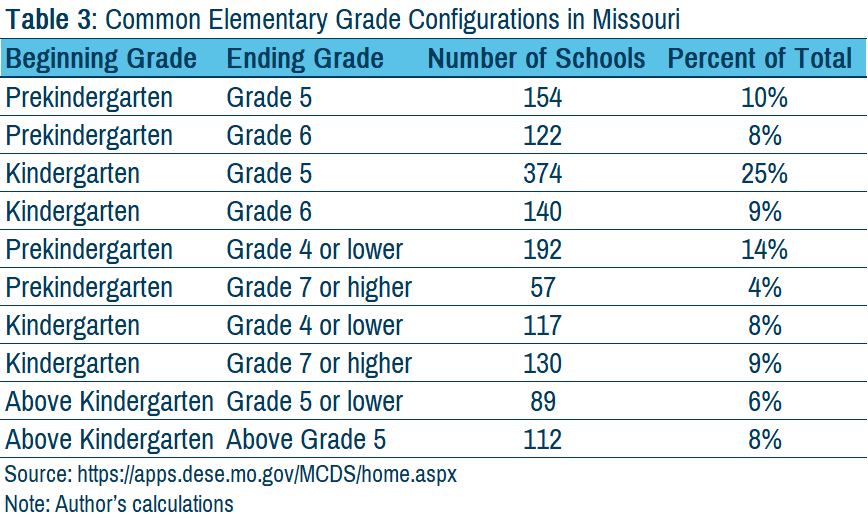
Defining the Elementary Spectrum: A Guide for Education Savings and Budgeting
To effectively manage personal finance during the primary years, one must first understand how the grade levels are segmented and the associated costs of each. While “elementary school” is often treated as a monolith, the financial demands of a Kindergartner are vastly different from those of a 6th grader.
Pre-K and Kindergarten: The Entry Costs of Early Development
While Pre-K is often considered “early childhood education,” many private institutions bundle it with elementary school, creating a financial “on-ramp.” Kindergarten is the official start of the elementary journey. From a money management perspective, this grade often represents a transition from high-cost private childcare to either “free” public education or high-tuition private primary schooling.
For parents utilizing public systems, Kindergarten often provides a “childcare dividend”—the sudden availability of funds previously allocated to preschool. Savvy investors redirect this dividend immediately into a 529 College Savings Plan. Conversely, for those choosing private education, Kindergarten often carries the same tuition weight as higher grades, requiring a long-term capital allocation strategy.
Lower Elementary (Grades 1–3): Scaling Academic Investment
Grades 1, 2, and 3 constitute the “lower elementary” phase. During this period, the financial focus shifts from basic supervision to enrichment. This is the era of extracurricular expenditures: music lessons, youth sports, and early STEM programs. From a budgetary standpoint, these are “variable costs” that can fluctuate based on a family’s lifestyle.
On a broader economic level, these grades are where the “achievement gap” begins to manifest in financial terms. Families who can afford to “invest” in supplemental tutoring or high-quality summer programs during these years often see a higher “Return on Education” (ROE) later in the student’s life, as these foundational years dictate future placement in honors or advanced placement tracks.
Upper Elementary (Grades 4–6): Transitioning Toward Middle School Expenses
As students enter 4th, 5th, and sometimes 6th grade, they hit the “upper elementary” tier. This phase introduces new financial line items, most notably technology fees and increased social consumption. In many modern school districts, this is when “1:1 technology initiatives” begin, requiring parents to budget for insurance on school-issued devices or the purchase of personal laptops and tablets.
Additionally, upper elementary grades often involve more expensive field trips, competitive club sports, and an increase in “peer-driven consumption.” For the household CFO, this is the time to transition from a “savings-only” mindset to a “cash-flow management” mindset to handle the rising incidental costs of a maturing student.
Private vs. Public: Calculating the ROI of Elementary Grade Levels
The question of which grades are included in elementary school becomes even more significant when evaluating the Return on Investment (ROI) between public and private options. The financial delta between these two paths over a six-year elementary span can exceed $150,000 in many U.S. markets.
The Hidden Costs of Public Elementary Schools
Public education is often marketed as “free,” but for the financially literate, it is anything but. The cost of public elementary school is primarily paid through property taxes. When an elementary school covers K-6 rather than K-5, it can actually increase the tax burden on a local community by requiring more infrastructure and staff.
Beyond taxes, parents must account for “ancillary costs.” These include school supplies, “pay-to-play” athletic fees, and the significant cost of after-school care. Since many elementary schools dismiss students at 2:30 PM or 3:00 PM, working parents often face a “childcare gap” that can cost upwards of $500–$1,000 per month. When calculating the true cost of the elementary grades, these figures must be annualized to understand the total impact on net worth.
Tuition Escalation in Private Elementary Institutions
For those opting for private elementary school, the grade structure is a primary driver of the “Tuition Escalation Clause.” Many private schools utilize a tiered pricing model where tuition increases as the student moves from Kindergarten to 5th grade.
Investors must view private elementary tuition as a “capital expenditure” in human capital. The rationale is often that a smaller student-to-teacher ratio in grades 1–3 leads to better outcomes in secondary school and university. However, the opportunity cost is high. $20,000 a year invested in a diversified index fund over the six years of elementary school, assuming a 7% return, could grow to nearly $150,000 by the time the child enters college. Deciding which grades are “worth” the private premium is a cornerstone of sophisticated family office planning.
Real Estate and Elementary Grading: How School Districts Impact Property Values
One of the most direct intersections of education and money is the real estate market. The specific grades housed within a neighborhood’s elementary school can have a profound impact on local property values and investment liquidity.
The “Great Schools” Premium: Investing in Localized Education
In real estate, “location, location, location” is often a proxy for “elementary school district.” Homes zoned for top-rated elementary schools (Grades K-5 or K-6) frequently command a premium of 10% to 25% over similar homes in lesser-rated districts.
For the property investor, the elementary school years are the most stable. Families with children in elementary school are less likely to move than those with toddlers or high schoolers, leading to lower turnover and higher rental stability in these zones. Understanding which grades are included in the local school’s charter is vital; a school that includes 6th grade may be more attractive to families seeking to delay the transition to the more volatile middle school environment, thereby holding property values higher for longer.
Redistricting Risks: Protecting Your Real Estate Assets
A significant risk to personal finance and real estate equity is “redistricting.” When a school board changes which grades are considered “elementary”—for example, moving 6th grade from the elementary building to a new middle school—it can trigger a shift in property demand.
Investors must monitor school board budgets and long-term facilities plans. If an elementary school is over-capacity, the district may move the 5th and 6th grades elsewhere, potentially lowering the “desirability index” of the immediate neighborhood. Keeping an eye on the “Business of Schooling” is a necessary part of maintaining a robust real estate portfolio.
Strategic Financial Tools for the Elementary Years
Managing the costs of the elementary grades requires more than just a savings account; it requires a strategic use of financial instruments designed to optimize education spending.
Maximizing 529 Plans for K-12 Expenses
A major shift in tax law (via the Tax Cuts and Jobs Act of 2017) allowed families to use 529 plans for K-12 tuition, up to $10,000 per year per student. This transformed the 529 from a “long-term college bucket” into a “flexible education fund.”
For a child in the six grades of elementary school, this means a parent could potentially withdraw $60,000 in tax-free earnings to cover private school tuition. However, from a wealth-maximization perspective, this is a double-edged sword. Using the funds for elementary school depletes the “compounding engine” intended for higher education. A sophisticated financial strategy involves balancing the immediate tax benefit of K-12 withdrawals against the long-term growth needed for university costs.
Tax Credits and Deductions for Grade-School Expenses
While elementary tuition is generally not tax-deductible at the federal level, many states offer credits or deductions for school supplies, uniforms, and even certain extracurricular fees. Additionally, the Child and Dependent Care Credit can be a vital tool for parents paying for after-school programs for children under age 13 (which covers all elementary grades).
For business owners and those with side hustles, certain expenses related to “educational enrichment” can sometimes be categorized as business expenses if they relate to training or specialized development, though this requires careful navigation of IRS guidelines. Understanding the specific age and grade cutoffs is essential for accurately claiming these credits.

Conclusion: The Economic Lifecycle of the Elementary Years
“What grades are elementary school?” is a question that defines the boundaries of a specific economic cycle in a household’s life. Whether it is the K-5 or K-6 model, these years represent a period of high investment and foundational growth. By viewing these grades through the lens of money—focusing on ROI, real estate impact, and tax-advantaged savings—families can ensure that the elementary years provide a solid financial floor for the challenges of middle school, high school, and beyond. In the world of finance, as in the classroom, the foundation laid in the early grades determines the success of the entire enterprise.
aViewFromTheCave is a participant in the Amazon Services LLC Associates Program, an affiliate advertising program designed to provide a means for sites to earn advertising fees by advertising and linking to Amazon.com. Amazon, the Amazon logo, AmazonSupply, and the AmazonSupply logo are trademarks of Amazon.com, Inc. or its affiliates. As an Amazon Associate we earn affiliate commissions from qualifying purchases.