
If you were born in 2001, you belong to Generation Z, often referred to as “Gen Z” or the “iGen.” While the exact boundaries of generations are sometimes debated by sociologists, the Pew Research Center defines Gen Z as those born between 1997 and 2012. Being born in 2001 places you at the very heart of this cohort—a generation defined not just by its age, but by its unprecedented relationship with technology.
For a 2001-born individual, technology is not an elective additive to life; it is the foundational infrastructure of existence. You were born the same year the first iPod was released and Wikipedia was launched. You have never known a world without the internet, and your developmental years mirrored the most aggressive period of technological expansion in human history. To understand what it means to be a 2001-born Gen Zer, one must look through the lens of the hardware, software, and digital trends that have shaped your reality.

The Digital Native Framework: Growing Up in the Web 2.0 Era
Individuals born in 2001 are the first true “Digital Natives.” Unlike Millennials, who remember the screech of a dial-up modem and a world of landlines, those born in 2001 entered a world that was already transitioning rapidly into high-speed connectivity and mobile ubiquity.
The Transition from Analog to Digital Memory
For the 2001 cohort, the transition from analog to digital was seamless. While you might have early childhood memories of DVDs or even the tail end of VHS tapes, your formative years were defined by the pivot to streaming and cloud storage. By the time you were in primary school, the concept of “physical media” was already beginning to wane. This has led to a psychological shift in how this generation views access versus ownership. In the tech landscape, this manifests as a preference for “As-a-Service” models—Spotify over CDs, Netflix over cable, and iCloud over local hard drives.
The Smartphone Revolution as a Childhood Constant
The iPhone was released in 2007, when someone born in 2001 was just six years old. This timing is critical. It means that during the peak years of cognitive development, the “computer in your pocket” became a standard utility rather than a luxury. This generation’s fluency with touch interfaces and app-based ecosystems is instinctual. For the 2001-born individual, the UI (User Interface) and UX (User Experience) of software are second nature; they don’t read manuals, they “feel” their way through an interface—a trait that tech developers now rely on when designing minimalist, gesture-based applications.
Shaping the Modern Software Ecosystem
The year 2001 was a watershed moment for software. Beyond the birth of Wikipedia, it saw the release of Windows XP, which stabilized the personal computing experience for a generation. As you grew, software evolved from static tools into dynamic, social environments.
The Rise of Social Media and Algorithmic Curation
While Millennials pioneered social media, Gen Z perfected its use. For those born in 2001, platforms like Instagram (launched in 2010) and Snapchat (launched in 2011) were the playgrounds of their middle-school years. This has resulted in a unique tech literacy: the understanding of the “algorithm.”
The 2001 cohort understands how to feed an algorithm to get the desired feed, whether it’s on TikTok or YouTube. This is a sophisticated level of digital awareness that previous generations struggle to master. You don’t just consume content; you understand the feedback loops between user behavior and software response. This has driven the tech industry toward hyper-personalization, where software is expected to predict user needs before they are even articulated.
SaaS and the Move to the Cloud
Growing up with Google Docs rather than just Microsoft Word (in its offline form) changed how the 2001 generation approaches productivity. The “Cloud” isn’t a nebulous concept for you; it is where your life lives. This shift to Software as a Service (SaaS) means that for a person born in 2001, the expectation is that work and data should be accessible from any device, anywhere, at any time. This expectation has forced tech companies to prioritize cross-platform compatibility and real-time synchronization, moving away from the “siloed” software of the late 20th century.
Gen Z in the Tech Workforce: The 2001 Cohort Enters the Market
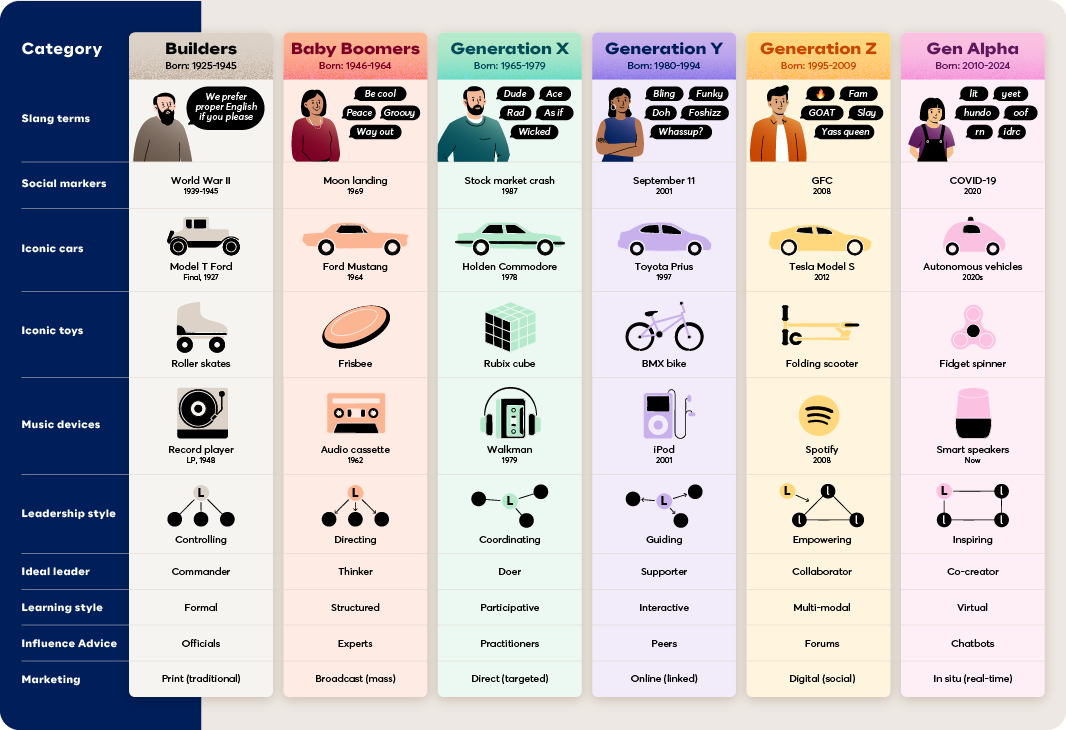
As of today, individuals born in 2001 are approximately 23 years old. This means you are currently graduating from universities or entering the early stages of your professional careers. This entry is fundamentally altering the corporate tech landscape.
Remote Work and Digital Collaboration Tools
The 2001 cohort entered the workforce or finished their degrees during or immediately after a global pandemic. Consequently, your professional identity is tied to digital collaboration tools like Slack, Microsoft Teams, Zoom, and Notion. For this generation, “the office” is a digital space as much as a physical one.
Tech companies are now forced to innovate in the realm of “Digital HQ” software because Gen Z employees demand high-quality, asynchronous communication tools. You are less likely to tolerate inefficient, legacy software systems, driving a “consumerization” of enterprise tech—where work software is expected to be as intuitive and fast as Instagram or TikTok.
The Demand for Ethical and Transparent Tech
Being born in 2001 means you grew up alongside the rise of “Big Tech” and the subsequent “Tech-lash.” Unlike earlier generations who viewed tech companies with unbridled optimism, Gen Z is more skeptical. You understand data privacy, the mechanics of targeted advertising, and the ethical implications of AI.
In the tech workforce, the 2001-born professional is a catalyst for “Ethical Tech.” You are more likely to push for transparency in data collection and diversity in algorithmic training sets. This generation understands that software is not neutral—it carries the biases of its creators—and you are using your tech-savviness to demand more responsible software development life cycles (SDLC).
Emerging Frontiers: AI, Web3, and the Future for the 2001 Generation
The most exciting phase for someone born in 2001 is the current transition into the era of Artificial Intelligence and decentralized technologies. While older generations view AI with a mix of awe and fear, for Gen Z, it is the next logical step in the technological continuum.
Navigating the Generative AI Boom
For the 2001 cohort, Generative AI (like ChatGPT, Midjourney, and Claude) is becoming a standard part of the creative and analytical toolkit. Having grown up with Google Search as a primary research tool, the shift to AI-driven synthesis feels natural. You are the “Prompt Engineers” of the new economy. This generation is uniquely positioned to bridge the gap between traditional coding and natural language processing, using AI to accelerate software development, content creation, and data analysis at speeds previously thought impossible.
Cybersecurity and Privacy in an Interconnected World
With a life lived almost entirely online, those born in 2001 face unique challenges regarding digital security. You are the first generation to deal with “Digital Footprints” that date back to your infancy. As a result, there is a growing trend among Gen Z toward “Digital Minimalism” and enhanced security protocols.
Technologies like end-to-end encryption, multi-factor authentication (MFA), and VPNs are common knowledge for the 2001-born user. Furthermore, there is a burgeoning interest in Web3 and decentralized identity solutions. As you seek to reclaim control over your data from centralized platforms, you are driving the development of blockchain-based technologies that prioritize user sovereignty.

Conclusion: The Architect of the Digital Future
What generation are you if you were born in 2001? You are the vanguard of Generation Z. But more importantly, you are a member of the most technologically fluent cohort in history. You were born at the intersection of the analog past and the hyper-digital future, giving you the unique ability to navigate both worlds while instinctively leaning toward the latter.
From the rise of the smartphone to the explosion of AI, your life has been a series of technological milestones. As you move deeper into your twenties, your role shifts from a consumer of technology to an architect of it. The software, gadgets, and digital security protocols of tomorrow will be built by those born in 2001—individuals who don’t just “use” tech, but who speak it as their native language. Whether it is through advancing AI, securing the decentralized web, or humanizing the digital workspace, the 2001 generation is set to define what it means to live in a truly connected world.
aViewFromTheCave is a participant in the Amazon Services LLC Associates Program, an affiliate advertising program designed to provide a means for sites to earn advertising fees by advertising and linking to Amazon.com. Amazon, the Amazon logo, AmazonSupply, and the AmazonSupply logo are trademarks of Amazon.com, Inc. or its affiliates. As an Amazon Associate we earn affiliate commissions from qualifying purchases.