
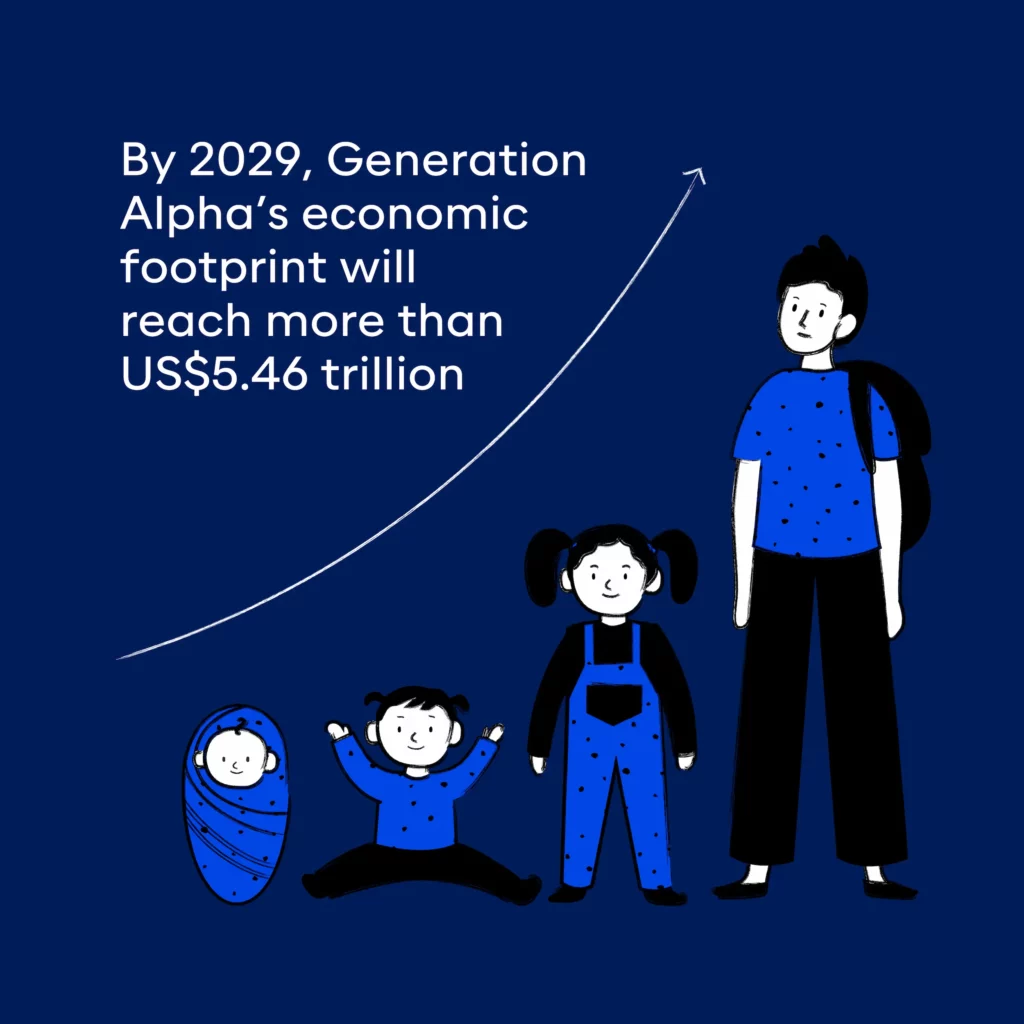
The question “What generation am I if I was born in 2012?” carries more weight than a simple chronological label. While sociologists generally identify those born in 2012 as the inaugural members of Generation Alpha (succeeding Generation Z), the true definition of this cohort lies not in birth years, but in their relationship with technology. To be born in 2012 is to be a “technological pioneer”—the first group of humans to have never known a world without ubiquitous high-speed mobile internet, cloud computing, and touch-interface ubiquity.
In the tech sector, 2012 is viewed as a watershed year. It was the year of the “mobile pivot,” the year the iPad became a household staple, and the year the foundations for modern artificial intelligence were laid. For a child born in 2012, technology is not a tool to be learned; it is an integrated environment to be inhabited.

The Generational Boundary: Why 2012 is the Tech Milestone
The transition from Gen Z to Gen Alpha is fundamentally rooted in the evolution of digital interfaces. While Gen Z grew up as “digital natives,” they still experienced the tail end of the desktop-first era. Those born in 2012, however, entered a world that was already “mobile-first” and increasingly “AI-first.”
Bridging Gen Z and Gen Alpha
Generational lines are often blurred, leading to the term “Zalpha” for those born on the cusp. However, from a technical perspective, 2012 marks a hard break. This cohort was born into the era of 4G LTE, which transformed the internet from a destination you “go to” on a computer into a continuous stream that follows you everywhere via a smartphone.
Unlike the early Gen Zers who might remember the friction of dial-up or the transition to smartphones, the 2012-born individual views seamless connectivity as a baseline utility, similar to electricity or running water. This shift in expectation dictates how software is developed and how user experiences (UX) are designed today.
The “Digital Native” Re-defined
The term “Digital Native” has evolved. For the 2012 cohort, the digital world is not a reflection of the physical world; rather, the physical and digital are synchronized in real-time. This generation began interacting with capacitive touchscreens before they could fully articulate sentences. This has led to a neurological preference for intuitive, gesture-based interfaces over traditional peripheral-based inputs (like the mouse and keyboard). In the tech industry, this drives the current push toward “Natural User Interfaces” (NUI), where voice, gesture, and even eye-tracking become the primary methods of interaction.
Hardware Paradigms: From the iPad to the Metaverse
In 2012, the hardware landscape shifted significantly. It was the year Apple released the iPad 3 (the first with a Retina display) and the iPad Mini, effectively cementing the tablet as the primary computing device for the next generation. For someone born in 2012, the tablet was likely their first window into global information.
The Rise of the Tablet Interface
The tablet revolution of 2012 replaced the tactile toys of previous generations with a single, glowing slate capable of infinite configurations. This “software-defined childhood” meant that children born in 2012 developed a high degree of adaptability. They are uniquely comfortable with “app-based” workflows, where specialized software is launched for specific tasks, rather than the “file-based” system of traditional Windows or macOS environments. Tech developers now prioritize this modular, app-centric architecture because the 2012-born demographic represents the future workforce.
Wearables and IoT Integration
As the 2012 cohort grew, so did the Internet of Things (IoT). By the time these children were entering primary school, smart speakers like Amazon Echo and Google Home were becoming commonplace. This generation is the first to utilize voice as a standard operating system. To a 2012-born individual, “talking” to a machine is not a novelty; it is an efficient shortcut. This has accelerated the development of Natural Language Processing (NLP) and voice-recognition technology, as tech companies rush to meet the demands of a generation that expects their environment to be responsive and “smart.”

Software and Ecosystems: Growing Up in a Cloud-Native World
The birth of the 2012 generation coincided with the maturation of the Cloud. Prior to this, data was something stored on hard drives or physical media. For those born in 2012, the concept of “losing a file” is becoming obsolete, as everything is synchronized across the cloud in real-time.
The Platformization of Childhood (Roblox and Minecraft)
The primary “social squares” for those born in 2012 are platforms like Roblox, Minecraft, and Fortnite. These aren’t just games; they are complex digital ecosystems that combine social networking, creative coding, and virtual economies.
From a tech standpoint, these platforms are the precursors to the Metaverse. A 2012-born user understands “digital ownership” through skins and virtual assets far better than previous generations. This comfort level with virtual environments is driving the current tech industry investments into Extended Reality (XR) and spatial computing. For this generation, a VR headset is simply a more immersive monitor, and a digital avatar is a legitimate extension of their identity.
The AI Transformation of Learning
Perhaps the most significant tech trend impacting those born in 2012 is the rise of Generative AI. As this cohort enters their teenage years, they are doing so alongside the explosion of Large Language Models (LLMs) like ChatGPT and Claude.
Unlike older generations who view AI with a mix of awe and skepticism, the 2012 cohort is integrating these tools into their education and creative processes. They are the first generation to use “AI as a co-pilot.” This will lead to a radical shift in software development, where “Prompt Engineering” and AI management become more critical skills than traditional syntax-heavy coding. The software of the future will be conversational, and the 2012-born generation is currently training those models through their daily interactions.
Digital Sovereignty: Security and Privacy for the 2012 Cohort
With great connectivity comes significant risk. Being born in 2012 means having a digital footprint that often began before birth, with parents posting ultrasound photos and childhood milestones on social media. This has made digital security and privacy a central theme in the lives of this generation.
Biometric Data and Identity
For the 2012 cohort, passwords are a legacy technology. They have grown up using FaceID, TouchID, and other biometric authenticators. From a digital security perspective, this generation is the vanguard of the “passwordless” future. However, this also poses unique challenges regarding biometric data privacy. Tech companies are currently navigating the ethics of storing the most personal data of a generation that has been digitally “mapped” since infancy.
Algorithmic Literacy and Content Curation
A 2012-born individual consumes content through algorithms. Whether it is YouTube Kids, TikTok, or Netflix, their media diet is curated by machine learning. This has led to a high level of “algorithmic literacy”—an intuitive understanding of how to influence the software to show them what they want. However, it also necessitates a new era of digital security focused on “cognitive security”—protecting oneself from misinformation and algorithmic echo chambers. The tech industry is responding by developing more transparent AI and “Explainable AI” (XAI) to help this generation navigate their filtered realities.
Conclusion: Why 2012 is the Tech Benchmark Year
If you were born in 2012, you are a member of Generation Alpha, but more importantly, you are a citizen of the most technologically accelerated era in human history. You represent a shift from “using technology” to “integrating with technology.”
From the hardware in your hands to the AI co-pilots in your browser, your life is defined by the seamless transition between the physical and digital realms. The tech industry is not just building products for you; it is being reshaped by you. As the 2012 cohort matures, we can expect a future where technology is invisible, intuitive, and infinitely personalized—a reflection of the world you have known since the day you were born. Whether it is through the development of the Metaverse, the ethical implementation of AI, or the next revolution in mobile hardware, the “2012 generation” is the compass pointing toward our digital future.
aViewFromTheCave is a participant in the Amazon Services LLC Associates Program, an affiliate advertising program designed to provide a means for sites to earn advertising fees by advertising and linking to Amazon.com. Amazon, the Amazon logo, AmazonSupply, and the AmazonSupply logo are trademarks of Amazon.com, Inc. or its affiliates. As an Amazon Associate we earn affiliate commissions from qualifying purchases.