
Since its debut in 2012, Subway Surfers has become more than just a mobile game; it is a global phenomenon. With over 4 billion downloads, it stands as one of the most successful mobile titles in history. For developers, tech enthusiasts, and players alike, a recurring question arises: what is the technical foundation that allows such a high-speed, visually vibrant game to run smoothly on everything from high-end iPhones to budget Android devices?
The answer lies in the Unity game engine. Developed by Unity Technologies, this engine has provided the framework for SYBO and Kiloo to build, iterate, and scale their endless runner for over a decade. In the realm of mobile technology, the choice of an engine determines not just how a game looks, but how it performs, how easily it can be updated, and how effectively it can be ported across different operating systems.
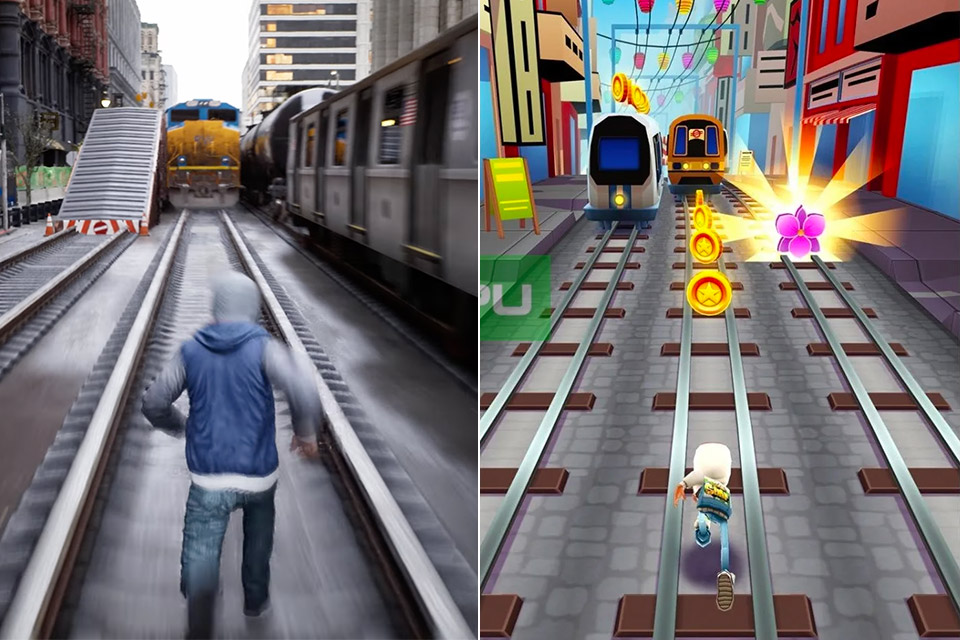
The Core Foundation: Why Unity and Subway Surfers are a Perfect Match
The decision to use Unity for Subway Surfers was a strategic move that aligned with the technical requirements of early 2010s mobile hardware. At the time, mobile gaming was transitioning from simple 2D sprites to more complex 3D environments. Unity offered a bridge between these two worlds, providing a robust set of tools that democratized high-quality game development.
The Cross-Platform Advantage
One of the primary reasons Unity became the engine of choice for Subway Surfers is its unparalleled cross-platform capability. Developing a game for mobile involves navigating the fragmentation of the Android ecosystem—thousands of devices with varying screen resolutions and processor speeds—while simultaneously catering to the standardized hardware of iOS. Unity’s “build once, deploy anywhere” philosophy allowed the developers to maintain a single codebase while optimizing the output for different platforms. This technical efficiency ensured that a player on a high-end tablet and a player on an entry-level smartphone received a comparable, high-quality experience.
C# and Scripting Efficiency
Unity utilizes C# (C-Sharp) as its primary programming language. For the developers at SYBO, C# provided a perfect middle ground between the high-level abstraction of languages like Python and the low-level manual memory management of C++. This allowed for rapid prototyping of the game’s core mechanics—swiping, jumping, and dodging—without sacrificing performance. The engine’s handling of garbage collection and memory management, while often a challenge in mobile environments, was expertly tuned by the Subway Surfers team to ensure that the game maintained a steady 60 frames per second (FPS), which is critical for a fast-paced reaction game.
The Power of the Unity Editor
The Unity Editor provided a visual interface that allowed designers and developers to collaborate in real-time. In the context of Subway Surfers, this meant that the “World Tour” updates—which see the game’s environment change to a new city every few weeks—could be developed and tested efficiently. The ability to drag and drop assets, tweak lighting settings, and preview physics within the editor accelerated the development cycle, allowing the team to maintain a rigorous update schedule for over ten years.
Technical Breakdown: How Unity Handles Endless Runner Mechanics
While Subway Surfers may appear simple on the surface, the underlying technical logic required to keep the game running “forever” is complex. Unity provides several key systems that make the endless runner genre possible.
Procedural Level Generation and Object Pooling
In an endless runner, the level is not pre-built from start to finish. Instead, it is generated procedurally. Unity’s engine allows for “chunks” of the environment to be instantiated (created) and destroyed as the player moves forward. However, constantly creating and destroying objects is taxing on a mobile CPU and can cause “stuttering.”
To solve this, Subway Surfers utilizes Object Pooling. Instead of deleting a train or a coin after it leaves the screen, the engine “deactivates” it and moves it to a pool. When the game needs a new object ahead of the player, it pulls a deactivated object from the pool, resets its position, and reactivates it. This technical sleight of hand reduces the overhead on the system’s memory and ensures a seamless transition between different sections of the subway track.
Rendering and Optimization for Mobile Hardware
Subway Surfers is known for its bright, “pop” art style. To achieve this look without overheating mobile devices, the developers use optimized shaders and low-poly models. Unity’s Universal Render Pipeline (URP) has been instrumental in this. By using URP, the game can achieve high-quality lighting and shadows with a fraction of the computational power required by traditional desktop rendering. The engine also makes extensive use of “draw call batching,” which groups similar objects together to be rendered in a single pass, significantly reducing the strain on the mobile GPU.

Physics and Collision Detection
At high speeds, collision detection becomes a technical hurdle. If the physics engine is too slow, a player might “clip” through a train or a wall. Unity’s built-in physics engine, PhysX, is highly configurable. The developers of Subway Surfers use a simplified version of collision detection, focusing on “trigger volumes” rather than complex mesh colliders. This ensures that the game can accurately detect a swipe or a crash in milliseconds, providing the responsive feel that is essential for a competitive mobile title.
The Evolution of the Subway Surfers Tech Stack
As mobile hardware has evolved from the iPhone 4 to the latest flagship devices, so too has the version of Unity powering Subway Surfers. The transition between different iterations of the engine is a massive technical undertaking that involves updating deprecated code and integrating new features.
Transitioning Through Unity Versions
Staying on an older version of an engine can lead to security vulnerabilities and a lack of support for new OS features (like high-refresh-rate screens or new notches). Over the years, the Subway Surfers tech team has migrated the game through several major Unity versions. This process requires a meticulous “refactoring” of the codebase to ensure that the physics and game logic remain consistent. A slight change in how the engine handles gravity or drag could fundamentally alter the “feel” of the game, potentially alienating long-term fans.
Managing High-Fidelity Graphics on Modern Screens
Modern mobile screens support HDR (High Dynamic Range) and high refresh rates (90Hz or 120Hz). Unity has enabled the Subway Surfers team to unlock these features for newer devices while maintaining backwards compatibility. By using “Level of Detail” (LOD) systems, the engine can swap out high-resolution textures for lower-resolution ones on the fly, depending on the device’s capabilities. This ensures that the game looks crisp on a 4K tablet screen while remaining playable on a device with limited VRAM.
Integrating Third-Party SDKs and APIs
A modern mobile game is more than just graphics and logic; it is a hub for various services. Subway Surfers integrates dozens of Software Development Kits (SDKs) for analytics, cloud saving, social media integration, and advertising. Unity’s extensive Asset Store and plugin architecture make it the industry leader for SDK integration. Whether it is connecting to Game Center/Google Play Games or managing the “World Tour” leaderboard, Unity’s framework acts as the glue that holds these disparate technical components together.
Why the Choice of Engine Matters for Mobile Success
In the competitive landscape of the App Store and Google Play, the choice of a game engine is a foundational business and technical decision. For Subway Surfers, Unity was not just a tool; it was a catalyst for growth.
Development Speed and Rapid Iteration
The “World Tour” campaign is a cornerstone of the Subway Surfers experience. Every few weeks, the game moves to a new city, such as Tokyo, New York, or Cairo. This requires a massive amount of new 3D assets, textures, and UI elements. Unity’s modular architecture allows the art team to swap out assets without touching the core game logic. This separation of concerns—where the “mechanics” are isolated from the “visuals”—is what enables the team to maintain such a prolific update schedule.
Future-Proofing and Scalability
As we look toward the future of mobile tech, Unity is positioning itself at the forefront of Augmented Reality (AR) and Virtual Reality (VR). While Subway Surfers remains a traditional 3D game, the underlying engine provides the potential for SYBO to explore new technological frontiers. If they chose to launch an AR mode where players run through their own streets, Unity’s AR Foundation would provide the necessary tools to implement it relatively quickly.
Furthermore, Unity’s move toward the Data-Oriented Technology Stack (DOTS) offers a glimpse into how future mobile games will handle thousands of objects on screen simultaneously. By moving from object-oriented programming to a data-oriented approach, Unity is allowing games like Subway Surfers to push the boundaries of what mobile hardware can handle, potentially allowing for even more complex environments and faster gameplay in the future.

Conclusion: The Synergy of Software and Speed
Subway Surfers is a masterclass in mobile game optimization, and the Unity engine is the engine that makes it possible. By leveraging Unity’s cross-platform capabilities, efficient C# scripting, and robust rendering pipelines, the developers created a game that is both technically accessible and visually stunning.
The success of Subway Surfers underscores the importance of choosing the right tech stack. In the fast-paced world of mobile apps, an engine must be more than just a renderer; it must be a versatile, scalable, and reliable platform that grows alongside its user base. As mobile technology continues to advance, the partnership between the creative vision of SYBO and the technical power of Unity will likely continue to set the standard for what is possible in the palm of our hands.
aViewFromTheCave is a participant in the Amazon Services LLC Associates Program, an affiliate advertising program designed to provide a means for sites to earn advertising fees by advertising and linking to Amazon.com. Amazon, the Amazon logo, AmazonSupply, and the AmazonSupply logo are trademarks of Amazon.com, Inc. or its affiliates. As an Amazon Associate we earn affiliate commissions from qualifying purchases.