
The concept of the “fiscal week” might sound like a niche accounting term, but for businesses and even savvy individuals managing their finances, understanding where you are within the fiscal year is crucial. It’s not just about marking off days on a calendar; it’s about strategic planning, performance tracking, and ensuring timely financial operations. This article will delve into the intricacies of fiscal weeks, why they matter, and how to effectively determine your current position within this vital financial framework.
Understanding the Fiscal Calendar: Beyond the Gregorian
The standard calendar year, from January 1st to December 31st, is known as the Gregorian calendar. However, many organizations and governments operate on a different schedule for financial reporting and budgeting – the fiscal year. This fiscal year can begin on any date and typically spans 12 consecutive months.
The Genesis of the Fiscal Year
The adoption of a fiscal year distinct from the calendar year stems from various practical and historical reasons. For businesses, aligning the fiscal year with their operational cycles can provide a more accurate reflection of profitability and cash flow. For instance, a retail company might choose a fiscal year that ends after its peak holiday season, allowing for a more complete picture of its annual performance. Governments often align their fiscal years with legislative sessions or tax collection cycles.
Defining the Fiscal Week
Within the broader fiscal year, the concept of the fiscal week emerges. A fiscal week is simply a seven-day period within the fiscal year, much like a standard week. The critical distinction lies in its starting and ending points, which are dictated by the commencement of the fiscal year, not necessarily January 1st. This means that the first fiscal week of a company whose fiscal year begins on July 1st would start on July 1st, not the first Sunday or Monday of July.
The numbering of fiscal weeks can also vary. Some organizations might simply count the weeks sequentially from the start of the fiscal year (Week 1, Week 2, etc.). Others might adopt more structured systems, such as the widely used ISO 8601 week numbering, which standardizes week identification across different calendars and systems. Regardless of the specific numbering system, the fundamental purpose remains the same: to provide a consistent and predictable framework for tracking financial progress.
The Importance of Tracking Your Fiscal Week
Knowing your current fiscal week is more than an academic exercise; it has tangible implications for financial management, operational efficiency, and strategic decision-making.
Strategic Planning and Budgeting
Budget Allocation and Monitoring: Budgets are typically set on a fiscal year basis, and then broken down into monthly, quarterly, and sometimes even weekly allocations. Knowing the current fiscal week allows for accurate tracking of spending against these allocations. Are you on track for your projected expenditures in Week 23? Or are you significantly over or under? This real-time insight is crucial for managing resources effectively and preventing budget overruns or underutilization.
Forecasting and Performance Evaluation: Financial performance is often evaluated against targets set for specific periods within the fiscal year. By accurately identifying the current fiscal week, businesses can compare their actual performance (revenue, profit, expenses) to their forecasted performance for that particular week or accumulated period. This granular level of tracking enables timely identification of trends, potential issues, and opportunities for course correction.
Sales and Marketing Campaign Timing: Marketing campaigns, sales initiatives, and promotional activities are frequently timed to coincide with specific points in the fiscal year, such as the beginning of a new quarter, a pre-determined sales push period, or a period leading up to a specific financial reporting deadline. Understanding the fiscal week helps in planning the launch, execution, and evaluation of these activities, ensuring they are deployed at the optimal time within the organizational financial cycle.
Operational Efficiency and Reporting
Payroll and Human Resources: Payroll processing, employee benefits management, and other HR functions are often tied to weekly or bi-weekly cycles that need to align with the fiscal calendar. Accurate fiscal week tracking ensures that payroll is processed on time and that any accruals or deductions are correctly accounted for within the relevant fiscal periods.
Inventory Management and Supply Chain: For businesses that deal with physical goods, inventory turnover and supply chain logistics are often analyzed on a weekly basis within the fiscal year. Understanding the fiscal week helps in forecasting demand, managing stock levels, and optimizing the flow of goods to meet sales targets and minimize carrying costs.
Financial Reporting and Compliance: Publicly traded companies and many private entities are required to produce financial reports on a regular basis, often quarterly and annually, which are dictated by their fiscal year. Accurate weekly tracking is essential for compiling the data needed for these reports and ensuring compliance with regulatory requirements. Delays or inaccuracies in reporting can have significant consequences, including penalties and damage to investor confidence.
Performance Benchmarking
Internal Comparison: By tracking performance on a week-to-week basis within the fiscal year, businesses can identify patterns and anomalies. Are certain weeks consistently stronger or weaker? This allows for a deeper understanding of internal operational rhythms and can inform strategies for improving performance during slower periods or capitalizing on peak times.
External Comparison: While less common for direct “fiscal week” comparisons externally, understanding your fiscal year-end and key reporting periods allows for more meaningful comparisons with industry benchmarks or competitors who operate on similar fiscal schedules. This provides a more standardized basis for assessing your company’s relative performance.
Methods for Determining Your Fiscal Week
Accurately identifying your current fiscal week requires a clear understanding of your organization’s fiscal year start date and the chosen method for week numbering.
Identifying Your Fiscal Year Start Date
The first and most critical step is to know when your fiscal year begins. This information is typically found in:

- Company Bylaws or Governing Documents: For corporations and non-profits, the fiscal year start date is usually stipulated in their foundational legal documents.
- Accounting and Finance Department: The internal accounting or finance department will have this information readily available.
- Financial Reports and Statements: The start date of the fiscal year is often mentioned in the header or introductory sections of annual financial reports.
- Company Policy Documents: Internal policies related to budgeting, reporting, or payroll may specify the fiscal year start.
Once you have this definitive start date, you can begin to calculate your fiscal week.
Week Numbering Systems
There are several common approaches to numbering fiscal weeks:
Sequential Week Counting
This is the most straightforward method.
- Define the Start: Identify the exact date your fiscal year begins.
- Count Weeks:
- Week 1 begins on the fiscal year start date and ends seven days later.
- Week 2 begins on the first day after Week 1 ends and continues for seven days.
- Continue this pattern sequentially for the entire fiscal year.
Example: If a fiscal year begins on July 1st:
- Week 1: July 1st – July 7th
- Week 2: July 8th – July 14th
- Week 3: July 15th – July 21st
And so on.
ISO 8601 Week Numbering
The International Organization for Standardization (ISO) 8601 standard provides a globally recognized method for identifying weeks. This system has specific rules:
- Week Starts on Monday: ISO weeks always begin on a Monday.
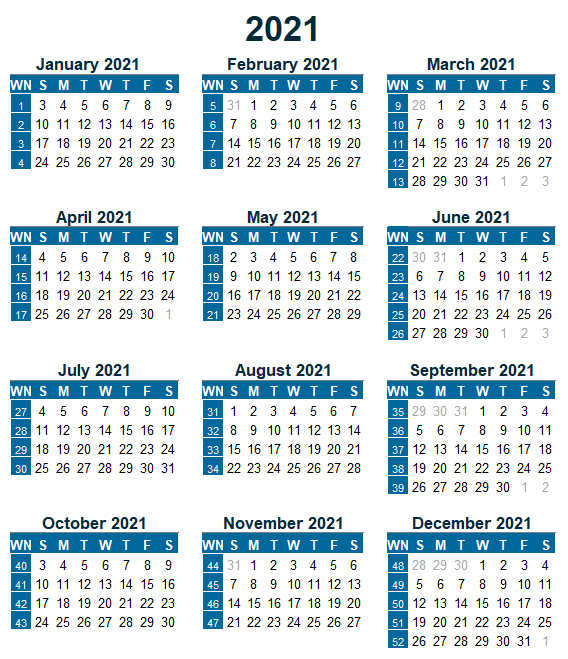
- First Week of the Year: Week 1 of a year is the week that contains the first Thursday of that year. This means that some years might start with a few days from the previous year’s last week, and the last week of a year might spill over into the first week of the next year.
- 52 or 53 Weeks: ISO years always have either 52 or 53 weeks.
To determine the ISO fiscal week:
- Determine Your Fiscal Year Start Date: As mentioned before.
- Align with ISO Calendar: Find the ISO week number for your fiscal year start date.
- Calculate Subsequent Weeks: Then, based on the ISO system, calculate how many ISO weeks have passed within your fiscal year.
Important Consideration: If your fiscal year doesn’t start on a Monday, you need to be careful when using ISO 8601 for fiscal week tracking. You might need to define your own fiscal weeks that start on a Monday and then align them with the fiscal year. Alternatively, some systems will calculate the ISO week number for the date within your fiscal year, which can be useful but requires careful interpretation.
Proprietary or Custom Systems
Some larger organizations may have developed their own internal systems for fiscal week tracking, often integrated into their enterprise resource planning (ERP) or accounting software. These systems might use customized naming conventions or algorithms.
Leveraging Technology for Accuracy
Accounting Software: Most modern accounting software packages allow you to define your fiscal year start date. They then automatically calculate and display the current fiscal week, month, and quarter, often integrating this information directly into your financial reports and dashboards. Examples include QuickBooks, Xero, SAP, and Oracle NetSuite.
ERP Systems: Enterprise Resource Planning (ERP) systems, used by larger organizations, are even more sophisticated. They manage a wide range of business processes, including finance, HR, and operations, all based on a defined fiscal calendar. These systems provide real-time visibility into fiscal week performance.
Spreadsheet Tools: For smaller businesses or individuals, Microsoft Excel or Google Sheets can be used to create custom fiscal calendars. Using formulas like WEEKNUM() (for Gregorian weeks) and carefully constructing your own calculations based on your fiscal year start date can help track your progress.
Practical Applications and Pitfalls to Avoid
Understanding your fiscal week is not just theoretical; it has practical applications that can significantly impact your business. However, there are common pitfalls that can lead to miscalculations and inaccurate financial management.
Real-World Scenarios Where Fiscal Weeks Matter
- Sales Performance Tracking: A sales team might have weekly quotas tied to the fiscal year. Knowing the current fiscal week allows them to accurately gauge progress towards their goals. If they are in Week 30, they should have achieved 30/52 or 30/53 of their annual target, depending on the fiscal year length.
- Project Management Milestones: For projects with deadlines tied to fiscal reporting periods, understanding the fiscal week ensures that project milestones are met in sync with financial requirements.
- Cash Flow Management: Monitoring cash inflows and outflows on a weekly basis within the fiscal year provides early warnings of potential cash shortages or surpluses, allowing for proactive adjustments.
- Performance Reviews: Managers can use fiscal week data to provide more timely and relevant feedback to their teams, aligning performance discussions with specific periods of the fiscal year.

Common Pitfalls and How to Mitigate Them
- Confusing Fiscal Year with Calendar Year: The most common error is assuming the fiscal year aligns with the calendar year. Always confirm your organization’s specific fiscal year start date.
- Inconsistent Week Numbering: If different departments or individuals use different methods for counting weeks (e.g., one uses sequential counting, another tries to align with ISO weeks without proper adjustments), it leads to confusion and errors. Standardize on a single, clearly defined method and communicate it widely.
- Ignoring Leap Years: While less impactful on a weekly basis, be mindful of how leap years might subtly affect the total number of days in a fiscal year if your calculations are extremely precise or rely on day-counting algorithms. Most software handles this automatically.
- Data Entry Errors: Inaccurate input of financial data is a perennial problem. Implement robust data validation processes and regular reconciliations to catch errors early.
- Lack of Automation: Relying solely on manual calculations for fiscal week tracking is prone to errors and time-consuming. Invest in accounting software or ERP systems that automate these calculations.
- Failing to Communicate: Ensure that all relevant stakeholders – from the C-suite to individual team members – understand the fiscal calendar and the importance of tracking performance within it. Regular updates and clear reporting can prevent misalignments.
By diligently understanding your fiscal year start date, choosing a consistent week-numbering system, and leveraging appropriate technological tools, you can ensure accurate tracking of your fiscal week. This foundational understanding is a critical component of sound financial management, empowering your organization to make informed decisions, achieve its strategic objectives, and navigate the financial year with confidence.
aViewFromTheCave is a participant in the Amazon Services LLC Associates Program, an affiliate advertising program designed to provide a means for sites to earn advertising fees by advertising and linking to Amazon.com. Amazon, the Amazon logo, AmazonSupply, and the AmazonSupply logo are trademarks of Amazon.com, Inc. or its affiliates. As an Amazon Associate we earn affiliate commissions from qualifying purchases.