
In the intricate tapestry of personal presentation, every detail contributes to the overarching narrative of one’s personal brand. From the cut of a suit to the choice of accessories, these elements are not mere adornments but powerful non-verbal communicators. For men, rings offer a particularly nuanced opportunity to articulate aspects of their identity, status, and even aspirations without uttering a single word. Understanding the subtle implications of ring placement is essential for anyone looking to strategically enhance their personal brand and ensure their visual message aligns perfectly with their desired perception. This isn’t merely about fashion; it’s about leveraging semiotics to reinforce your unique professional and personal identity.
The Silent Language of Rings: A Personal Brand Statement
Rings have transcended their origins as simple ornaments or markers of marital status. Today, they function as an extension of personal style, carrying layers of cultural, historical, and individual meaning. For the discerning man, a ring is a deliberate choice, reflecting conscious decisions about the image he wishes to project. Each finger, due to its historical associations and conventional interpretations, acts as a different canvas for communicating a specific aspect of one’s personal brand. The choice of which finger to adorn, therefore, becomes a strategic act, a subtle yet potent declaration of identity, values, and status.
The Psychology of Placement: Subconscious Cues
Our brains are wired to interpret visual cues, often subconsciously. When someone observes a man wearing a ring, particularly on a non-traditional finger, their mind processes a narrative even before any verbal interaction occurs. A ring on the pinky might evoke an image of eccentricity or creative flair, while one on the index finger could suggest leadership or a commanding presence. These initial impressions, formed within milliseconds, are critical components of personal branding. They influence how others perceive trustworthiness, authority, creativity, and even approachability. By understanding these subconscious associations, men can strategically choose ring placements that support and amplify their desired brand attributes, making a statement that resonates long before words are exchanged.
Historical Significance and Modern Interpretations
Historically, rings were powerful symbols of lineage, power, wealth, and affiliation. Kings wore rings as symbols of sovereignty, societies used them for identification, and families passed them down as heirlooms. While many of these overt uses have faded, the symbolic weight persists. The wedding ring finger, for instance, universally signifies commitment and relationship status. However, other fingers have accumulated their own rich lore. The thumb ring, once associated with archers, now often conveys a sense of strength or individuality. The middle finger, being central, sometimes represents balance or responsibility. Leveraging these historical echoes, even subtly, can add depth and gravitas to one’s personal brand, suggesting a connection to tradition or an appreciation for deeper meanings.
Decoding Each Finger: Crafting Your Brand Message
The most effective personal branding is intentional. By understanding the widely accepted, albeit sometimes subtle, interpretations of ring placement on each finger, men can make informed choices that bolster their desired image. This section delves into the specific brand messages conveyed by rings on different fingers, offering a guide to strategic adornment.
The Pinky Finger: Boldness, Power, and Non-Conformity
Wearing a ring on the pinky finger is perhaps one of the most distinctive choices a man can make, largely because it’s not commonly associated with marriage or specific cultural rites. This makes it an ideal canvas for personal branding. A pinky ring often signals a departure from convention, an embrace of individuality, or even a subtle display of power or affiliation (think old-school signet rings). It can convey a creative spirit, a discerning taste, or an air of playful confidence. For those seeking to project an image of unique style, leadership, or a professional who thinks outside the box, the pinky ring is an exceptional tool. It demands attention without being overtly flashy, making a statement about one’s self-assured and often unconventional approach to life and business.
The Ring Finger: Commitment, Romance, and Relationship Status
Globally, the fourth finger of the left hand is almost exclusively reserved for wedding or engagement rings, universally signaling commitment and partnership. While some cultures use the right hand, the message remains consistent. For personal branding, wearing a ring on this finger immediately communicates one’s relationship status, which can influence perceptions in both social and professional settings. In a professional context, it might subtly suggest stability, reliability, and an established personal life. For those who are single but wish to wear a ring on this finger, it’s crucial to be aware of the immediate (and often incorrect) assumptions it will provoke. Conversely, not wearing a ring on this finger, if married, can also send an unintended message about one’s personal brand regarding commitment or adherence to social norms.
The Middle Finger: Balance, Responsibility, and Confidence
The middle finger, being the largest and most central, offers a unique opportunity for balanced self-expression. Unlike the pinky or index finger, a ring here is less overtly symbolic in many cultures, providing a more neutral ground for personal branding. It can represent balance, responsibility, and an individual who is grounded. A ring on the middle finger is often chosen for its aesthetic appeal and comfort, yet it subtly conveys a sense of confidence and maturity without being boastful. It’s a choice for men who want to add a touch of sophistication and strength to their look without overtly declaring status or specific affiliations, projecting an image of measured self-assurance and thoughtful decision-making.
The Index Finger: Leadership, Authority, and Direction
Historically, the index finger was a popular choice for signet rings and family crests, denoting status, authority, and leadership. In modern personal branding, this association largely persists. Wearing a ring on the index finger naturally draws attention, as it’s the finger we use to point, command, and direct. It can signify ambition, a strong sense of purpose, and an individual who takes charge. For professionals in leadership roles, entrepreneurs, or anyone wishing to project an image of influence and decisiveness, a ring on the index finger can be a powerful accessory. It’s a statement of confidence and a subtle assertion of one’s position at the forefront.
The Thumb: Willpower, Strength, and Self-Assertion
The thumb, distinct from the other fingers, is a less common but highly impactful choice for a ring. Traditionally, thumb rings have been associated with strength, willpower, and independence. In personal branding, a thumb ring often conveys a bold, assertive personality and a strong sense of self. It suggests a man who is confident in his own skin, unafraid to stand out, and possesses a unique, perhaps even rebellious, spirit. For individuals who want to emphasize their individuality, personal strength, or a non-conformist approach, a thumb ring serves as an excellent visual cue. It’s a declaration of autonomy and a testament to one’s distinct identity.
Beyond Tradition: Aligning Rings with Your Professional and Personal Brand
While historical and cultural interpretations provide a framework, the most effective personal branding involves tailoring these guidelines to your unique context. The goal is to ensure your ring choices actively support the overall brand narrative you wish to construct, rather than detracting from it.
Professional Contexts: Subtle Branding in the Workplace
In professional environments, subtlety often reigns supreme. The choice of ring placement and style should align with industry norms and the specific corporate culture. For instance, in conservative fields like finance or law, an overly large or flamboyant ring on the index or pinky finger might be perceived as distracting or unprofessional. Here, understated designs on the middle or ring finger (if applicable) might be more appropriate, signaling stability and professionalism. In creative industries, however, more expressive choices on the pinky or thumb could reinforce a brand built on innovation and individuality. The key is to understand your audience and environment, ensuring your accessory choices enhance, rather than hinder, your professional credibility.
Personal Style and Brand Consistency
Your rings should be an authentic extension of your personal style and overall brand aesthetic. If your brand is minimalist and sleek, chunky, ornate rings would create a dissonance. Conversely, if your style is eclectic and artistic, a simple band might feel out of place. Consistency across all elements of your personal presentation—from clothing to accessories—is crucial for building a cohesive and believable brand. Each ring should feel like a natural, intentional addition that reinforces your core values and the image you consistently project. This congruence strengthens your brand’s authenticity and makes your message more impactful.
The “Stacking” Effect: Multiple Rings, Multiple Messages
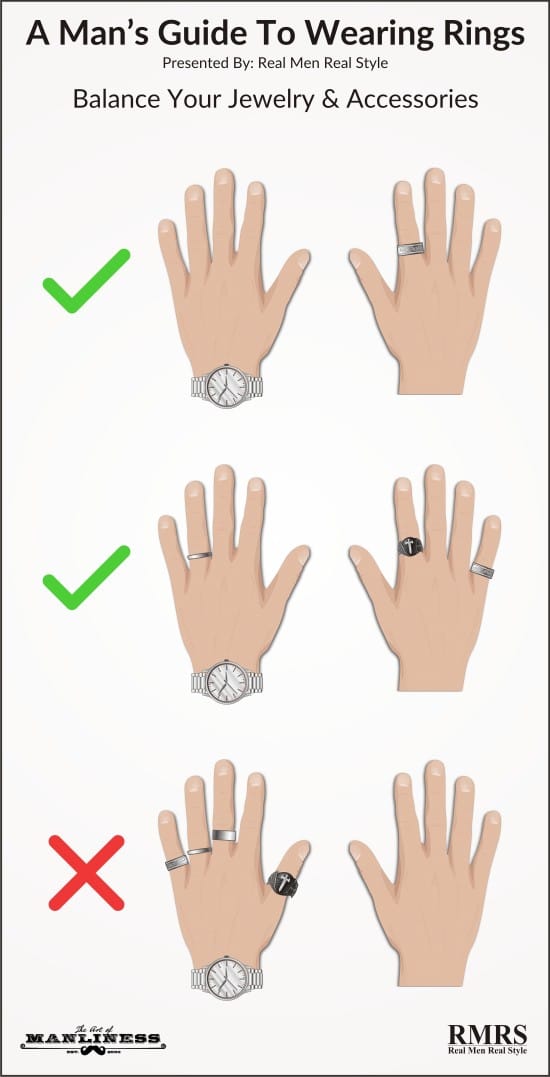
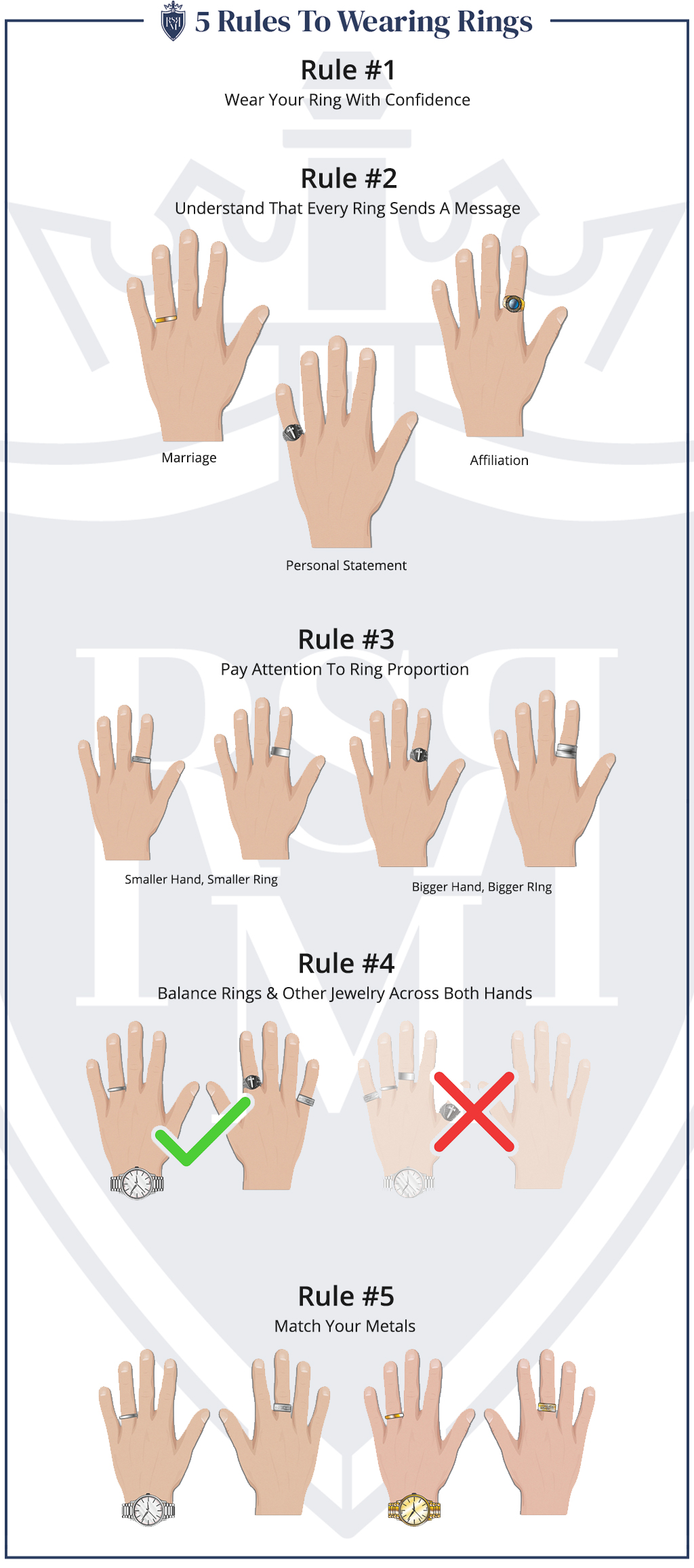
Wearing multiple rings offers an advanced level of personal branding, allowing for a more complex narrative. However, this requires careful consideration to avoid visual clutter or conflicting messages. Each ring should complement the others, both aesthetically and symbolically. For example, pairing a simple commitment band on the ring finger with a subtle, textured ring on the middle finger can suggest a blend of stability and sophisticated individuality. Stacking rings on a single finger, or distributing them across different fingers, should be done with an eye towards balance and proportionality. The overall effect should be one of curated intention, enhancing your brand with layers of detail rather than overwhelming it.
Strategic Ring Selection: Enhancing Your Brand Narrative
Beyond placement, the characteristics of the ring itself — its material, design, and symbolic value — are equally important in shaping your personal brand. These elements contribute significantly to the overall message you convey.
Material and Design: Reflecting Your Values
The material of a ring can speak volumes. A classic gold band might evoke tradition and understated luxury, suitable for a brand emphasizing heritage and timeless quality. Modern materials like titanium or tungsten can convey innovation, strength, and a contemporary edge, aligning with a tech-savvy or forward-thinking brand. The design — whether minimalist, intricate, vintage, or avant-garde — further refines this message. A signet ring with a personal emblem communicates lineage or personal identity, while a simple, unadorned band can project grounded simplicity. Choosing materials and designs that resonate with your core brand values ensures every detail reinforces your desired image.
Symbolism and Personal Meaning: Authenticity in Branding
The most powerful branding is authentic. Rings with personal symbolism, whether it’s an heirloom, a gift, or a piece chosen for its specific meaning to you, add a layer of depth and authenticity to your personal brand. Such rings can spark conversations, providing opportunities to share personal stories that further enrich your brand narrative. When a ring has genuine personal significance, it imbues your presentation with sincerity and character, making your brand more relatable and memorable. This authenticity is a cornerstone of strong personal branding, allowing your accessories to tell a part of your unique story.

Comfort and Practicality: Maintaining a Polished Brand
Ultimately, for any accessory to enhance your brand, it must be worn with comfort and confidence. An ill-fitting or impractical ring can be distracting, both for you and for observers, undermining the polished image you aim to project. Ensure rings are sized correctly and do not impede daily activities. A well-chosen ring should feel like a natural extension of your hand, allowing you to move and interact with ease. Practicality ensures that your accessories always contribute positively to your brand, allowing you to maintain a professional and self-assured demeanor without hindrance.
aViewFromTheCave is a participant in the Amazon Services LLC Associates Program, an affiliate advertising program designed to provide a means for sites to earn advertising fees by advertising and linking to Amazon.com. Amazon, the Amazon logo, AmazonSupply, and the AmazonSupply logo are trademarks of Amazon.com, Inc. or its affiliates. As an Amazon Associate we earn affiliate commissions from qualifying purchases.