
The introduction of the Crafter block in Minecraft version 1.21 represents one of the most significant shifts in the game’s technical landscape since the addition of the Hopper. For years, the technical community focused on the extraction of raw materials—farming mobs for drops, mining for ores, and harvesting flora. However, the “industrial revolution” of Minecraft was always capped by a manual bottleneck: the player had to physically stand at a crafting table to convert those raw materials into usable items.
The Crafter eliminates this bottleneck, functioning essentially as a programmable logic controller (PLC) within a three-dimensional digital environment. By allowing Redstone signals to trigger the assembly of items based on a predefined grid, it enables the creation of fully autonomous manufacturing plants. This leap from resource gathering to resource processing allows for a new generation of farms that produce finished goods rather than just raw ingredients.
The Architecture of the Crafter: A New Era of In-Game Automation
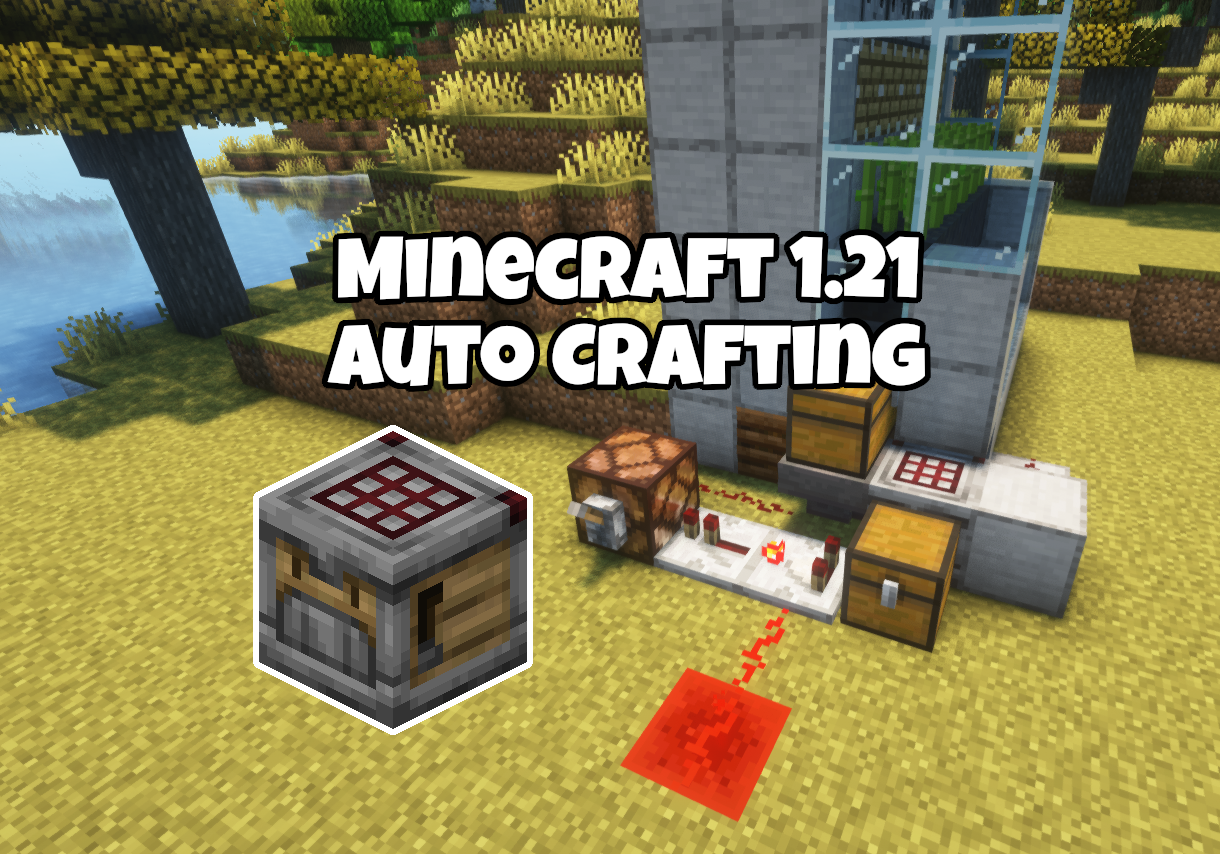
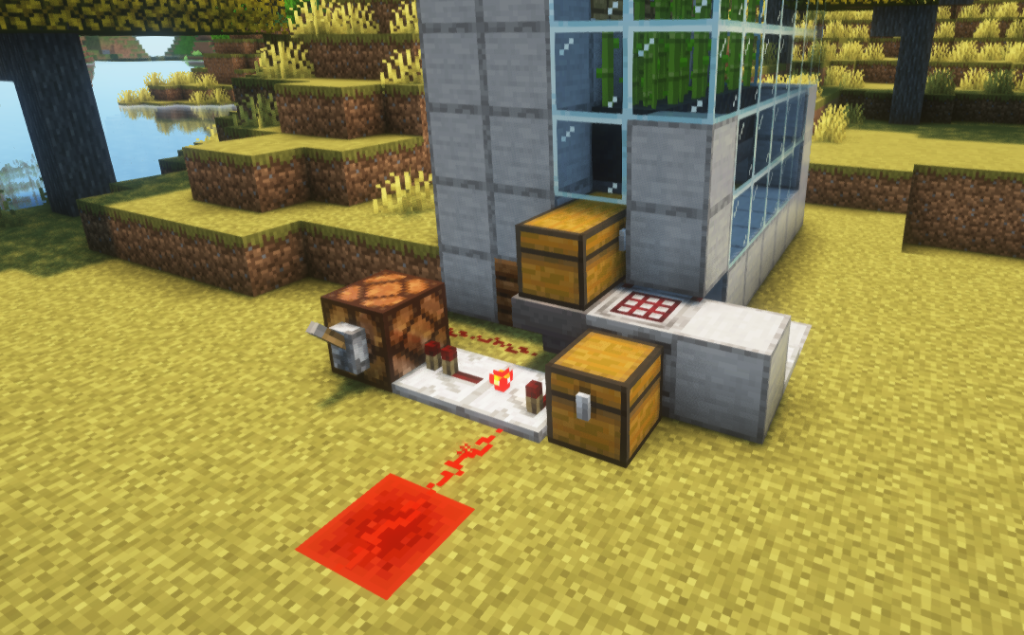
To understand the farms possible with the Crafter, one must first understand its technical architecture. Unlike a standard crafting table, the Crafter has a toggleable 3×3 grid where specific slots can be disabled. This allows the block to understand the “recipe shape” without requiring a player to place items manually. When a Redstone pulse is received, the Crafter checks its internal inventory against valid recipes and ejects the resulting item into the world or a container.
Redstone Integration and Logic Gates
The Crafter outputs a signal strength via a Comparator based on the number of filled slots or disabled slots. This creates a feedback loop that is essential for sophisticated farm designs. Technical players can use this to create “smart” systems that only trigger when the exact amount of ingredients is present, preventing the system from “clogging” with partial recipes. This logic-based approach mirrors real-world industrial automation, where sensors and feedback loops ensure assembly line precision.
Inventory Management and Throughput
The most significant challenge in Crafter-based farms is “backfilling.” Because the Crafter accepts items through hoppers and droppers, a farm must be designed to distribute items into the correct slots in the correct order. This requires advanced knowledge of hopper priority and timing. For complex recipes like Firework Rockets or Honey Blocks, the technical design must ensure that the ratio of ingredients remains constant, or the machine will eventually stall or produce the wrong item.
Essential Resource Farms Enhanced by Auto-Crafting
The most immediate application for the Crafter is in high-yield resource farms where inventory management was previously a nightmare. By converting small, stackable items into their block forms, players can increase their storage density by a factor of nine.
Automated Gold and Iron Refineries
Gold and Iron farms are staples of the technical Minecraft experience. However, a high-efficiency Pigman farm produces thousands of Gold Nuggets per hour, which quickly fill up chests. By integrating a Crafter, the nuggets can be automatically processed into Gold Ingots, and those ingots can further be processed into Gold Blocks.
This multi-stage “refinery” uses a series of Crafters. The first stage receives nuggets and outputs ingots into a buffer. Once that buffer reaches a certain threshold, a second Crafter triggers to create blocks. This reduces the footprint of a storage system from hundreds of double chests to just a few, allowing for much longer AFK (Away From Keyboard) sessions without system overflow.
The Self-Sustaining Kelp and Fuel Loop
Kelp farms are often used for experience and fuel, but the process of crafting Dried Kelp into Dried Kelp Blocks was historically tedious. With the Crafter, players can create a closed-loop energy system. Raw kelp is grown and harvested automatically, fed into a series of furnaces (or smokers), and the resulting dried kelp is piped into a Crafter. The Crafter assembles the Dried Kelp Blocks and pipes them back into the furnaces as fuel. This creates a perpetual motion machine that generates excess fuel and experience with zero player intervention.
Advanced Complex Item Pipelines
Beyond simple 3×3 block compression, the Crafter allows for the automated production of complex items that require multiple distinct ingredients. This is where the technical sophistication of “factory” design truly shines.
Firework Rocket Factories
For players using the Elytra for transportation, Firework Rockets are a constant necessity. A Firework Rocket farm combines the outputs of a Creeper farm (for Gunpowder) and a Sugarcane farm (for Paper).
The technical challenge here is the 1:1 ratio. A Sugarcane farm usually produces at a different rate than a Creeper farm. To solve this, technical builds utilize “buffer siloes” equipped with Comparators. The Crafter is only allowed to activate when both a piece of paper and a pile of gunpowder are available. Advanced designs can even incorporate dyes from flower farms to produce colored decorative rockets, using a “round-robin” item distribution system to ensure each rocket gets a firework star.
Automated Honey and Slime Production
Honey Blocks and Slime Blocks are essential for Redstone engineering, particularly in flying machines. Honey bottling is automated via bees, but turning four bottles into one Honey Block used to be manual.
In a modern Honey Factory, the Crafter is positioned to receive Honey Bottles. Once four bottles are present, the Crafter fires, producing a Honey Block and returning the empty glass bottles to the system to be refilled by the bees. This represents a perfect circular economy within the game’s mechanics. Similarly, Slime farms can now output finished Slime Blocks, making large-scale world-eaters and piston-based contraptions much easier to supply.
TNT and Sand Processing Systems
While Sand is notoriously difficult to farm without glitches, TNT production has been revolutionized. By syncing a high-output Creeper farm with a localized desert-quarry or a gravity-block duper, players can feed Gunpowder and Sand into a Crafter. This is particularly useful for perimeter-clearing projects. Instead of carrying shulker boxes of ingredients, the player can have a mobile “TNT Factory” that produces explosives on-demand as the clearing progresses.
Scaling and Optimization: Technical Considerations for Server Performance
As with any automated system, the addition of Crafters to a world comes with technical overhead. For players on multiplayer servers or low-end hardware, optimization is key to maintaining a consistent 20 Ticks Per Second (TPS).
Tick Rate Management and Lag Mitigation
Every time a Crafter checks for a recipe or receives an item, the game engine performs a calculation. In massive industrial districts, hundreds of Crafters firing simultaneously can cause “MSPT” (Milliseconds Per Tick) to spike.
To mitigate this, optimized farm designs use “batch processing.” Instead of a Crafter firing every time a single item enters, the system uses a Redstone counter to wait until enough items are present for a full stack of crafting operations. This reduces the number of block updates and lighting updates (if the Crafter triggers a Redstone lamp or neighboring components), keeping the server environment stable.
Modular Design Patterns for Expandability
The most efficient Crafter-based farms are modular. Rather than building one giant machine, technical players design “cells”—self-contained units that handle one specific recipe. These cells can be tiled horizontally or vertically.
This modularity allows for easy troubleshooting. If a recipe fails because an ingredient line is backed up, only one module stops, rather than the entire factory. Using a “bus line” system—similar to a computer’s data bus—items can be moved along a central corridor and diverted into specific Crafter modules using sorted filters. This mimics the “Just-In-Time” (JIT) manufacturing processes used in modern global logistics.
The Future of Technical Minecraft Logic
The Crafter is more than just a convenience; it is a fundamental shift in how players interact with the game’s economy. It encourages the transition from “gathering” to “engineering.” By treating Minecraft as a series of logistical puzzles, the Crafter allows players to build systems that are increasingly autonomous, complex, and rewarding.
Whether it is a simple iron-to-block compressor or a multi-stage factory producing enchanted golden apples or complex Redstone components, the Crafter has unlocked a level of automation previously reserved for modded gameplay. As the community continues to refine these designs, the line between “playing a game” and “designing a system” continues to blur, solidifying Minecraft’s position as a premier platform for digital engineering and creative logic.
aViewFromTheCave is a participant in the Amazon Services LLC Associates Program, an affiliate advertising program designed to provide a means for sites to earn advertising fees by advertising and linking to Amazon.com. Amazon, the Amazon logo, AmazonSupply, and the AmazonSupply logo are trademarks of Amazon.com, Inc. or its affiliates. As an Amazon Associate we earn affiliate commissions from qualifying purchases.