
The question “What elements are found in lipids?” might seem straightforward, delving into the basic building blocks of these essential biomolecules. However, understanding the elemental composition of lipids opens a gateway to comprehending their diverse functions, their impact on technological advancements, and their intricate relationship with financial markets. While lipids are fundamentally organic compounds, their elemental makeup and the resulting structural variations are crucial in fields ranging from pharmaceutical development to the burgeoning bio-based economy. This exploration will focus exclusively on the technological implications and applications driven by the elemental composition of lipids, examining how our understanding of these molecular structures fuels innovation and creates new economic opportunities.
The Fundamental Elemental Framework of Lipids
Lipids, at their core, are defined by their hydrophobic (water-repelling) nature, a property directly stemming from their elemental composition. This inherent characteristic dictates their behavior within biological systems and, consequently, their utility in various technological applications.
The Carbon Backbone: A Versatile Foundation
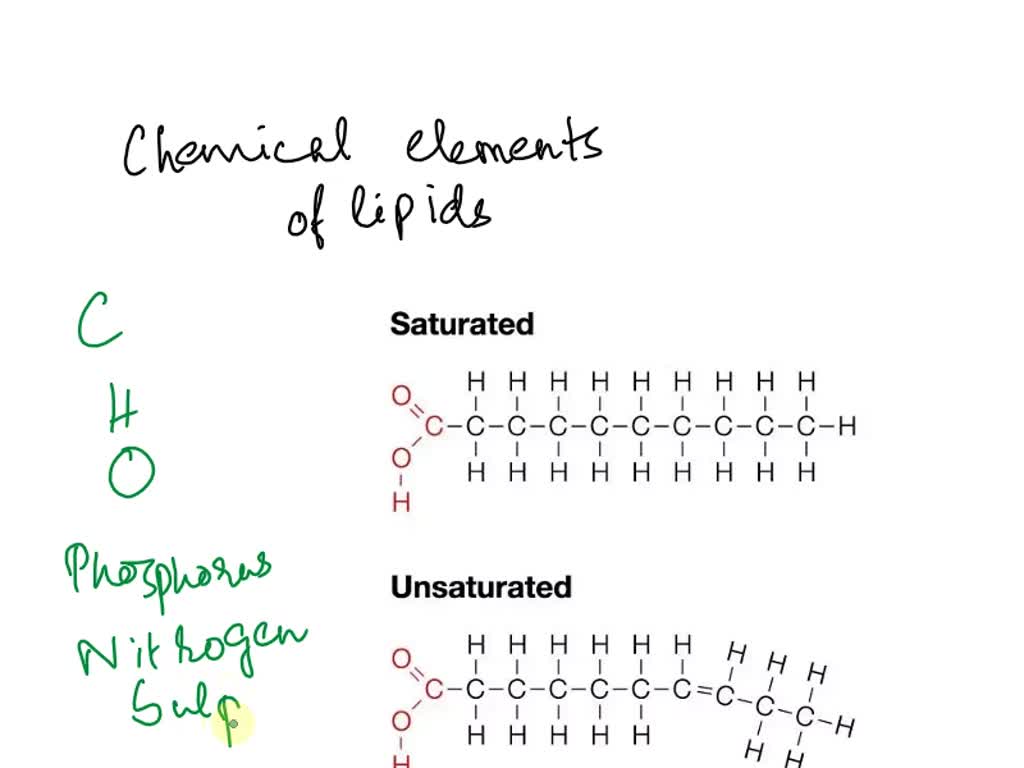
The ubiquitous element in all organic molecules, carbon, forms the fundamental backbone of lipids. Carbon’s ability to form long, stable chains and rings, coupled with its capacity to bond with itself and other elements, provides an unparalleled structural versatility. This versatility is paramount in lipid chemistry, allowing for an immense diversity of lipid structures, each with unique properties.
Saturated vs. Unsaturated Fatty Acids: The Impact of Hydrogen Content
The primary difference between saturated and unsaturated fatty acids lies in the number of hydrogen atoms attached to the carbon chain. In saturated fatty acids, every carbon atom in the chain is bonded to the maximum possible number of hydrogen atoms, resulting in a straight, rigid structure. This linearity leads to tighter packing, making them solid at room temperature, a characteristic exploited in industries like food processing and oleochemistry.
Unsaturated fatty acids, conversely, contain one or more double bonds between carbon atoms. Each double bond signifies a reduction in the number of hydrogen atoms attached to those carbons. These double bonds introduce kinks or bends into the carbon chain, preventing tight packing and resulting in liquid states at room temperature. This fluidity is critical for cell membrane function and has direct implications for the development of specialized lubricants, biofuels, and advanced drug delivery systems. The precise placement and number of these double bonds (e.g., omega-3 and omega-6 fatty acids) are not just biochemical curiosities but are actively researched for their roles in advanced materials and health-tech applications.
The Role of Hydrogen: Dictating Properties and Reactivity
Hydrogen, bonded to carbon atoms, plays a crucial role in defining the physical properties of lipids. The degree of saturation, as discussed, is directly determined by the hydrogen content. Beyond physical state, the hydrogen atoms, particularly those adjacent to double bonds, can influence the reactivity of the lipid molecule. This reactivity is a key consideration in chemical synthesis and modification processes, essential for tailoring lipids for specific technological purposes. For example, the controlled hydrogenation of vegetable oils to produce margarines and shortenings is a classic example of manipulating hydrogen content for industrial application, showcasing an early integration of lipid chemistry into food technology.
Oxygen’s Influence: Introducing Polarity and Functionality
While lipids are primarily hydrocarbon-based, the presence of oxygen atoms introduces crucial functional groups that dramatically expand their applications. Oxygen, being more electronegative than carbon and hydrogen, creates polar regions within the lipid molecule. This polarity is essential for the formation of more complex lipid structures and for enabling interactions with other molecules, including water, albeit to a limited extent.
Glycerol and Phosphate: The Building Blocks of Phospholipids
Phospholipids, a cornerstone of cell membranes, contain phosphate groups. These groups, with their oxygen atoms, impart a hydrophilic (water-attracting) head to the molecule, contrasting with the hydrophobic fatty acid tails. This amphipathic nature is the fundamental principle behind the formation of lipid bilayers, the structural basis of all biological membranes. Technologically, this amphipathic property is harnessed in the development of liposomes – spherical vesicles used for drug delivery. The controlled encapsulation of therapeutic agents within these artificial lipid bilayers, driven by their elemental composition and inherent self-assembly properties, represents a significant advancement in pharmaceutical technology. Understanding the precise arrangement of oxygen atoms in the phosphate group is critical for controlling liposome stability and release kinetics.
Fatty Acids in Esters and Ethers: Expanding Functional Roles
Oxygen also forms ester linkages, connecting fatty acids to glycerol to create triglycerides, the primary form of stored energy in many organisms. The ester bond itself is a site of potential chemical modification. Furthermore, ether linkages, found in some specialized lipids, offer greater stability than ester bonds, making them valuable in certain industrial lubricants and cosmetic formulations where resistance to hydrolysis is paramount. The synthesis and modification of these ester and ether linkages are areas of active research in oleochemistry and green chemistry, seeking to develop sustainable and high-performance materials from lipid precursors.
Trace Elements and Functional Modifications
While carbon, hydrogen, and oxygen constitute the vast majority of lipid elemental composition, other elements can be present, often incorporated through biological processes or intentional chemical modification, bestowing unique functionalities.
Nitrogen in Sphingolipids: Complexity and Cellular Signaling
Sphingolipids, another crucial class of membrane lipids, incorporate a nitrogen atom into their structure (e.g., in the sphingosine backbone). The presence of nitrogen introduces different polarity and hydrogen bonding capabilities compared to phospholipids, contributing to the intricate signaling roles these lipids play within cells. Understanding the synthesis and manipulation of these nitrogen-containing lipids is vital for developing biosensors and exploring advanced biomaterials that mimic cellular communication pathways.
Sulfur in Some Specialized Lipids: Unique Chemical Properties
While less common, sulfur can be found in certain specialized lipids, such as biotin (a vitamin) or in some sulfolipids involved in plant and microbial biochemistry. The unique electron configurations and bonding capabilities of sulfur can impart distinct chemical properties, opening avenues for niche applications in areas like specialized catalysts or components in advanced battery technologies. Research into the incorporation of sulfur into novel lipid structures could lead to materials with enhanced conductivity or specific catalytic activities.
Technological Applications Driven by Elemental Lipid Composition
The understanding of the elemental makeup of lipids is not merely an academic exercise; it is the bedrock upon which numerous technological innovations are built. The ability to predict, manipulate, and harness the properties derived from the specific arrangement of carbon, hydrogen, oxygen, and other elements within lipid molecules has led to significant advancements across diverse industries.
Biofuels and Sustainable Energy: Leveraging Fatty Acid Chains
The energy density of lipids, primarily triglycerides, makes them ideal candidates for biofuel production. The long hydrocarbon chains of fatty acids store a significant amount of chemical energy. Technologies focused on transesterification, a chemical process that converts triglycerides into fatty acid methyl esters (FAMEs) or fatty acid ethyl esters (FAEEs) – essentially biodiesel – directly exploit the ester linkage formed by oxygen.
Optimizing Esterification Processes for Efficiency

The efficiency and yield of biodiesel production are directly influenced by the fatty acid composition of the lipid feedstock and the reaction conditions. Research in this area focuses on understanding how the length and degree of saturation of the fatty acid chains affect the viscosity, flash point, and combustion properties of the resulting biodiesel. Advanced analytical techniques, rooted in elemental analysis and spectroscopy, are employed to characterize feedstocks and optimize reaction parameters for different lipid sources, from agricultural oils to waste cooking oils and algal lipids. The goal is to create biofuels that are not only sustainable but also perform comparably to or better than fossil fuels, directly addressing global energy challenges through a deeper understanding of molecular structure.
Beyond Biodiesel: Hydrogenation and Gasification Technologies
The elemental composition also dictates other biofuel pathways. For instance, the hydrogenation of unsaturated fatty acids can produce hydrocarbon chains suitable for jet fuel or diesel fuel alternatives. Furthermore, advanced gasification technologies are being developed to convert lipid biomass into syngas, a mixture of hydrogen and carbon monoxide, which can then be used to synthesize various fuels and chemicals. The precise control over the carbon-to-hydrogen ratio and the presence of oxygen within the lipid feedstock are critical factors in the efficiency and output of these complex conversion processes.
Advanced Materials and Nanotechnology: Harnessing Amphipathicity and Self-Assembly
The amphipathic nature of certain lipids, particularly phospholipids and some surfactants derived from fatty acids, is a cornerstone of nanotechnology and advanced materials science. This dual hydrophilic and hydrophobic character allows these molecules to self-assemble into organized structures like micelles, liposomes, and bilayers in aqueous environments.
Liposomes for Drug Delivery and Targeted Therapies
Liposomes are perhaps the most well-known application of lipid amphipathicity in biomedicine. These microscopic vesicles, formed by lipid bilayers, can encapsulate a wide range of therapeutic agents, including drugs, vaccines, and genetic material. The elemental composition of the lipids used to form the liposome (e.g., phosphatidylcholine, cholesterol) dictates the stability, size, and surface properties of the vesicle, which in turn influences its circulation time in the bloodstream, its ability to penetrate tissues, and its targeting capabilities. Advanced lipid formulations are engineered to respond to specific biological cues or to be actively targeted to disease sites, minimizing side effects and maximizing therapeutic efficacy. The precise control over the hydrophilic head groups (rich in oxygen and potentially other elements) and hydrophobic tails (carbon and hydrogen) is paramount in designing these sophisticated delivery systems.
Lipid-Based Nanoparticles for Gene Therapy and Cosmetics
Beyond drug delivery, lipid-based nanoparticles are emerging as powerful tools for gene therapy, delivering genetic material (DNA or RNA) into cells to modulate gene expression. The charged nature of the genetic material requires careful formulation with cationic lipids to facilitate complexation and cellular uptake. Similarly, in the cosmetics industry, lipids are used in advanced formulations for skincare, acting as emollients, emulsifiers, and delivery vehicles for active ingredients. The precise elemental makeup determines their skin compatibility, sensory properties, and ability to penetrate the skin barrier.
Oleochemistry and Specialty Chemicals: Tailoring Properties through Chemical Modification
Oleochemistry, the branch of chemistry concerned with the industrial processing of fats and oils, is fundamentally about manipulating the elemental composition and structure of lipids to create a vast array of useful products. This field leverages the inherent properties of fatty acids and glycerol to produce surfactants, lubricants, plastics, and countless other specialty chemicals.
Surfactants and Emulsifiers: Bridging Hydrophilic and Hydrophobic Worlds
Surfactants, essential in detergents, soaps, and many industrial processes, are typically molecules with both hydrophilic and hydrophobic parts. Many common surfactants are derived from lipids, such as fatty acid salts or ethoxylated fatty alcohols. The creation of these molecules involves chemical modifications that alter the polarity and hydrogen bonding capabilities of the original lipid structure, primarily through the introduction or modification of oxygen-containing functional groups. The precise chain length of the fatty acid and the nature of the hydrophilic head group are carefully chosen based on the desired application, such as emulsifying oil and water in food products or creating stable foams in cleaning agents.
Lubricants and Biodegradable Polymers: From Fossil Fuels to Renewable Resources
The long hydrocarbon chains of fatty acids make them excellent candidates for lubricants. By modifying their structure – for example, through esterification with polyols or by introducing specific functional groups – chemists can create high-performance lubricants that are also biodegradable, offering an environmentally friendly alternative to petroleum-based products. Similarly, lipids are increasingly being used as building blocks for biodegradable polymers, reducing reliance on fossil fuels and addressing plastic waste concerns. The controlled polymerization of lipid derivatives, or their incorporation into polymer backbones, relies on understanding the reactivity of their elemental components.
The Future of Lipids: Innovations Fueled by Elemental Understanding
The trajectory of lipid science and technology is intrinsically linked to our deepening understanding of their elemental composition. As analytical tools become more sophisticated and our ability to manipulate molecules at the atomic level increases, the potential for novel applications expands exponentially.
Precision Medicine and Personalized Therapeutics: Tailoring Lipid Formulations
The future of medicine is increasingly personalized, and lipids will play a pivotal role in this revolution. By precisely tailoring the elemental makeup and structure of lipid-based delivery systems, such as nanoparticles and exosomes, researchers can create formulations optimized for individual patient needs. This includes targeting specific tissues or cell types, controlling the release rate of drugs based on physiological cues, and improving the bioavailability of challenging therapeutic agents. The ability to incorporate specific functional groups or isotopes through controlled synthesis, informed by elemental analysis, will be crucial in developing these next-generation therapeutics.
Gene Editing and RNA Therapeutics: The Role of Lipid Nanocarriers
The advent of gene editing technologies like CRISPR-Cas9 and the burgeoning field of RNA therapeutics (e.g., mRNA vaccines) have highlighted the critical need for efficient and safe delivery systems. Lipid nanoparticles have emerged as a leading platform for delivering these complex genetic payloads. The precise composition of the lipid nanoparticles – the ratio of ionizable lipids, structural lipids, cholesterol, and PEGylated lipids – dictates their efficiency in encapsulating genetic material, their stability in vivo, and their ability to evade the immune system. Advances in this area will involve fine-tuning the elemental composition to achieve optimal delivery kinetics and minimal toxicity.
Sustainable Materials and the Circular Economy: Bio-Based Innovations
The global push towards sustainability and a circular economy places lipids at the forefront of innovation. Beyond biofuels, lipids are being explored as building blocks for a wide range of bio-based materials, from bioplastics and biocomposites to bio-adhesives and bio-packaging.
Developing Novel Bioplastics from Lipid Derivatives
The transformation of waste lipids or underutilized biomass into valuable materials is a key objective. Researchers are developing novel polymerization techniques that utilize the functional groups present in fatty acids and their derivatives to create new classes of bioplastics with tunable properties. The elemental composition of these monomers dictates the strength, flexibility, biodegradability, and other performance characteristics of the resulting polymers.
Biomimicry and Advanced Bio-Inspired Technologies
The intricate structures and functionalities of natural lipids in biological systems provide a rich source of inspiration for technological development. By understanding the precise elemental arrangements that confer specific properties in nature, scientists are developing biomimetic materials that can self-heal, respond to environmental stimuli, or perform complex tasks. For example, research into the lipid structures that enable efficient energy storage in biological membranes could inspire new battery technologies.

The Interplay of Fundamental Science and Industrial Application
Ultimately, the exploration of “what elements are found in lipids” is a journey that bridges fundamental scientific inquiry with tangible technological advancements. The ability to identify, quantify, and manipulate the elemental composition of these versatile molecules is not only deepening our understanding of life itself but is also driving innovation in energy, medicine, materials science, and beyond. As research continues, the elemental secrets of lipids will undoubtedly unlock even more transformative technologies, shaping our future in profound and exciting ways. The continuous development of advanced analytical instrumentation, from mass spectrometry to nuclear magnetic resonance (NMR) spectroscopy, plays a vital role in this ongoing discovery, allowing for increasingly precise elemental and structural characterization.
aViewFromTheCave is a participant in the Amazon Services LLC Associates Program, an affiliate advertising program designed to provide a means for sites to earn advertising fees by advertising and linking to Amazon.com. Amazon, the Amazon logo, AmazonSupply, and the AmazonSupply logo are trademarks of Amazon.com, Inc. or its affiliates. As an Amazon Associate we earn affiliate commissions from qualifying purchases.