
The sheer power contained within a canine jaw is a topic that ignites curiosity, often tinged with a healthy dose of awe and perhaps a touch of apprehension. When we talk about the “strongest bite force,” we are delving into a fascinating area of canine physiology and biomechanics. While sensationalized claims and anecdotal evidence abound, a deeper dive reveals a complex interplay of factors that contribute to a dog’s biting power, moving beyond simple breed stereotypes to explore the scientific underpinnings. This exploration is not merely about satisfying a morbid curiosity; understanding bite force has practical implications for dog owners, trainers, and those involved in animal welfare and public safety.
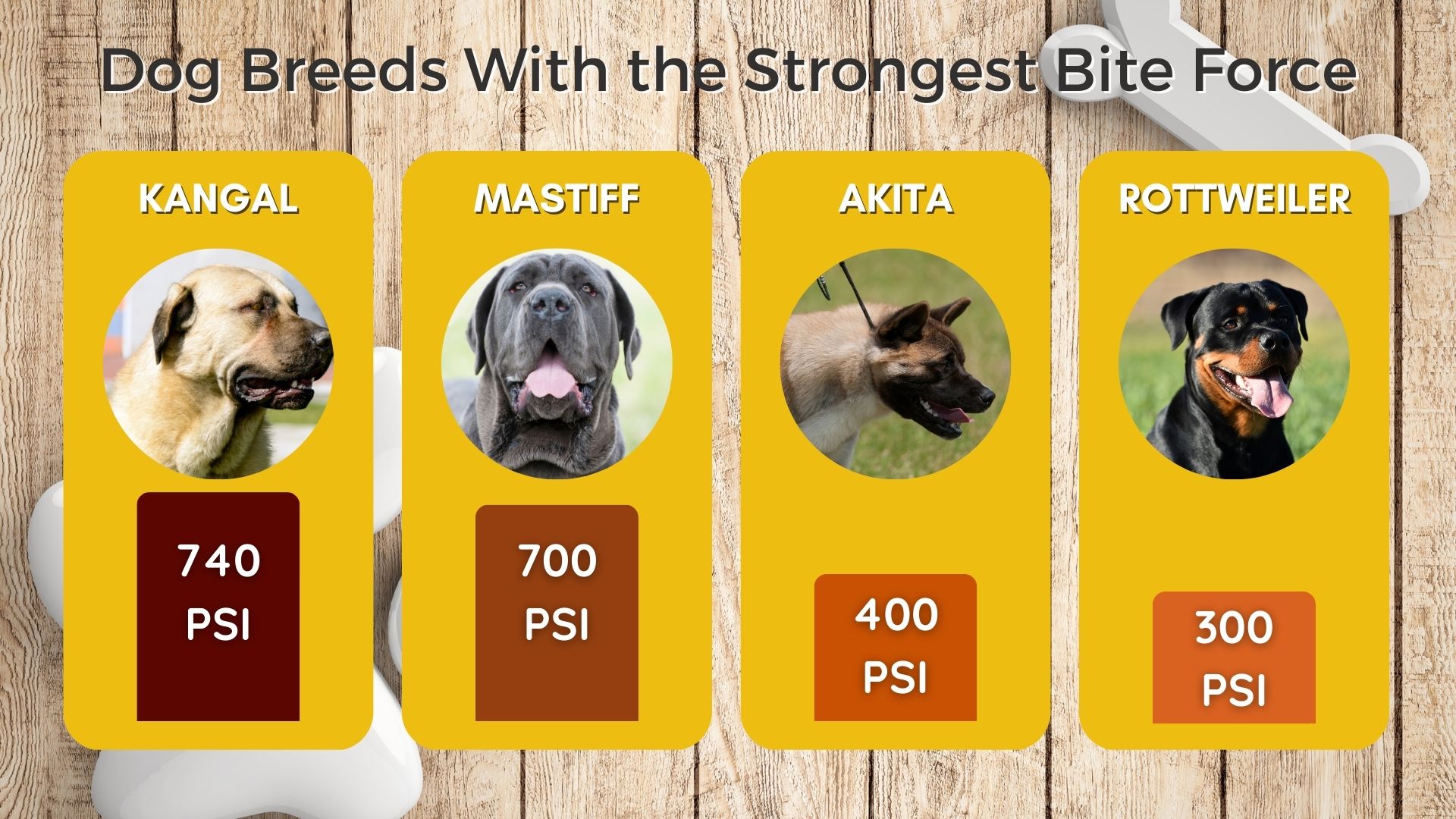
It’s crucial to establish from the outset that accurately measuring bite force in dogs is a scientifically challenging endeavor. While specialized equipment like gnathometers and pressure sensors exist, achieving consistent and reliable readings across different breeds and individual dogs is difficult. Factors such as the dog’s motivation, the object being bitten, and the angle of the bite all play a significant role. Consequently, many figures cited are estimates or based on limited studies. However, by examining the anatomical characteristics and the prey drive inherent in certain breeds, we can draw informed conclusions about which dogs possess the potential for the most formidable bite.
The discussion of bite force in dogs often leads to a focus on large, powerful breeds, and for good reason. Their robust musculature, strong skeletal structures, and evolutionary history designed for hunting or protection contribute to their impressive biting capabilities. Yet, it’s not simply about size; jaw structure, tooth morphology, and the effectiveness of the muscle attachments all contribute to the final output of force. This article will aim to cut through the myths and provide a more scientifically grounded perspective on what constitutes a strong bite force in dogs, and which breeds are most likely to exhibit this trait.
Understanding Canine Bite Force Mechanics
The strength of a dog’s bite is a result of a complex biomechanical system. It’s not a single, easily quantifiable metric that applies uniformly across all individuals of a breed. Instead, it’s a combination of several key anatomical and physiological components working in concert. Understanding these elements is fundamental to appreciating the variations in bite force observed in different dog breeds.
The Muscular Foundation: Masseter and Temporalis Muscles
The primary muscles responsible for closing the jaw in dogs are the masseter and temporalis muscles. The masseter is the large, powerful muscle located on the side of the jaw, connecting the mandible (lower jawbone) to the zygomatic arch (cheekbone). Its primary function is to elevate the mandible, closing the jaw. The temporalis muscle is located on the temporal bone of the skull and also contributes to jaw closure, particularly for rapid and forceful movements.
The size and density of these muscles are directly correlated with bite force. Breeds that have been historically selected for tasks requiring strong jaws, such as guarding, fighting, or hunting large prey, often possess significantly larger and more developed masseter and temporalis muscles. This development is not only genetic but also influenced by the dog’s diet and activity throughout its life. A well-fed, active dog with these muscles well-exercised will generally exhibit greater biting power than an undernourished or sedentary one, assuming similar genetic predispositions.
Jaw Structure and Skull Morphology
Beyond muscle mass, the very structure of a dog’s skull and jaw plays a critical role. The width and length of the muzzle, the shape of the mandible, and the articulation of the temporomandibular joint (TMJ) all influence the leverage and force that can be applied. Dogs with broader heads and shorter, wider muzzles, often referred to as brachycephalic or mesocephalic breeds, tend to have a more compact and powerful jaw structure. This can translate to a more concentrated application of force. Conversely, dolichocephalic breeds (those with long, narrow muzzles) may exhibit different biting characteristics, potentially favoring speed or precision over sheer raw power.
The angle at which the mandible attaches to the skull also impacts the mechanical advantage. A steeper angle can allow for greater force to be generated. Furthermore, the robustness of the jawbone itself is a contributing factor. Thicker, denser bones can withstand greater forces without fracturing, allowing for a more powerful bite to be exerted.
Tooth Morphology and Occlusion
While often overlooked in discussions of bite force, the teeth themselves are the instruments that deliver the impact. The shape, size, and arrangement of the teeth are adapted to the dog’s ancestral diet and hunting behaviors. Carnassial teeth, for instance, are specialized for shearing, while incisors are for tearing and gripping. The strength of the tooth roots and the enamel contribute to their ability to withstand pressure.
Occlusion, the way the upper and lower teeth meet, is also important. A strong, scissor-like bite where the incisors interlock efficiently allows for maximum pressure to be applied. Malocclusions or misaligned bites can compromise the effectiveness of the bite, even in breeds with powerful musculature.
Breeds with Noted Bite Force Potential
While precise rankings are elusive and often debated, certain breeds consistently appear in discussions about powerful canine bites. These breeds typically share a common ancestry of working roles that demanded significant jaw strength and a powerful grip. It is crucial to emphasize that these are general observations based on breed characteristics and available (though often estimated) data, and individual variation is substantial.
The Mastiff Family: Powerhouses of the Canine World
The English Mastiff is frequently cited as one of the breeds with the strongest bite force. These gentle giants, despite their often placid demeanor, possess immense physical power. Their large size, robust build, and broad heads are indicative of their potential for a formidable bite. Historically, Mastiffs were used for guarding property, fighting large animals, and even as war dogs, roles that necessitated a powerful jaw.
Similarly, the Neapolitan Mastiff, another member of the Mastiff family, is known for its imposing presence and powerful build. Their loose, wrinkled skin can be deceptive, but beneath it lies a muscular frame designed for strength. Their historical roles as guardians and protectors further underscore their potential for a strong bite.
The Bullmastiff, a cross between the English Mastiff and the Bulldog, was specifically bred to be a guard dog capable of stopping poachers without causing fatal injury. This controlled power implies a significant bite force, capable of exerting immense pressure.
The Rottweiler: Strength and Control

The Rottweiler is a breed renowned for its strength, confidence, and protective instincts. Their muscular bodies, powerful jaws, and broad heads are characteristic of breeds built for work. Rottweilers were historically used as cattle drovers and guard dogs, tasks that require a strong grip and the ability to control large animals. Their bite force is often estimated to be among the highest, reflecting their formidable physical capabilities.
The Pit Bull Type Breeds: A Controversial, Yet Powerful, Bite
The term “Pit Bull” encompasses several breeds, including the American Pit Bull Terrier, American Staffordshire Terrier, and Staffordshire Bull Terrier. These breeds have historically been associated with a powerful bite, often attributed to their strong jaw structure and muscularity. Their ancestry, which includes fighting dogs, has unfortunately led to their reputation for aggression, overshadowing their potential for strong, controlled bites when properly trained and socialized.
It is important to address the sensationalized claims surrounding “locking jaws” or “unhinging jaws” often attributed to these breeds. Scientific evidence does not support these myths. Their bite strength is derived from powerful jaw muscles and a robust jaw structure, not from a unique physiological mechanism. Despite the controversy, their inherent physical attributes suggest a significant bite force potential.
Other Notable Breeds
Several other breeds possess impressive bite force potential, often due to their size, musculature, and historical working roles:
- Doberman Pinscher: Known for their intelligence, agility, and protective nature, Dobermans are powerful dogs with a strong bite. They were originally bred for protection and guarding.
- German Shepherd: Highly intelligent and versatile, German Shepherds are often employed in police and military work, requiring a strong bite for apprehending suspects and for protection.
- Cane Corso: This Italian Mastiff breed is a powerful and imposing dog historically used for guarding and hunting large game. Their muscular build and broad skull contribute to their strong bite.
- Akita Inu: Originating from Japan, Akitas are large, powerful dogs known for their loyalty and protective instincts. They were historically used for hunting large game and for guarding.
Factors Influencing Bite Force Beyond Breed
While breed predispositions offer valuable insights, it is crucial to understand that bite force is not solely determined by genetics. A multitude of other factors contribute to the actual force a dog can exert, making generalizations about breed strength only a partial picture.
Individual Variation and Conditioning
Just as humans vary in their physical strength, so too do individual dogs within the same breed. A dog’s genetics, including the specific lineage and individual gene expression, will play a role in muscle development and bone density. However, conditioning is equally, if not more, important. A dog that is regularly exercised and engaged in activities that utilize its jaw muscles (such as playing with appropriate chew toys or engaging in scent work that involves carrying objects) will develop stronger jaw musculature than a dog that is sedentary.
The health and age of a dog are also significant. A young, growing dog’s jaw structure is still developing, and their bite force will increase as they mature. Conversely, an older dog may experience a decline in muscle mass and strength. Dogs suffering from underlying health conditions, such as dental problems or injuries, may also exhibit reduced biting power.
Diet and Nutrition
A dog’s diet plays a critical role in muscle development and overall health. Adequate protein intake is essential for building and maintaining muscle mass. Essential vitamins and minerals, such as calcium and phosphorus, are vital for strong bones and teeth. A diet that is deficient in these nutrients can compromise a dog’s physical capabilities, including its bite force. For working breeds, a diet formulated to support high energy demands and muscle recovery is particularly important.
Motivation and Psychological State
The motivation behind a bite is a significant factor in the force exerted. A dog that is instinctively protecting its territory or its owner may bite with more force than a dog that is playfully nipping. Similarly, a dog that is in pain or fear might bite with a greater force out of desperation. The psychological state of the dog, including its level of arousal, anxiety, or aggression, can influence the intensity of its bite. Understanding these emotional triggers is crucial for responsible dog ownership and for interpreting a dog’s behavior.
The Act of Biting: Technique and Object
The technique a dog employs when biting can also influence the measured force. A quick snap might generate a different force reading than a sustained, crushing grip. The type of object being bitten is another variable. Some materials may deform under pressure, leading to lower readings, while others offer more resistance. Studies that aim for consistent measurements often use standardized bite sleeves or pressure pads, but even these can be influenced by how the dog grips and applies pressure.
Conclusion: A Powerful Potential, Not a Guarantee
The question of “what dog breed has the strongest bite force” leads us into a fascinating exploration of canine anatomy, physiology, and the evolutionary history that has shaped these remarkable animals. While breeds like the English Mastiff, Rottweiler, and certain Pit Bull types are consistently mentioned due to their imposing physical characteristics and historical roles, it is vital to move beyond simplistic rankings.
The strength of a dog’s bite is a complex phenomenon, influenced by the development of powerful jaw muscles, the intricate structure of the skull and jaw, and the morphology of the teeth. However, these inherent potentials are further modulated by individual factors such as genetics, diet, conditioning, age, health, and crucially, the dog’s psychological state and motivation at the moment of the bite.
It is imperative to remember that a powerful bite force is a potential, not an inherent trait that dictates aggression or uncontrollability. Responsible breeding, early and consistent socialization, positive reinforcement training, and a deep understanding of canine behavior are paramount for any dog owner, regardless of breed. The power of a dog’s bite should be respected, but it should not be a source of unwarranted fear or prejudice. Instead, it should inspire an appreciation for the incredible biomechanical engineering present in the animal kingdom and a commitment to responsible stewardship of these magnificent creatures. Ultimately, the strongest bite is not about a specific breed, but about the responsible handling and understanding of any dog’s capabilities.
aViewFromTheCave is a participant in the Amazon Services LLC Associates Program, an affiliate advertising program designed to provide a means for sites to earn advertising fees by advertising and linking to Amazon.com. Amazon, the Amazon logo, AmazonSupply, and the AmazonSupply logo are trademarks of Amazon.com, Inc. or its affiliates. As an Amazon Associate we earn affiliate commissions from qualifying purchases.