
The old English idiom “watch your p’s and q’s” has long served as a reminder to mind one’s manners, be on one’s best behavior, and pay close attention to detail. While its origins are debated—ranging from barkeeps tracking “pints and quarts” to typesetters distinguishing between the lowercase “p” and “q” in a printing press—the essence of the phrase remains unchanged: precision matters. In the high-stakes world of modern brand strategy, this age-old advice has never been more relevant.
For a brand, minding your p’s and q’s isn’t just about politeness; it is about the meticulous management of Brand Perception and Brand Quality. In an era where a single tweet can erase billions in market cap and a minor design flaw can trigger a viral backlash, the “little things” are actually the big things. This article explores how modern corporations and personal brands can apply the philosophy of “minding their p’s and q’s” to build lasting equity, foster trust, and maintain a competitive edge in a crowded marketplace.

The Etymology of Excellence: Why Details Matter in Modern Branding
To understand the importance of detail in branding, we must first look at the precision required in the early days of communication. If we follow the “printer’s apprentice” theory of the idiom, the warning to watch your p’s and q’s was a matter of technical survival. In a world of lead type, a mirrored letter could ruin an entire print run. Today, the digital equivalent of a misplaced “p” or “q” is a brand inconsistency that signals a lack of professionalism to the consumer.
From Print Shops to Digital Platforms
In the traditional era, branding was localized and slow. Today, it is global and instantaneous. When a brand fails to “watch its p’s and q’s” in the digital space—perhaps through a mismatched hex code on a website or a tone-deaf social media response—the error is amplified by millions. The precision once required by the typesetter is now required by the brand manager, the UX designer, and the social media strategist. Consistency is the heartbeat of trust; without it, the brand identity begins to fracture.
The Cost of Overlooking the Minor Details
Psychologically, consumers use small cues to judge large-scale reliability. This is known as the “broken window theory” of branding. If a company’s customer service email contains typos or if their mobile app has broken links, the consumer subconsciously assumes that the core product or service might also be flawed. Minding your p’s and q’s is a defensive strategy that prevents these micro-frictions from eroding the macro-trust of the audience. It is the difference between a brand that feels “premium” and one that feels “amateur.”
P is for Perception: Crafting a Cohesive Brand Image
In the context of brand strategy, the “P” represents Perception. Your brand is not what you say it is; it is what they—the customers—say it is. However, you can influence that perception by being incredibly disciplined about how you present yourself to the world.
Visual Consistency Across Touchpoints
A brand’s visual identity is its first handshake with the public. To “watch your p’s” means ensuring that every visual touchpoint—from the favicon on a browser tab to the packaging of a physical product—feels part of a unified whole. Brands like Apple or Nike have mastered this to such a degree that their products are recognizable even without a logo. This level of perception is achieved through a religious adherence to brand guidelines. When a brand begins to drift, using unauthorized fonts or inconsistent color palettes, it creates “visual noise” that confuses the consumer and weakens the brand’s mental real estate.
Tone of Voice and Narrative Alignment
Perception is also shaped by how a brand speaks. Is your brand authoritative and stoic, or is it playful and disruptive? Minding your p’s and q’s involves maintaining a consistent “Brand Voice” across all channels. If a brand’s LinkedIn presence is formal and corporate, but its X (formerly Twitter) account is full of memes and snark, it creates a “personality split” that can alienate audiences. A coherent narrative ensures that whether a customer is reading a white paper or a promotional email, they feel they are interacting with the same entity.
Q is for Quality: Elevating the Customer Experience
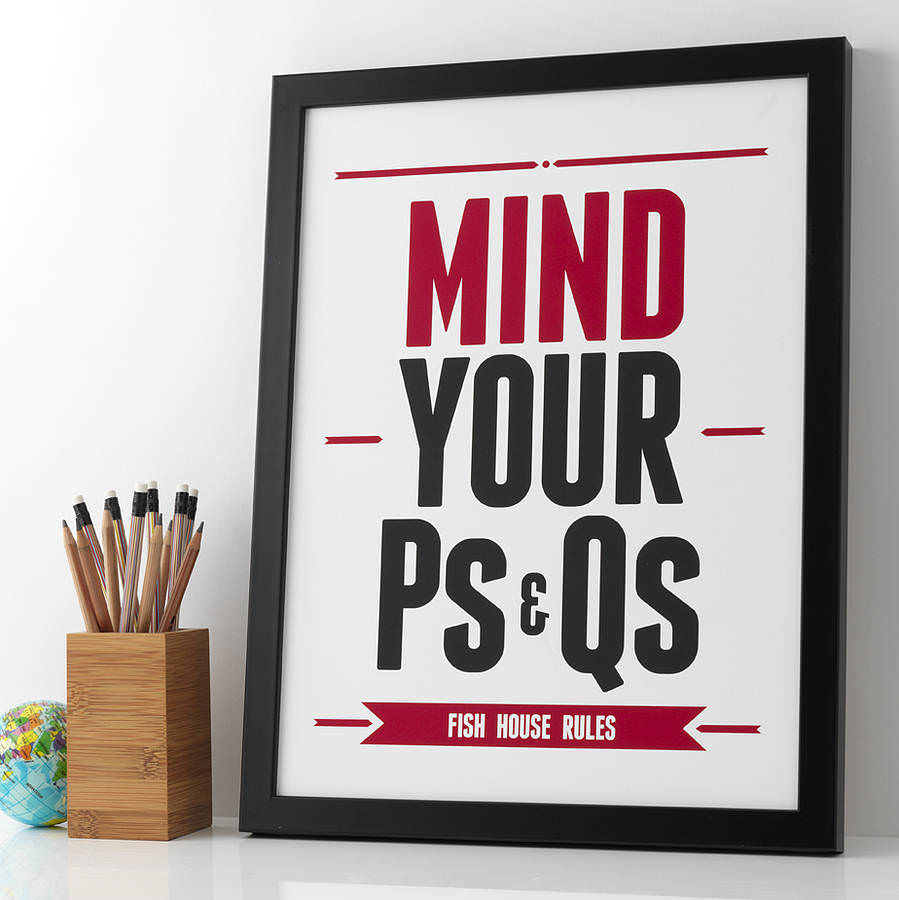
If “P” is for the perception you create, “Q” is for the Quality you deliver. In the long run, no amount of clever marketing can save a product of poor quality. Minding your “Q’s” is about operational integrity—ensuring that the “promise” made by the brand is matched by the “performance” of the product.
Operational Integrity vs. Marketing Claims
We live in an age of “radical transparency.” Brands often fall into the trap of over-promising in their marketing campaigns, only to under-deliver in reality. This creates a “trust gap.” To mind your q’s, a brand must ensure that its internal operations are aligned with its external messaging. If a brand markets itself as “environmentally friendly,” but its supply chain is found to be wasteful, the brand’s quality—and its soul—is called into question. True brand quality is found in the intersection of what is promised and what is practiced.
The Role of Feedback in Quality Assurance
A brand that watches its q’s is a brand that listens. Quality is not a static destination; it is a continuous process of refinement. Modern brand strategy involves using data analytics, customer reviews, and social listening to identify “potholes” in the customer journey. By proactively addressing quality issues before they become systemic failures, a brand demonstrates that it values the customer’s experience over its own ego. This responsiveness is a hallmark of high-quality branding.
Social Etiquette and Digital Presence: Modern P’s and Q’s
In the original sense of the idiom, minding your p’s and q’s was about social etiquette. In the corporate world, this translates to how a brand conducts itself in the public square. In a “cancel culture” environment, a brand’s social behavior is under a microscope 24/7.
Community Management and Crisis Communication
How a brand handles a mistake is often more important than the mistake itself. Minding your p’s and q’s in the digital age means practicing “grace under fire.” When a brand is faced with criticism, the impulse might be to delete comments or go on the defensive. However, a well-branded entity uses these moments to showcase its values. Ethical community management involves engaging with the audience with respect, humility, and transparency. This is the “etiquette” of modern business, and it is a critical component of brand longevity.
Personal Branding for the Modern Executive
The concept of p’s and q’s also extends to the leaders behind the brand. In today’s market, the personal brand of a CEO or founder is inextricably linked to the corporate brand. When executives fail to mind their p’s and q’s on social media or in public interviews, the entire organization pays the price. Personal branding requires a high degree of self-awareness and discipline. Leaders must recognize that they are the primary ambassadors of their brand’s values, and their behavior sets the “social tone” for the entire company.
Building Long-Term Equity through Meticulous Management
The ultimate goal of minding your p’s and q’s is to build brand equity—the intangible value that allows a company to charge a premium and survive market volatility. Equity is not built overnight; it is the compounding result of thousands of small, correct decisions.
The Compounding Effect of “The Little Things”
In branding, there is no such thing as a “neutral” interaction. Every touchpoint either adds to or subtracts from the brand’s total equity. When a company consistently minds its p’s and q’s—paying attention to the kerning in its logo, the speed of its website, the tone of its customer service, and the quality of its materials—it creates a “halo effect.” This halo of excellence makes customers more likely to forgive an occasional error and more likely to become brand evangelists.

Conclusion: The Discipline of Detail
To “watch your p’s and q’s” is to embrace the discipline of detail. In the world of Brand Strategy, this means never becoming complacent. It means understanding that your brand is a living, breathing entity that requires constant grooming and care. By focusing on Perception (P) and Quality (Q), and by maintaining the highest standards of professional etiquette, a brand can transcend being a mere commodity and become a trusted part of the consumer’s life.
In a marketplace characterized by noise and chaos, the brands that stand out are those that remain precise. They are the ones who check the “p’s” and “q’s” of their identity every single day, ensuring that every letter, every pixel, and every customer interaction reflects the excellence they claim to represent. Precision is the ultimate brand strategy.
aViewFromTheCave is a participant in the Amazon Services LLC Associates Program, an affiliate advertising program designed to provide a means for sites to earn advertising fees by advertising and linking to Amazon.com. Amazon, the Amazon logo, AmazonSupply, and the AmazonSupply logo are trademarks of Amazon.com, Inc. or its affiliates. As an Amazon Associate we earn affiliate commissions from qualifying purchases.