
In the modern digital economy, the phrase “I’ll Venmo you” has become synonymous with settling debts, sharing experiences, and managing small-scale commerce. Since its inception, Venmo has positioned itself as the friendly, social face of finance, removing the friction from peer-to-peer (P2P) transactions. However, as the platform has evolved from a simple social utility into a robust financial ecosystem—complete with debit cards, credit cards, business profiles, and cryptocurrency trading—its fee structure has grown increasingly complex.
For the financially savvy user, understanding what Venmo charges is not merely about avoiding a few cents in fees; it is about optimizing cash flow and understanding the “convenience tax” associated with digital liquidity. To navigate this platform effectively, one must distinguish between the complimentary services designed to build user loyalty and the premium features that drive the company’s bottom line.
The Essential Zero-Fee Framework: Understanding the Baseline
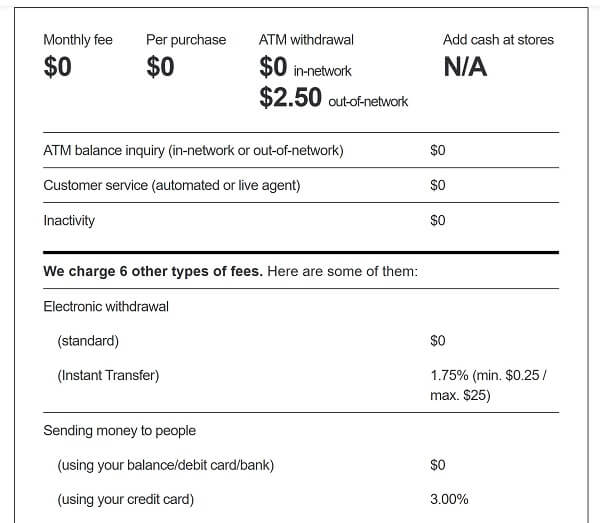
At its core, Venmo was built to facilitate the free movement of money between individuals. For the vast majority of casual users, the platform remains free to use, provided they adhere to specific transaction types. Maintaining a Venmo account carries no monthly maintenance fee, no application fee, and no minimum balance requirement. This “freemium” model is designed to lower the barrier to entry, ensuring that the platform remains the default choice for social transactions.
Peer-to-Peer Transactions via Linked Accounts
The most common use of Venmo—sending money to a friend using a linked bank account, a debit card, or your existing Venmo balance—is entirely free. This is the cornerstone of the platform’s value proposition. Whether you are splitting a $15 lunch or a $1,500 rent payment, as long as the source of funds is a bank account or debit card, Venmo does not take a cut.
Standard Bank Transfers
When it is time to move money from your Venmo balance back into your traditional financial ecosystem, the “Standard Transfer” remains free of charge. These transfers are processed via the Automated Clearing House (ACH) network. While they are cost-effective, they require patience, typically taking one to three business days to land in your bank account. From a financial management perspective, this is the preferred method for users who plan their cash flow in advance and do not require immediate access to their funds.
Receiving Money from Friends
Unlike some merchant services or professional wire transfers, receiving money from friends or family members for personal reasons does not incur a fee. The amount sent is exactly the amount that appears in your Venmo balance. This transparency is what allowed Venmo to disrupt the traditional banking sector’s grip on small-scale transfers.
The Price of Immediacy: Instant Transfers and Credit Transactions
While Venmo provides a robust free tier, it monetizes the user’s need for speed and the use of borrowed capital. In the world of personal finance, time is money, and Venmo’s fee structure reflects this reality through its instant transfer and credit card policies.
The Instant Transfer Fee
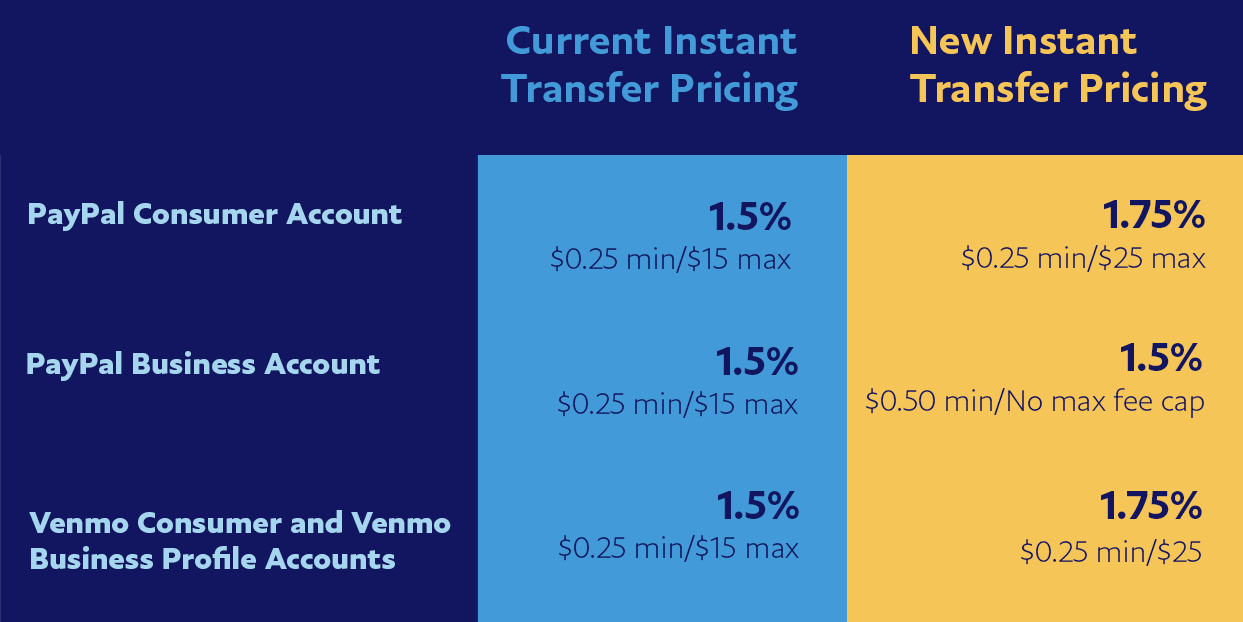
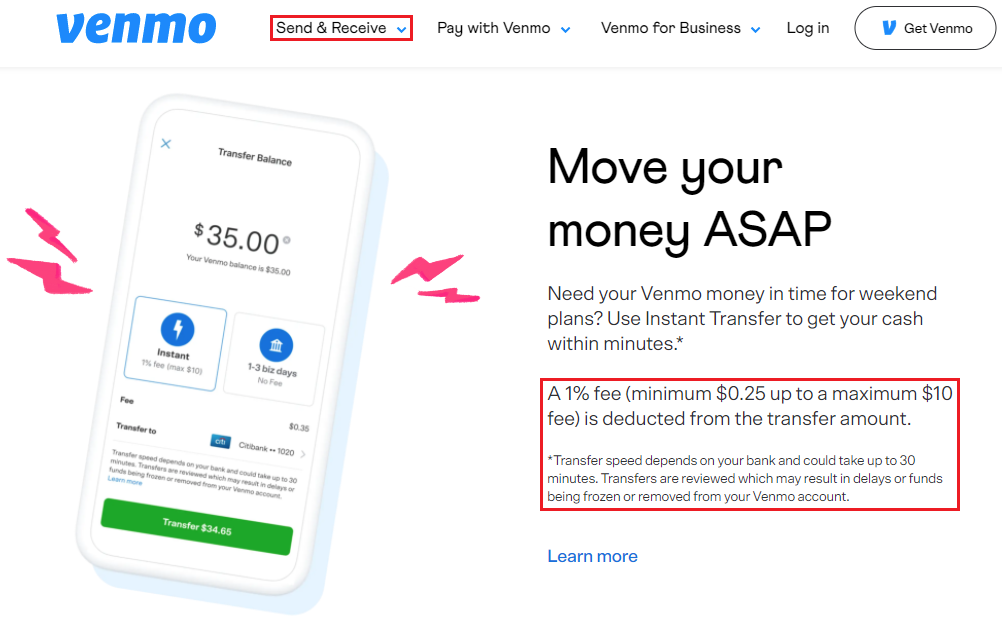
For users who cannot wait the standard one to three business days for an ACH transfer, Venmo offers the “Instant Transfer” feature. This allows funds to be moved to a linked debit card or eligible bank account within minutes. The convenience, however, comes with a calculated cost: a fee of 1.75% of the transfer amount.
As of the most recent updates, this fee has a minimum charge of $0.25 and a maximum cap of $25. While 1.75% may seem negligible on a $20 transfer, it becomes a significant consideration for larger sums. For instance, moving $1,000 instantly costs $17.50. For the disciplined budgeter, these fees represent a leak in the financial bucket that can be easily plugged by utilizing the standard transfer method.
Credit Card Transaction Fees
Venmo allows users to link credit cards to their accounts, providing a layer of flexibility for those who want to keep their liquid cash in their bank accounts while still settling P2P debts. However, sending money using a credit card incurs a flat 3% fee.
This fee is largely passed through from the credit card networks themselves. From a strategic standpoint, using a credit card on Venmo is rarely advisable. Not only does the 3% fee typically outweigh any rewards or “cash back” the card might offer, but many credit card issuers categorize Venmo P2P payments as “cash advances.” This can trigger even higher interest rates and immediate interest accrual, bypassing the standard grace period.
Commercial Use: Business Profiles and the Seller Fee Landscape
As the “gig economy” and micro-entrepreneurship have flourished, Venmo has expanded its services to include Business Profiles and a “Goods and Services” payment category. This shift marked a transition from a purely social tool to a professional financial utility, bringing with it a fee structure modeled after its parent company, PayPal.
The Cost of Doing Business
For entrepreneurs and small business owners, Venmo charges a seller fee of 1.9% plus $0.10 for every payment received that is $1.00 or more. This fee is automatically deducted from the payment before it reaches the seller’s balance. While this is lower than the standard 2.9% + $0.30 charged by many other processors, it is a critical line item for any business owner to factor into their pricing strategy.
The “Goods and Services” Toggle
Even for users without a formal Business Profile, Venmo has introduced a “Goods and Services” toggle for P2P payments. When a sender marks a payment as a purchase, the recipient is charged the same 1.9% + $0.10 fee. In exchange for this fee, both the buyer and seller gain access to Venmo’s Purchase Protection Program. This program can be vital for transactions involving strangers—such as buying furniture from an online marketplace—providing a level of security that the free P2P service does not offer.
Tax Implications and Reporting
It is important to note that commercial transactions on Venmo are subject to IRS reporting requirements. Under current tax laws, payment processors are required to report gross payments for goods and services that exceed certain thresholds via Form 1099-K. While the tax itself is not a “Venmo fee,” the administrative reality of using the platform for business means that users must maintain meticulous records to differentiate between taxable income and non-taxable personal reimbursements.
Hardware and Holdings: Credit Cards, Debit Cards, and Cryptocurrency Fees
Venmo’s evolution into a “super-app” includes physical hardware and the ability to hold volatile assets like cryptocurrency. Each of these features carries its own unique set of costs and benefits.
The Venmo Debit Card
The Venmo Debit Card, which allows users to spend their Venmo balance at physical and online retailers, is largely fee-free for daily use. There are no annual fees or inactivity fees. However, the costs appear at the ATM. While Venmo offers fee-free withdrawals at many MoneyPass ATMs, using an out-of-network ATM results in a $2.50 fee, in addition to whatever the ATM owner charges. Furthermore, over-the-counter cash withdrawals at banks carry a $3.00 fee.
The Venmo Credit Card
The Venmo Credit Card offers a tiered cash-back system with no annual fee. While there is no fee to use the card for purchases, the standard costs of credit apply. This includes high-interest rates (APR) on balances carried month-to-month and fees for late payments or returned payments. For the financially disciplined, this card is a tool for accumulation; for the undisciplined, it is a high-interest liability.
Cryptocurrency Trading Fees
Venmo allows users to buy, sell, and hold various cryptocurrencies directly within the app. However, this is one of the most expensive ways to interact with digital assets. Venmo utilizes a tiered fee schedule for crypto transactions:
-
$1.00 – $4.99: $0.49 fee
-
$5.00 – $24.99: $0.99 fee
-
$25.00 – $74.99: $1.99 fee
-
$75.00 – $200.00: $2.49 fee
-
$200.01 – $1,000.00: 1.8% fee
-
$1,000.01+: 1.5% fee
Additionally, Venmo includes a “spread” in the price of the cryptocurrency, meaning the price you pay to buy is slightly higher than the market rate, and the price you receive when selling is slightly lower. For serious investors, these fees represent a significant drag on potential returns compared to dedicated cryptocurrency exchanges.
Strategic Financial Management: Minimizing the “Convenience Tax”
Navigating Venmo’s fee structure requires a proactive approach to personal finance. The platform is designed to nudge users toward the most profitable actions for the company—such as instant transfers and credit card usage. To master your money within the Venmo ecosystem, consider the following strategies:
-
Anticipate Liquidity Needs: By initiating bank transfers on a Wednesday or Thursday, you can often ensure funds are available by the weekend without ever paying the 1.75% instant transfer fee. Treat the instant transfer as an emergency tool, not a standard operating procedure.
-
Audit Your Payment Sources: Ensure your default payment method is always a bank account or a debit card. Accidental credit card usage can result in a 3% loss immediately, which is a steep price for a simple dinner split.
-
Use “Goods and Services” Selectively: If you are paying a trusted friend, ensure the “Goods and Services” toggle is off. If you are buying from a stranger, consider the 1.9% fee as an insurance premium. It is a small price to pay for the ability to dispute a fraudulent transaction.
-
Evaluate ATM Networks: If you use the Venmo Debit Card, use the in-app map to find MoneyPass ATMs. Avoiding the $2.50 fee is an easy win for your monthly budget.
-
Look Beyond Venmo for Investing: While the convenience of buying Bitcoin on Venmo is high, the cost is equally high. For anything more than “play money,” use a dedicated brokerage or exchange where fees are lower and the spread is tighter.
In conclusion, Venmo remains a powerful and largely free tool for managing the social aspects of our financial lives. However, as the platform expands, the burden is on the user to understand the nuances of its fee structure. By staying informed and choosing the slower, more deliberate paths for moving money, you can enjoy the benefits of digital convenience without sacrificing your hard-earned capital to unnecessary fees.
aViewFromTheCave is a participant in the Amazon Services LLC Associates Program, an affiliate advertising program designed to provide a means for sites to earn advertising fees by advertising and linking to Amazon.com. Amazon, the Amazon logo, AmazonSupply, and the AmazonSupply logo are trademarks of Amazon.com, Inc. or its affiliates. As an Amazon Associate we earn affiliate commissions from qualifying purchases.