
When most people think of investing, they often envision owning shares of specific companies – Apple, Amazon, Tesla. But behind the scenes, vast investment management firms hold significant stakes in a dizzying array of global enterprises. Among these titans, Vanguard stands out, not just for the sheer scale of its assets, but for its unique structure and philosophy. Asking “what does Vanguard own?” isn’t just a question about a company’s balance sheet; it’s an inquiry into the very fabric of the global economy, as Vanguard’s immense portfolio touches virtually every major industry and market worldwide.
Vanguard manages trillions of dollars in assets, making it one of the largest investment companies globally. But unlike many of its peers, Vanguard is not publicly traded. Instead, it’s owned by its funds, which in turn are owned by its investors. This distinctive structure fundamentally shapes what Vanguard owns and how it operates, prioritizing investor interests through a commitment to low costs and broad market diversification. Understanding Vanguard’s holdings is key to grasping its influence and the core principles that have made it a cornerstone for millions of individual and institutional investors seeking long-term wealth accumulation.
The Vanguard Ethos: A Unique Ownership Model Driving Value
At the heart of “what Vanguard owns” lies a revolutionary concept in the financial world: a mutual company structure. This foundational principle dictates every investment decision, every fund offering, and every expense ratio, ultimately benefiting the end investor.
Investor-Owned, Fund-First Structure
Vanguard’s corporate structure is arguably its most defining characteristic. Unlike publicly traded asset managers whose primary duty is to generate profits for their shareholders, Vanguard is technically owned by its U.S.-domiciled funds and ETFs. These funds, in turn, are owned by their investors. This setup creates a powerful alignment of interests: any profits generated by Vanguard are reinvested into the company or used to reduce operating costs, leading directly to lower expense ratios for its fund holders. In essence, when you invest in a Vanguard fund, you become part-owner of the company itself, a stark contrast to traditional for-profit financial institutions. This structure fosters a fiduciary duty that is ingrained into the company’s DNA, always putting the investor first.
Pioneering Passive Investing
The investor-owned model paved the way for Vanguard’s unwavering commitment to passive investing, specifically through index funds and exchange-traded funds (ETFs). While John Bogle, Vanguard’s founder, didn’t invent the index fund, he democratized it, making it accessible and affordable for the everyday investor. The philosophy is elegantly simple: rather than trying to beat the market (a notoriously difficult and often expensive endeavor), investors should aim to own the entire market. This approach eliminates the need for expensive research teams, frequent trading, and complex analytical models that characterize actively managed funds. By mirroring broad market indices like the S&P 500 or the total U.S. stock market, Vanguard’s index funds inherently own a diversified slice of the global economy, directly reflecting what the underlying index holds.
The Compounding Power of Low Costs
The nexus between Vanguard’s ownership structure and its indexing philosophy results in consistently low costs – a cornerstone of its appeal. Because Vanguard doesn’t have external shareholders demanding ever-increasing profits, it can operate with a focus on efficiency and passing savings directly to investors. These low expense ratios, which represent the annual fees charged as a percentage of assets, might seem minuscule (often just a few basis points, or hundredths of a percent), but their impact over decades is profound. The cumulative effect of lower fees means more of an investor’s money stays invested and continues to compound, significantly enhancing long-term returns. This cost advantage is a direct manifestation of “what Vanguard owns” – its funds and by extension, its investors.
The Breadth of Vanguard’s Holdings: A Global Economic Footprint
To truly understand what Vanguard owns, one must look beyond the corporate entity itself and delve into the portfolios of its thousands of funds and ETFs. These vehicles collectively hold an astonishingly broad and deep selection of assets, spanning equities, fixed income, and various other investment classes across the globe.
Dominance in Broad Market Index Funds
Vanguard’s investment strategy heavily leans into broad market indexing, meaning its funds aim to replicate the performance of entire market segments rather than picking individual winners. This strategy leads to its funds owning thousands of individual securities. For instance, the Vanguard Total Stock Market Index Fund (VTSAX or its ETF equivalent, VTI) seeks to track the performance of the entire U.S. stock market, investing in over 3,500 companies, from mega-caps like Apple and Microsoft to small-cap enterprises. Similarly, the Vanguard S&P 500 Index Fund (VFIAX or VOO) owns all 500 companies in the S&P 500 index, providing exposure to the largest and most established U.S. corporations.
Internationally, the Vanguard Total International Stock Index Fund (VTIAX or VXUS) holds thousands of stocks from developed and emerging markets outside the U.S., offering unparalleled global diversification. Through these flagship funds, Vanguard owns significant stakes in the vast majority of publicly traded companies worldwide.
Comprehensive Bond Market Exposure
Beyond equities, Vanguard is a powerhouse in the fixed-income market. Its bond funds offer exposure across the entire spectrum of debt securities. The Vanguard Total Bond Market Index Fund (VBTLX or BND) is a prime example, investing in thousands of U.S. investment-grade government, corporate, and mortgage-backed bonds. This provides investors with diversified exposure to the vast U.S. bond market.
Vanguard also offers funds specializing in different maturities (short, intermediate, long-term), credit qualities (investment-grade, high-yield), and types of issuers (municipal bonds, international bonds). Through these offerings, Vanguard holds billions in government debt from nations worldwide, corporate bonds from global enterprises, and various other fixed-income instruments, providing stability and income to millions of portfolios.
Specialized and Factor-Based ETFs
While broad market funds are its bread and butter, Vanguard also caters to investors seeking more targeted exposure. It offers a range of sector-specific ETFs, allowing investors to focus on industries like technology (e.g., VGT – Vanguard Information Technology ETF), healthcare (e.g., VHT – Vanguard Health Care ETF), or real estate (e.g., VNQ – Vanguard Real Estate Index Fund). These funds own the underlying companies within their respective sectors.
Furthermore, Vanguard has expanded into factor-based ETFs, which aim to capture specific investment “factors” or characteristics known to drive returns over the long term, such as value (e.g., VTV – Vanguard Value ETF), growth (e.g., VUG – Vanguard Growth ETF), or minimum volatility. These funds own baskets of companies that exhibit those particular characteristics.
Select Actively Managed Strategies
Although Vanguard is synonymous with passive investing, it also offers a smaller, yet significant, suite of actively managed funds. These funds are run by experienced portfolio managers who seek to outperform their respective benchmarks by making specific investment selections. Often, these actively managed funds are sub-advised by external investment firms, bringing diverse expertise under the Vanguard umbrella. While less numerous than their index counterparts, these funds represent a portion of what Vanguard owns, demonstrating a commitment to offering various investment solutions where they believe active management can add value.
Deeper Dive: What Companies & Assets Are Under Vanguard’s Umbrella?
The true scale of “what Vanguard owns” becomes apparent when you consider its indirect ownership of individual companies and assets through its vast fund network. As a collective, Vanguard’s funds are frequently among the largest shareholders in the world’s most influential corporations.
Major Stakes in Publicly Traded Giants
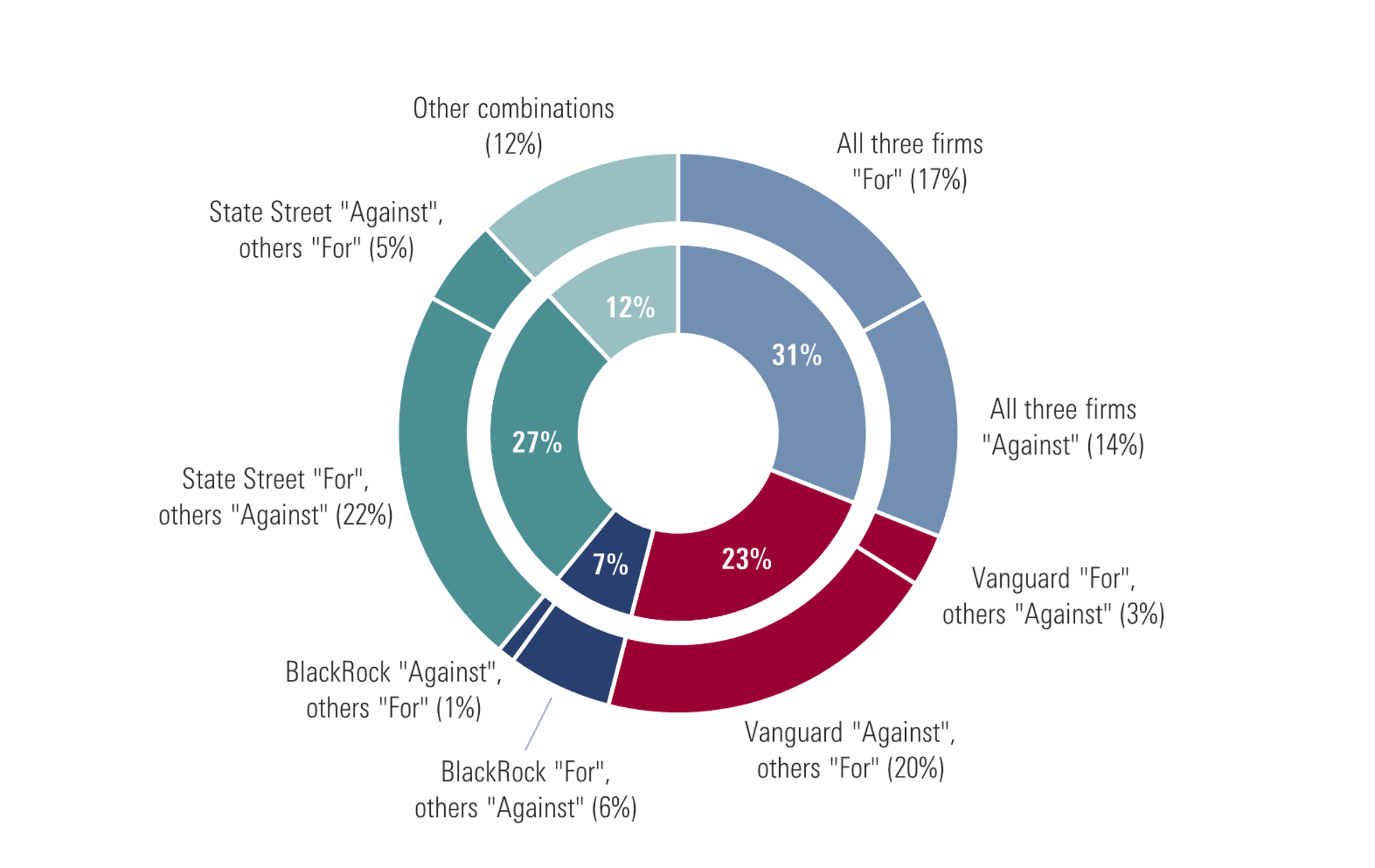
Because Vanguard’s index funds are designed to mirror broad market indices, they inherently hold proportionate stakes in the companies that comprise those indices. This means that, through its funds, Vanguard is consistently one of the top institutional shareholders in virtually every major publicly traded company globally. Consider the titans of industry:
- Technology: Apple, Microsoft, Amazon, Alphabet (Google), Meta Platforms (Facebook), NVIDIA, Tesla.
- Healthcare: Johnson & Johnson, UnitedHealth Group, Pfizer, Eli Lilly, Merck.
- Financials: JPMorgan Chase, Bank of America, Berkshire Hathaway, Visa, Mastercard.
- Consumer Goods: Procter & Gamble, Coca-Cola, PepsiCo, Walmart.
- Energy: ExxonMobil, Chevron.
Vanguard’s ownership stakes in these companies typically range from 3% to 8% or more, making it a critical voice in corporate governance. This isn’t direct corporate ownership by “Vanguard Inc.” but rather ownership held by millions of individual investors through their Vanguard funds, consolidating their collective power.
Global Diversification Across Industries
Vanguard’s commitment to broad market indexing means its holdings are incredibly diverse, spanning the entire economic landscape across developed and emerging markets. Its funds own companies in every sector imaginable: technology, financials, healthcare, consumer discretionary, consumer staples, industrials, energy, materials, utilities, and real estate. This global, multi-sector diversification is a key pillar of Vanguard’s investment philosophy, aiming to capture the aggregate growth of the entire global economy rather than being reliant on the performance of a few individual companies or industries.
This means that whether you look at a factory in Germany, a software company in India, a pharmaceutical giant in Switzerland, or an e-commerce platform in China, it’s highly probable that Vanguard, through its various international and emerging markets funds, owns a piece of it.
Beyond Equities: Real Estate, Commodities, and Alternatives (Indirectly)
While equities and bonds form the core of Vanguard’s offerings, its diversified funds can also provide indirect exposure to other asset classes. For instance, Vanguard offers Real Estate Index Funds (like VNQ) that invest in Real Estate Investment Trusts (REITs). REITs are companies that own, operate, or finance income-generating real estate. By owning these funds, investors indirectly gain exposure to commercial properties, apartment complexes, shopping centers, and other real estate assets.
Similarly, while Vanguard doesn’t typically offer direct commodity funds (due to their often high costs and tax complexities), a globally diversified portfolio with exposure to energy and materials sectors will naturally have a link to commodity prices through the underlying companies involved in extraction, processing, and transportation. Though less common in its standard offerings, Vanguard’s approach allows for a comprehensive investment landscape that can indirectly touch upon various alternative investments as they become securitized or form part of a broader economic index.
The Strategic Impact of Vanguard’s Massive Portfolio
The immense scale of what Vanguard owns has far-reaching implications, extending beyond mere investment returns to influence corporate behavior and democratize access to sophisticated financial strategies.
Shaping Corporate Governance
As one of the largest institutional investors globally, Vanguard holds significant voting power in corporate boardrooms. This position gives it considerable influence over corporate governance issues, including executive compensation, board independence, and, increasingly, environmental, social, and governance (ESG) factors. Vanguard uses its proxy voting rights and engages directly with company management to advocate for practices that it believes will enhance long-term shareholder value. While often taking a less vocal or activist stance than some other large institutional investors, its sheer size means its voice in matters of corporate responsibility and strategic direction is undeniable. This role underscores that “what Vanguard owns” isn’t just a collection of assets, but a platform for responsible capitalism.
Driving Market Efficiency
Vanguard’s pioneering and pervasive use of indexing has fundamentally altered the investment landscape. By investing in broad market indices, Vanguard’s funds contribute to market efficiency. Large passive investors help ensure that security prices reflect all available information, as they buy and sell based on predetermined rules rather than speculative analysis. This reduces price discrepancies and helps prevent individual stocks from becoming over or undervalued for extended periods. The stability provided by large, rules-based investment flows from firms like Vanguard is a significant, albeit often overlooked, benefit to the overall health and functionality of capital markets.
Democratizing Investing
Perhaps one of the most profound impacts of Vanguard’s vast holdings, powered by its unique model, is the democratization of sophisticated investing. Before Vanguard, achieving broad diversification across thousands of companies or the entire bond market was a complex and expensive undertaking, largely reserved for institutional investors or the very wealthy. Vanguard’s low-cost index funds made it possible for millions of ordinary people – from teachers and factory workers to small business owners and retirees – to build highly diversified portfolios. This accessibility has leveled the playing field, allowing everyday investors to participate in the long-term growth of the global economy with unprecedented ease and affordability.
How Investors Can Leverage Vanguard’s Holdings for Wealth Building
For individual investors, understanding “what Vanguard owns” translates directly into practical strategies for building wealth. By aligning with Vanguard’s philosophy, one can harness the power of its diversified holdings for long-term financial success.
Building a Diversified Portfolio with Vanguard
The easiest way to invest in what Vanguard owns is to open an account directly with them or through a brokerage that offers Vanguard products. Investors can then choose from a range of funds and ETFs tailored to their risk tolerance and financial goals. For many, a simple “three-fund portfolio” consisting of a Total Stock Market Index Fund, a Total International Stock Index Fund, and a Total Bond Market Index Fund can provide global diversification across equities and fixed income. For those seeking even greater simplicity, Vanguard’s Target-Date Retirement Funds offer a ready-made, professionally managed, and automatically rebalancing portfolio that adjusts its asset allocation as retirement approaches.
The Long-Term Vision
Vanguard’s investment philosophy is fundamentally long-term. Its holdings are not speculative bets on short-term market movements but rather represent a belief in the enduring growth of human innovation and economic progress. Investors who succeed with Vanguard’s approach embrace patience, consistency, and a disciplined approach to investing. This means resisting the urge to frequently trade or time the market, and instead focusing on consistent contributions and allowing the power of compounding to work over decades.
Harnessing the Power of Compounding
By investing in Vanguard’s broad and low-cost funds, investors gain exposure to the aggregate earnings and growth of thousands of companies worldwide. Over time, these companies generate profits, innovate, and expand, leading to increases in their stock prices and dividend payments. Reinvesting these dividends and capital gains back into the funds allows for exponential growth through compounding. “What Vanguard owns” becomes what you own, allowing you to benefit directly from the economic engine of the world, gradually building substantial wealth for your future.
In conclusion, “what does Vanguard own?” is a question with a profound answer. It owns a collective slice of the global economy, meticulously managed through an investor-centric model. Its trillions in assets represent a diversified tapestry of stocks, bonds, and other securities spanning every industry and country imaginable. For investors, this translates into an accessible, low-cost, and powerful pathway to long-term financial security, all while contributing to a more efficient and democratic investment landscape.
aViewFromTheCave is a participant in the Amazon Services LLC Associates Program, an affiliate advertising program designed to provide a means for sites to earn advertising fees by advertising and linking to Amazon.com. Amazon, the Amazon logo, AmazonSupply, and the AmazonSupply logo are trademarks of Amazon.com, Inc. or its affiliates. As an Amazon Associate we earn affiliate commissions from qualifying purchases.