
The Yin Yang symbol, a ubiquitous icon recognized across cultures, transcends its ancient origins to offer profound lessons for modern brand strategy, visual identity, and communication. Far from being a mere decorative element, this elegant depiction of duality holds a philosophical depth that can inspire how brands understand themselves, their market, and their audience. In the intricate world of corporate identity and personal branding, understanding the essence of the Yin Yang can illuminate pathways to creating more resilient, resonant, and authentic brands. It is a masterclass in communicating complex ideas with elegant simplicity, demonstrating the enduring power of symbolic representation.

The Ancient Roots of Balance: Understanding Yin and Yang
To fully appreciate the Yin Yang symbol’s implications for branding, we must first delve into its origins and fundamental principles. Its story begins not as a marketing tool, but as a philosophical framework for understanding the universe.
Origins in Taoist Philosophy
The Yin Yang concept is deeply embedded in ancient Chinese philosophy, particularly Taoism, which seeks to explain the nature of the cosmos and the human condition. The symbol, known as the Taijitu, represents the core belief that all things exist as inseparable and contradictory opposites. This isn’t about rigid opposition, but rather about dynamic interplay, where one element cannot exist without the other. Taoist sages observed the natural world—day following night, warmth succeeding cold, life giving way to death—and extrapolated these cyclical patterns into a universal theory of balance and harmony. For a brand, this means understanding that its strengths often emerge from its perceived weaknesses, or that its innovative edge might be rooted in a deep respect for tradition.
The Fundamental Principles: Duality, Interdependence, Transformation
At its core, the Yin Yang symbol encapsulates several powerful principles:
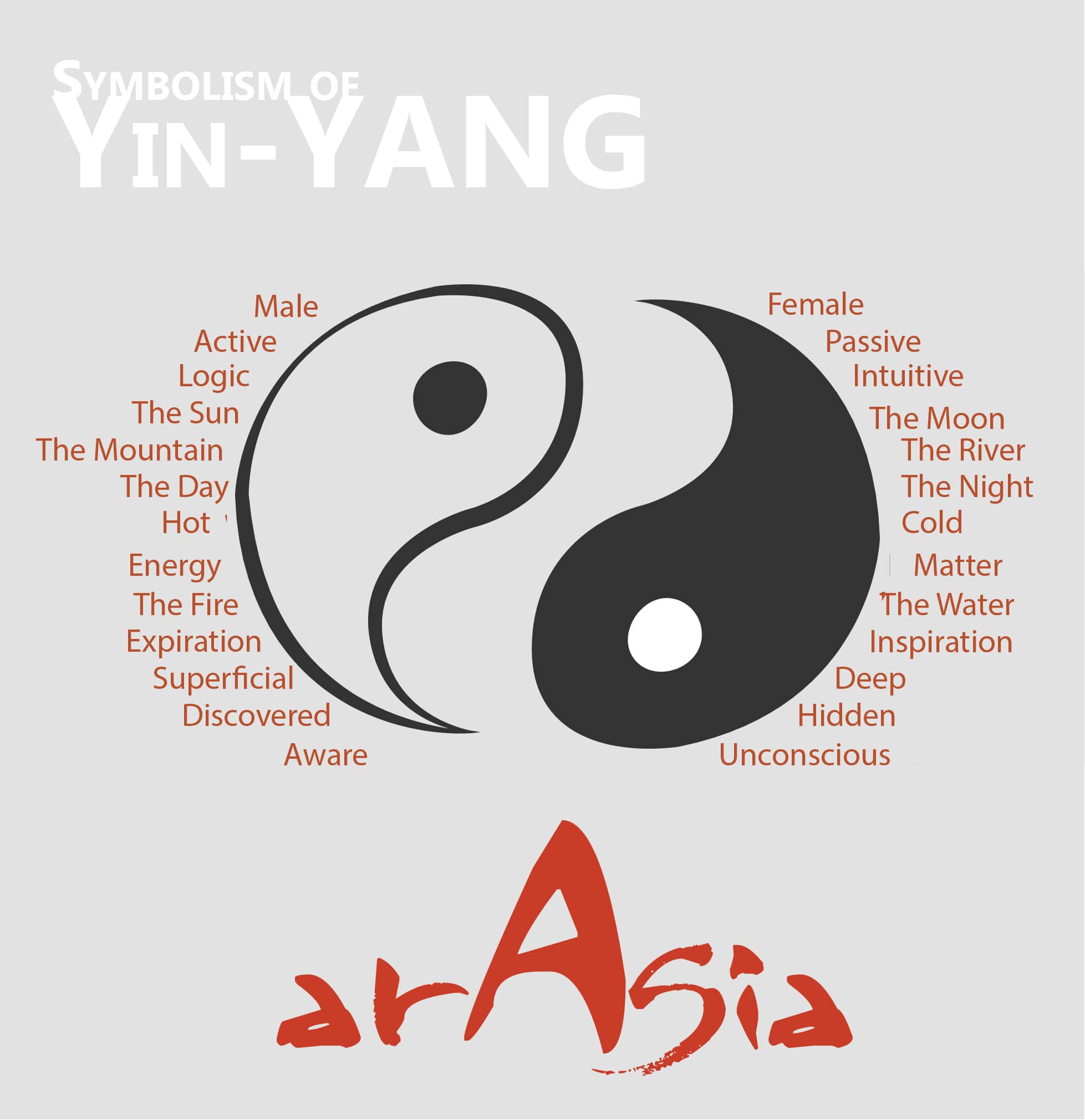
- Duality: It represents two complementary forces: Yin and Yang. Yin is often associated with the feminine, darkness, passivity, cold, softness, and the moon. Yang is associated with the masculine, light, activity, warmth, hardness, and the sun. In branding, this duality can manifest as a brand’s innovative spirit versus its commitment to reliability, or its global presence balanced with local relevance.
- Interdependence: The curved line dividing the black and white halves signifies that these forces are not merely separate but are interwoven and depend on each other for existence. One cannot exist without the other, and each contains the seed of the other. A brand, for instance, cannot effectively communicate its bold vision without understanding the market’s current state, or offer a cutting-edge product without a robust support infrastructure.
- Transformation: The symbol is not static; it implies constant movement and change. As Yin reaches its peak, Yang begins to grow, and vice versa. This dynamic flow speaks to the cyclical nature of life and the necessity of adaptation. For brands, this principle underscores the importance of continuous evolution, market responsiveness, and the ability to pivot while maintaining core identity.
- Harmony: Despite their opposing nature, Yin and Yang exist in perfect harmony within the circle, representing a balanced universe. The goal is not to eliminate one in favor of the other, but to find a harmonious balance between them. This is a crucial lesson for brands aiming for sustainable growth: growth must be balanced with responsibility, innovation with stability, and ambition with empathy.
Beyond Black and White: Nuance and the ‘Eyes’
Perhaps the most insightful detail of the Taijitu are the small dots—a black dot in the white section and a white dot in the black section. These “eyes” represent that within every Yin, there is a bit of Yang, and within every Yang, there is a bit of Yin. Nothing is purely one or the other. This nuance is critical. A brand that positions itself as entirely “masculine” or “feminine,” “serious” or “playful,” might miss opportunities to connect with a broader audience or to reflect the complexity of human experience. The dots teach brands that embracing contradictions and finding the gray areas can lead to richer, more authentic identities that resonate deeply because they reflect reality. A luxury brand can still have an approachable side, and a tech giant can possess a deeply human-centered philosophy.
Yin Yang as a Masterclass in Brand Visual Identity
Beyond its philosophical depth, the Yin Yang symbol is an extraordinary example of effective visual communication, offering invaluable lessons for logo design and brand aesthetics. Its universal appeal and timelessness are qualities every brand aspires to achieve.
Simplicity and Recognizability
The Yin Yang is remarkably simple yet instantly recognizable. Its clean lines and elemental shapes make it memorable and easy to reproduce across various mediums. This simplicity is a hallmark of effective logo design. Brands striving for iconic status often strip away unnecessary complexity, focusing on core forms that communicate their essence. Think of the simplicity of the Nike swoosh, the Apple logo, or the Mercedes-Benz star. These designs, much like the Yin Yang, achieve maximum impact with minimal elements, ensuring they are understood globally without requiring translation. For designers, the Yin Yang demonstrates that clarity and distinctiveness arise not from adding more, but from refining what is essential.
Dynamic Balance in Logo Design
The flowing curve that divides the Yin and Yang creates a sense of movement and dynamism within the static circle. This isn’t just a division; it’s an interaction. For brand logos, this translates to designs that feel alive and balanced, rather than rigid or lopsided. A logo imbued with this dynamic balance can suggest forward motion, adaptability, and harmony. It’s about creating an aesthetic equilibrium where no single element overwhelms another, even when depicting contrasting ideas. This balance is critical for brands that want to convey both stability and innovation, tradition and modernity, or boldness and sophistication. The Yin Yang teaches that balance doesn’t mean stagnation; it means controlled, purposeful motion.
Communicating Complex Ideas Visually
Perhaps the greatest visual lesson from the Yin Yang is its ability to convey profound philosophical concepts through a single, elegant image. It communicates duality, interdependence, transformation, and harmony without a single word. This is the ultimate goal of a strong brand logo: to encapsulate the brand’s core values, mission, and personality in a visually compelling way that resonates instantly. Brands can learn from this by developing visual identities that are not just aesthetically pleasing but are also laden with symbolic meaning. A logo that successfully hints at the brand’s story, its unique selling proposition, or its core ethos without explicit text achieves a level of sophistication and memorability that static, literal designs often fail to capture. It’s about designing with purpose and allowing the visual to speak volumes.
Crafting Brand Narratives Through Duality and Complementarity
The Yin Yang principles extend beyond visual design into the very fabric of brand messaging and storytelling. Brands, like the universe, are often defined by their interplay of complementary forces, and understanding this can unlock more authentic and compelling narratives.

Embracing Brand Archetypes and Persona
Just as Yin and Yang represent universal archetypes, brands often embody a combination of complementary personas. A brand might be an “Innovator” (Yang) but also a “Caregiver” (Yin) through its customer service. It could be a “Warrior” (Yang) in its competitive stance but also a “Sage” (Yin) in its thought leadership. The Yin Yang framework encourages brands to explore the full spectrum of their personality, rather than pigeonholing themselves into a singular, one-dimensional archetype. By acknowledging and strategically leveraging these dualities, brands can create richer, more relatable narratives that connect with diverse segments of their audience. It’s about understanding that a brand can be both strong and empathetic, bold and subtle, cutting-edge and timeless.
Messaging Harmony: Balancing Different Brand Values or Service Offerings
Many brands offer a diverse range of products or services, or stand for a complex set of values. The challenge is to communicate these varied facets in a cohesive and harmonious way. The Yin Yang provides a blueprint for this messaging harmony. For example, a tech company might need to balance messages of high performance (Yang) with ease of use (Yin), or innovation (Yang) with reliability and security (Yin). A lifestyle brand might emphasize both adventure and excitement (Yang) alongside comfort and relaxation (Yin). The goal is not to present these as conflicting, but as complementary aspects of a holistic brand experience, much like the Yin and Yang seamlessly flow into each other. This integrated messaging strategy strengthens the brand’s overall identity and prevents audience confusion.
Market Positioning and Competitive Dynamics
In the competitive landscape, brands often define themselves in relation to others. The Yin Yang concept can offer an insightful lens through which to view market positioning. Instead of simply seeing competitors as opposing forces to be defeated, a brand can recognize complementary roles within an ecosystem. For instance, one brand might be the established, reliable leader (Yin), while another is the agile, disruptive challenger (Yang). Understanding this dynamic can help a brand carve out a unique space, not necessarily by being “better” in all aspects, but by excelling in its chosen role and perhaps even forming symbiotic relationships. It’s about recognizing that sometimes the market needs both the light and the dark, the traditional and the revolutionary, and a brand can strategically position itself by consciously embracing its “Yin” or “Yang” attributes while acknowledging the other’s role.
The Yin Yang of Brand Strategy: Adaptability and Core Identity
The enduring appeal of the Yin Yang symbol also speaks to a critical aspect of long-term brand strategy: the delicate balance between maintaining a strong, consistent core identity and the necessity of adapting to an ever-changing world.
Evolving Without Losing Essence
The transformative nature of the Yin Yang, where one force gradually gives way to the other, perfectly illustrates the challenge brands face in evolving. A successful brand must adapt to new technologies, shifting consumer preferences, and emergent cultural trends. However, this adaptation must not come at the cost of losing the brand’s fundamental essence—its core values, mission, and unique promise. Like the Yin Yang, which constantly shifts yet remains within the circle, a brand must evolve its manifestations (Yang) while preserving its intrinsic identity (Yin). This strategic dance ensures that while the brand’s appearance or specific offerings might change, its soul remains recognizable and trusted by its audience. This requires a deep understanding of what truly defines the brand beyond its transient expressions.
Innovation and Tradition
Many of the world’s most enduring brands expertly navigate the tension between innovation and tradition. They understand that while innovation (Yang) drives growth and relevance, tradition (Yin) provides a foundation of heritage, trust, and authenticity. Think of luxury brands that continuously innovate with new designs and technologies while remaining deeply rooted in craftsmanship and classic aesthetics. Or tech companies that push boundaries of future possibilities while building upon foundational principles of user experience and reliability. The Yin Yang teaches that these are not opposing forces but complementary ones, each necessary for the other’s vitality. A brand that leans too heavily on tradition without innovation risks becoming obsolete, while a brand that innovates without a solid foundation of tradition might lack depth and trust. The ideal is to weave both into the brand’s DNA.
Global Reach, Local Touch
In today’s interconnected world, many brands aim for global reach. This often presents a classic Yin Yang challenge: how to maintain a consistent global brand identity (Yang) while simultaneously adapting to local cultural nuances and preferences (Yin). A truly global brand doesn’t merely impose a monolithic identity everywhere; it finds ways to localize its messaging, product offerings, and even visual communication to resonate with specific markets, all while retaining its overarching brand promise. This “glocal” approach is a perfect manifestation of Yin and Yang: a universal brand framework that allows for diverse local expressions. It acknowledges that effective brand strategy requires both a strong, centralized vision and the flexibility to embrace cultural specificities.
The Enduring Power of Symbolic Branding
The Yin Yang symbol’s millennia-spanning relevance underscores the profound power of symbols in human communication and, by extension, in branding. Its lessons are not just philosophical but deeply practical for any entity seeking to build a meaningful, lasting presence.
Creating Deep Resonance
Symbols, by their nature, tap into universal human experiences and archetypes. They bypass purely rational thought and connect with emotions and subconscious understanding. The Yin Yang’s resonance comes from its ability to represent fundamental truths about life – balance, change, interdependence. Brands that can distill their essence into powerful symbols, be they a logo, a specific color palette, or a core visual motif, can achieve a similar deep resonance with their audience. This isn’t just about recognition; it’s about fostering a sense of connection, belonging, and shared understanding that transcends mere product features or services. It’s how brands become more than just companies; they become cultural touchstones.
Legacy and Timelessness
The Yin Yang symbol has endured for centuries, its meaning remaining relevant across generations and geographies. This timelessness is the holy grail for any brand. Brands striving for legacy can learn from the Yin Yang’s ability to communicate universal truths through a simple, adaptable form. By focusing on core values that transcend fleeting trends, by creating visual identities that are simple yet profound, and by crafting narratives that acknowledge the complexities and dualities of human experience, brands can build a foundation for enduring relevance. The Yin Yang demonstrates that authenticity, balance, and a clear understanding of interconnectedness are not just philosophical ideals but essential ingredients for constructing a brand that stands the test of time, continuously transforming yet always remaining true to its core essence.
In conclusion, the Yin Yang symbol is far more than an ancient diagram; it is a profound blueprint for understanding existence, and by extension, for building powerful brands. It teaches us that true strength lies in balance, that adaptability is key to survival, and that the most profound messages can be conveyed through the simplest forms. For brand strategists, designers, and marketers, embracing the wisdom of the Yin Yang offers a pathway to creating brands that are not only aesthetically pleasing and commercially successful but also deeply meaningful, resilient, and eternally relevant in an ever-changing world.
aViewFromTheCave is a participant in the Amazon Services LLC Associates Program, an affiliate advertising program designed to provide a means for sites to earn advertising fees by advertising and linking to Amazon.com. Amazon, the Amazon logo, AmazonSupply, and the AmazonSupply logo are trademarks of Amazon.com, Inc. or its affiliates. As an Amazon Associate we earn affiliate commissions from qualifying purchases.