
In the realm of automotive technology, few components are as critical yet as frequently misunderstood as the tire. While most consumers view tires as simple rubber hoops, they are, in fact, highly engineered composite structures designed to manage extreme physical forces. Among the various technical specifications embossed on a tire’s sidewall, the speed rating stands out as a primary indicator of its engineering limits. Far from being a mere suggestion of how fast a vehicle should travel, the speed rating is a complex metric representing a tire’s ability to dissipate heat, resist centrifugal distortion, and maintain structural integrity under specific laboratory conditions.
To understand what the speed rating means is to delve into the intersection of material science, thermodynamics, and mechanical engineering. As vehicles become faster and more technologically advanced, the technology embedded within the tire must evolve to keep pace, ensuring that the “patch” of rubber meeting the road remains stable regardless of velocity.
1. The Engineering Architecture of the Speed Rating
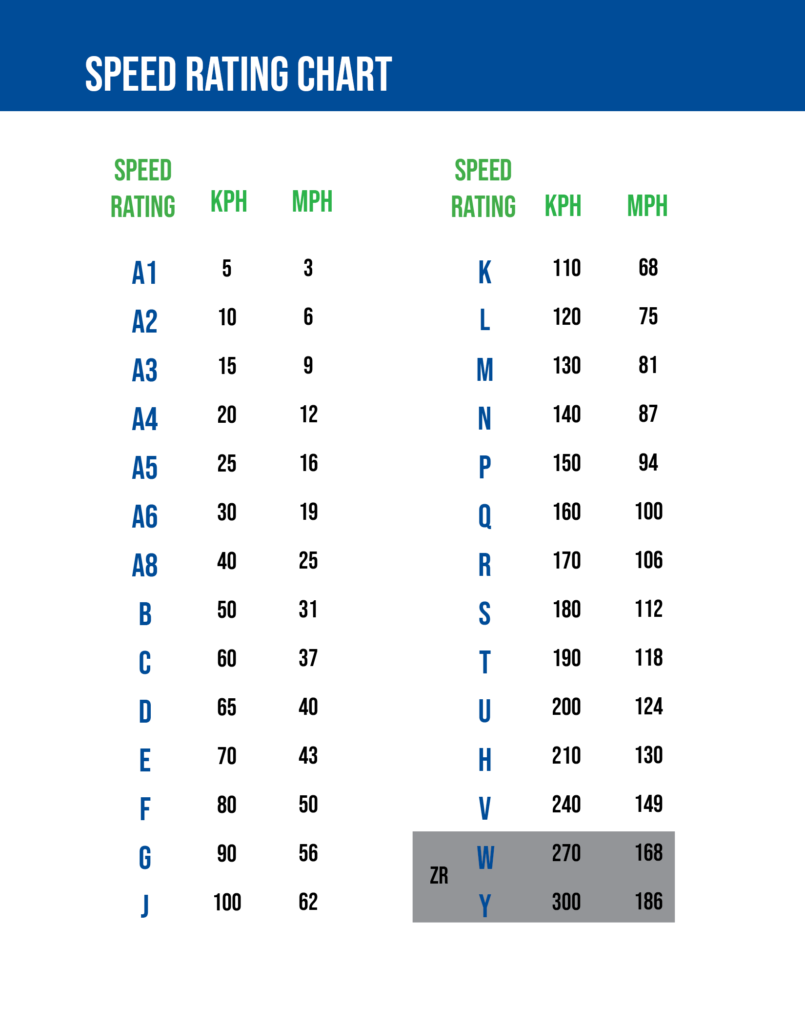
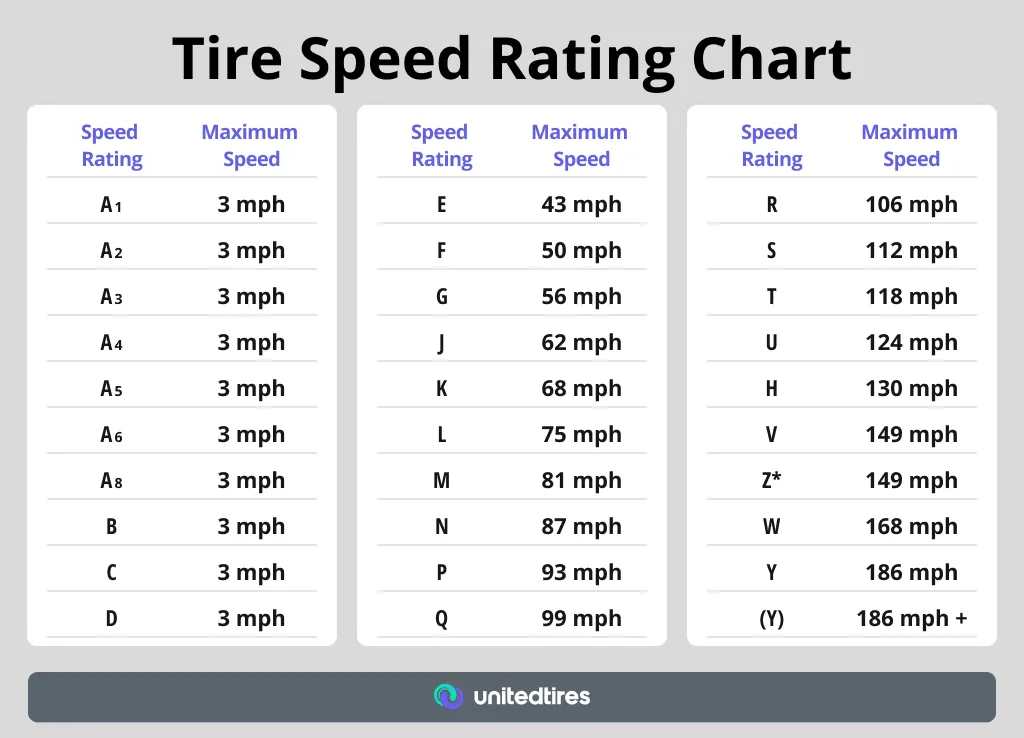
The speed rating of a tire, denoted by a letter ranging typically from L (75 mph) to Y (186 mph), is a technical certification derived from rigorous testing. This rating signifies the maximum speed at which the tire can safely carry a load over a sustained period without failing. However, the engineering behind this letter is significantly more complex than a simple speedometer reading.
The Role of Heat Dissipation and Thermodynamics
The primary enemy of a tire at high speeds is heat. As a tire rotates, it undergoes constant deformation and recovery as it contacts the road. This cycle, known as hysteresis, generates internal friction within the rubber compounds and internal structures. At higher speeds, this cycle repeats thousands of times per minute, causing temperatures to spike.
A high-speed-rated tire (such as one rated V, W, or Y) is engineered with advanced chemical compounds that exhibit high thermal stability. These materials are designed to transfer heat away from the tire’s internal components toward the surface, where it can be dissipated by the airflow. If a tire is pushed beyond its rated speed, the heat buildup can exceed the material’s threshold, leading to “chunking” (where pieces of the tread break off) or total structural delamination.
Centrifugal Force and Structural Integrity
At high velocities, centrifugal force attempts to pull the tire apart. A tire spinning at 150 mph experiences massive outward pressure that can cause the tread to “balloon,” reducing the contact patch and compromising grip. To counteract this, engineers utilize specialized internal reinforcements. High-speed tires often feature “cap plies”—extra layers of fabric or synthetic fibers (like aramid or nylon) wrapped over the steel belts. These cap plies act like a corset, holding the tire’s shape against the intense forces of rotation and ensuring the footprint remains flat and stable.
The Alpha-Numeric System and Laboratory Benchmarks
The speed rating is determined through a “Step Load Test.” In a controlled environment, a tire is pressed against a large diameter metal drum to simulate a load and then spun at increasing speeds. To earn a specific rating, the tire must maintain its integrity for 10-minute increments at increasing velocities until the target speed is reached and sustained. This technical benchmark ensures that every tire meet a standardized level of mechanical reliability before it ever touches a public road.
2. Advanced Material Science: The Chemistry of High Performance
The difference between a tire rated “S” (112 mph) and one rated “Y” (186 mph) is largely found in the molecular composition of the rubber and the sophisticated materials used in its construction. Modern tire technology utilizes a blend of natural rubber, synthetic polymers, and reinforcing agents like silica and carbon black.
Polymer Optimization for High-Velocity Stability
In lower-speed tires, the rubber compound is often optimized for longevity and fuel economy. However, in high-speed applications, the tech shifts toward “grip-to-temperature” optimization. Engineers use specialized polymers that remain flexible at high temperatures but stiffen under the high-frequency stresses of high-speed rotation. This prevents the tread blocks from “squirming,” a phenomenon that causes instability and extra heat.
High-Tensile Reinforcements: Steel, Rayon, and Aramid
The “skeleton” of a tire is just as technologically significant as the rubber. While standard tires use polyester and steel, high-performance, high-speed tires often incorporate exotic materials:
- Rayon Plies: Often used in European high-speed tires, rayon offers better dimensional stability at high temperatures than polyester.
- Aramid (Kevlar) Hybrids: Some of the highest-rated tires use aramid-nylon hybrid belts. Aramid is five times stronger than steel by weight and has high heat resistance, allowing the tire to maintain its shape even under the extreme stress of track-level speeds.
- Steel Cord Tension: The angle and tension of the steel belts are meticulously calculated using Finite Element Analysis (FEA) software to ensure the tire provides precision steering response at its maximum rated speed.
Tread Pattern Technology and Aerodynamics
Even the grooves and sipes on a tire are a product of high-tech fluid dynamics. At high speeds, the air moving around the tire creates turbulence. Engineers design tread patterns not just for water evacuation, but for “aerodynamic cooling.” The way air flows through the grooves can actually help cool the tire’s surface, acting as a passive thermal management system.
3. The Digital Evolution: Simulation, AI, and Virtual Testing
In the past, developing a tire with a high speed rating required months of physical prototyping and destructive testing. Today, the speed rating is often perfected in a digital environment long before the first mold is cast. This shift represents a major technological leap in how we define tire performance.
Finite Element Analysis (FEA) and Predictive Modeling
Tire manufacturers now use sophisticated FEA software to simulate the stresses of high-speed travel. These programs can predict exactly where heat will build up, how the belts will shift under centrifugal force, and how different rubber compounds will react to friction. By iterating in a virtual space, engineers can push the theoretical speed rating of a tire design further than was previously possible, identifying potential failure points in the “digital twin” of the tire.
Artificial Intelligence in Compound Development
The search for the “perfect” high-speed compound is now being accelerated by AI. Machine learning algorithms analyze databases of thousands of chemical formulations to predict which combinations will offer the best heat resistance without sacrificing wet-weather safety. This allows for the creation of “dual-compound” treads, where the center of the tire is optimized for high-speed stability and heat dissipation, while the shoulders are optimized for cornering grip.
Virtual Vehicle Integration
Tire tech does not exist in a vacuum. Modern speed ratings are developed in tandem with the vehicle’s electronic systems. Engineers use computer models to see how a tire’s speed rating and stiffness interact with the vehicle’s Electronic Stability Control (ESC) and Anti-lock Braking Systems (ABS). A tire with a higher speed rating is generally stiffer, which changes the frequency of data the car’s sensors receive. Ensuring the tire’s physical “tech” matches the car’s digital “tech” is a critical part of modern automotive engineering.
4. The Future of Speed Ratings: Intelligent Tires and Real-Time Data
As we look toward the future, the static “letter” rating on a sidewall may evolve into a dynamic, data-driven metric. The integration of the Internet of Things (IoT) and sensor technology into the tire itself—often referred to as “Smart Tires”—is set to redefine how we understand speed limits and safety.
Embedded Sensors and TPMS 2.0
Next-generation tires are being equipped with internal sensors that go far beyond simple pressure monitoring. These sensors can measure the internal temperature of the rubber and the vibration patterns of the tire in real-time. If a tire is approaching a thermal threshold that might compromise its speed rating—perhaps due to heavy load or high ambient temperatures—the vehicle’s onboard computer can alert the driver or even limit the vehicle’s top speed automatically.
Adaptive Performance and RFID Tracking
Many manufacturers are now embedding Radio Frequency Identification (RFID) tags into tires. This allows the vehicle’s ECU to “read” the tire’s exact specifications, including its speed rating, load index, and manufacture date. This digital handshake ensures that the vehicle’s performance parameters are automatically adjusted to match the hardware installed. For instance, if a car is fitted with winter tires with a lower speed rating than the factory summer tires, the car’s software can cap the top speed to prevent structural failure.

Sustainable High-Speed Materials
The next frontier in tire technology is achieving high speed ratings using sustainable materials. Researchers are experimenting with guayule rubber and bio-based resins that can match the thermal performance of petroleum-based synthetics. The challenge—and the current focus of tire tech R&D—is ensuring these eco-friendly materials can withstand the same 150+ mph stresses as their traditional counterparts.
In conclusion, the speed rating on a tire is far more than a simple compliance label; it is a testament to the sophisticated engineering and material science that allows a vehicle to safely traverse the physical world. From the molecular structure of synthetic polymers to the digital simulations that predict performance at the limit, the speed rating represents a boundary where technology meets the road. Understanding this metric is essential for anyone who appreciates the complex synergy of hardware and software that defines modern automotive performance.
aViewFromTheCave is a participant in the Amazon Services LLC Associates Program, an affiliate advertising program designed to provide a means for sites to earn advertising fees by advertising and linking to Amazon.com. Amazon, the Amazon logo, AmazonSupply, and the AmazonSupply logo are trademarks of Amazon.com, Inc. or its affiliates. As an Amazon Associate we earn affiliate commissions from qualifying purchases.