
In the expansive landscape of Minecraft’s survival and combat mechanics, the enchantment system represents one of the most sophisticated software layers within the game’s engine. Among the various offensive modifiers available to players, the Smite enchantment stands out as a specialized tool designed for high-efficiency combat against a specific subset of entities. While many players gravitate toward general-purpose damage buffs, Smite is a technical powerhouse that, when understood through its mathematical scaling and target logic, becomes an essential asset for high-level gameplay, automated farming, and boss-slaying strategies.
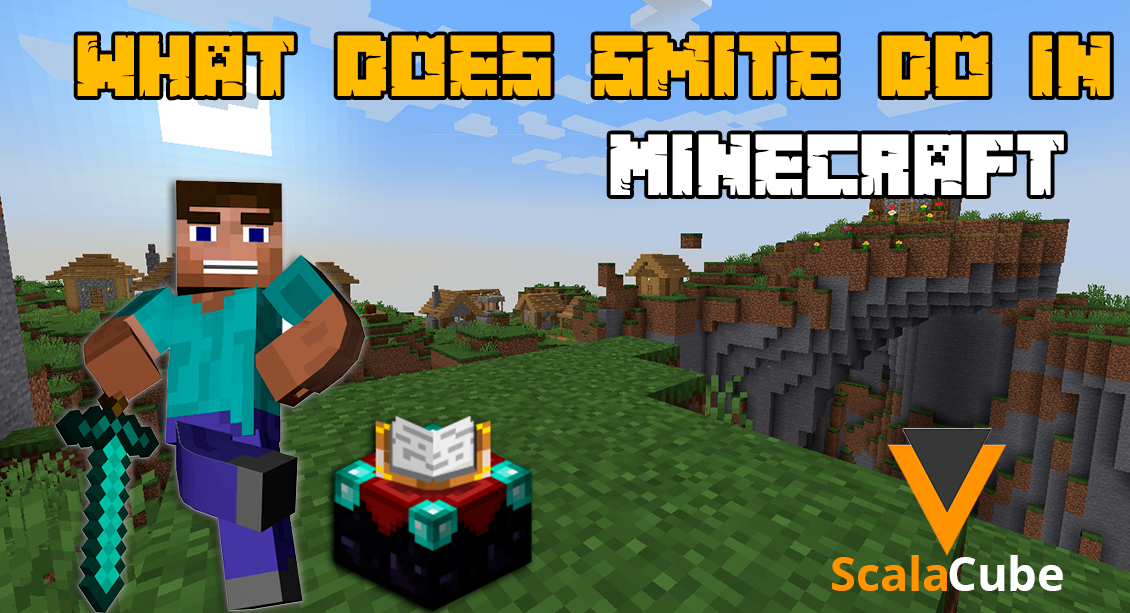
Understanding what the Smite enchantment does requires a deep dive into the game’s damage calculation algorithms, entity classification systems, and the trade-offs inherent in the enchantment’s mutual exclusivity with other combat modifiers.
Understanding the Mechanics of the Smite Enchantment
At its core, Smite is an enchantment that can be applied to swords and axes, significantly increasing the damage dealt to “undead” mobs. Unlike the Sharpness enchantment, which provides a smaller, universal damage boost across all entities, Smite is a “slayer” enchantment. It prioritizes extreme power over a limited range of targets, making it a specialized utility rather than a general-purpose tool.
How Damage Scaling Works
The technical power of Smite is categorized into five distinct tiers, labeled Smite I through Smite V. The damage progression follows a linear mathematical formula that differs slightly depending on the version of the game (Java Edition vs. Bedrock Edition), though the fundamental impact remains consistent.
In the Java Edition, each level of Smite adds an additional 2.5 damage (equivalent to 1.25 hearts) to every hit. A player wielding a diamond or netherite sword with Smite V is adding a staggering 12.5 extra damage to their base attack. To put this into perspective, the Sharpness V enchantment only adds 3 extra damage. This makes Smite significantly more potent against its intended targets, often allowing players to “one-shot” common enemies that would otherwise require multiple swings.
In the Bedrock Edition, the scaling is equally impressive, though the base damage of weapons is calculated differently. Regardless of the platform, the Smite enchantment acts as a multiplier that pushes the DPS (Damage Per Second) of a weapon to its absolute limit when facing the undead.
The Undead Class: Target Specifications
The efficacy of Smite is determined by the “undead” tag within the game’s entity data. The enchantment does not function against players, animals, or “arthropod” mobs (like spiders). Instead, it triggers exclusively when the weapon’s hitbox intersects with an entity categorized under the undead classification. The primary targets include:
- Zombies and their variants: This includes standard Zombies, Husks (desert variants), Drowned (underwater variants), and Zombie Villagers.
- Skeletons and their variants: This includes standard Skeletons, Strays (tundra variants), and Wither Skeletons.
- The Wither: As a major boss entity, the Wither is classified as undead, making Smite a critical component for speedrunning or efficiently defeating this boss.
- Phantoms: The flying pests that haunt players who haven’t slept are technically undead, meaning a Smite-enchanted axe or sword can ground them instantly.
- Zombified Piglins and Zoglins: The inhabitants of the Nether that carry the zombie plague are also susceptible.
By identifying these targets, a player can optimize their inventory. While a Sharpness sword might be better for a general excursion, a Smite sword is the superior choice for clearing a Mob Spawner or traversing the Soul Sand Valley in the Nether.
Smite vs. Sharpness: A Technical Comparison
One of the most frequent debates in the Minecraft community involves the choice between Smite and Sharpness. Because these enchantments are mutually exclusive—meaning a single weapon cannot have both without the use of third-party software or creative mode commands—players must make a strategic decision based on their technical needs.
DPS Optimization for Different Scenarios
The decision between Smite and Sharpness usually boils down to a trade-off between versatility and specialization.
Sharpness is a “broad-spectrum” modifier. It increases damage against everything: creepers, endermen, players, and animals. However, because its damage bonus is relatively low (0.5 extra damage per level + 0.5 base in Java), it rarely changes the “hits-to-kill” ratio for common mobs in a dramatic way.
Smite, conversely, is a “niche-specialist” modifier. Because the damage bonus is so high (2.5 per level), Smite IV or V allows a player to bypass the standard combat loop. In technical terms, it reduces the “Time to Kill” (TTK) for approximately 50% of the hostile mobs found in the game to nearly zero. When using a Smite V Netherite Sword, a player can kill a standard Skeleton or Zombie in a single hit, even without a critical strike. This efficiency is vital in high-stakes environments like Hardcore Mode, where minimizing the time an enemy is alive directly correlates to player survival.
Mutually Exclusive Enchantment Logic
The game’s code prevents the stacking of Smite, Sharpness, and Bane of Anthropods. This is a deliberate design choice intended to prevent “power creep.” If a player could stack Smite V and Sharpness V, they would possess a weapon capable of dealing over 25 damage per hit, which would trivialize almost every encounter in the game.
From a technical standpoint, the game checks for these enchantment IDs during the anvil merging process. If the code detects a conflicting ID, it will prioritize the enchantment already on the item or the one in the first slot of the anvil, discarding the other. Understanding this logic is essential for players who are trying to build the “perfect” toolkit and want to avoid wasting experience points or rare enchanted books.
How to Obtain and Apply Smite in Minecraft
Integrating Smite into a gear set involves interacting with the game’s Random Number Generator (RNG) through the enchanting table or utilizing the trading economy.
Enchanting Table Algorithms
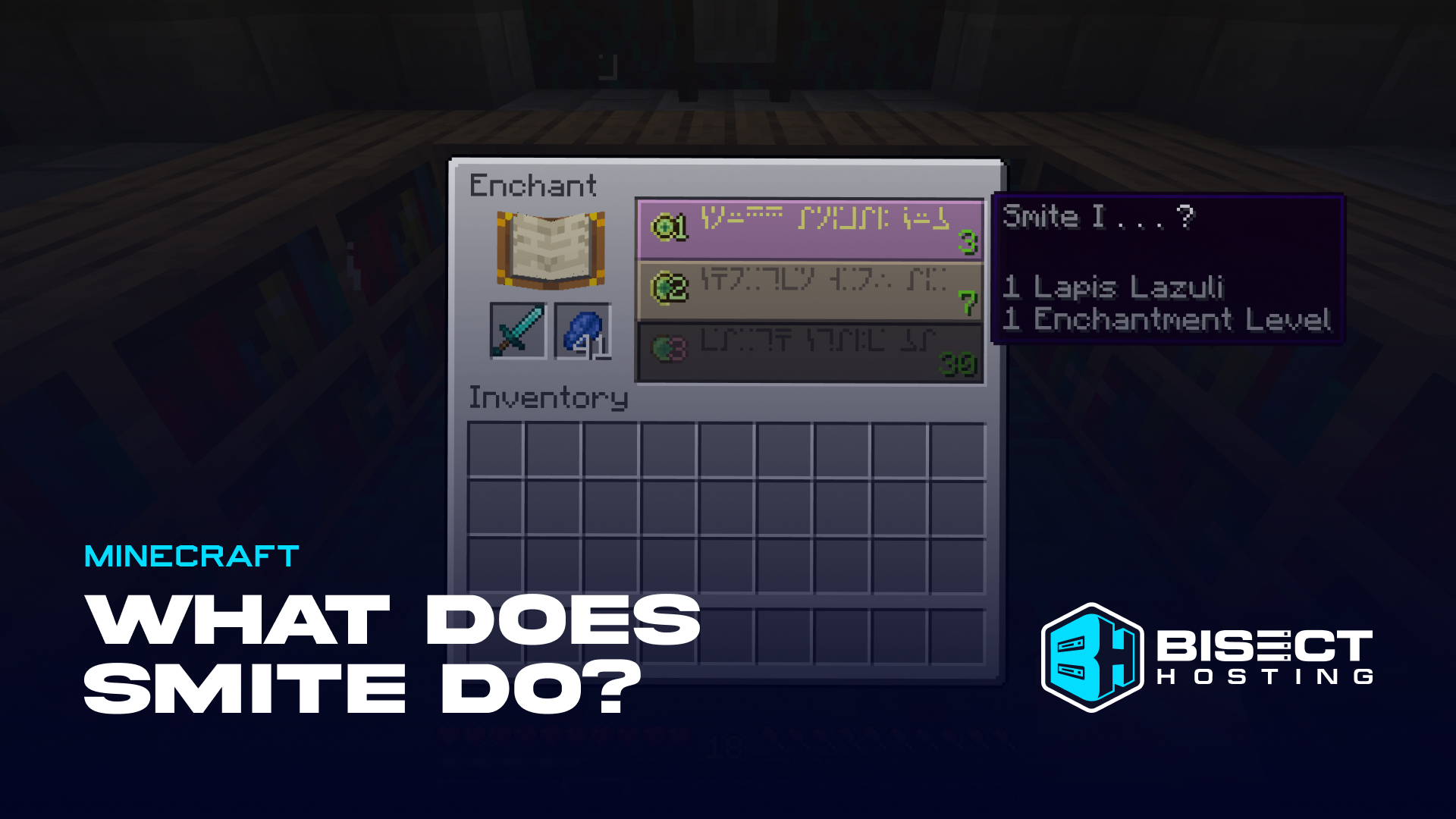
The Enchanting Table is the primary source of Smite. The probability of Smite appearing in the UI is determined by the “enchantability” of the material (gold has the highest, followed by netherite and diamond) and the level of the player. To obtain Smite V directly from a table, a player typically needs to be level 30 and have a full array of 15 bookshelves.
However, Smite V is rarely granted directly on the table for diamond or netherite tools; often, the table will grant Smite IV, requiring the player to combine two Smite IV tools in an anvil to “upgrade” the software logic of the item to the fifth tier.
Anvil Mechanics and Book Optimization
For players who prefer a more deterministic approach, the Librarian Villager trade system is the most efficient technical route. By “rerolling” a Librarian’s trades (breaking and replacing a Lectern), a player can eventually lock in a Smite V enchanted book trade.
When applying these books via an anvil, players must be aware of “Prior Work Penalty.” Every time an item is modified in an anvil, its internal “repair cost” tag increases. If a player combines too many lower-level Smite books together, the item may eventually reach a “Too Expensive!” state, preventing further upgrades. The most technically sound method is to apply the highest level of Smite possible in a single transaction to preserve the item’s longevity.
Strategic Applications in High-Level Gameplay
The Smite enchantment is not just for casual zombie hunting; it is a cornerstone of several advanced gameplay strategies that utilize the game’s mechanics to their fullest extent.
Wither Boss Speedrunning and Tech
The Wither is arguably the most difficult “undead” entity in the game. It has 300 health points (150 hearts) in Java Edition and significantly more in Bedrock. Because the Wither is undead, Smite V is the most effective way to deplete its health bar during its second phase, where it becomes immune to projectiles (arrows).
Technical players often use a Smite V Smite Axe for this encounter. While axes have a slower “cooldown” or attack speed than swords in Java Edition, their base damage is higher. A critical hit with a Smite V Netherite Axe can deal massive burst damage, shortening the boss fight significantly and reducing the risk of the Wither destroying the surrounding terrain or killing the player.
Raid Defense and Farm Optimization
In the context of technical Minecraft—where players build massive automated farms—Smite plays a vital role in “killing chambers.” For example, in a stray or skeleton farm designed to harvest bones and arrows, the player needs to clear the mobs as quickly as possible to allow more to spawn (staying under the “mob cap”).
A Smite V sword with the “Sweeping Edge” enchantment allows a player to kill multiple undead mobs in a single swing. This technical synergy between Smite (high damage) and Sweeping Edge (area of effect) is the gold standard for manual XP farming. It ensures that the player can process hundreds of entities per minute, maximizing the output of the farm’s mechanical components.
Future Trends in Minecraft Enchantment Systems
As Minecraft continues to evolve through major version updates, the technical balance of enchantments remains a point of focus for the developers at Mojang. Recent updates have introduced new mobs and combat tweaks that subtly shift the value of specialized enchantments like Smite.
The introduction of the “Experimental Combat Tests” suggests a future where attack reach, speed, and enchantment scaling may be overhauled. However, the fundamental concept of Smite—providing a massive technical advantage against the undead—is likely to remain a core pillar of the game’s combat software. For players looking to master the technical side of Minecraft, understanding the Smite enchantment is more than just a tip; it is a fundamental requirement for optimizing efficiency, ensuring survival, and conquering the game’s most challenging undead threats.
aViewFromTheCave is a participant in the Amazon Services LLC Associates Program, an affiliate advertising program designed to provide a means for sites to earn advertising fees by advertising and linking to Amazon.com. Amazon, the Amazon logo, AmazonSupply, and the AmazonSupply logo are trademarks of Amazon.com, Inc. or its affiliates. As an Amazon Associate we earn affiliate commissions from qualifying purchases.