
StabiliTrak is not just another cryptic acronym or a complex piece of automotive jargon. It represents a fundamental advancement in vehicle safety and control, a testament to the relentless pursuit of technological innovation in the automotive industry. At its core, StabiliTrak is an electronic stability control system, a sophisticated suite of sensors and computer-controlled interventions designed to help drivers maintain control of their vehicle during challenging driving maneuvers, particularly those involving skids, spins, or sudden loss of traction. While the term “service” in the title might initially suggest a maintenance or repair function, in this context, it refers to the service the system provides – the invaluable assistance it offers to the driver to prevent accidents and enhance overall driving safety. This article will delve into the technical intricacies of StabiliTrak, exploring its purpose, how it functions, the components that make it work, and why understanding this technology is crucial for modern drivers.

The Imperative of Electronic Stability Control
The evolution of the automobile has been a continuous journey towards greater safety and performance. Early vehicles relied solely on the driver’s skill and the mechanical limitations of the chassis and tires. However, the inherent physics of vehicle dynamics mean that under certain conditions, a vehicle can lose traction and become unstable, leading to accidents. Electronic Stability Control (ESC), and by extension systems like StabiliTrak, emerged as a critical technological response to this inherent risk.
Understanding Vehicle Dynamics and Loss of Control
To fully appreciate StabiliTrak’s significance, it’s essential to grasp the basic principles of vehicle dynamics. A vehicle’s movement is governed by forces acting upon it, including acceleration, braking, steering, and friction from the tires. When these forces become unbalanced, especially during rapid changes in direction or speed, the vehicle can enter an unstable state. This instability can manifest in several ways:
- Understeer: When the front wheels lose grip, the vehicle tends to continue in a straighter line than the driver intends, making it difficult to negotiate a turn. The steering wheel will feel lighter, and the vehicle will plow through the corner.
- Oversteer: When the rear wheels lose grip, the vehicle’s rear end begins to slide outwards, potentially leading to a spin. The steering wheel will feel heavier, and the driver will need to counter-steer to correct.
- Yaw: This refers to the vehicle’s rotation around its vertical axis. Excessive yaw is the hallmark of a loss of control, where the vehicle is spinning or rotating uncontrollably.
Traditional driver interventions, such as steering corrections and braking adjustments, can be challenging and often instinctive reactions that may not always be effective, especially in panic situations. StabiliTrak aims to augment the driver’s capabilities by intervening proactively and precisely when these unstable conditions are detected.
The Role of StabiliTrak in Preventing Accidents
The primary objective of StabiliTrak is accident prevention. By acting as an intelligent co-pilot, it can identify the onset of instability before it becomes unrecoverable. This proactive approach can significantly reduce the likelihood of:
- Run-off-road accidents: Often caused by a driver overcorrecting or losing control during a evasive maneuver.
- Rollover accidents: Particularly common in SUVs and trucks, these can occur when a vehicle experiences severe side-to-side oscillations.
- Collisions with other vehicles: Resulting from a loss of control and veering into another lane or oncoming traffic.
StabiliTrak doesn’t replace the driver; it empowers them. It provides an additional layer of safety, giving drivers a better chance to regain control and avoid hazardous situations.
How StabiliTrak Works: A Symphony of Sensors and Actuators
StabiliTrak’s operation is a marvel of automotive engineering, relying on a complex interplay of sensors that monitor the vehicle’s behavior and sophisticated algorithms that dictate precise interventions. It integrates with other vehicle systems, notably the Anti-lock Braking System (ABS) and Traction Control System (TCS), to achieve its stability-enhancing functions.
The Sensory Network: Detecting Instability
The system’s intelligence stems from its ability to “see” what’s happening with the vehicle in real-time. This is achieved through a network of sensors strategically placed throughout the chassis:
- Wheel Speed Sensors: These sensors, also crucial for ABS and TCS, monitor the rotational speed of each wheel. Deviations in wheel speed can indicate a loss of traction or a wheel locking up.
- Yaw Rate Sensor: This sensor measures the vehicle’s rate of rotation around its vertical axis. It’s a key indicator of whether the vehicle is spinning or about to spin.
- Steering Wheel Position Sensor: This sensor detects the angle and direction the driver is turning the steering wheel, providing information about the driver’s intended path.
- Lateral Acceleration Sensor (G-Sensor): This sensor measures the sideways force acting on the vehicle. High lateral acceleration can indicate a vehicle is being pushed towards its limits in a turn.
- Longitudinal Acceleration Sensor (G-Sensor): While less directly involved in stability control, it can contribute to understanding the vehicle’s acceleration and deceleration patterns.
The Brains of the Operation: The Electronic Control Module (ECM)
All the data from these sensors is fed into a dedicated Electronic Control Module (ECM), often referred to as the StabiliTrak control module or a similar name. This module acts as the “brain” of the system. It continuously analyzes the sensor data, comparing the driver’s intended direction (as indicated by the steering wheel sensor) with the vehicle’s actual motion (as detected by the yaw rate and lateral acceleration sensors).
The Actuators: Taking Precise Action
When the ECM detects a discrepancy between the intended and actual path, indicating the onset of instability, it doesn’t just alert the driver. It takes immediate, precise action through the vehicle’s actuators:
- Individual Wheel Braking: This is the most common intervention. StabiliTrak can selectively apply the brakes to individual wheels to counteract yaw and steer the vehicle back onto the desired path. For example, if the vehicle is understeering (plowing outwards), StabiliTrak might gently apply the brake to the inside rear wheel to help pivot the vehicle around the turn. Conversely, if oversteering is detected, it might apply the brake to the outside front wheel.
- Engine Power Reduction: In conjunction with braking, StabiliTrak can also reduce engine power. This is particularly useful when a loss of traction is caused by excessive acceleration, helping to regain grip. This function is closely integrated with the Traction Control System (TCS).

The speed and precision with which StabiliTrak applies these interventions are critical. It acts far faster and more precisely than a human driver could, often making subtle adjustments that the driver may not even consciously perceive, other than perhaps a subtle deceleration or a change in steering feel.
StabiliTrak and Related Systems: An Integrated Safety Net
StabiliTrak does not operate in isolation. It is a sophisticated system that leverages and integrates with other crucial vehicle safety technologies, creating a comprehensive safety net. Understanding these relationships provides a clearer picture of StabiliTrak’s overall contribution to driving safety.
The Synergy with Anti-lock Braking System (ABS)
The Anti-lock Braking System (ABS) is designed to prevent wheel lock-up during hard braking, allowing the driver to maintain steering control. StabiliTrak builds upon ABS by using the same wheel speed sensors and hydraulic brake actuators. When StabiliTrak intervenes by applying individual wheel brakes, it does so through the ABS system, ensuring that the braking is modulated to prevent lock-up while still achieving the desired corrective force. This integration means that StabiliTrak can both help steer the vehicle and prevent it from skidding uncontrollably during braking events.
The Partnership with Traction Control System (TCS)
Traction Control System (TCS) aims to prevent wheelspin during acceleration, particularly on slippery surfaces. It achieves this by reducing engine power or applying the brakes to the spinning wheel. StabiliTrak often incorporates TCS functions. If StabiliTrak detects instability due to wheelspin during acceleration, it will not only reduce engine power but may also use selective braking to help control the vehicle’s trajectory. This seamless integration ensures that stability is maintained not only during cornering and braking but also during acceleration.
The Role of Other Sensors and Systems
Modern StabiliTrak systems may also integrate with other sensors and vehicle dynamics management systems, such as:
- Electronic Brake-force Distribution (EBD): This system optimally distributes braking force between the front and rear wheels based on load and braking conditions.
- Roll Stability Control (RSC): For vehicles prone to rollovers, RSC uses additional sensors to detect the risk of tipping and can intervene more aggressively to prevent it.
- Advanced Driver-Assistance Systems (ADAS): In some vehicles, StabiliTrak data may be shared with ADAS features like adaptive cruise control or lane-keeping assist, contributing to a more holistic approach to vehicle safety.
The combined effect of these interconnected systems is a vehicle that is significantly more stable and controllable under a wider range of driving conditions, offering an enhanced level of safety for occupants.
The Driver’s Role and StabiliTrak’s Limitations
While StabiliTrak is an incredibly effective safety feature, it’s crucial for drivers to understand that it is an assistive system, not a substitute for responsible driving. Over-reliance on technology can lead to complacency and potentially dangerous situations.
Understanding the Warning Lights and Indicators
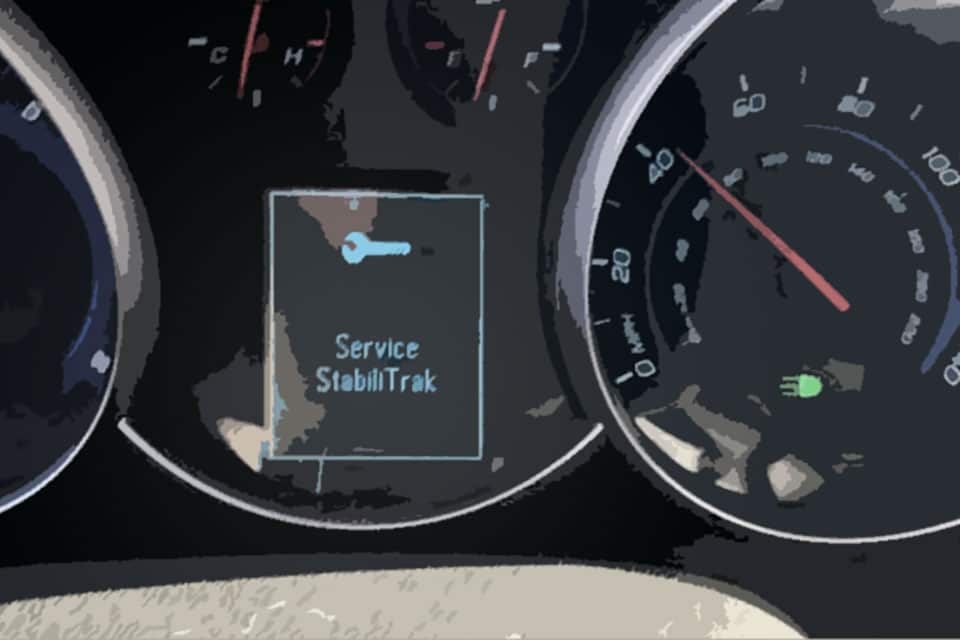
Most vehicles equipped with StabiliTrak will have a dashboard indicator light that illuminates when the system is active or if there is a malfunction. This light often looks like a car with squiggly lines behind it. Drivers should familiarize themselves with this indicator and understand that its flashing signifies the system is actively intervening to help maintain control. A solid illuminated light usually indicates a system fault, and the vehicle should be inspected by a qualified technician.
When StabiliTrak Might Be Deactivated
In certain specific circumstances, a driver might choose to manually deactivate StabiliTrak. This is typically only recommended for situations where controlled wheelspin might be beneficial, such as:
- Driving in deep snow or mud: Where maintaining momentum is critical and the system’s interventions might hinder progress.
- Towing heavy loads on inclines: Where a more direct engine control might be preferred.
- Performance driving on a closed track: Where a driver intentionally seeks to explore the limits of the vehicle’s traction.
However, it is imperative to understand that deactivating StabiliTrak significantly reduces the vehicle’s safety margin. It should only be done by experienced drivers who fully understand the implications and when the specific situation warrants it. StabiliTrak automatically reactivates itself when the vehicle reaches a certain speed or after the ignition is cycled.
The Limits of Physics
It is vital to remember that StabiliTrak, like all vehicle safety systems, operates within the fundamental laws of physics. It cannot defy gravity or create traction where none exists. If a driver enters a corner at an excessive speed, drives too aggressively on a slippery surface, or is distracted, StabiliTrak may not be able to prevent an accident. The system is designed to help drivers maintain control, not to make reckless driving safe. Responsible driving habits, including obeying speed limits, maintaining safe following distances, and avoiding distractions, remain the most critical elements of road safety.
In conclusion, StabiliTrak represents a significant leap forward in automotive safety technology. By acting as an intelligent guardian, it continuously monitors vehicle dynamics and intervenes precisely to prevent a loss of control. Understanding its purpose, how it functions, and its relationship with other safety systems empowers drivers to appreciate the protective service this technology provides and to use it most effectively, always remembering that the ultimate responsibility for safe driving rests with the driver themselves.
aViewFromTheCave is a participant in the Amazon Services LLC Associates Program, an affiliate advertising program designed to provide a means for sites to earn advertising fees by advertising and linking to Amazon.com. Amazon, the Amazon logo, AmazonSupply, and the AmazonSupply logo are trademarks of Amazon.com, Inc. or its affiliates. As an Amazon Associate we earn affiliate commissions from qualifying purchases.