
The simple pairing of “I” and “V” might seem unassuming at first glance, but the Roman numeral IV holds a fascinating position in our collective numerical consciousness. At its most fundamental level, IV represents the number four. Yet, to dismiss it merely as a primitive way to write ‘4’ would be to overlook its rich history, its ingenious (albeit sometimes cumbersome) design, and its surprising endurance in a world dominated by Arabic numerals and digital technology. From the faces of ancient monuments to the versioning of modern software, from the sophisticated branding of luxury goods to subtle indicators in financial history, IV is far more than a simple digit; it is a symbol imbued with cultural significance, an aesthetic choice, and a silent testament to the evolution of human communication.

In an era defined by rapid technological advancement, sophisticated branding strategies, and dynamic financial markets, it might seem counterintuitive to delve into an ancient numbering system. However, the story of IV is not just a historical footnote. It profoundly intersects with how we design our digital experiences, how brands craft their identities, and even how we perceive value in certain financial contexts. This article will journey through the origins and rules of Roman numerals, specifically focusing on IV, and then explore its unexpected relevance and impact across the realms of technology, branding, and finance in our contemporary world.
The Core Identity of IV: A Journey from Ancient Rome to Modern Numeracy
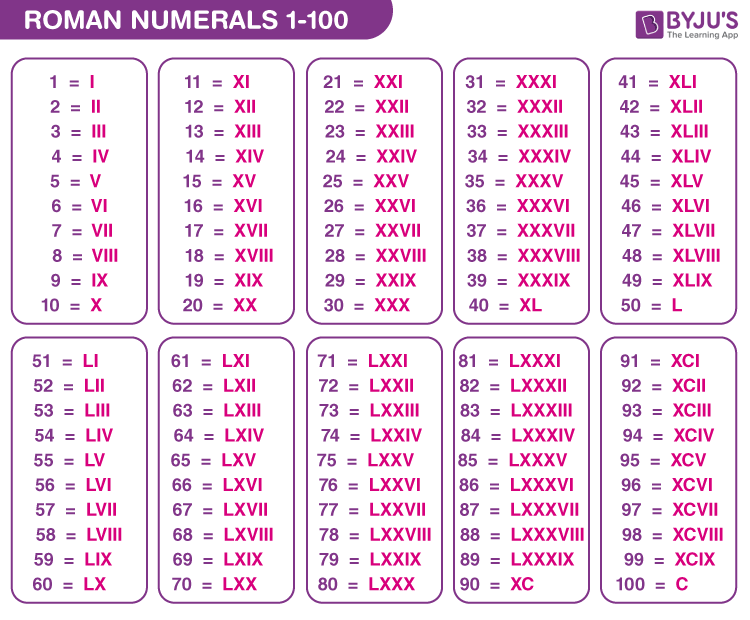
To truly appreciate the multifaceted role of IV, we must first understand its fundamental meaning and the system from which it hails. Roman numerals emerged from ancient Rome and served as the standard numbering system throughout the vast Roman Empire. Unlike our modern decimal system, which is positional and includes a zero, Roman numerals are additive and subtractive, relying on a fixed set of seven basic symbols.
Decoding the Subtraction Principle
The brilliance and occasional frustration of Roman numerals lie in their specific rules for combining symbols. The numeral IV is a prime example of the “subtraction principle.” In this system, if a symbol of smaller value (like ‘I’ for 1) is placed before a symbol of larger value (like ‘V’ for 5), the smaller value is subtracted from the larger one. Thus, I (1) placed before V (5) yields 5 – 1 = 4. This principle makes Roman numerals relatively concise compared to simply repeating symbols (imagine ‘IIII’ for four, which while sometimes seen on clock faces for aesthetic balance, is not standard Roman numeral practice).
Other common applications of the subtraction principle include:
- IX: I (1) before X (10) = 10 – 1 = 9
- XL: X (10) before L (50) = 50 – 10 = 40
- CD: C (100) before D (500) = 500 – 100 = 400
- CM: C (100) before M (1000) = 1000 – 100 = 900
This subtractive rule is crucial for understanding the elegant economy of Roman numerals, allowing them to represent numbers without excessive repetition of symbols. In contrast, when a symbol of smaller value follows a symbol of larger value, their values are added, such as VI (5 + 1 = 6) or LX (50 + 10 = 60).
Beyond the Basics: Understanding Roman Numeral Systems
The seven fundamental Roman numeral symbols are:
- I = 1
- V = 5
- X = 10
- L = 50
- C = 100
- D = 500
- M = 1000
From these basic building blocks, nearly any number can be constructed by following a set of rules:
- Repetition: A symbol can be repeated up to three times to add its value (e.g., III = 3, XX = 20, CCC = 300). V, L, and D are never repeated.
- Addition: If a symbol of equal or smaller value follows a symbol of larger value, their values are added (e.g., VIII = 8, CLX = 160).
- Subtraction: As described above, if a symbol of smaller value precedes a symbol of larger value, it is subtracted (e.g., IV, IX, XL). Only I, X, and C can be used as subtractive prefixes.
The historical rationale for this system likely stemmed from its suitability for carving into stone or tallying using fingers and simple counting devices. However, the system’s limitations became apparent over time. The absence of a zero, the difficulty in performing complex arithmetic operations (addition, subtraction, multiplication, division are cumbersome with Roman numerals), and the increasing length for very large numbers ultimately led to its gradual replacement by the more efficient Arabic numeral system, particularly as trade, science, and mathematics advanced. Yet, its legacy endures, notably through the humble IV.
IV in the Digital Realm: Bridging Ancient Symbols with Modern Technology
In an age dominated by pixels, algorithms, and artificial intelligence, the presence of Roman numeral IV might seem like an anachronism. However, its continued use in various technological contexts demonstrates a fascinating interplay between tradition and innovation, aesthetic choice and functional efficiency.
From Analog Clocks to Digital Interfaces
Perhaps the most universally recognized application of Roman numerals is on clock faces. The “IV” hour marker, alongside I, II, III, V, VI, VII, VIII, IX, X, XI, and XII, is a staple of traditional analog clocks. This enduring design choice speaks to a preference for classical aesthetics and historical continuity.
However, the leap to digital timekeeping and interfaces brought a fundamental shift. Modern digital clocks and most user interfaces overwhelmingly favor Arabic numerals (1, 2, 3, 4…). The reasons are purely practical:
- Clarity and Readability: Arabic numerals are universally recognized and instantly decipherable across diverse cultures, making them ideal for rapid comprehension in a fast-paced digital environment.
- Efficiency: They are compact and require less processing power or pixel real estate to display.
- Computational Ease: Digital systems are built on binary code, and Arabic numerals translate directly to mathematical operations, which Roman numerals do not.
Despite this, Roman numerals occasionally make an appearance in digital interfaces as a deliberate design choice. Think of a luxury smartwatch app offering a “classic” watch face option, or a digital dashboard in a high-end car allowing for a traditional aesthetic. In these instances, IV’s inclusion is a nod to heritage rather than a practical numbering system, prioritizing style over pure functional efficiency.
IV in Software, Gaming, and Content Production
Beyond timekeeping, IV finds its way into various forms of digital content and software:
-
Gaming: The gaming industry frequently leverages Roman numerals for sequel numbering, and IV is particularly prominent. Titles like Grand Theft Auto IV, Civilization IV, The Elder Scrolls IV: Oblivion, and Halo Wars 2 (often stylized as Halo Wars II) immediately come to mind. Here, IV serves several purposes: it signifies continuity within a series, often implying a significant installment; it lends an epic, almost classical gravitas to the title; and it distinguishes it from earlier iterations while hinting at a grand scale of evolution. For gamers, “IV” is instantly understood as the fourth main entry, carrying the weight of its predecessors and the anticipation of new features.
-
Software Versioning: While most contemporary software uses decimal versioning (e.g., 4.0, 4.1.2), some specialized or legacy systems might use Roman numerals for major releases, particularly in academic or niche fields where tradition holds sway. Even if not directly in the version number, IV might appear in accompanying documentation or branding to denote a “Series IV” hardware component or a “Generation IV” of a product line, subtly communicating advancement and refinement.
-
Digital Content: In digital books, films, and television series, Roman numerals are still used for chapter numbering or volume indicators (e.g., “Chapter IV,” “Volume IV”). This practice maintains a sense of formality and tradition, especially in academic texts, classic literature, or historical documentaries. It offers a visual cue of sequence without overtly competing with the content itself.
-
Data Representation and AI: From a technical standpoint, computers process Roman numerals as character strings. When an AI or machine learning model encounters “IV,” it must be programmed to interpret it correctly, perhaps through natural language processing (NLP) for text or optical character recognition (OCR) for images. This requires mapping “IV” to its numerical equivalent ‘4’, highlighting the computational steps needed to bridge this ancient system with modern digital logic, a process not required for native Arabic numerals.
The UX and Design Dilemma: Why Simplicity Triumphs
In the broader context of User Experience (UX) and interface design, the use of Roman numerals is a careful consideration. While they offer aesthetic appeal and can evoke a sense of tradition, they are rarely the default for purely functional numbering in modern applications.
- Readability for a Global Audience: Arabic numerals are globally standardized and instantly understood by almost everyone, regardless of language or cultural background. Roman numerals require prior knowledge, which can impede intuitive navigation for some users.
- Efficiency in Data Entry and Processing: Entering “4” is simpler than typing “IV,” and converting “IV” to a usable numerical format adds an extra layer of computational complexity, however minor.
- Scalability: While “IV” is compact, large Roman numbers become cumbersome (e.g., 2024 is MMXXIV). Arabic numerals remain concise regardless of magnitude.
Ultimately, UX design prioritizes clarity, efficiency, and accessibility. Thus, Roman numerals, including IV, are primarily reserved for situations where their symbolic, aesthetic, or traditional value outweighs the practical benefits of Arabic numerals. They serve as a deliberate design choice to evoke a specific feeling or convey a particular brand message, rather than as a primary tool for numerical information.
Branding with IV: Crafting Identity and Legacy
Beyond its numerical value, the Roman numeral IV holds significant weight in the realm of branding and marketing. Its ancient origins and distinct visual form can be powerful tools for companies seeking to convey specific messages about their identity, heritage, and the quality of their products or services.
Evoking Heritage and Exclusivity
Luxury brands, in particular, often gravitate towards Roman numerals to imbue their products with a sense of history, timelessness, and exclusivity. The visual gravitas of IV, compared to the more common ‘4’, immediately elevates the perception of an item.
- High-End Watches: Many luxury watchmakers, known for their meticulous craftsmanship and enduring designs, frequently feature Roman numerals on their dials. While some might use “IIII” for the number four to achieve perfect visual symmetry with “VIII” on the opposite side of the dial, the presence of Roman numerals instantly signals a classic, sophisticated aesthetic. A watch with Roman numerals on its face often suggests heritage, intricate design, and an investment in lasting quality.
- Architectural Elements and Institutional Seals: Buildings designed to convey permanence and authority—like banks, government institutions, or universities—often incorporate Roman numerals into their foundation stones, plaques, or official seals. A cornerstone dated “MCMXXIV” (1924) or a seal featuring “Est. CIV BC” (Established 100 BC) immediately adds a layer of historical depth and gravitas that plain Arabic numerals might lack. This signifies a brand (or institution) that values its past and projects an image of enduring stability.
By using IV, brands tap into a historical resonance that suggests craftsmanship, tradition, and an appreciation for classicism, positioning their offerings as more than just commodities but as objects of lasting value and cultural significance.
Product Naming and Series Marketing
For products that evolve through successive generations or series, Roman numerals offer a sophisticated way to denote advancement while maintaining a connection to previous iterations. A “Series IV” or “Generation IV” product immediately signals:
- Evolution and Refinement: It implies that the product has undergone significant development from its predecessors, moving beyond “version 3” to a more advanced “version 4.” The Roman numeral suggests a more substantial leap or a more considered evolution than a simple numeric update.
- Continuity and Legacy: While indicating progress, “IV” also preserves a clear lineage. Consumers understand that a “Model IV” builds upon the strengths and reputation of “Model III,” rather than being a completely disconnected new product. This can be crucial for brand loyalty and customer recognition.
- Perceived Prestige: For premium products—such as luxury cars (e.g., “BMW 7 Series IV,” though often not officially used for full range, the concept applies), high-fidelity audio equipment, or specialized software suites—the “IV” designation can add a layer of perceived prestige and seriousness that a simple Arabic ‘4’ might not. It suggests a product that has earned its sequential designation through iterative improvement and established excellence.
Consider a hypothetical “Titanium Drone IV” versus “Titanium Drone 4.” The former might evoke a sense of robust engineering and a refined lineage, appealing to a customer who values enduring quality, while the latter might appear more like a routine, incremental update. The subtle psychological impact of “IV” can influence brand perception and consumer buying behavior, positioning a product as a considered evolution rather than just the “next number.”
The Visual Impact: Design Considerations
The aesthetic qualities of Roman numerals are a significant factor in their branding utility. The clean, straight lines and sharp angles of the letters ‘I’ and ‘V’ offer a distinctive visual appeal.
- Typography and Symmetry: When integrated into a logo or product design, Roman numerals demand careful typographical consideration. Their inherent symmetry and classic proportions can contribute to a balanced and elegant visual identity. Designers often choose specific fonts and kerning (spacing between characters) to ensure that the “IV” appears authoritative and harmonious within the overall brand aesthetic.
- Weight and Form: The individual components, ‘I’ and ‘V’, are simple yet powerful. Their starkness can convey strength, precision, and clarity. This makes them suitable for brands that want to project these qualities without relying on overly complex graphics.
- Timelessness: Unlike some fleeting design trends, the form of Roman numerals is inherently timeless. Incorporating IV into a brand’s visual language can help create an identity that resists obsolescence and maintains a classic appeal for years, even decades.
However, designers must also consider the potential for misinterpretation or lack of immediate recognition by global audiences unfamiliar with Roman numerals. Therefore, their use in branding is typically strategic, reserved for contexts where the intended message of heritage, quality, and exclusivity resonates with the target demographic.
The Financial Footprint of IV: From Ancient Economies to Modern Investments
While Roman numerals are no longer the primary currency of modern finance, the numeral IV and its brethren still possess a subtle yet significant presence in the financial world, primarily through historical context and as markers of value in specific investment domains.
Roman Numerals in Historical Commerce and Accounting
In ancient Rome, Roman numerals were indeed the standard for financial transactions, record-keeping, and public accounting. They were used to tally taxes, record trade deals, mark debts, and enumerate census data. Imagine a Roman merchant meticulously carving “IV Denarii” (four denarii) onto a clay tablet or a public official noting “CCCIV A.U.C.” (304 years from the founding of Rome) in an official record.
However, the limitations discussed earlier—the absence of zero, the difficulty with complex arithmetic, and the unwieldy nature of large numbers—made them ill-suited for the increasingly sophisticated financial systems that emerged over centuries. The adoption of Arabic numerals, particularly with the introduction of the concept of zero, revolutionized finance by making calculations infinitely easier and more accurate. This shift facilitated the development of modern accounting, banking, and global trade, rendering Roman numerals largely obsolete for direct financial computation.
Despite this, understanding Roman numerals remains valuable for historians, archivists, and specialized financial researchers who may need to interpret ancient economic documents or translate historical financial data. For them, deciphering “IV” in a long-lost ledger could be critical to understanding ancient economic practices.
IV as a Mark of Value in Collectibles and Luxury Investments
Today, the financial relevance of IV is less about direct transaction and more about its role as an intrinsic identifier that enhances the value of certain luxury goods and collectibles.
- Luxury Watches and Jewelry: As mentioned in branding, high-end watches featuring Roman numeral dials often command higher prices due to their aesthetic appeal, association with tradition, and perceived exclusivity. For collectors, the presence of IV (or IIII) on a vintage timepiece can be a crucial detail influencing its authenticity, rarity, and market value. Similarly, custom jewelry might incorporate Roman numerals for dates or personal significance, adding to its bespoke value.
- Collectibles and Antiques: Rare books, ancient coins, historical maps, and artworks often bear dates or identifying marks in Roman numerals. For example, a coin minted in “MVLXIV” (1064) or a painting signed “MDCCCIV” (1804) provides undeniable historical provenance. Investors in these collectibles pay a premium for authenticated items, and the correct interpretation of Roman numeral dates is paramount for verifying their age and origin. The presence and correct application of IV within these dates contribute directly to an item’s collectible and investment value.
- Real Estate: Historical properties, especially those with significant architectural or cultural heritage, sometimes feature Roman numerals on foundation stones, plaques, or internal architectural details. These might indicate the year of construction, renovation, or dedication (e.g., “AD MCMIV”). For investors and buyers of such properties, these markers contribute to the property’s narrative, historical appeal, and perceived long-term value.
In these contexts, “IV” is not merely a numerical representation; it is a symbol embedded within the physical object itself, testifying to its age, craftsmanship, or historical significance. This symbolic value translates directly into financial value for collectors and investors in specialized markets.
Understanding Financial Data: The Role of Historical Context
While modern balance sheets and stock market tickers don’t use Roman numerals, appreciating their historical role can offer a broader perspective on the evolution of financial systems. It helps us understand why our current systems are so efficient and how early limitations influenced economic development. For individuals engaging in niche historical research for online content creation or educational side hustles, knowledge of Roman numerals could unlock unique avenues for income, such as creating educational materials or specialized historical analyses.
Moreover, the principles of valuing items marked with Roman numerals can inform broader investment strategies. Understanding how provenance, tradition, and aesthetic appeal contribute to value in luxury and collectible markets can provide insights into similar dynamics in other investment sectors, where perceived value often goes beyond purely quantitative metrics. The IV, in this sense, serves as a miniature case study in how cultural and historical factors subtly influence financial worth.

Conclusion
The Roman numeral IV, initially a simple representation of the number four, has proven to be an extraordinarily resilient and versatile symbol. From its origins in ancient Rome as a practical, albeit limited, counting system, it has navigated millennia to remain a relevant presence in our contemporary world.
Its journey through time showcases a remarkable adaptability. In the realm of technology, IV bridges the ancient with the modern, appearing in video game titles that evoke epic narratives, in digital interfaces that prioritize classical aesthetics, and as a specific data point that modern AI must learn to interpret. In branding, IV is a powerful tool for conveying heritage, exclusivity, and quality, helping luxury brands and product lines craft identities that resonate with tradition and timelessness. And in finance, while no longer a direct instrument of commerce, IV retains its significance as a historical marker and a subtle enhancer of value in the lucrative markets of collectibles, antiques, and luxury investments.
Ultimately, “What does the Roman numeral IV mean?” transcends a simple numerical answer. It means history, design, legacy, and a nuanced understanding of how ancient symbols continue to shape our perceptions in a world increasingly defined by innovation. The enduring power of IV reminds us that even in our pursuit of the new, the echoes of the past can profoundly influence our digital experiences, our brand loyalties, and our sense of value.
aViewFromTheCave is a participant in the Amazon Services LLC Associates Program, an affiliate advertising program designed to provide a means for sites to earn advertising fees by advertising and linking to Amazon.com. Amazon, the Amazon logo, AmazonSupply, and the AmazonSupply logo are trademarks of Amazon.com, Inc. or its affiliates. As an Amazon Associate we earn affiliate commissions from qualifying purchases.