
In the intricate world of finance, the term “risk” is far more than a mere synonym for danger or uncertainty; it is a foundational concept that underpins every decision, every investment, and every financial plan. To truly understand “what the risk means” is to grasp the probabilities of varying outcomes, both positive and negative, and to appreciate how these possibilities shape our financial journey. Far from being something to always avoid, risk is an inherent and often necessary component of seeking financial growth, managing wealth, and navigating the economic landscape. It is the measure of potential deviation from an expected outcome, signifying the possibility of financial loss, but also, critically, the potential for significant gain. Embracing a sophisticated understanding of risk allows individuals and businesses to make informed choices, calibrate strategies, and align their financial actions with their overarching goals and capacity.

The Foundational Role of Risk in Financial Decisions
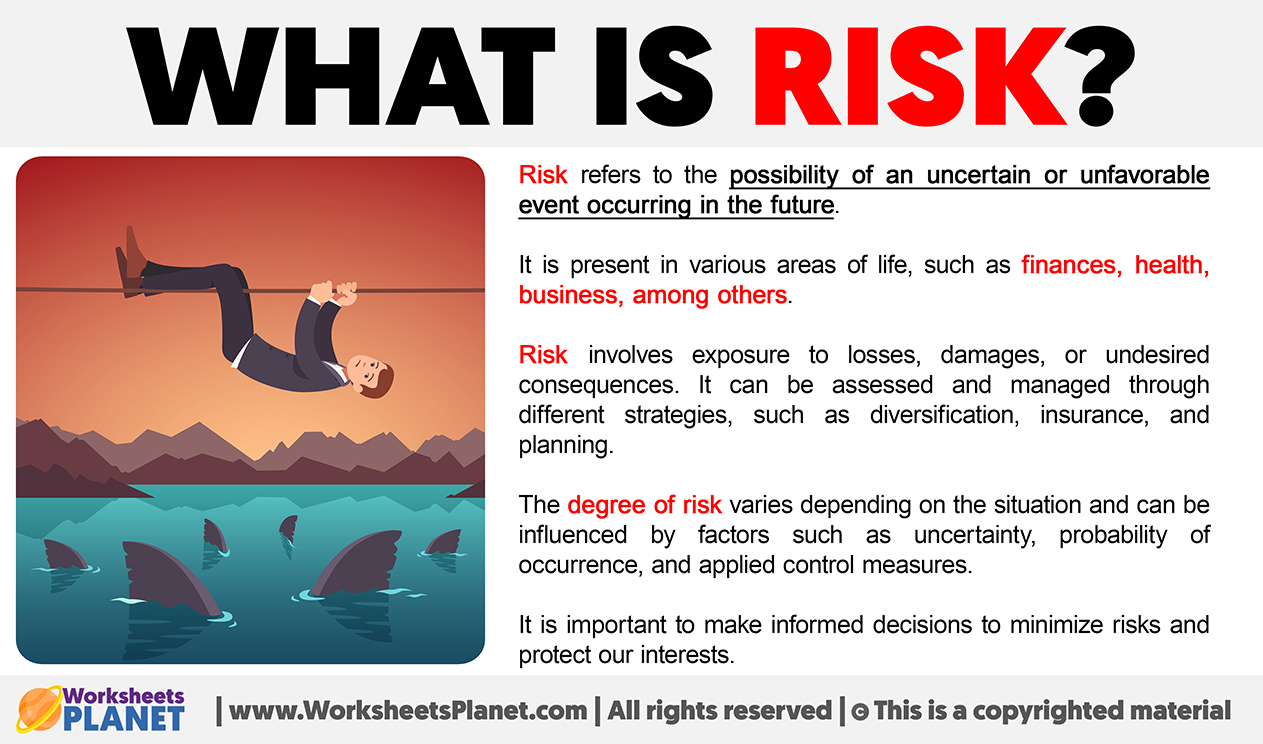
Risk, at its core, refers to the probability or potential for an outcome to differ from what is expected. In a financial context, this deviation usually implies the potential for loss of capital, a lower-than-anticipated return, or a failure to meet financial objectives. However, it’s crucial to acknowledge that risk is a two-sided coin; it also encapsulates the possibility of better-than-expected returns or achieving goals ahead of schedule. Without risk, there is typically no reward. The pursuit of financial growth, whether through investing, starting a business, or even choosing a career path, inherently involves taking on some level of risk.
Understanding the various facets of financial risk empowers individuals and organizations to quantify, evaluate, and ultimately manage the uncertainties they face. It moves beyond a simple fear of loss to a strategic assessment of potential scenarios and their impact. For instance, saving money in a low-interest savings account might carry minimal direct market risk, but it exposes the saver to inflation risk, where the purchasing power of their money erodes over time. Conversely, investing in a startup company might offer the allure of exponential returns but comes with a significantly higher risk of complete capital loss. Navigating these trade-offs is central to effective financial planning, requiring a clear articulation of goals, an honest assessment of one’s capacity to absorb losses, and a realistic understanding of the potential returns commensurate with the risks undertaken. This foundational understanding sets the stage for dissecting specific types of risk encountered across personal finance, investment, and business domains.
Deconstructing Investment Risk: Beyond Volatility
Investment risk is perhaps the most commonly discussed aspect of financial risk, often mistakenly equated solely with market volatility. While volatility—the degree of variation in an asset’s price over time—is a component of risk, it doesn’t encompass the full spectrum. A comprehensive understanding requires distinguishing between various types of investment risks that can impact portfolios.
Market Risk (Systematic Risk)
Market risk, also known as systemic risk, is the risk inherent in the entire market or market segment. It is caused by broader economic or political factors that affect all investments, regardless of their specific characteristics. Examples include economic recessions, interest rate changes, geopolitical events, and major policy shifts. Diversification within a market segment cannot mitigate market risk, as all assets within that segment tend to move in the same direction. Investors can only mitigate market risk by diversifying across different asset classes (e.g., stocks and bonds) or through hedging strategies.
Specific Risk (Unsystematic Risk)
In contrast, specific risk, or unsystematic risk, is unique to a particular company, industry, or asset. It arises from factors specific to a single investment, such as poor management decisions, product recalls, labor strikes, or changes in consumer preferences affecting a particular sector. This type of risk can be significantly reduced through diversification. By investing in a variety of companies across different industries, an investor can minimize the impact of a single negative event affecting one of their holdings.
Other Key Investment Risks
Beyond market and specific risk, several other categories influence investment outcomes:
- Interest Rate Risk: Primarily affects bond investments. As interest rates rise, the value of existing bonds with lower fixed interest payments typically falls, and vice versa.
- Inflation Risk (Purchasing Power Risk): The risk that the return on an investment will not keep pace with the rate of inflation, thereby eroding the real purchasing power of the investment’s proceeds. Cash and fixed-income investments are particularly susceptible.
- Liquidity Risk: The risk that an investment cannot be bought or sold quickly enough at a fair price due to a lack of willing buyers or sellers. Illiquid assets often require significant discounts to sell quickly.
- Credit Risk (Default Risk): The risk that a borrower (e.g., a bond issuer or a company you’ve lent money to) will fail to meet their financial obligations, such as making interest payments or repaying the principal. This is central to fixed-income investing.
- Currency Risk (Exchange Rate Risk): For investors holding assets denominated in foreign currencies, fluctuations in exchange rates can affect the value of their investment when converted back to their home currency.
The Risk-Reward Spectrum
A fundamental principle in investing is the risk-reward trade-off: higher potential returns are typically associated with higher levels of risk. Assets considered “safe,” like government bonds, generally offer lower returns, while investments with greater uncertainty, such as growth stocks or emerging market equities, may offer the potential for higher returns to compensate investors for taking on additional risk. Understanding this spectrum is vital for constructing a portfolio that aligns with an individual’s financial objectives and their ability to withstand potential losses. It’s about finding the optimal balance, not simply avoiding risk entirely.
Risk in Personal Finance and Everyday Life
While investment risk often dominates discussions, risk permeates every aspect of personal finance, affecting an individual’s financial stability and ability to meet daily obligations and long-term goals. These everyday risks, if not adequately managed, can derail even the most meticulously planned financial strategies.
Income and Employment Risk
One of the most significant personal financial risks is the potential loss or reduction of income. This can stem from various sources: job loss due to economic downturns, technological displacement, company restructuring, or personal inability to work due to illness or injury. A sudden halt in income can quickly deplete savings, lead to debt, and threaten housing stability. Strategies to mitigate this include maintaining an emergency fund, diversifying income streams (e.g., through side hustles or skill development), and investing in continuous education to remain competitive in the job market.
Health and Life Event Risk
Unforeseen life events carry substantial financial implications. Major illness, accidents, disability, or death can incur significant medical expenses, loss of income, and increased care costs. Without adequate preparation, these events can lead to catastrophic financial hardship for individuals and their families. This is where insurance plays a critical role. Health insurance covers medical costs, disability insurance replaces lost income, and life insurance provides financial support to dependents upon the policyholder’s death, effectively transferring a portion of these substantial risks to an insurance provider.
Debt and Credit Risk
While debt can be a tool for wealth creation (e.g., a mortgage for a home), excessive or unmanaged debt poses considerable risk. High-interest credit card debt, for instance, can quickly spiral out of control, eroding disposable income and hindering saving efforts. Defaulting on loans damages credit scores, making it difficult and more expensive to borrow in the future, impacting everything from housing applications to car loans. Prudent debt management, including minimizing high-interest debt and maintaining a healthy credit score, is crucial for financial well-being.
Planning for the Unexpected
A cornerstone of personal financial risk management is establishing an adequate emergency fund. Typically, this means setting aside three to six months’ worth of essential living expenses in an easily accessible, liquid account. This fund acts as a financial buffer against unexpected job loss, medical emergencies, or large unforeseen expenses, preventing individuals from having to liquidate investments at inopportune times or resort to high-interest debt. Budgeting for contingencies, regularly reviewing financial plans, and updating insurance coverage are also vital practices in managing the everyday risks of life.
Business Finance and Entrepreneurial Ventures: Calculated Gambles
For businesses and entrepreneurs, risk takes on a multifaceted dimension, influencing everything from daily operations to long-term strategic direction. Launching or running a business inherently involves a series of calculated gambles, where understanding and managing risk can be the difference between success and failure.
Operational Risk
Operational risk encompasses the potential for losses resulting from inadequate or failed internal processes, people, and systems, or from external events. This can include anything from equipment breakdowns, supply chain disruptions, technology failures, cybersecurity breaches, or human error. Effective operational risk management requires robust internal controls, contingency planning, business continuity strategies, and a culture of vigilant monitoring. For instance, a manufacturing company faces operational risk if a key supplier goes bankrupt or if its production line experiences an extended outage.
Strategic Risk
Strategic risk pertains to the potential for losses arising from poor business decisions, failed strategies, or the inability to adapt to changes in the market, competitive landscape, or regulatory environment. Launching a product that fails to gain market traction, failing to innovate in a rapidly evolving industry, or misjudging a competitor’s moves are all forms of strategic risk. Mitigating strategic risk involves thorough market research, scenario planning, continuous monitoring of the competitive landscape, and maintaining flexibility in business models to pivot when necessary.
Financial Risk in Business
Beyond general investment risk (for businesses holding investments), businesses face specific financial risks related to their own capital structure and cash flow.
- Cash Flow Risk: The risk that a business will not have enough cash to meet its short-term obligations, potentially leading to liquidity crises or even bankruptcy. Effective cash flow forecasting and management are critical here.
- Capital Structure Risk: The risk associated with how a business finances its operations and growth—the mix of debt and equity. Too much debt can lead to high interest payments and increased default risk, while too much equity dilution can impact ownership and control.
- Market Demand Risk: The risk that consumer demand for a company’s products or services will decline, impacting sales and revenue.
- Credit Risk (in business context): The risk that customers will fail to pay for goods or services purchased on credit.
Regulatory and Compliance Risk
Businesses operate within a complex web of laws, regulations, and industry standards. Regulatory and compliance risk is the potential for legal sanctions, financial penalties, or material loss due to failure to comply with these requirements. This includes environmental regulations, data privacy laws (e.g., GDPR), labor laws, and industry-specific regulations. Staying abreast of changing legislation and investing in robust compliance frameworks are essential to mitigate this risk.
The Role of Risk Assessment in Business Planning
For entrepreneurs, a comprehensive risk assessment is a vital component of any business plan. It involves identifying potential threats, evaluating their likelihood and potential impact, and developing strategies to mitigate or manage them. This systematic approach allows businesses to anticipate challenges, allocate resources effectively, and make informed decisions that enhance their resilience and long-term viability.
Mastering Risk: Quantification, Mitigation, and Personal Strategy
Effectively dealing with financial risk involves a structured approach that moves from understanding its nature to actively quantifying, mitigating, and aligning it with one’s personal and financial objectives. Mastering risk isn’t about eliminating it entirely, which is often impossible or counterproductive, but rather about making informed choices about the risks one is willing and able to take.
Risk Quantification and Measurement
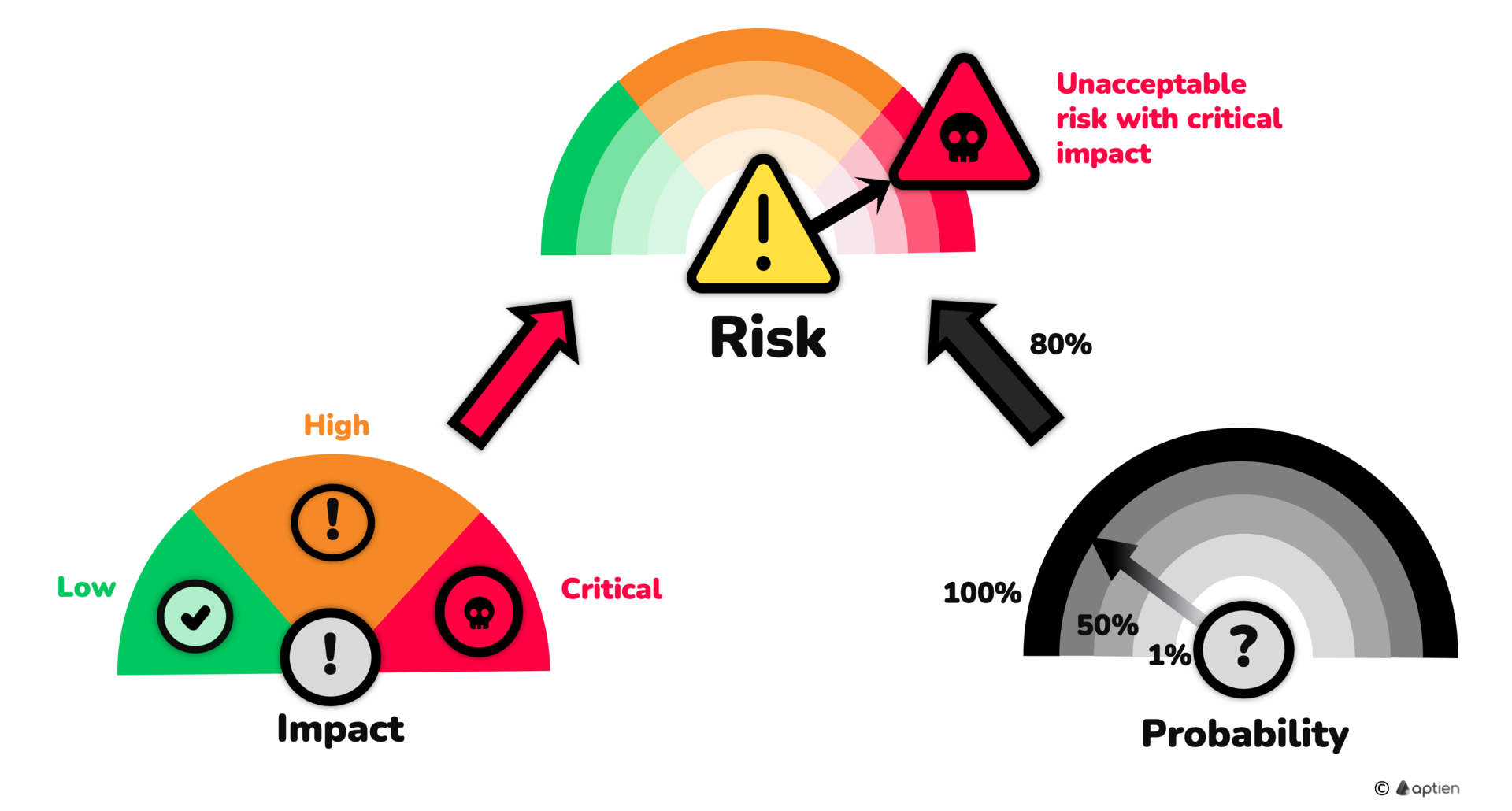
While complex models exist for institutional investors, individuals can conceptually quantify risk by considering probability and impact. What is the likelihood of a particular negative event occurring (e.g., a stock dropping by 20%, a job loss)? And if it does occur, what would be the financial impact? Tools like standard deviation can indicate volatility, while a careful analysis of historical performance, economic forecasts, and asset characteristics helps in forming expectations. For personal finance, this involves assessing the financial consequences of scenarios like an unexpected car repair versus a major health crisis.
Strategic Risk Mitigation Techniques
A range of strategies can be employed to reduce exposure to various financial risks:
- Diversification: The golden rule of investing, diversification involves spreading investments across different asset classes (stocks, bonds, real estate), industries, geographies, and company sizes. This helps reduce unsystematic risk, as poor performance in one area can be offset by better performance elsewhere. For personal finance, it means not relying on a single income source or a single investment vehicle.
- Asset Allocation: This is the process of deciding how to divide an investment portfolio among different asset categories. It’s a strategic decision based on an investor’s time horizon, risk tolerance, and financial goals. A younger investor with a longer time horizon might allocate more to equities (higher risk, higher potential return), while someone nearing retirement might favor a more conservative mix with more bonds.
- Insurance: As discussed, insurance is a powerful tool for transferring specific, significant risks (health, life, property, auto, disability) to a third party for a premium. It prevents catastrophic financial losses from derailing long-term plans.
- Emergency Funds: A liquid cash reserve is a form of self-insurance against short-term financial shocks, preventing the need to sell investments at a loss or incur high-interest debt during crises.
- Due Diligence and Research: Before making any significant financial commitment—whether investing in a stock, purchasing real estate, or starting a business—thorough research helps identify and understand potential risks. Informed decisions are inherently less risky than impulsive ones.
- Hedging: For more sophisticated investors or businesses, hedging involves taking an offsetting position in a related security to reduce the risk of adverse price movements.
Understanding Your Risk Profile
Effective risk management begins with a clear understanding of one’s personal risk profile, which is composed of three key elements:
- Risk Tolerance: This is your psychological comfort level with risk and uncertainty. How much emotional stress can you handle when your investments fluctuate?
- Risk Capacity: This refers to your financial ability to absorb losses without jeopardizing your essential financial goals. A higher net worth and stable income generally mean higher risk capacity.
- Risk Need: This is the level of risk you must take to achieve your financial goals within your given time horizon. If your goals are ambitious and your time horizon is short, you might need to take on more risk than your tolerance might suggest, leading to a necessary reevaluation of goals or strategies.
Continuous Monitoring and Adjustment
Financial risks are not static; they evolve with market conditions, economic cycles, and personal circumstances. Therefore, effective risk management requires continuous monitoring of investments, regular review of financial plans, and periodic adjustments to strategies. A portfolio allocated for a 30-year-old might be wholly inappropriate for that same individual at 50 or 60. By proactively assessing and adapting to changes, individuals and businesses can maintain a resilient financial footing, navigating the inherent uncertainties of the money world with greater confidence and strategic foresight.
aViewFromTheCave is a participant in the Amazon Services LLC Associates Program, an affiliate advertising program designed to provide a means for sites to earn advertising fees by advertising and linking to Amazon.com. Amazon, the Amazon logo, AmazonSupply, and the AmazonSupply logo are trademarks of Amazon.com, Inc. or its affiliates. As an Amazon Associate we earn affiliate commissions from qualifying purchases.