
The Fundamental Charge Driving Technological Advancements
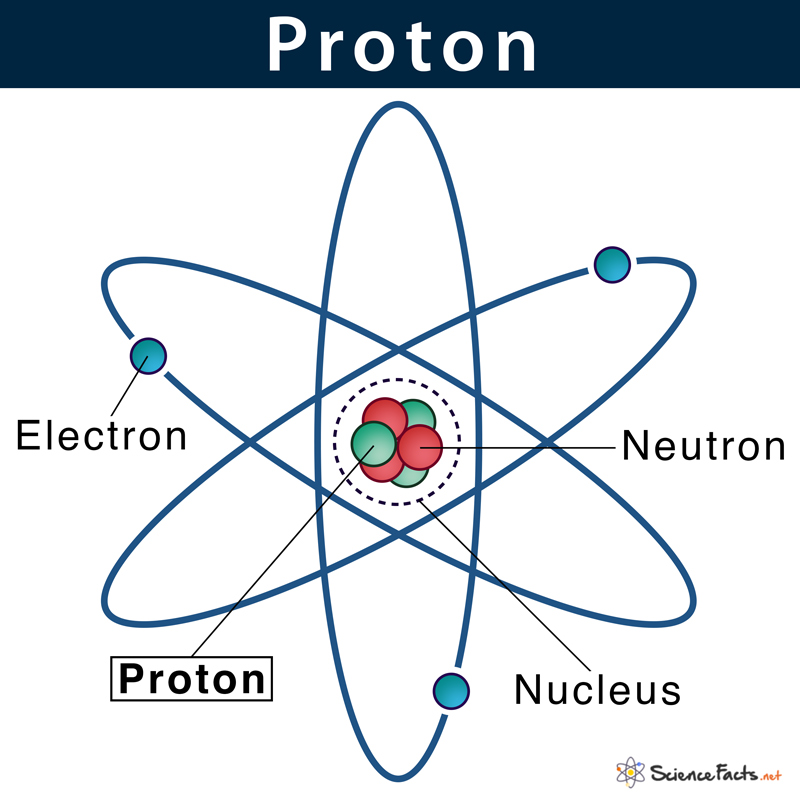
At its core, the proton is a subatomic particle, a foundational building block of all matter, residing within the nucleus of every atom. While its definition might seem purely academic, understanding “what the proton does” is not merely a scientific curiosity but a profound insight into the very mechanisms that enable a vast array of modern and future technologies. Its positive electrical charge, mass, and role in atomic number dictate the identity of an element, influencing chemical reactions, material properties, and energy dynamics that are continuously harnessed by engineers and innovators worldwide. From the silicon in our microchips to the energy powering our grids, the proton’s silent, ubiquitous action is the unseen architect of technological progress.
The Proton’s Core Identity and its Electrical Charge
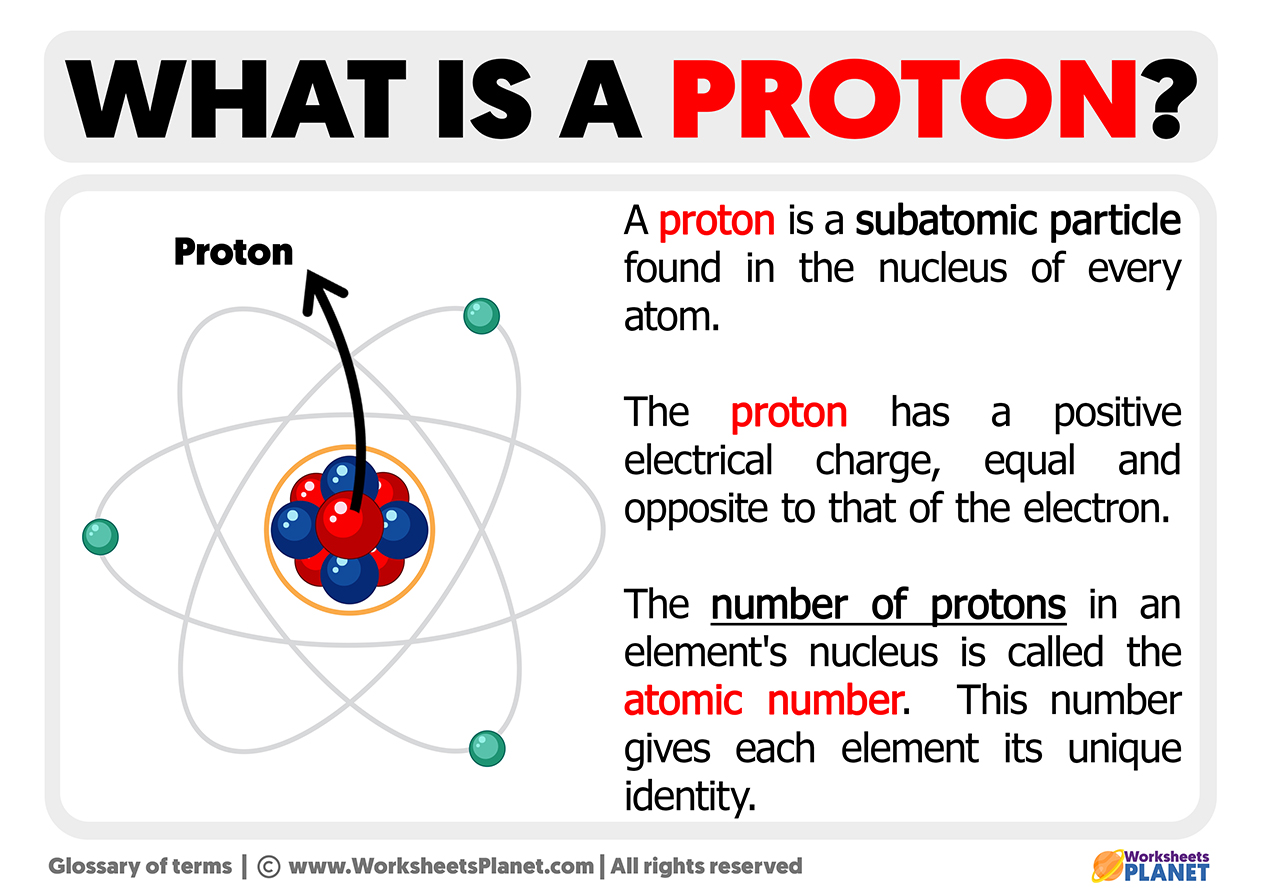
The defining characteristic of a proton is its positive electrical charge, equal in magnitude but opposite in sign to that of an electron. This charge is not merely an abstract concept; it is the force that binds electrons to the nucleus, forming atoms and, subsequently, molecules. Without the proton’s positive charge, the very concept of stable matter as we know it would cease to exist. In technology, this charge is manipulated directly and indirectly. For instance, in semiconductors, the careful introduction of impurities (doping) alters the availability of charge carriers—electrons and “holes” (a conceptual positive charge deficit)—which are ultimately governed by the atomic structure defined by protons. The ability to control and direct these charge carriers is the bedrock of all modern electronics, from microprocessors to memory chips, where electrical signals are precisely managed to perform complex computations. The continuous miniaturization and increased efficiency of integrated circuits owe much to our precise understanding and engineering of these atomic-level charge dynamics, directly tied to the proton’s fundamental role.
How Atomic Structure Shapes Material Science
The number of protons in an atom’s nucleus, known as the atomic number, uniquely defines an element. This seemingly simple fact has monumental implications for material science. Different elements, by virtue of their distinct proton counts, exhibit wildly varying physical and chemical properties. Iron (26 protons) is a sturdy metal, while oxygen (8 protons) is a gaseous non-metal. Engineers and material scientists leverage this fundamental principle to design materials with specific characteristics tailored for technological applications. For example, in the development of advanced alloys for aerospace, superconducting materials for high-efficiency power transmission, or novel polymers for flexible electronics, the precise arrangement and combination of elements—each defined by its proton count—is paramount. The ability to manipulate and combine these proton-defined identities allows for the creation of innovative materials that push the boundaries of what technology can achieve, leading to lighter, stronger, more conductive, or more resistant components crucial for the next generation of gadgets and infrastructure, from quantum dots to high-temperature ceramics.
Protons in Advanced Medical Technologies
Perhaps one of the most direct and life-changing applications of understanding the proton’s function is found in the field of medical technology. Here, the unique properties of protons are not just theoretical constructs but active tools used to diagnose diseases with unprecedented clarity and treat them with enhanced precision, significantly improving patient outcomes and quality of life.
Precision Oncology: Proton Beam Therapy
One of the most remarkable medical innovations leveraging protons is proton beam therapy, a highly advanced form of radiation therapy used primarily for cancer treatment. Unlike traditional X-ray radiation, which deposits energy along its entire path through the body, protons exhibit a characteristic known as the “Bragg peak.” This means they release most of their energy precisely at a controllable depth, just before they come to a stop. This property allows medical physicists and oncologists to deliver a highly concentrated dose of radiation directly to a tumor while minimizing damage to surrounding healthy tissues and organs. This precision is particularly crucial for treating cancers located near sensitive structures, such as tumors in the brain, spinal cord, eyes, or in pediatric patients, where safeguarding developing tissues is paramount. The technology involves sophisticated particle accelerators that generate and control high-energy proton beams, alongside advanced imaging and dosimetry systems to guide their application with millimeter accuracy, pushing the boundaries of non-invasive tumor eradication.
Diagnostic Breakthroughs: MRI and NMR Spectroscopy
The proton also plays a starring role in one of the most powerful diagnostic tools in modern medicine: Magnetic Resonance Imaging (MRI). MRI scanners exploit the magnetic properties of atomic nuclei, particularly the hydrogen nucleus, which consists of a single proton. When placed in a strong magnetic field, these protons align themselves. When a radiofrequency pulse is applied, they absorb energy and temporarily flip their alignment. Upon removal of the pulse, they relax back to their original alignment, emitting a radio signal in the process. Different tissues, due to varying water content and molecular environments, cause protons to relax at different rates, producing distinct signals. Advanced computational algorithms then translate these signals into detailed cross-sectional images of organs, soft tissues, bone, and virtually all internal body structures, without using ionizing radiation.
Beyond imaging, the principles of nuclear magnetic resonance (NMR) spectroscopy, upon which MRI is based, are also used in biochemical research to determine the structure of complex molecules, providing insights crucial for drug discovery and understanding disease mechanisms at a molecular level. These technologies are a direct testament to how deeply understanding the proton’s quantum mechanical properties can revolutionize healthcare, enabling earlier diagnosis and targeted therapies.

Energy and Computing: Harnessing Proton Dynamics
The proton’s influence extends far beyond medical applications, underpinning critical developments in energy generation, storage, and even the fundamental limits of computation. Its role in nuclear processes and charge transport mechanisms is central to addressing some of humanity’s most pressing technological challenges, from climate change to data processing.
Next-Gen Batteries: The Promise of Proton-Exchange Technologies
The quest for more efficient and sustainable energy storage solutions is a defining challenge of our era. While lithium-ion batteries dominate the market, researchers are actively exploring alternative chemistries, and proton-exchange technologies are emerging as a compelling area. Proton-exchange membrane (PEM) fuel cells, for instance, generate electricity by combining hydrogen and oxygen, with protons being the key charge carriers across a specialized membrane. These fuel cells are pivotal for developing zero-emission vehicles and stationary power sources. Furthermore, advancements in proton batteries, which utilize protons as the primary charge carriers, promise higher energy density, faster charging times, and greater safety compared to traditional designs. By manipulating the movement of protons within electro-chemical cells, engineers are designing novel systems that could fundamentally alter how we store and utilize renewable energy, driving innovation in portable electronics and grid-scale storage.
Nuclear Fusion and Fission: Protons at the Heart of Power
At the grandest scale of energy production, protons are indispensable. Nuclear fission, currently used in power plants worldwide, involves splitting heavy atomic nuclei (like uranium or plutonium), releasing immense amounts of energy. The nuclei, by definition, are characterized by their proton count, and the interaction of these protons with neutrons during fission is the core process generating heat for electricity. The controlled release of energy from these proton-rich nuclei powers cities and industries globally.
Even more ambitiously, nuclear fusion – the process that powers the sun – seeks to replicate by fusing light atomic nuclei (typically isotopes of hydrogen, which are protons and neutrons) together. This process releases even more energy than fission with fewer radioactive byproducts. While still largely experimental, projects like ITER (International Thermonuclear Experimental Reactor) are striving to create controlled fusion reactions on Earth. Success in this domain would represent a limitless, clean energy source, all stemming from our ability to control and harness the fundamental interactions of protons at extreme temperatures and pressures, promising a future of sustainable power generation.
Quantum Computing’s Atomic Foundations
While electrons are often discussed in the context of quantum bits (qubits), the stability and manipulation of quantum states also depend on the properties of atomic nuclei, which are defined by their protons and neutrons. Nuclear spins, including those of protons, can be used as qubits in certain quantum computing architectures. For instance, in nuclear magnetic resonance quantum computing, the spins of protons in molecules are manipulated using radiofrequency pulses, echoing the principles behind MRI but applied for computation rather than imaging. A deeper understanding of proton dynamics and their interactions within a quantum framework could unlock new pathways for building more robust and scalable quantum computers, potentially revolutionizing fields from cryptography to drug discovery and advanced material design by tackling problems intractable for classical computers. The precise control over individual proton spins is a frontier in developing quantum processors.
Exploring the Universe: Particle Accelerators and Scientific Discovery
Beyond direct application, the study of protons themselves, often facilitated by some of the most complex technological marvels ever built, continues to expand the frontiers of human knowledge, indirectly paving the way for unforeseen future technologies. This ongoing scientific exploration is a vital engine for long-term technological progress.
Probing Matter’s Secrets: The Role of Accelerators
Large Hadron Colliders (LHC) and other particle accelerators are colossal technological instruments designed to accelerate protons (and other particles) to nearly the speed of light and then smash them together. By observing the debris and energy produced in these collisions, physicists gain insights into the fundamental forces and particles that govern the universe, including the very internal structure of the proton itself. Understanding these basic building blocks, their interactions, and the forces that bind them is not merely abstract science. It leads to the development of highly sensitive detectors, advanced cryogenic systems, ultra-high vacuum technologies, and sophisticated data processing algorithms—all cutting-edge technologies that often find applications far beyond fundamental physics research. For example, the World Wide Web was initially developed at CERN to facilitate information sharing among particle physicists, demonstrating the unexpected technological dividends of pure research.
Designing Future Technologies from Fundamental Insights
Every breakthrough in fundamental physics, often involving a deeper understanding of elementary particles like the proton, has the potential to spawn entirely new technological paradigms. The discovery of electromagnetism led to electronics, and understanding quantum mechanics paved the way for lasers and transistors. As scientists continue to explore the nuances of proton structure, stability, and interaction—potentially through new forms of matter or energy that manifest under extreme conditions created in accelerators—the insights gained could inspire technologies we cannot yet envision. These might include revolutionary energy sources, entirely new forms of computation, or novel materials with unprecedented properties, all springing from our continuous quest to comprehend “what the proton does” at the most profound levels of existence. The proton, in its quiet omnipresence, remains a key driver of humanity’s technological evolution, from the smallest medical device to the grandest dreams of cosmic energy.
aViewFromTheCave is a participant in the Amazon Services LLC Associates Program, an affiliate advertising program designed to provide a means for sites to earn advertising fees by advertising and linking to Amazon.com. Amazon, the Amazon logo, AmazonSupply, and the AmazonSupply logo are trademarks of Amazon.com, Inc. or its affiliates. As an Amazon Associate we earn affiliate commissions from qualifying purchases.