
The Nasdaq isn’t merely a stock exchange; it’s a dynamic ecosystem representing innovation, growth, and the relentless march of technological progress in the global financial landscape. Born out of a desire to modernize securities trading, it has evolved into a powerful symbol of the digital economy, a critical barometer for investors, and a crucial engine for capital formation. For anyone looking to understand the intricacies of investing, business finance, or even the broader economic pulse, comprehending what the Nasdaq represents is fundamental. It signifies more than just a list of companies; it embodies a philosophy of forward-thinking investment and a platform where the companies shaping tomorrow are brought to the forefront of today’s markets.

The Birth and Evolution of a Digital Exchange
The Nasdaq’s story is one of disruption and adaptation, a testament to how financial markets can innovate to meet the demands of a rapidly changing world. Its origins are rooted in a dissatisfaction with the traditional, often inefficient, paper-based trading systems of the mid-20th century.
Origins: Revolutionizing Trading
Before Nasdaq, stock trading was largely conducted on physical floors, with brokers shouting bids and offers, a process that was slow, opaque, and often subject to human error. The National Association of Securities Dealers (NASD) was tasked by the U.S. Congress in the late 1960s to regulate the over-the-counter (OTC) market, which was notorious for its lack of transparency. Their solution, launched on February 8, 1971, was the National Association of Securities Dealers Automated Quotations (Nasdaq) system.
Nasdaq was the world’s first electronic stock market. Instead of a physical trading floor, it used a sophisticated computer network to provide brokers and dealers with real-time, electronic bid and ask prices. This automation brought unprecedented transparency and efficiency to the market, allowing participants to see a consolidated view of prices from multiple market makers. This digital revolution democratized access to market information and significantly sped up transaction times, laying the groundwork for the high-frequency trading and digital platforms we know today. In its early days, Nasdaq primarily listed smaller, unlisted companies that couldn’t meet the stringent listing requirements of older exchanges like the New York Stock Exchange (NYSE). This focus on emerging companies would profoundly shape its future identity.
The Rise of Tech: A Natural Symbiosis
While Nasdaq initially served a broad range of companies in the OTC market, its electronic nature made it a natural fit for technology companies, which were themselves at the forefront of the digital revolution. As the tech boom of the 1980s and 1990s began, particularly with the advent of the personal computer and the internet, these innovative companies found a welcoming home on Nasdaq. Companies like Microsoft, Apple, Intel, and Cisco Systems chose Nasdaq for their public listings, drawn by its modern image, lower listing costs, and a perception that it understood their growth-oriented business models better than the more traditional exchanges.
This symbiosis created a powerful feedback loop: Nasdaq’s electronic infrastructure appealed to tech companies, and in turn, the listing of prominent tech companies cemented Nasdaq’s reputation as the exchange for innovation. This association became so strong that “Nasdaq” almost became synonymous with “tech stocks” in the public consciousness, a perception that largely persists even today. The dot-com bubble of the late 1990s, while ultimately speculative, further amplified Nasdaq’s profile as the primary venue for groundbreaking, albeit sometimes unproven, businesses seeking public capital.
Beyond Technology: Diversification and Growth
While technology remains a cornerstone of Nasdaq, the exchange has undergone significant diversification since the dot-com era. Recognizing the risks of being overly concentrated in one sector, Nasdaq actively sought to attract companies from other industries, including biotechnology, consumer goods, healthcare, and finance. Today, while tech giants still dominate its indices, a wide array of companies across various sectors call Nasdaq home, from Starbucks to Moderna.
Furthermore, Nasdaq has expanded its global footprint and services far beyond just stock listing. It now operates multiple exchanges, provides market technology to over 100 organizations in 50 countries, offers market data, index services, and solutions for corporate clients in areas like investor relations and governance. This diversification reflects a strategic effort to become a comprehensive global financial technology company, leveraging its core strengths in automation, data, and market infrastructure. The evolution from a simple automated quotation system to a global financial powerhouse underscores its adaptability and its ongoing representation of progress in financial markets.
Nasdaq as a Market Barometer
Beyond its role as a trading venue, the Nasdaq is critically important as a set of market barometers. Its various indices offer crucial insights into the performance of specific sectors and the broader economic health, making them indispensable tools for investors, economists, and analysts alike.
The Nasdaq Composite: A Broad Market Indicator
The Nasdaq Composite Index is arguably the most widely recognized Nasdaq index. It is a market-capitalization-weighted index of all common stocks and similar securities listed on the Nasdaq stock market. This means that larger companies (those with higher market capitalization) have a greater impact on the index’s performance.
The Composite index provides a comprehensive snapshot of the entire Nasdaq market. Because Nasdaq has historically attracted growth-oriented companies, especially those in technology and biotechnology, the Composite is often seen as an indicator of the performance of these innovative sectors. When the Nasdaq Composite is rising, it often signals strong investor confidence in growth stocks and future-oriented industries. Conversely, a decline can suggest a pullback in these sectors, perhaps due to concerns about interest rates, economic slowdowns, or shifts in investment sentiment towards more value-oriented companies.
The Nasdaq 100: The Large-Cap Tech Bellwether
While the Composite includes all Nasdaq-listed stocks, the Nasdaq 100 Index focuses on a more specific segment: the 100 largest non-financial companies listed on the Nasdaq Stock Market. This index is also market-capitalization-weighted and explicitly excludes financial companies, ensuring its focus remains squarely on technology, healthcare, consumer discretionary, and industrial innovators.
The Nasdaq 100 is often considered the preeminent benchmark for large-cap growth and technology stocks. Its constituents include some of the most influential companies in the world—Apple, Microsoft, Amazon, Google (Alphabet), Tesla, and Nvidia, to name a few. Because these companies are often at the forefront of innovation and global economic trends, the Nasdaq 100 serves as a powerful bellwether for the health of the technology sector and, by extension, a significant portion of the global economy. Its performance is closely watched by investors seeking exposure to high-growth areas and by analysts trying to gauge the strength of leading-edge industries.
Interpreting Market Sentiment and Trends
The performance of the Nasdaq indices, particularly the Composite and the 100, offers profound insights into prevailing market sentiment and underlying economic trends. A robust Nasdaq suggests an environment where investors are willing to pay a premium for growth potential, often signaling optimism about future earnings, technological advancements, and economic expansion. This can be fueled by low-interest rates, which make future earnings more valuable, or by significant technological breakthroughs.
Conversely, underperformance or declines in the Nasdaq indices can indicate a shift in investor preference towards more defensive or value stocks, perhaps due to rising interest rates, inflationary pressures, or broader economic uncertainties. Periods of high volatility on Nasdaq often reflect uncertainty around technological disruption, regulatory changes impacting tech giants, or geopolitical events that could affect global supply chains and consumer spending. By closely monitoring these indices, investors can gain a better understanding of the risk appetite in the market, the performance of key innovation drivers, and the potential direction of capital flows.
Investing on the Nasdaq: Opportunities and Considerations
For individual and institutional investors alike, the Nasdaq represents a vast landscape of opportunities, particularly for those seeking exposure to companies at the forefront of innovation. However, like all investments, it comes with its own set of considerations, risks, and strategies.
Accessing Growth-Oriented Companies

The primary appeal of investing in Nasdaq-listed companies is the unparalleled access it provides to growth-oriented businesses. Many companies that initially list on Nasdaq are smaller, rapidly expanding firms seeking capital to fund research and development, scale operations, or enter new markets. As they mature, many grow into global behemoths, maintaining their Nasdaq listing. This makes Nasdaq an attractive venue for investors looking for companies with strong growth potential, often driven by intellectual property, technological innovation, or disruptive business models.
Whether it’s a cutting-edge biotechnology firm developing new treatments, a software company revolutionizing cloud computing, or an e-commerce giant transforming retail, Nasdaq offers a diverse range of companies poised for significant expansion. Investors can directly purchase shares of individual companies or gain broader exposure through exchange-traded funds (ETFs) that track the Nasdaq Composite or Nasdaq 100, offering diversified access to these growth engines.
Understanding Volatility and Risk
While the promise of high growth is enticing, it often comes hand-in-hand with higher volatility and risk, characteristics frequently associated with Nasdaq-listed companies. Growth stocks, by their nature, often trade at higher valuations based on expectations of future earnings rather than current profitability. This makes them particularly sensitive to changes in investor sentiment, economic outlook, and interest rate environments.
When economic conditions are favorable and interest rates are low, growth stocks tend to outperform. However, during periods of economic uncertainty, rising interest rates, or market corrections, these stocks can experience significant downturns. Smaller, less established companies on Nasdaq may also carry additional risks related to their business models, competitive landscape, and ability to secure future funding. Investors must be prepared for potentially wider price swings and conduct thorough due diligence before investing in individual Nasdaq stocks.
Diversification Strategies for Nasdaq Investors
Given the inherent volatility, smart investors employ diversification strategies when allocating capital to Nasdaq-listed assets. Simply investing in a single tech stock, no matter how promising, can expose an investor to undue idiosyncratic risk.
One common strategy is to invest in Nasdaq-tracking ETFs or mutual funds, which provide immediate diversification across many companies, mitigating the impact of any single company’s poor performance. For those investing in individual stocks, it’s prudent to diversify across different sub-sectors within technology (e.g., software, semiconductors, hardware, biotech), or even across different industries listed on Nasdaq.
Furthermore, investors should consider diversifying their overall portfolio beyond just Nasdaq-listed growth stocks. Combining growth investments with value stocks, income-generating assets, and other asset classes can help create a more balanced and resilient portfolio, capable of weathering different market cycles. The Nasdaq offers immense potential for wealth creation, but a disciplined, diversified approach is essential to harness its opportunities effectively while managing its inherent risks.
The Nasdaq’s Role in the Global Economy
The Nasdaq is more than just an American stock exchange; it plays a pivotal role in the global economic fabric, fostering innovation, facilitating capital flows, and serving as a critical benchmark for the performance of key industries worldwide.
Fostering Innovation and Capital Formation
At its core, Nasdaq represents a powerful engine for capital formation. It provides a platform for both nascent startups and established companies to raise capital from public investors, which is essential for funding research and development, expanding operations, acquiring other companies, and driving job creation. By enabling companies to access public markets, Nasdaq facilitates the transformation of innovative ideas into marketable products and services, driving economic growth and societal progress. Many of the world’s most transformative companies—from those that pioneered personal computing to those leading the AI revolution—have leveraged Nasdaq to fund their growth. This ability to connect capital with innovation makes Nasdaq an indispensable component of the global innovation ecosystem.
Facilitating Global Investment Flows
The Nasdaq’s international reach has grown substantially. It lists companies from around the globe, providing international firms access to the vast pool of U.S. and global capital, while simultaneously offering investors worldwide opportunities to invest in diverse global enterprises. Through its market technology solutions, Nasdaq also powers exchanges and financial markets in numerous countries, effectively standardizing and modernizing trading infrastructure on a global scale. This global integration facilitates cross-border investment flows, allowing capital to seek out the most promising opportunities wherever they may arise, thereby fostering global economic interconnectedness and efficiency.
Benchmarking Economic Health and Sector Performance
As highlighted earlier, the Nasdaq’s indices, particularly the Nasdaq Composite and Nasdaq 100, are invaluable benchmarks for economic health and sector performance, not just domestically but globally. Given the heavy concentration of technology and growth companies, these indices are often seen as leading indicators of innovation cycles and investor sentiment towards future economic prospects. A strong performance on Nasdaq can signal robust R&D spending, healthy corporate earnings in key sectors, and investor optimism about technological advancements that will drive future productivity and wealth. Conversely, a downturn can indicate investor concerns about the global tech sector, potential economic slowdowns, or shifts in capital away from growth-oriented investments. Economists and policymakers frequently analyze Nasdaq’s movements as part of their broader assessment of the global economic climate and the health of critical, high-growth industries.
Distinguishing Nasdaq from Other Exchanges
To fully grasp what Nasdaq represents, it’s crucial to understand how it differentiates itself from other major stock exchanges, particularly its long-standing rival, the New York Stock Exchange (NYSE). These distinctions lie in their history, trading models, and the types of companies they traditionally attract.
NYSE vs. Nasdaq: A Tale of Two Listing Philosophies
The fundamental difference between Nasdaq and NYSE often comes down to their historical roots and listing philosophies. The NYSE, founded in 1792, represents tradition and established industry. It has historically attracted larger, older, and more industrial companies, often referred to as “blue-chip” stocks. Its listing requirements have traditionally been more stringent regarding profitability and asset size.
Nasdaq, as discussed, is a relatively younger exchange, founded in 1971, and was built for the digital age. It quickly became the preferred venue for technology companies and growth-oriented firms that might not have met the NYSE’s profitability thresholds but offered immense future potential. While both exchanges now list a broad range of companies, Nasdaq maintains its reputation as the “tech-heavy” exchange, a home for disruptors and innovators, whereas the NYSE often represents stability and mature industries. This divergence in philosophy influences investor perception and the strategic choices companies make regarding where to list their shares.
The Dealer Market vs. Auction Market Model
Another significant distinction lies in their trading models. The NYSE operates primarily as an auction market. In this model, orders from buyers and sellers converge on a physical trading floor, facilitated by “specialists” who manage the order book for specific stocks and aim to maintain an orderly market. Price discovery occurs through open outcry and the specialist’s role in matching bids and offers.
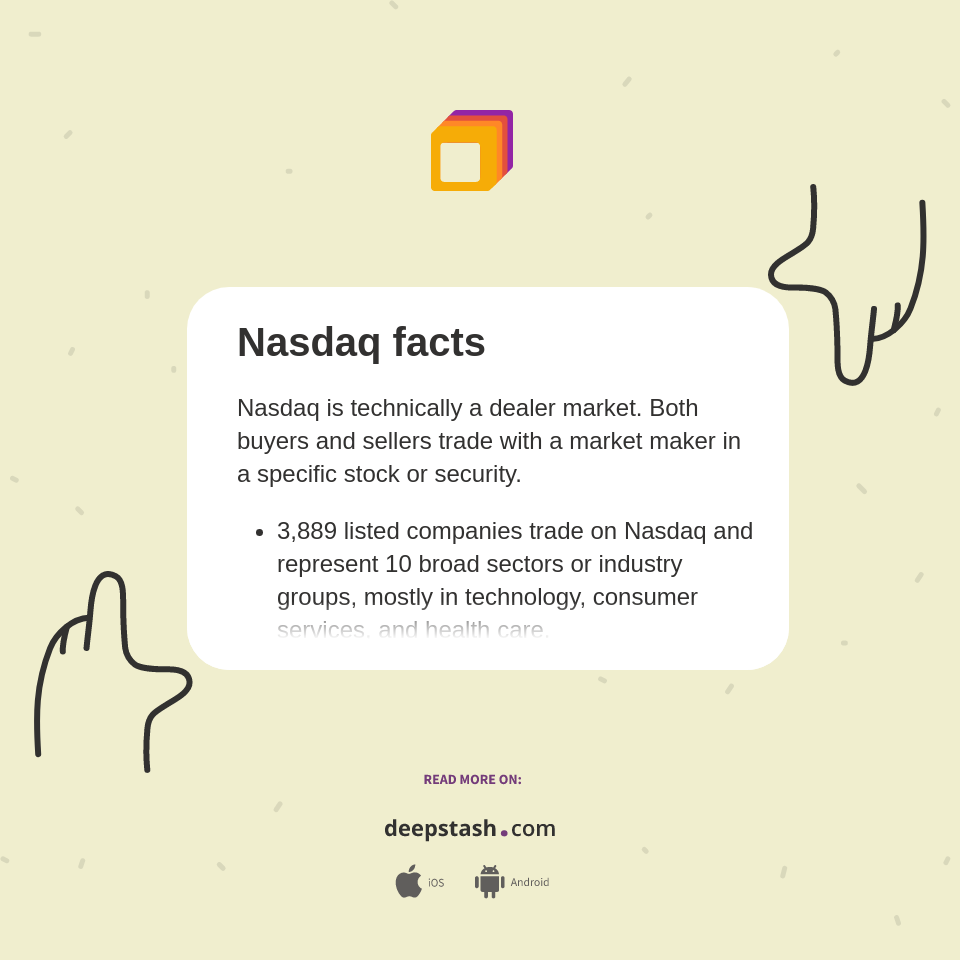
Nasdaq, on the other hand, is a dealer market. It doesn’t have a physical trading floor. Instead, it relies on a network of competing market makers (dealers) who stand ready to buy and sell specific stocks from their own inventory. These market makers quote bid (buy) and ask (sell) prices, and investors trade with the best available quote. This electronic, competitive market-making system was a revolutionary concept that prioritized speed, efficiency, and multiple pricing sources. While both exchanges have adopted elements of electronic trading, their foundational models still inform their operational structures and market dynamics.
Focus on Growth vs. Established Industries
Ultimately, what the Nasdaq represents is a focus on growth, innovation, and the future. Its indices are dominated by companies that are often disrupting existing industries or creating entirely new ones. This makes it a crucial indicator for sectors like technology, biotechnology, and renewable energy. Investors seeking exposure to companies with high growth potential, often with higher risk but also higher potential reward, frequently turn to Nasdaq.
In contrast, the NYSE, while having diversified, still leans towards established industries like manufacturing, finance, consumer staples, and utilities. Its indices, such as the Dow Jones Industrial Average (though not exclusively NYSE-listed), tend to reflect the performance of more mature, stable companies. Therefore, the choice of exchange for listing or investing often reflects a company’s stage of development or an investor’s appetite for risk and growth versus stability and established value. The Nasdaq stands as a beacon for the relentless pursuit of innovation and the financial opportunities that emerge from it, profoundly shaping our understanding of modern financial markets.
aViewFromTheCave is a participant in the Amazon Services LLC Associates Program, an affiliate advertising program designed to provide a means for sites to earn advertising fees by advertising and linking to Amazon.com. Amazon, the Amazon logo, AmazonSupply, and the AmazonSupply logo are trademarks of Amazon.com, Inc. or its affiliates. As an Amazon Associate we earn affiliate commissions from qualifying purchases.