
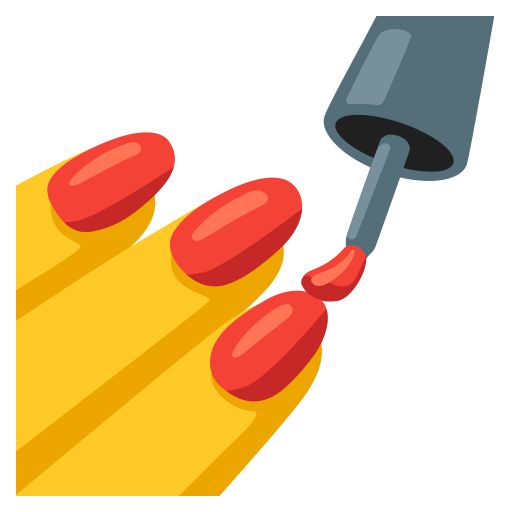
In the vast ecosystem of digital communication, where brevity is the ultimate currency, the emoji has evolved from a simple visual aid into a complex linguistic tool. Among the thousands of characters sanctioned by the Unicode Consortium, the Nail Polish emoji ( ) stands out as a fascinating case study in digital semantics. While it appears to be a straightforward representation of beauty and self-care, its technical journey and cultural adoption have transformed it into a multi-layered symbol of nonchalance, confidence, and “sass.” Understanding the nuance of this emoji requires a look at the intersection of mobile technology, platform-specific rendering, and the evolution of Natural Language Processing (NLP).

The Technical Evolution: From Unicode 6.0 to Modern UI
The Nail Polish emoji did not emerge in a vacuum. It was officially introduced as part of Unicode 6.0 in 2010, a landmark update that brought hundreds of now-essential icons to mobile devices globally. Technically categorized as “Nail Care,” its hexadecimal code point is U+1F485. While the Unicode Consortium provides the standard, the actual visual manifestation of the emoji is left to the discretion of individual software developers and hardware manufacturers.
Cross-Platform Discrepancies in Rendering
In the tech world, “fragmentation” is a common challenge, and emoji design is no exception. The way a user perceives the emoji depends heavily on their operating system’s UI/UX philosophy.
On Apple’s iOS, the nail polish emoji is rendered with high-fidelity detail, featuring a classic red polish and a hand positioned with a degree of elegance. This high-gloss, skeuomorphic legacy makes it appear more “premium,” which likely contributed to its early adoption in luxury branding and “baddie” aesthetics.
Conversely, Google’s Android version has undergone several iterations, moving from a more abstract, “blob-like” figure to a cleaner, flat-design aesthetic that aligns with Material Design principles. Samsung’s implementation often features a different bottle shape and a more vibrant pink hue. These subtle design choices impact the “vibe” of the message; a sleek iOS emoji might feel more biting or sarcastic, whereas a softer Android rendering might feel more literal. For developers and UI designers, these discrepancies highlight the importance of universal design standards in cross-platform communication.
Skin Tone Modifiers and Inclusivity
A significant technical milestone for the nail polish emoji was the introduction of Unicode 8.0 in 2015, which brought the Fitzpatrick scale to the emoji keyboard. This allowed the emoji to support five different skin tone modifiers ( , , , , ). From a technical standpoint, this is achieved through “Zero Width Joiner” (ZWJ) sequences, where the base emoji is combined with a hidden character that tells the system to render a specific skin tone. This shift was more than just a cosmetic update; it was a move toward digital inclusivity, allowing users across diverse demographics to see themselves reflected in their digital “shorthand.”
Digital Linguistics: The Pragmatics of “Sass”
In the realm of digital linguistics, the nail polish emoji serves as a “pragmatic marker.” It doesn’t just add information to a sentence; it changes the entire tone of the interaction. While its literal meaning remains “getting one’s nails done,” its figurative meaning has become dominant in social media algorithms and peer-to-peer messaging.
The “I’m Unbothered” Signal
The most prevalent use of in modern tech culture is to convey a sense of nonchalance or indifference. It is the digital equivalent of a shrug combined with a boast. When a user posts a controversial opinion followed by , the emoji acts as a full stop that signals, “I said what I said, and I’m not engaging in the debate.”
This usage is particularly common on platforms like X (formerly Twitter) and TikTok, where character limits or fast-paced scrolling favor high-impact visual cues. The emoji functions as a “mic drop,” suggesting that the sender is too busy focusing on their own “glow-up” or self-care to be bothered by critics.

The Rise of “Soft Life” Tech Aesthetics
Within the “tech-adjacent” lifestyle content on Instagram and Pinterest, the nail polish emoji has become a cornerstone of the “Soft Life” and “Clean Girl” aesthetics. Here, it is less about sarcasm and more about the curation of a digital identity centered on luxury, ease, and organized productivity. Tech influencers often use it when showcasing their “desk setups” or “morning routines,” using the emoji to bridge the gap between high-tech gadgets and high-maintenance self-care. It signals a balance between the grind of the digital economy and the necessity of offline restoration.
Data, Algorithms, and Social Media Trends
For digital marketers and data scientists, the frequency of the nail polish emoji provides valuable insights into consumer sentiment. Emojis are essentially metadata for human emotion, and analyzing their usage patterns helps brands fine-tune their engagement strategies.
Sentiment Analysis and NLP Challenges
Natural Language Processing (NLP) models often struggle with emojis because their meanings are context-dependent. A machine might initially categorize as “Beauty/Cosmetics.” However, advanced sentiment analysis tools now recognize the “sarcastic” or “confident” weight the emoji carries.
When a brand’s mention is accompanied by , it often indicates a high level of brand loyalty or “stanning.” For example, if a tech company releases a sleek new smartphone and fans tweet about it using the nail polish emoji, it signifies that the brand is seen as fashionable and superior to competitors. Developers training AI models must account for these cultural shifts to ensure that “unbothered” isn’t misclassified as “neutral.”
The Emoji in Search and Discovery
Platform algorithms also utilize emojis to categorize content. On Instagram, searching for will lead a user to a mix of professional manicurists and lifestyle influencers. However, the “shadow” associations—the slang and the attitude—ensure that the emoji also appears in “trending” sections related to pop culture news and celebrity “clapbacks.” For creators, using the emoji is a tactical move to enter specific digital subcultures, signaling to the algorithm that their content belongs to a specific “vibe” or community.
The Future of Pictorial Language in Digital Interfaces
As we move toward more immersive digital environments, such as the metaverse and spatial computing, the role of 2D emojis like is evolving. We are seeing the transition from flat icons to 3D animated avatars that can mimic the physical gesture of looking at one’s nails.
Haptic Feedback and Integrated Gestures
Future wearable tech and VR interfaces may integrate “emoji gestures.” Imagine a scenario where a user performs a specific hand motion while wearing a haptic-enabled glove, and their digital avatar automatically displays the nail polish emoji or performs the corresponding “buffing” motion. This bridges the gap between hardware and emotional expression, making digital communication more intuitive and expressive.
Predictive Text and AI Integration
Modern mobile keyboards now use sophisticated machine learning to suggest emojis based on the semantic content of a message. If you type “I’m doing me,” “slay,” or “feeling good,” the emoji is often the first suggestion. This predictive technology reinforces the emoji’s secondary meanings, as the AI learns from billions of user interactions that “nail polish” is the go-to symbol for confidence. This creates a feedback loop where the tech reinforces the slang, and the slang shapes the future of the software.
Conclusion: The Intersection of Code and Culture
The nail polish emoji is a testament to how technology does not just facilitate communication; it shapes it. What began as a simple 12×12 pixel icon in the early days of Japanese mobile carriers has become a powerful tool for identity and social posturing. From the technical complexities of Unicode ZWJ sequences to the nuances of AI sentiment analysis, represents the sophisticated way humans have adapted to the limitations of the digital screen.
In the world of tech, small symbols carry heavy weight. The nail polish emoji proves that even the most feminine, seemingly “trivial” icons can become pillars of digital discourse, providing a way for users to convey complex emotions like confidence, indifference, and superiority with a single tap. As our digital tools continue to advance, the “sass” of the emoji will likely remain a permanent fixture of our shared visual language, reminding us that in the digital age, a picture—or an emoji—truly is worth a thousand words.
aViewFromTheCave is a participant in the Amazon Services LLC Associates Program, an affiliate advertising program designed to provide a means for sites to earn advertising fees by advertising and linking to Amazon.com. Amazon, the Amazon logo, AmazonSupply, and the AmazonSupply logo are trademarks of Amazon.com, Inc. or its affiliates. As an Amazon Associate we earn affiliate commissions from qualifying purchases.