
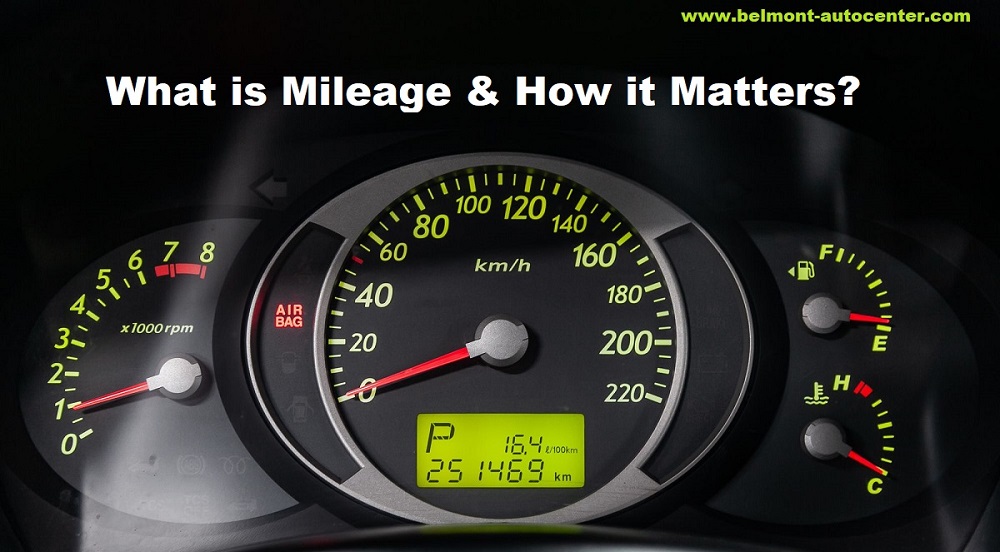
The odometer on your car, a seemingly simple display, holds a wealth of information, particularly when it comes to its financial implications. For many, “miles” on a car simply represent how much it has been driven. However, from a financial standpoint, mileage is a critical determinant of a vehicle’s value, its potential for future costs, and its suitability for various ownership models. Understanding the nuanced meaning of car mileage can empower you to make smarter purchasing decisions, manage your finances more effectively, and maximize the return on your automotive investment. This article delves into the financial significance of car mileage, exploring its impact on depreciation, maintenance, ownership costs, and resale value.
The Undeniable Impact of Mileage on Car Depreciation
Depreciation is the silent killer of a car’s value. It’s the process by which a vehicle loses value over time and with use. While age plays a role, mileage is arguably the most significant factor influencing depreciation. Each mile driven represents wear and tear on the vehicle’s components, and the market – whether you’re buying new, used, or selling – fully accounts for this.
Understanding the Depreciation Curve
The depreciation curve for a car is not linear; it’s steepest in the initial years of ownership. A brand-new car can lose 20-30% of its value within the first year. However, mileage significantly influences the trajectory of this curve. Cars with significantly higher mileage than their peers of the same age will depreciate at a faster rate. This is because prospective buyers will perceive a higher likelihood of impending repairs and a shorter remaining lifespan for critical components.
For example, consider two identical cars, both five years old. Car A has 50,000 miles, while Car B has 120,000 miles. Car B will undoubtedly be valued considerably lower than Car A. This is not just about the number; it’s about the accumulated stress on the engine, transmission, suspension, brakes, and countless other systems. These components have finite lifespans, and higher mileage signifies that these lifespans are being consumed more rapidly.
The “Sweet Spot” for Used Car Buyers
For savvy used car buyers, understanding depreciation can lead to financial advantages. The steepest depreciation occurs in the first few years. This means that cars that are a few years old with moderate to slightly above-average mileage can represent a “sweet spot” for value. You benefit from the initial owner absorbing the bulk of the depreciation, while the car still has considerable life left in its components. However, it’s crucial to strike a balance. A car with extremely low mileage for its age might indicate underutilization, which can also lead to its own set of problems (e.g., dried-out seals, seized components). Conversely, a car with excessively high mileage, even at a tempting price, may be a financial black hole waiting to happen.
Mileage as a Negotiating Tool
When purchasing a used car, mileage is a primary negotiating point. Sellers will price cars based on their mileage, and buyers should use it to their advantage. If a car’s mileage is higher than the average for its age and condition, you have strong grounds to negotiate a lower price. Conversely, if you are selling, understanding how your car’s mileage compares to market averages will help you set a realistic asking price. Online valuation tools and market research will provide benchmarks to help you gauge fair market value based on mileage.
Mileage and the Financial Implications of Maintenance and Repairs
Beyond depreciation, mileage directly correlates with the likelihood and cost of future maintenance and repairs. The more a car is driven, the more its components are subjected to friction, heat, and stress, leading to wear and tear. This translates into increased expenses for the owner.
Scheduled Maintenance: A Mileage-Driven Necessity
Every vehicle manufacturer outlines a comprehensive schedule of recommended maintenance services, often tied directly to mileage intervals. These include oil changes, filter replacements, tire rotations, brake inspections, fluid flushes, and replacement of wear-and-tear items like spark plugs and belts. Neglecting these services, especially as mileage accumulates, can lead to premature failure of vital components, resulting in far more expensive repairs down the line.
For example, failing to replace transmission fluid at the recommended mileage interval can lead to transmission overheating and eventual failure, a repair that can cost thousands of dollars. Similarly, ignoring brake pad replacements can damage rotors and calipers, escalating a simple maintenance task into a costly repair. Understanding these mileage-based maintenance schedules is crucial for budgeting your vehicle ownership expenses.
The Probability of Unexpected Repairs
As a car’s mileage increases, so does the probability of unexpected repairs. Seals can dry out, hoses can crack, electrical components can fail, and mechanical parts can simply wear out. These are often not covered by standard warranty periods and can hit your wallet unexpectedly. A car with 150,000 miles is inherently more likely to develop an issue with its exhaust system, cooling system, or suspension than a car with 50,000 miles.
When considering a used car purchase, understanding the mileage of a vehicle allows you to proactively budget for potential future repairs. A car with high mileage might be a great deal upfront, but you need to factor in the potential for several thousand dollars in repairs over the next few years. This is where a pre-purchase inspection by a trusted mechanic becomes invaluable. They can assess the current condition of components and provide an estimate of potential upcoming maintenance and repair costs based on the vehicle’s mileage and overall wear.

Extended Warranties and Mileage Limits
Many vehicles come with manufacturer warranties that have both time and mileage limits. Once these limits are exceeded, you are fully responsible for all repair costs. When buying a used car, especially one with significant mileage, you might consider purchasing an extended warranty. However, these policies often have mileage caps, and the cost of the warranty itself needs to be weighed against the potential repair costs. It’s a financial calculation based on risk assessment driven by the vehicle’s mileage.
Mileage and the Economics of Car Ownership
The financial impact of mileage extends beyond depreciation and maintenance to encompass the overall economics of car ownership, including fuel efficiency, insurance premiums, and financing options.
Fuel Efficiency: A Mileage-Dependent Metric
While engine technology plays a significant role, a car’s fuel efficiency can also be influenced by its mileage. Older engines, or engines that have not been meticulously maintained, can become less efficient over time, leading to increased fuel consumption. This means that for every mile driven, a higher-mileage vehicle might cost you more at the pump. Over the lifespan of a car, this difference can add up to a substantial financial burden. When comparing vehicles, especially for those who drive a lot, considering the projected fuel costs based on mileage is a vital part of the financial equation.
Insurance Premiums: Mileage as a Risk Factor
Insurance companies assess risk when setting premiums. Mileage is a key factor in this assessment. Generally, vehicles with higher annual mileage are considered higher risk because they are on the road more often, increasing the chance of an accident or theft. This can result in higher insurance premiums. Conversely, if you drive less, you might qualify for lower mileage discounts. When budgeting for car ownership, understanding how your projected annual mileage will affect your insurance costs is important. Some insurance providers offer usage-based insurance (UBI) programs that track your driving habits, including mileage, to offer more personalized rates.
Financing and Lease Agreements: Mileage is Paramount
For those financing a car purchase or opting for a lease, mileage is a critical component of the financial agreement. Loan terms can be affected by the perceived risk associated with a high-mileage vehicle, potentially leading to higher interest rates. Lease agreements, in particular, are heavily mileage-dependent. Exceeding the agreed-upon annual mileage limit in a lease can result in substantial penalty fees at the end of the lease term. This necessitates careful estimation of your annual driving needs to avoid costly overages. Understanding these mileage clauses is paramount to avoiding financial surprises and ensuring you choose a lease that aligns with your lifestyle and budget.
Maximizing Value: Strategic Mileage Management
While you can’t undo the miles already on your car, you can manage your driving and maintenance habits to strategically maximize its financial value. This involves a proactive approach to car care and a conscious understanding of how mileage impacts its worth.
Proactive Maintenance as a Value Preservation Strategy
Regularly adhering to the manufacturer’s recommended maintenance schedule is the single most effective way to preserve the value of your car. Not only does it prevent costly breakdowns, but it also demonstrates to potential buyers that the vehicle has been well cared for. Keep meticulous records of all maintenance performed. This documentation serves as tangible proof of your diligence and can significantly boost resale value. When selling a well-maintained, high-mileage car, your service history can often outweigh the stigma of a high odometer reading.
Responsible Driving Habits
Your driving habits can influence the rate at which your car accumulates wear and tear. Smooth acceleration and braking, avoiding harsh driving conditions when possible, and ensuring your tires are properly inflated can all contribute to extending the life of various components. While these habits might seem minor, collectively they can reduce the strain on your vehicle and potentially mitigate some of the negative impacts of mileage.

The Resale Value Equation: Mileage vs. Condition
When it’s time to sell your car, the interplay between mileage and overall condition is crucial. A car with high mileage but in impeccable mechanical and cosmetic condition can still command a respectable price, especially if it’s a desirable model. Conversely, a lower-mileage car that has been neglected can be worth less than a well-maintained higher-mileage counterpart. Understanding this balance allows you to present your car in the best possible light, highlighting its strengths to potential buyers. Thorough cleaning, minor cosmetic repairs, and a complete service history can all contribute to a more favorable resale value, even with a significant number on the odometer.
In conclusion, the “miles” on a car are far more than just a number; they are a powerful financial indicator. From depreciation and maintenance costs to insurance premiums and resale value, understanding the financial implications of mileage is essential for any car owner or prospective buyer. By adopting a proactive approach to maintenance, driving responsibly, and being informed about market values, you can navigate the financial landscape of car ownership with greater confidence and ensure that your automotive investment serves you well for years to come.
aViewFromTheCave is a participant in the Amazon Services LLC Associates Program, an affiliate advertising program designed to provide a means for sites to earn advertising fees by advertising and linking to Amazon.com. Amazon, the Amazon logo, AmazonSupply, and the AmazonSupply logo are trademarks of Amazon.com, Inc. or its affiliates. As an Amazon Associate we earn affiliate commissions from qualifying purchases.