
Interest is a fundamental concept in personal finance, investing, and business. It’s the invisible force that drives growth in your savings, magnifies returns on your investments, and determines the true cost of your loans. Yet, for many, the mechanics of how interest is calculated remain a mystery. Understanding how to figure out interest is not just about crunching numbers; it’s about gaining financial literacy, making informed decisions, and ultimately taking control of your financial future. Whether you’re a budding investor, a first-time homebuyer, or simply trying to optimize your savings, demystifying interest is an essential step towards financial empowerment.

This article will break down the various ways interest is calculated, explain the terminology, and provide practical insights into how these calculations impact your everyday financial life. From the simplicity of basic interest to the formidable power of compounding, we’ll equip you with the knowledge to understand, manage, and leverage interest to your advantage.
The Fundamentals of Interest: What It Is and Why It Matters
At its core, interest is the cost of borrowing money or the reward for lending it. It’s the “rent” you pay for using someone else’s money, or the “income” you earn for letting someone use yours. This seemingly simple concept underpins almost every financial transaction, from your savings account to a multi-million-dollar corporate loan.
Defining Interest: The Cost and Reward of Money
Think of interest as the price tag associated with money over time. When you deposit money into a savings account, the bank pays you interest because they are effectively borrowing your money to lend out to others or invest. When you take out a loan for a car or a home, you pay interest to the lender for the privilege of using their capital. This exchange ensures that lenders are compensated for the risk and opportunity cost of parting with their money, and borrowers can access funds they don’t immediately possess. The interest rate, usually expressed as a percentage, dictates how much that cost or reward will be relative to the amount of money involved.
Why Interest is Crucial: Borrowing, Lending, and Investing
Understanding interest is not merely an academic exercise; it’s a practical necessity that permeates every facet of your financial life. For borrowers, grasping interest rates and calculation methods is vital to minimizing debt costs. A seemingly small difference in an interest rate can translate into thousands of dollars over the life of a mortgage or a student loan. For savers and investors, understanding how interest accrues, especially through compounding, is the key to wealth creation. It’s the engine that can transform modest savings into substantial nest eggs over time. Without a clear understanding of interest, individuals and businesses are at a significant disadvantage, susceptible to high borrowing costs and missed opportunities for growth. It empowers you to compare financial products effectively, negotiate better terms, and forecast future financial outcomes.
Key Terminology: Principal, Rate, Time
Before diving into calculations, it’s essential to familiarize ourselves with the fundamental components that determine interest:
- Principal (P): This is the initial amount of money borrowed, loaned, or invested. If you take out a $10,000 personal loan, $10,000 is the principal. If you deposit $1,000 into a savings account, $1,000 is the principal.
- Interest Rate (R): This is the percentage charged or paid on the principal over a specific period, typically expressed annually. An interest rate of 5% means you’ll pay or earn 5 cents for every dollar of principal per year. It’s crucial to convert the percentage to a decimal for calculations (e.g., 5% becomes 0.05).
- Time (T): This is the duration for which the money is borrowed, loaned, or invested. Time is almost always expressed in years or a fraction of a year in interest calculations. For example, six months would be 0.5 years.
These three variables are the building blocks for virtually all interest calculations, whether simple or complex.
Demystifying Simple Interest Calculations
Simple interest is the most straightforward method of calculating interest. It’s applied only to the initial principal amount, meaning you earn or pay interest solely on the original sum, not on any accumulated interest from previous periods. While less common for long-term investments or mortgages, simple interest is still relevant for certain types of loans and very short-term financial instruments.
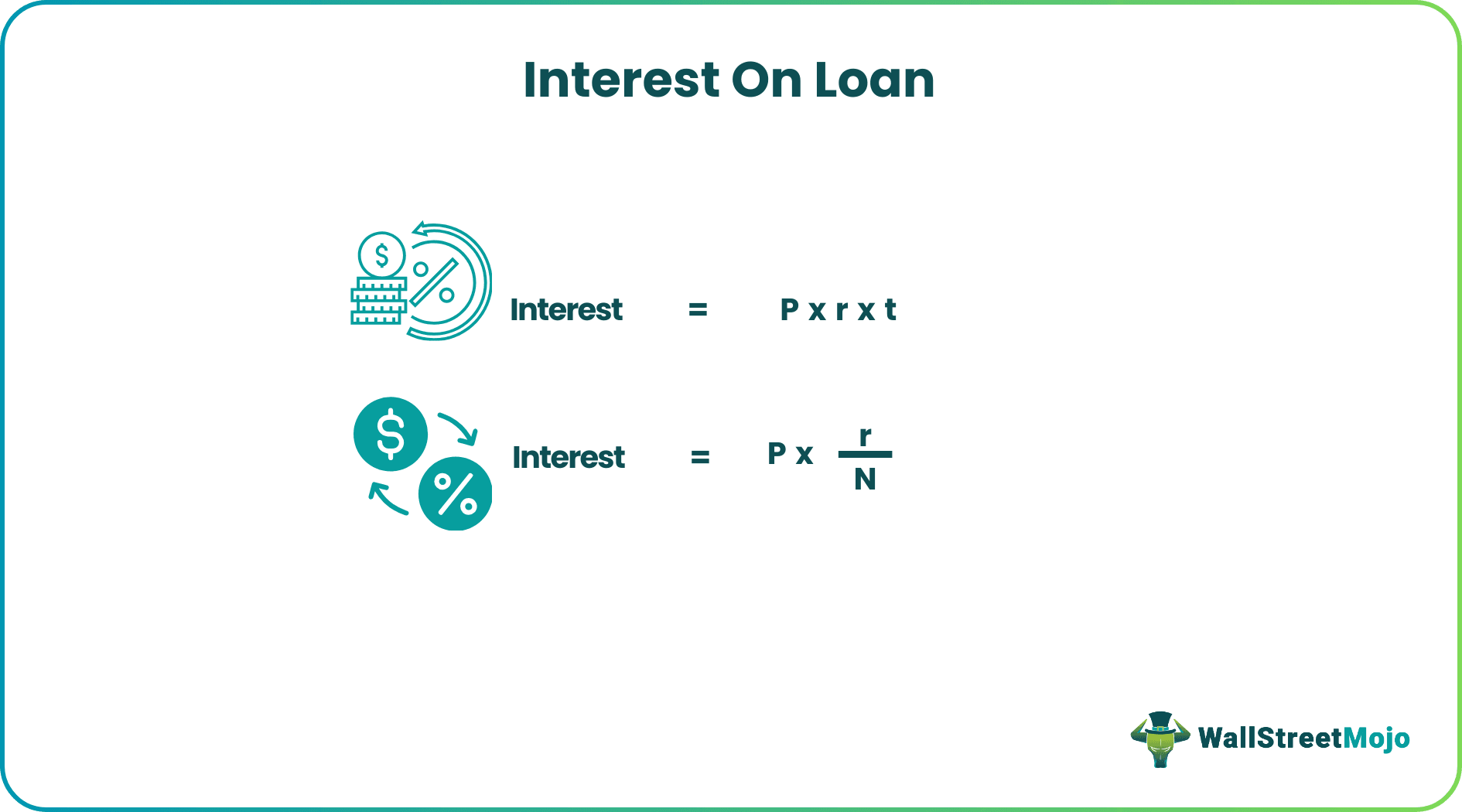
The Simple Interest Formula (I = PRT)
The formula for calculating simple interest is remarkably straightforward:
I = P × R × T
Where:
- I = Total Interest
- P = Principal amount
- R = Annual Interest Rate (as a decimal)
- T = Time (in years)
Let’s illustrate with an example. Suppose you lend a friend $1,000 for 2 years at a simple annual interest rate of 5%.
I = $1,000 (P) × 0.05 (R) × 2 (T)
I = $50 × 2
I = $100
So, after two years, your friend would owe you the original $1,000 principal plus $100 in simple interest, for a total of $1,100.
Practical Examples: Loans and Basic Investments
Simple interest is often used in situations where the term is short or the nature of the transaction doesn’t lend itself to compounding.
- Short-Term Personal Loans: Many quick loans or lines of credit might quote simple interest, especially if repayment is expected within a year. For instance, a payday loan might calculate interest simply on the principal for the duration until your next paycheck.
- Bonds (Face Value Interest): Some bonds pay interest based on their face value (principal) at a simple annual rate. You receive regular interest payments, but the interest itself doesn’t earn more interest.
- Inter-company Lending: In some business-to-business lending arrangements, particularly for short periods, simple interest may be applied.
- Some Savings Accounts: Very basic savings accounts, though increasingly rare, might accrue simple interest annually, meaning the interest earned in one year does not contribute to the principal for the next year’s interest calculation.
Understanding simple interest is a good starting point, but it’s crucial to recognize its limitations, especially when considering long-term financial growth or debt accumulation, where the power of compounding takes center stage.
When Simple Interest Applies (Short-term loans, basic savings)
Simple interest is generally applied in scenarios where the financial agreement is short-term, or the structure doesn’t allow for the reinvestment of interest. This includes:
- Short-term loans: Many loans with terms of a year or less, such as certain consumer loans or promissory notes between individuals, often use simple interest calculations. This is because the period is too brief for compounding to have a significant effect, or the administrative overhead of compounding daily or monthly is unwarranted.
- Basic savings products (less common now): While most modern savings accounts use compound interest, some very basic or older savings products might still operate on a simple interest basis, calculating interest only on the initial deposit. Always check the terms and conditions carefully.
- Some types of bonds: Many corporate and government bonds pay interest (coupons) on the principal (face value) at a simple rate. The interest is paid out to the bondholder and is not typically reinvested into the bond itself to earn more interest.
It serves as a foundational concept, providing a clear picture of interest accrual without the added complexity of compounding. However, for most long-term financial products, particularly those involving growth or substantial debt, compound interest is the dominant force.
Understanding the Power of Compound Interest
While simple interest provides a basic understanding, the real engine of financial growth and, conversely, significant debt accumulation, is compound interest. Often referred to as the “eighth wonder of the world,” compound interest allows you to earn interest not only on your initial principal but also on the accumulated interest from previous periods. It’s interest on interest, and its effects can be astonishing over time.
What is Compounding? Interest on Interest
Compounding occurs when the interest earned on an investment or loan is added back to the principal sum, and then the next interest calculation is performed on this new, larger principal. This process creates an accelerating growth curve, as your money effectively starts to earn money on itself.
Imagine you invest $1,000 at a 10% annual interest rate.
- Year 1 (Simple Interest): You earn $100 ($1,000 * 0.10). Your total is $1,100.
- Year 2 (Compounding): Now, you earn 10% on $1,100 (your original principal + last year’s interest), which is $110. Your total is $1,210.
- Year 3 (Compounding): You earn 10% on $1,210, which is $121. Your total is $1,331.
Notice how the interest earned increases each year, even though the rate remains constant. This snowball effect is the magic of compounding.
The Compound Interest Formula Explained
The formula for compound interest is more complex than simple interest, reflecting the iterative nature of the calculation:
A = P (1 + R/n)^(nt)
Where:
- A = The future value of the investment/loan, including interest
- P = The principal investment amount (the initial deposit or loan amount)
- R = The annual interest rate (as a decimal)
- n = The number of times that interest is compounded per year
- t = The number of years the money is invested or borrowed for
Let’s use an example: You invest $1,000 at an annual interest rate of 5%, compounded annually for 10 years.
A = $1,000 (1 + 0.05/1)^(1*10)
A = $1,000 (1.05)^10
A = $1,000 × 1.62889
A = $1,628.89
If this were simple interest over 10 years: I = $1,000 × 0.05 × 10 = $500. Total = $1,500.
The extra $128.89 is the power of compounding at work.
The Magic of Compounding: Long-Term Growth and Debt Accumulation
The true impact of compounding becomes evident over longer periods. Small, consistent investments, when allowed to compound over decades, can grow into significant wealth. This principle is the cornerstone of retirement planning, college savings, and long-term investment strategies. The earlier you start investing, the more time your money has to compound, making time arguably the most valuable ingredient in the compounding formula.
Conversely, compounding works against you when it comes to debt. High-interest credit card debt, for example, often compounds daily or monthly. If you only make minimum payments, the interest you owe is added to your principal, and then you start paying interest on that larger amount. This can quickly lead to a spiral where your debt grows faster than you can pay it down, making it incredibly difficult to escape. Understanding this dual nature of compounding is crucial for both building wealth and avoiding financial pitfalls.
Frequency of Compounding: Daily, Monthly, Annually
The “n” in the compound interest formula is critical because the more frequently interest is compounded, the faster your money grows (or your debt accumulates).
- Annually (n=1): Interest is calculated and added to the principal once a year.
- Semi-annually (n=2): Interest is calculated and added twice a year (every six months).
- Quarterly (n=4): Interest is calculated and added four times a year (every three months).
- Monthly (n=12): Interest is calculated and added every month.
- Daily (n=365): Interest is calculated and added every day.
While the difference might seem small for individual periods, over many years, daily compounding will yield slightly more than annual compounding, given the same annual interest rate. This is why savings accounts often advertise daily compounding, as it maximizes returns for the saver, while some loans might highlight their monthly compounding to emphasize the regular addition to the principal.
Advanced Interest Concepts and Real-World Applications
Beyond simple and compound interest, the financial world uses several other terms and concepts related to interest that are crucial for understanding the true cost of borrowing and the actual return on investments. These concepts help to standardize comparisons and provide a more holistic view of financial products.
Annual Percentage Rate (APR) vs. Annual Percentage Yield (APY)
When comparing financial products, you’ll frequently encounter APR and APY, and understanding their difference is vital:
- Annual Percentage Rate (APR): This represents the annual cost of a loan, expressed as a percentage. It includes the interest rate plus any additional fees or costs associated with the loan, but without accounting for the effect of compounding. APR gives you the basic yearly rate you’re being charged. For example, a credit card might have an APR of 18%, but if interest is compounded monthly, the effective rate you pay might be higher. APR is primarily used for loans like mortgages, car loans, and credit cards.
- Annual Percentage Yield (APY): This represents the real annual rate of return on an investment or savings account, taking into account the effect of compounding interest. APY provides a more accurate picture of how much you’ll actually earn over a year because it includes the interest earned on previously accrued interest. For example, a savings account might offer a 1.0% interest rate, but with daily compounding, its APY might be 1.005%. APY is typically used for savings accounts, CDs, and other interest-bearing deposits.
In essence, APY is a more accurate measure of what you’ll earn or pay because it includes the impact of compounding, while APR is the nominal rate before compounding is considered. Always compare APYs for savings and investments, and APRs for loans, but remember that for loans, the actual cost might be higher than the APR due to compounding frequency if APR only reflects simple interest.
Effective Annual Rate (EAR): The True Cost/Return
The Effective Annual Rate (EAR), also known as the Effective Annual Yield (EAY) or Effective Interest Rate, takes the concept of APY a step further by explicitly stating the actual annual interest rate after accounting for compounding. While APY is often quoted by financial institutions, EAR is the mathematical calculation that reveals the true cost or return. It’s especially useful when comparing financial products with different compounding frequencies.
The formula for EAR is:
EAR = (1 + R/n)^n – 1
Where:
- R = the stated annual interest rate (nominal rate)
- n = the number of compounding periods per year
For example, a loan with a 10% nominal annual rate compounded monthly (n=12) will have a higher EAR than a loan with a 10% nominal annual rate compounded annually (n=1). The EAR helps consumers and investors see beyond the stated interest rate to the actual percentage increase over a year due to compounding. It allows for an apples-to-apples comparison of financial instruments regardless of their compounding frequency.
Amortization: Breaking Down Loan Payments (Mortgages, Car Loans)
Amortization is the process of gradually paying off a loan over time through a series of regular payments. Each payment consists of both principal and interest. In the early stages of an amortizing loan (like a mortgage or a car loan), a larger portion of your payment goes towards interest, and a smaller portion reduces the principal. As the loan matures, the proportion shifts, with more of your payment going towards the principal and less towards interest.
This occurs because the interest is calculated on the remaining principal balance. In the beginning, the balance is high, so the interest component is larger. As you chip away at the principal, the interest component naturally shrinks. An amortization schedule is a table that details each payment, showing how much goes towards interest, how much reduces the principal, and the remaining principal balance after each payment. Understanding this schedule is crucial for knowing how quickly you’re building equity in an asset or how much interest you’ll pay over the life of a loan.
Present Value and Future Value: Time Value of Money
These two concepts are fundamental to the “time value of money,” the idea that a dollar today is worth more than a dollar tomorrow due to its potential earning capacity.
- Future Value (FV): This is the value of an investment or a sum of money at a specified future date, assuming a certain interest rate (or rate of return). It answers the question: “How much will my $1,000 investment be worth in 10 years if it earns 5% annually?” The compound interest formula (A = P (1 + R/n)^(nt)) is essentially a future value calculation.
- Present Value (PV): This is the current value of a future sum of money or stream of cash flows, discounted at a specific rate of return. It answers the question: “How much do I need to invest today to have $10,000 in 5 years, assuming I earn 6% annually?” PV calculations are used for financial planning, valuing investments, and making capital budgeting decisions.
Both PV and FV calculations rely heavily on interest rates to project money forward or discount it back, highlighting how interest is the core mechanism linking money across different points in time.
Tools and Strategies for Managing Interest Effectively
Understanding how interest works is the first step; the next is to actively manage it to your financial benefit. Whether you’re aiming to grow your savings, accelerate debt repayment, or make informed investment choices, leveraging interest effectively can significantly impact your financial well-being.
Leveraging Interest for Investment Growth
The most powerful strategy for investment growth is to harness compound interest over the long term.
- Start Early: The earlier you begin investing, the more time your money has to compound. Even small, consistent contributions made early in life can accumulate into substantial sums thanks to decades of compounding.
- Reinvest Earnings: For investments that generate income (like dividends or interest), reinvesting those earnings back into the original investment allows them to compound further, accelerating growth.
- Seek Higher APYs: For savings accounts and Certificates of Deposit (CDs), compare APYs (Annual Percentage Yields) to ensure you’re getting the best return for your money, factoring in the effect of compounding.
- Understand Risk vs. Return: Higher potential returns often come with higher risk. While you want to maximize interest earned, balance this with your risk tolerance and investment goals. Diversify your investments to manage risk effectively.
Minimizing Interest Costs on Debt
Just as compounding can be your friend in investments, it can be your foe with debt. Minimizing interest costs is crucial for financial health.
- Pay More Than the Minimum: Especially for high-interest debts like credit cards, paying more than the minimum payment directly reduces your principal balance, which in turn reduces the amount of interest accrued in subsequent periods. This is the most effective way to escape debt faster and save a significant amount on interest.
- Prioritize High-Interest Debt (Debt Avalanche): If you have multiple debts, focus on paying off the one with the highest interest rate first, while making minimum payments on others. Once that debt is cleared, roll the payment amount into the next highest interest debt. This “debt avalanche” strategy mathematically minimizes your total interest paid.
- Refinance or Consolidate Debt: For large debts like mortgages or student loans, explore refinancing options if interest rates have dropped or your credit score has improved. For high-interest consumer debts, consider a lower-interest personal loan or a balance transfer credit card (with caution) to consolidate and reduce your overall interest burden.
- Negotiate Rates: Sometimes, a simple call to your credit card company or lender can result in a lower interest rate, particularly if you have a good payment history.
Using Financial Calculators and Spreadsheets
You don’t need to be a math whiz to figure out complex interest scenarios. Numerous tools are available to help:
- Online Compound Interest Calculators: Websites of banks, investment firms, and financial education platforms offer free calculators that can quickly show you the future value of investments or the total interest paid on a loan.
- Amortization Calculators: These tools will generate a full schedule of your loan payments, detailing how much goes to principal and interest for each installment. They are invaluable for understanding mortgages and car loans.
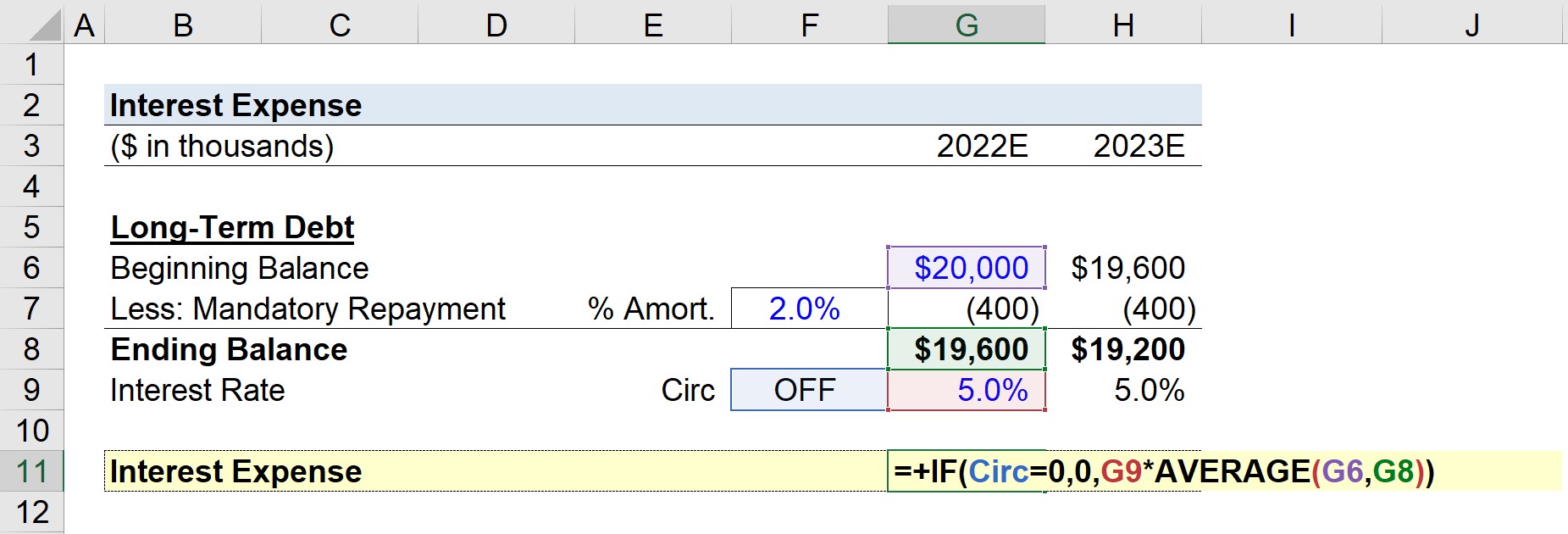
- Spreadsheet Software (Excel, Google Sheets): Spreadsheets are incredibly powerful for personal finance. You can use built-in functions (like
FVfor future value,PVfor present value,RATEfor interest rate, andPMTfor payment) to perform complex calculations, build custom budgets, and track your financial progress. Learning basic spreadsheet formulas for financial calculations can be a game-changer for managing your money. - Mobile Apps: Many personal finance apps offer integrated calculators and tracking features that incorporate interest calculations, making it easy to monitor your accounts on the go.
The Importance of Financial Literacy
Ultimately, mastering how to figure out interest boils down to developing strong financial literacy. Understanding these concepts empowers you to:
- Make Informed Decisions: You can critically evaluate loan offers, investment opportunities, and savings accounts, choosing products that align with your financial goals.
- Negotiate Better Terms: Knowing how interest impacts your bottom line gives you leverage in discussions with lenders or financial advisors.
- Plan for the Future: Accurately project your savings growth for retirement, plan for large purchases, or set realistic debt repayment timelines.
- Avoid Pitfalls: Recognize predatory lending practices or financial products that carry hidden, high interest costs.
By dedicating time to understand interest, you are not just learning a mathematical formula; you are investing in your financial future, enabling yourself to navigate the complexities of the money world with confidence and strategic insight.
aViewFromTheCave is a participant in the Amazon Services LLC Associates Program, an affiliate advertising program designed to provide a means for sites to earn advertising fees by advertising and linking to Amazon.com. Amazon, the Amazon logo, AmazonSupply, and the AmazonSupply logo are trademarks of Amazon.com, Inc. or its affiliates. As an Amazon Associate we earn affiliate commissions from qualifying purchases.