
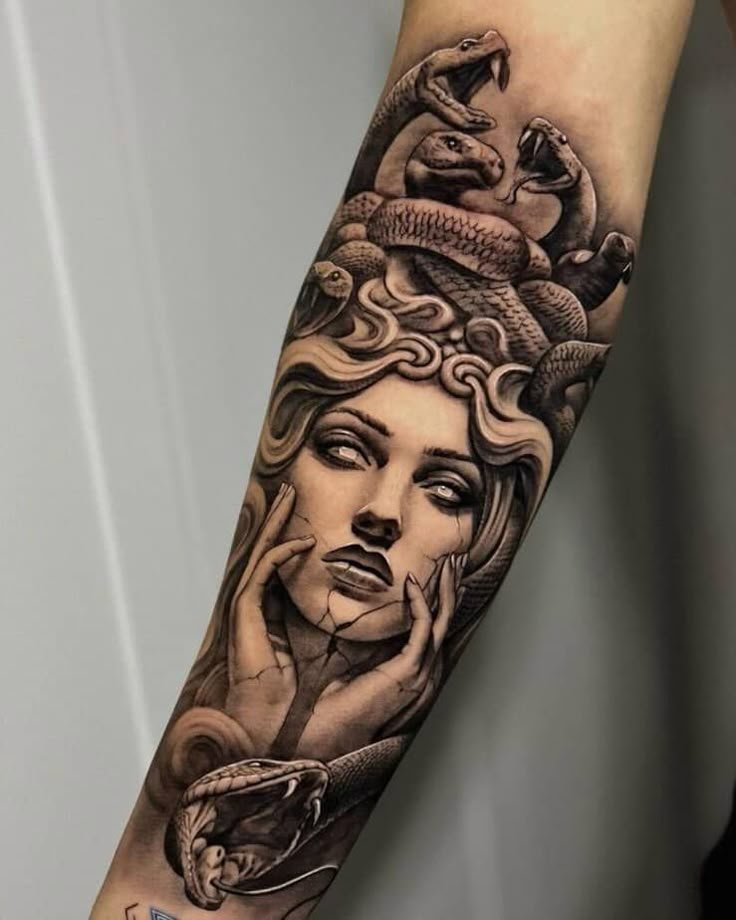
The Medusa tattoo is a powerful and complex symbol that has resonated throughout history and across various cultures. Far from being a simple aesthetic choice, the image of the Gorgon, with her venomous snakes for hair and petrifying gaze, carries a rich tapestry of meanings. When considering the Medusa tattoo through the lens of Brand Strategy, its symbolism can be deeply understood as a potent representation of identity, power, protection, and transformation. This article will delve into the multifaceted significance of the Medusa tattoo as a branding element, exploring how its historical context translates into a compelling and potent personal or corporate identity marker.
The Ancient Origins of a Powerful Symbol
To understand the modern resonance of the Medusa tattoo, it’s essential to trace its roots back to Greek mythology. The story of Medusa is one of tragedy, transformation, and ultimately, a fierce, enduring power. Her image, though often depicted as monstrous, has evolved from a terrifying entity to a symbol of defiance and strength.
Medusa: From Mortal to Monster
Originally, Medusa was a mortal woman, a priestess of Athena. The myth, in its most common iterations, tells of her violation by Poseidon in Athena’s temple. In retribution for the desecration of her sacred space, Athena, or sometimes Poseidon himself, cursed Medusa, transforming her into a hideous monster. Her beautiful hair became a writhing mass of venomous snakes, and her gaze gained the power to turn any who looked upon her into stone. This transformation is a pivotal element, signifying a profound, unwanted shift in identity, often born from trauma or injustice.
The Symbolism of the Serpent and the Gaze
The snakes are perhaps the most iconic aspect of Medusa’s appearance, and their symbolism is deep and varied. In many ancient cultures, snakes represented healing, rebirth (due to shedding their skin), and transformation. However, Medusa’s snakes are venomous, adding a layer of danger and deadly power. They symbolize a potent, untamed force, a wildness that can be both feared and respected.
Her petrifying gaze is equally significant. It represents ultimate control, the ability to halt opposition in its tracks, and an unyielding stare that cannot be ignored. This gaze can be interpreted as a defense mechanism, a way to ward off further harm and to exert dominance in a world that has wronged her.
Perseus and the Transformation of Medusa’s Image
The hero Perseus is famously known for slaying Medusa. However, his victory wasn’t simply about destruction; it was about appropriation and repurposing. Perseus used Medusa’s severed head as a weapon, wielding its power to defeat his enemies. The shield of Athena, polished to a mirror-like finish, allowed him to see Medusa’s reflection without looking directly at her, a testament to her overwhelming power even in death. This act of using her likeness for his own gain, while ultimately leading to her demise, also ensured her image’s perpetuation. This complex narrative of being both victim and formidable force is central to her enduring appeal.
Medusa as a Modern Brand Identity: Defiance and Empowerment
In the realm of personal and corporate branding, the Medusa tattoo has become a powerful declaration of individuality, resilience, and unapologetic strength. It speaks to a refusal to be silenced or diminished, especially by societal pressures or past adversies.
Embracing the “Monstrous” Feminine
For many, particularly women, the Medusa tattoo is a reclamation of a symbol that was historically used to demonize and disempower. It’s an embrace of the “monstrous feminine”—the aspects of female power that have been feared, repressed, or misunderstood by patriarchal societies. This can include assertiveness, sexuality, anger, and an inherent wildness that doesn’t conform to conventional expectations. By choosing Medusa, individuals are signaling that they are not afraid of these powerful, often untamed, aspects of themselves or of the feminine archetype. It’s a way of saying, “I am not what you expect, and I am powerful because of it.”
A Shield Against Adversity
The petrifying gaze and venomous snakes of Medusa function as potent visual metaphors for protection and defense. For someone who has faced significant challenges, trauma, or unfair criticism, a Medusa tattoo can serve as a personal emblem of their resilience and their ability to ward off negativity. It symbolizes a boundary, a clear message to the world that they are not to be trifled with. This can be particularly appealing for individuals who have had to fight for their survival or their voice. The tattoo becomes a constant reminder of their inner fortitude and their capacity to overcome obstacles.
Symbol of Transformation and Rebirth
The mythological narrative of Medusa’s transformation, while forced, offers a parallel to the personal journeys of transformation that many people undertake. The shedding of skin by snakes is a powerful symbol of rebirth and renewal. Those who have gone through significant life changes, overcome addiction, healed from trauma, or reinvented themselves often find resonance with Medusa. Her image can represent the arduous but ultimately empowering process of shedding old selves and emerging stronger and more authentic. The tattoo becomes a visual testament to their personal evolution and their ability to find beauty and power even in difficult transitions.
Strategic Applications of the Medusa Symbol in Branding
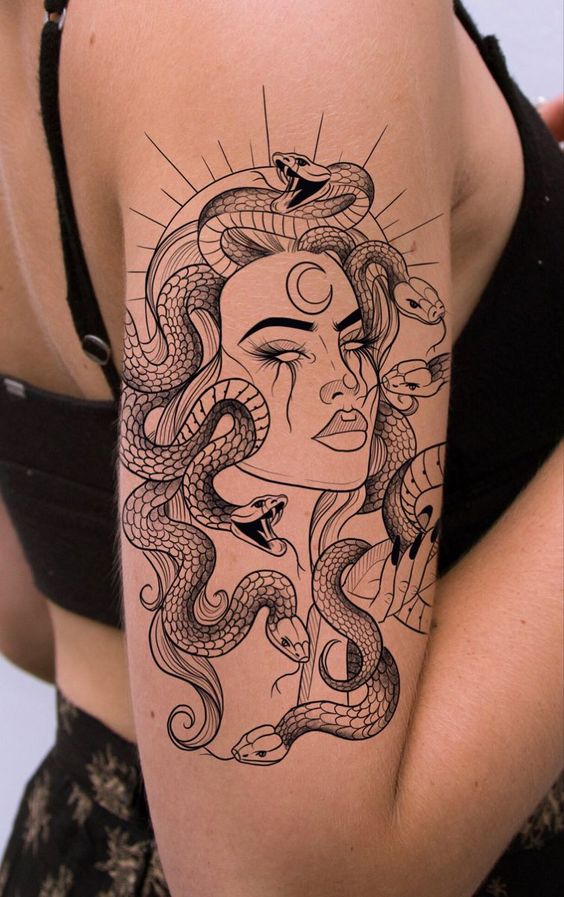
Beyond personal expression, the Medusa symbol offers a compelling narrative for brands seeking to convey specific values and establish a distinct identity. Its inherent drama and power make it a memorable and impactful choice.
Corporate Identity: Boldness and Unconventionality
For businesses, a Medusa-inspired logo or brand motif can signal a departure from the ordinary. It speaks to innovation, a willingness to challenge the status quo, and a fierce dedication to their product or service. This is particularly effective for brands in industries that value disruption, creativity, or a strong, assertive market position. For example, a fashion brand might use Medusa to embody edgy, avant-garde style, while a cybersecurity firm could leverage her protective gaze as a metaphor for their impenetrable defenses. The key is to ensure that the brand’s core values align with the chosen symbolism to avoid misinterpretation.
Marketing Campaigns: Evoking Strength and Intrigue
Medusa’s image can be a powerful tool in marketing campaigns. Her visual impact is undeniable, instantly capturing attention and sparking curiosity. Campaigns featuring Medusa can evoke themes of power, allure, mystery, and even rebellion. This can be used to:
- Highlight product durability or effectiveness: The “petrifying” aspect can be translated to an unyielding quality.
- Emphasize brand resilience: Like Medusa, the brand has endured challenges.
- Promote a sense of empowerment: Encouraging consumers to embrace their own strength.
- Create a sense of exclusivity: Positioning the brand as bold and unafraid to be different.
However, brands must be mindful of the potential for negative interpretations. The association with monstrosity and violence needs to be carefully navigated to ensure the brand is perceived as strong and confident, rather than aggressive or off-putting. The context in which Medusa is presented is crucial.
Personal Branding: Asserting Authority and Unique Value Proposition
For individuals seeking to build a strong personal brand, the Medusa tattoo can be a significant differentiator. It allows them to communicate a complex personal narrative and a powerful sense of self. When integrated into a personal brand, Medusa can signify:
- Expertise with an edge: Acknowledging deep knowledge while maintaining a bold, unafraid demeanor.
- Leadership with integrity: The unwavering gaze can represent a commitment to principles.
- Resilience in their field: Having overcome professional challenges and emerged stronger.
- Uniqueness and individuality: A refusal to conform to industry norms.
This symbolism can be particularly impactful for entrepreneurs, artists, activists, or anyone whose personal brand is built on authenticity and a strong voice. It’s a way of saying, “This is who I am, and I stand firm in my convictions.”
Navigating the Nuances of Medusa in Branding
While the Medusa tattoo offers potent symbolism, its application in branding requires careful consideration and a deep understanding of its multifaceted meanings. The potential for misinterpretation is high, and brands must approach this powerful imagery with strategic intent.
Balancing Power and Approachability
The most significant challenge in using Medusa as a brand symbol is balancing her inherent power and intimidating aspects with the need for approachability and trust. A brand that appears too aggressive or unyielding can alienate potential customers or partners. Therefore, the interpretation of Medusa must be carefully curated. This can involve:
- Stylization: Using artistic interpretations of Medusa that soften her more fearsome features, focusing on grace and strength rather than pure monstrosity.
- Contextualization: Surrounding the Medusa imagery with other brand elements that convey warmth, innovation, or customer-centricity.
- Narrative framing: Clearly communicating the brand’s story and values, so that Medusa is understood as a symbol of empowerment and resilience, not aggression.
For instance, a brand might pair a stylized Medusa with positive messaging about protection, transformation, and inner strength, thereby softening her more intimidating aspects and highlighting her empowering qualities.

Ethical Considerations and Cultural Sensitivity
The mythology of Medusa is rooted in themes of victimhood, sexual assault, and the demonization of women. While the tattoo can be a powerful act of reclaiming and empowering, it’s crucial for brands to be aware of these sensitive origins. Applying Medusa’s image without acknowledging or respecting this context can be seen as exploitative or insensitive.
- Authenticity: Brands should ensure their use of Medusa is aligned with genuine values of empowerment, resilience, and challenging oppression, rather than simply adopting it for shock value.
- Target Audience: Understanding how the chosen audience will perceive the symbol is paramount. For some, it might be deeply resonant; for others, it might be a symbol of fear or discomfort.
- Avoiding Misappropriation: Care must be taken not to trivialize or misrepresent the complex mythological narrative.
When used thoughtfully, the Medusa tattoo can be a profound symbol for brands and individuals alike. It allows for the expression of immense power, resilience, and a bold assertion of identity, transforming a figure of ancient fear into a modern emblem of unwavering strength and self-possession. It’s a potent reminder that even from perceived monstrosity, incredible power and beauty can emerge, a message that continues to captivate and inspire in the world of branding and beyond.
aViewFromTheCave is a participant in the Amazon Services LLC Associates Program, an affiliate advertising program designed to provide a means for sites to earn advertising fees by advertising and linking to Amazon.com. Amazon, the Amazon logo, AmazonSupply, and the AmazonSupply logo are trademarks of Amazon.com, Inc. or its affiliates. As an Amazon Associate we earn affiliate commissions from qualifying purchases.