
The allure of ancient civilizations often extends beyond their monumental architecture and philosophical treatises. It encompasses their very means of communication: their languages. For many, the Greek language, particularly its ancient form, conjures images of philosophical debates, epic poetry, and the foundational texts of Western thought. However, beyond the scholarly realm, a fascinating question often arises: what did Greek sound like? While direct audio recordings from antiquity are impossible, advancements in linguistic reconstruction, computational phonetics, and digital archiving are allowing us to get closer than ever to hearing the echoes of Hellenic speech. This exploration delves into the sonic landscape of the Greek language, not through historical reenactment alone, but through the lens of modern technology, highlighting how digital tools are revolutionizing our understanding and even our experience of ancient sounds.
The Sonic Palette of Ancient Greek: Reconstructing the Sounds
The challenge of recreating the sound of ancient Greek lies in its remoteness in time and the inherent limitations of textual evidence. Unlike languages with a continuous oral tradition, or those for which we possess contemporary audio recordings, our understanding of ancient Greek pronunciation is pieced together from various sources. However, technology is proving to be an invaluable ally in this endeavor.
Deciphering Phonetic Clues Through Digital Analysis
Ancient Greek, as documented by scholars, exhibits a rich phonetic inventory. Key to its distinctive sound are several features that have evolved or disappeared in Modern Greek. Technological tools are instrumental in dissecting these nuances:
-
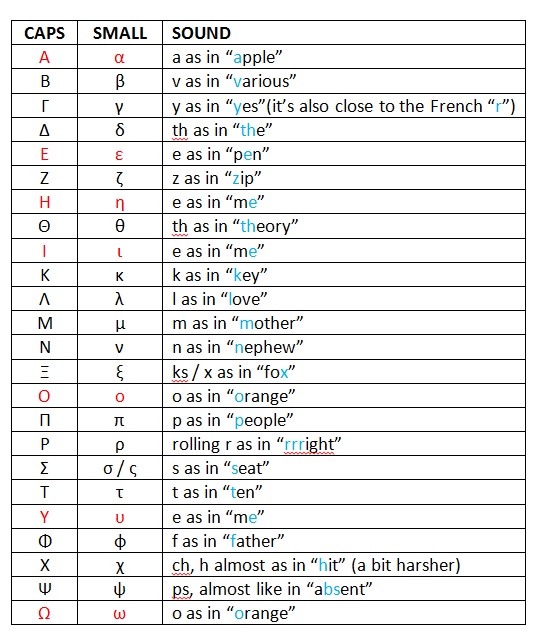
Vowel Quality and Length: Ancient Greek distinguished between long and short vowels, a feature lost in Modern Greek. Computational analysis of ancient texts, particularly those with poetic meters (which often indicate vowel length), allows for probabilistic modeling of vowel sounds. Digital tools can process vast amounts of metrical poetry, identifying patterns and assigning likely phonetic values to vowels like eta (η) and omega (ω) as distinct from epsilon (ε) and omicron (ο). While we can’t reproduce the exact subtle timbre, we can infer a more nuanced vowel system than what is present today. Tools like phonetic transcription software, designed to handle archaic phonemes, aid in this process by providing standardized representations that can be further analyzed.
-
Consonant Articulation: The presence of aspirated consonants (like φ, χ, θ, often transliterated as ph, kh, th) is a significant feature of Ancient Greek. These are sounds produced with a puff of air, distinct from their unaspirated counterparts (π, κ, τ). Digital simulations of speech production can model the airflow and articulatory movements required for these sounds, allowing researchers to test hypotheses about their precise realization. Furthermore, comparative linguistics, aided by sophisticated database software, can map the evolution of sounds across Indo-European languages, providing external validation for reconstructed phonetic features. By comparing Ancient Greek consonant clusters with those in related ancient languages whose pronunciation is better understood, computational models can refine our estimations.
-
The Digamma (Ϝ): This archaic letter, largely fallen out of use by the Classical period, represented a “w” sound. Digital databases that cross-reference textual evidence with historical linguistic reconstructions can highlight instances where the digamma would have been present, prompting further phonetic investigation. Software that can annotate texts with hypothetical phonemes allows scholars to “hear” a more complete phonetic representation, even if it’s a digital approximation.
The Role of Computational Linguistics and Speech Synthesis
The advent of computational linguistics has revolutionized the way we approach language reconstruction. Algorithms can now analyze large corpuses of ancient texts, identifying patterns in spelling, meter, and dialectal variations that are indicative of pronunciation.
-
Algorithmic Reconstruction: Machine learning algorithms are being trained on the available evidence to generate probabilistic models of Ancient Greek phonology. These models can then be used to synthesize speech, creating audio outputs that, while not definitively accurate, represent the most likely sonic realization based on current scholarly consensus. This moves beyond static phonetic charts to dynamic, audible approximations.
-
Interactive Learning Platforms: Imagine an app where you can input a phrase in Ancient Greek and hear it pronounced by a synthesized voice, with explanations of the phonetic features. Such platforms, powered by advanced speech synthesis engines, are becoming a reality. These tools leverage sophisticated phonetic models and generative AI to produce speech that mimics the reconstructed sounds. They are invaluable for educators, students, and anyone curious about the auditory experience of ancient languages.
-
Digital Epigraphy and Phonetic Annotation: The study of inscriptions (epigraphy) provides direct evidence of how words were written. When combined with phonetic knowledge, digital epigraphy tools can highlight variations in spelling that might reflect pronunciation shifts or regional dialects. Software that allows for the phonetic annotation of digital epigraphic databases enables researchers to visually and aurally explore these variations, making the process of reconstruction more dynamic and accessible.
Bridging the Gap: From Text to Sound with Modern Tech
The journey from ancient texts to audible Greek is one that technology is making increasingly tangible. It’s not just about academic curiosity; it’s about making history come alive through the power of sound.
Immersive Language Learning and Digital Archives
The educational potential of technological advancements in understanding ancient languages is immense. Beyond mere transcription, we can now experience the language in a more holistic manner.
- Virtual Reality (VR) and Augmented Reality (AR) Experiences: Imagine walking through ancient Athens, with market vendors speaking Greek in a way that scholars have reconstructed. VR and AR technologies can create immersive historical environments where reconstructed ancient languages are used, providing an unprecedented level of engagement. These simulations can incorporate synthesized voices that adhere to phonetic reconstructions, allowing users to “hear” the language in its historical context.

-
Digital Sound Libraries of Reconstructed Languages: Similar to how musicians record and archive various instruments, digital sound libraries are being developed for reconstructed ancient languages. These libraries contain synthesized audio samples of individual phonemes, diphthongs, and even complete phrases, all generated based on linguistic research. These archives serve as a valuable resource for researchers, educators, and content creators looking to incorporate authentic-sounding ancient Greek into their work.
-
Interactive Pronunciation Guides: Online platforms and apps now offer interactive pronunciation guides for Ancient Greek. These tools often use text-to-speech technology powered by sophisticated phonetic algorithms. Users can select words or phrases, and the software will generate an audio output, allowing for direct comparison and practice. The ability to isolate specific sounds and receive immediate auditory feedback is a significant technological leap in language learning.
The Computational Phonetician: A New Breed of Scholar
The rise of computational tools has led to the emergence of the “computational phonetician,” a scholar who combines traditional linguistic expertise with advanced data analysis and simulation techniques.
-
Data Mining and Linguistic Pattern Recognition: Computational linguists employ sophisticated algorithms for data mining in vast digital repositories of ancient texts. These tools can identify subtle patterns in grammar, syntax, and word usage that might have previously gone unnoticed, offering new insights into pronunciation and linguistic evolution. For instance, identifying recurring deviations in spelling across different dialects can provide clues about how those sounds were articulated differently.
-
Acoustic Simulation and Modeling: Advanced software allows for the simulation of human speech production. By inputting parameters derived from linguistic reconstruction (e.g., likely tongue placement, vocal cord vibration for voiced consonants), researchers can create digital models that generate acoustic waveforms. These simulations allow for the testing of different phonetic hypotheses and the refinement of our understanding of how specific sounds were produced.
-
Crowdsourcing and Citizen Science in Linguistic Research: Platforms that utilize crowdsourcing can engage a wider audience in linguistic research. For example, citizen scientists could be tasked with identifying potential phonetic variations in digital texts or even providing feedback on the perceived naturalness of synthesized speech. This collaborative approach, facilitated by technology, accelerates the pace of research and broadens the dataset available for analysis.
The Modern Echo: How Ancient Greek Sounds Today (and How Tech Connects Us)
While the primary focus is on ancient Greek, it’s impossible to ignore its living descendant, Modern Greek. The technological tools that help us reconstruct the past also inform our understanding of the present, revealing the evolutionary journey of the language.
Tracing the Sonic Evolution with Digital Tools
Modern Greek, spoken by millions today, retains many echoes of its ancient predecessor, but with significant shifts. Technology is crucial in mapping these transformations.
-
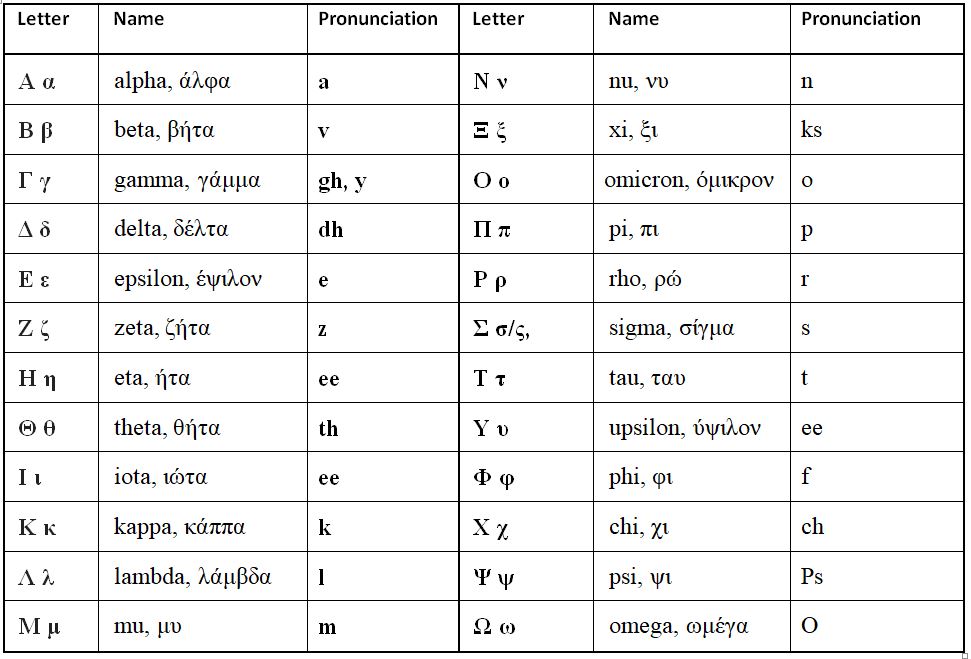
Comparative Phonetic Analysis Software: Specialized software can compare the phonetic inventories of Ancient and Modern Greek, highlighting significant changes. This includes the loss of vowel length distinction, the simplification of certain consonant clusters, and the merging of some vowel sounds. By inputting reconstructed Ancient Greek phonemes and comparing them to Modern Greek phonetic transcriptions, these tools can visually and audibly demonstrate the linguistic evolution.
-
Speech Recognition and Natural Language Processing (NLP) for Modern Greek: Advancements in speech recognition and NLP for Modern Greek allow us to analyze the spoken language with unprecedented detail. While not directly about ancient pronunciation, this technology provides a benchmark of a living Hellenic language, from which we can infer potential continuities and divergences from ancient forms. For example, analyzing regional accents in Modern Greek might offer clues about older dialectal pronunciations.
-
AI-Powered Language Learning Apps for Modern Greek: Numerous language learning apps utilize AI to teach Modern Greek. These tools often incorporate sophisticated pronunciation feedback mechanisms, analyzing a learner’s speech against native speaker models. While focused on the modern language, the underlying principles of acoustic analysis and phonetic modeling are the same ones being applied to reconstruct ancient sounds. They demonstrate the practical application of technology in understanding and reproducing spoken language.
The Future of Experiencing Ancient Sound
The intersection of technology and linguistics is not merely an academic pursuit; it is opening new avenues for public engagement and understanding.
-
Interactive Digital Lexicons with Audio: Imagine a digital lexicon where, alongside definitions and etymologies, you can click a button and hear a reconstructed pronunciation of an ancient Greek word. This is becoming a reality, thanks to the integration of text-to-speech engines and phonetic databases. Such resources democratize access to the sonic heritage of ancient Greece.
-
AI-Generated Historical Narratives: Imagine an audiobook of Homer’s Odyssey read in a reconstructed ancient Greek accent. As AI-powered text-to-speech becomes more sophisticated, it’s conceivable that entire historical narratives and literary works could be rendered in historically plausible pronunciations, offering a unique and immersive way to engage with ancient texts.
-
Digital Archaeology of Sound: This emerging field uses technology to “excavate” the sonic past. By analyzing inscriptions, textual descriptions of sound, and comparative linguistic data, digital archaeologists of sound aim to reconstruct not just individual words, but the ambient soundscapes of ancient civilizations. This includes the sounds of speech, music, and even everyday life, offering a richer, multi-sensory understanding of history.
In conclusion, while the precise sound of ancient Greek remains a subject of ongoing scholarly debate, the technological revolution has provided us with powerful new tools to approximate it. From computational linguistics and speech synthesis to immersive VR experiences and digital sound archives, technology is transforming how we study, learn, and even “hear” the echoes of a language that shaped Western civilization. The question “What does the Greek language sound like?” is no longer confined to dusty academic journals; it is becoming an accessible, engaging, and increasingly audible experience, thanks to the innovative applications of modern technology.
aViewFromTheCave is a participant in the Amazon Services LLC Associates Program, an affiliate advertising program designed to provide a means for sites to earn advertising fees by advertising and linking to Amazon.com. Amazon, the Amazon logo, AmazonSupply, and the AmazonSupply logo are trademarks of Amazon.com, Inc. or its affiliates. As an Amazon Associate we earn affiliate commissions from qualifying purchases.