
In the rapidly evolving landscape of financial technology, few platforms have managed to bridge the gap between a simple utility and a comprehensive financial ecosystem as effectively as Cash App. Originally launched by Block, Inc. (formerly Square) as a peer-to-peer payment service, the platform has expanded its horizons significantly. Today, it serves millions of users not just as a way to “split the bill,” but as a legitimate alternative to traditional banking, a gateway to the stock market, and a simplified entry point into the world of cryptocurrency. Understanding what Cash App does requires looking beyond its primary function and examining its role as a multifaceted financial tool designed for the modern economy.

Revolutionizing Peer-to-Peer Payments and Everyday Banking
At its core, Cash App is a peer-to-peer (P2P) payment processor, but the sophistication of its delivery has redefined how we perceive digital transactions. The cornerstone of this system is the “Cashtag”—a unique username that allows users to send and receive funds without sharing sensitive information like bank account numbers or phone numbers. This layer of abstraction provides a sense of security and ease that traditional wire transfers or even older P2P services lack.
The Core of P2P Transactions
The primary utility of Cash App is the instantaneous transfer of funds between individuals. Whether it is paying a roommate for rent, splitting a dinner check, or sending a gift to a family member, the platform facilitates these transactions in real-time. Unlike traditional banking systems that often operate on a multi-day settlement cycle, Cash App transfers between users are immediate. These funds enter the user’s “Cash Balance,” where they can be held, spent via a dedicated debit card, or transferred to a linked bank account. While standard transfers to a bank account are free and take one to three business days, the app offers an “Instant Deposit” feature for a small fee, providing users with immediate liquidity when needed.
Banking Features and the Cash Card
Cash App has transitioned from being a mere intermediary to offering features that mimic a traditional checking account. Users can receive a “Cash Card,” a customizable Visa debit card linked directly to their Cash App balance. This card can be used at any retailer that accepts Visa, both online and in physical stores.
One of the most innovative aspects of the Cash Card is the “Boost” program. Boosts are instant rewards or discounts applied at specific merchants—such as coffee shops, grocery stores, or popular retailers. Unlike traditional credit card rewards that require users to accumulate points over months, Boosts provide an immediate reduction in the transaction price at the point of sale. Furthermore, Cash App provides users with routing and account numbers, enabling them to set up direct deposits for their paychecks. In many cases, users who deposit their paychecks into Cash App can access their funds up to two days earlier than they would with a traditional bank, a significant advantage for those managing tight monthly budgets.
Democratizing the Investment Landscape
Beyond daily spending and transfers, Cash App has made significant strides in the realm of wealth management. For many years, the stock market was perceived as an arena reserved for those with substantial capital and sophisticated brokers. Cash App has disrupted this narrative by integrating a highly accessible investment platform directly into its interface.
Fractional Share Investing
The platform allows users to purchase stocks with as little as $1. This is made possible through fractional share investing, where the app allows a user to buy a portion of a single share of a company. For instance, if a high-performing tech company’s stock is trading at $3,000 per share, a user who only has $10 can still own a piece of that company. This lowers the barrier to entry for young investors or those who are just beginning their journey into personal finance.
The interface is intentionally stripped of the complexity found in traditional brokerage platforms. Users can see basic performance charts, read brief news summaries about the companies they are interested in, and execute trades instantly. There are no commission fees for basic stock trades, making it an efficient tool for those practicing “dollar-cost averaging”—the strategy of investing small amounts of money at regular intervals regardless of market fluctuations.
The Bitcoin Ecosystem
Perhaps one of the most distinct features of Cash App compared to its direct competitors is its deep integration with Bitcoin. Cash App was one of the first major financial platforms to allow users to buy, sell, and hold Bitcoin with extreme simplicity.
The app doesn’t just treat Bitcoin as a speculative asset to be traded; it treats it as a functional currency. Users can send Bitcoin to other users within the app for free, or they can send it to any external lightning or on-chain wallet. For the financially savvy user, the app also offers a “Paid in Bitcoin” feature, which automatically converts a percentage of a user’s direct-deposited paycheck into Bitcoin. This automated approach to cryptocurrency acquisition has made it a favorite for those looking to build a digital asset portfolio without the friction of using a dedicated cryptocurrency exchange.
Streamlining Financial Administration and Tax Preparation
As Cash App has matured, it has moved into the “back office” of personal finance, offering tools that help users manage the more bureaucratic aspects of their money. This includes everything from tax preparation to sophisticated savings goals.
Cash App Taxes
Following the acquisition of Credit Karma Tax, the platform launched “Cash App Taxes.” This is a free tax-filing service that allows users to file their federal and state returns directly through the app or a mobile browser. In an industry where “free” often comes with caveats or hidden upsells for “deluxe” versions, Cash App Taxes has remained remarkably transparent and truly free for the majority of filers. By integrating tax filing into the same ecosystem where users receive their income and manage their spending, the platform creates a centralized hub for the entire financial year. This integration also allows for faster refunds, as users can choose to have their tax returns deposited directly into their Cash App balance.
Savings and Goal-Oriented Finance
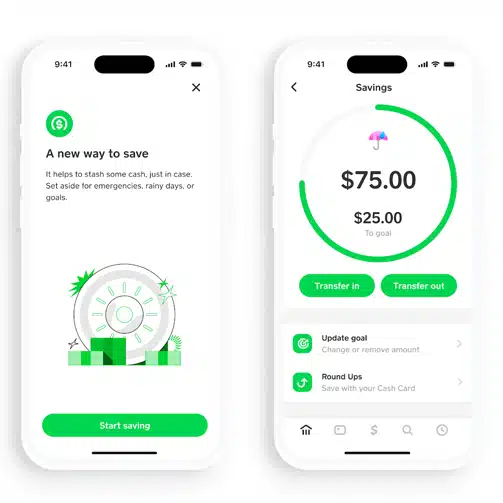
In addition to the spending balance, Cash App introduced a dedicated “Savings” feature. This allows users to move money out of their main spending balance and into a separate bucket designated for long-term goals. While it functions similarly to a traditional savings account, its strength lies in its accessibility and the “Round-Up” feature.
The Round-Up tool automatically rounds up every Cash Card purchase to the nearest dollar and deposits the difference into either a savings account or toward a Bitcoin or stock investment. This “set it and forget it” mentality toward saving is a powerful psychological tool for building wealth. It turns the act of spending into a secondary act of saving, helping users accumulate significant sums over time without needing to manually adjust their budgets.
Security, Privacy, and Financial Safety
In the digital age, a financial tool is only as good as the security it provides. Because Cash App handles sensitive financial data and real-time movement of capital, it employs several layers of protection to ensure user safety.
Protecting Your Digital Assets
Cash App utilizes industry-standard encryption and fraud detection technology. To prevent unauthorized access, the app offers several “lock” features, including the requirement of a PIN, Touch ID, or Face ID for every transaction. Users can also instantly disable their Cash Card via the app if it is lost or stolen, preventing any fraudulent charges without needing to call a customer service representative and wait on hold.
Furthermore, the platform provides “Security Alerts,” notifying users of any account activity in real-time. This immediate feedback loop is crucial for detecting and stopping suspicious activity before it escalates. For those using the platform for Bitcoin, Cash App stores the vast majority of its digital assets in “cold storage”—offline servers that are immune to online hacking attempts—providing an extra layer of institutional-grade security for retail investors.
Limits and Verification
To comply with financial regulations and protect the ecosystem from money laundering, Cash App imposes certain limits on unverified accounts. To unlock the full potential of the app—such as higher sending limits, the ability to trade larger amounts of stock, and the ability to file taxes—users must go through a “Know Your Customer” (KYC) verification process. This involves providing a full name, date of birth, and the last four digits of a Social Security number. This verification process transforms the app from a casual utility into a robust financial account that meets the legal standards of the traditional banking world.
In summary, what Cash App does is provide a unified, mobile-first solution to the fragmentation of modern personal finance. It collapses the distance between getting paid, spending money, saving for the future, and investing in the markets. By removing the friction from these processes, it empowers users—particularly those who may have been underserved by traditional banks—to take full control of their financial destiny from the palm of their hand. Whether used as a simple tool for social payments or a primary engine for wealth creation, Cash App represents the future of integrated financial management.
aViewFromTheCave is a participant in the Amazon Services LLC Associates Program, an affiliate advertising program designed to provide a means for sites to earn advertising fees by advertising and linking to Amazon.com. Amazon, the Amazon logo, AmazonSupply, and the AmazonSupply logo are trademarks of Amazon.com, Inc. or its affiliates. As an Amazon Associate we earn affiliate commissions from qualifying purchases.