
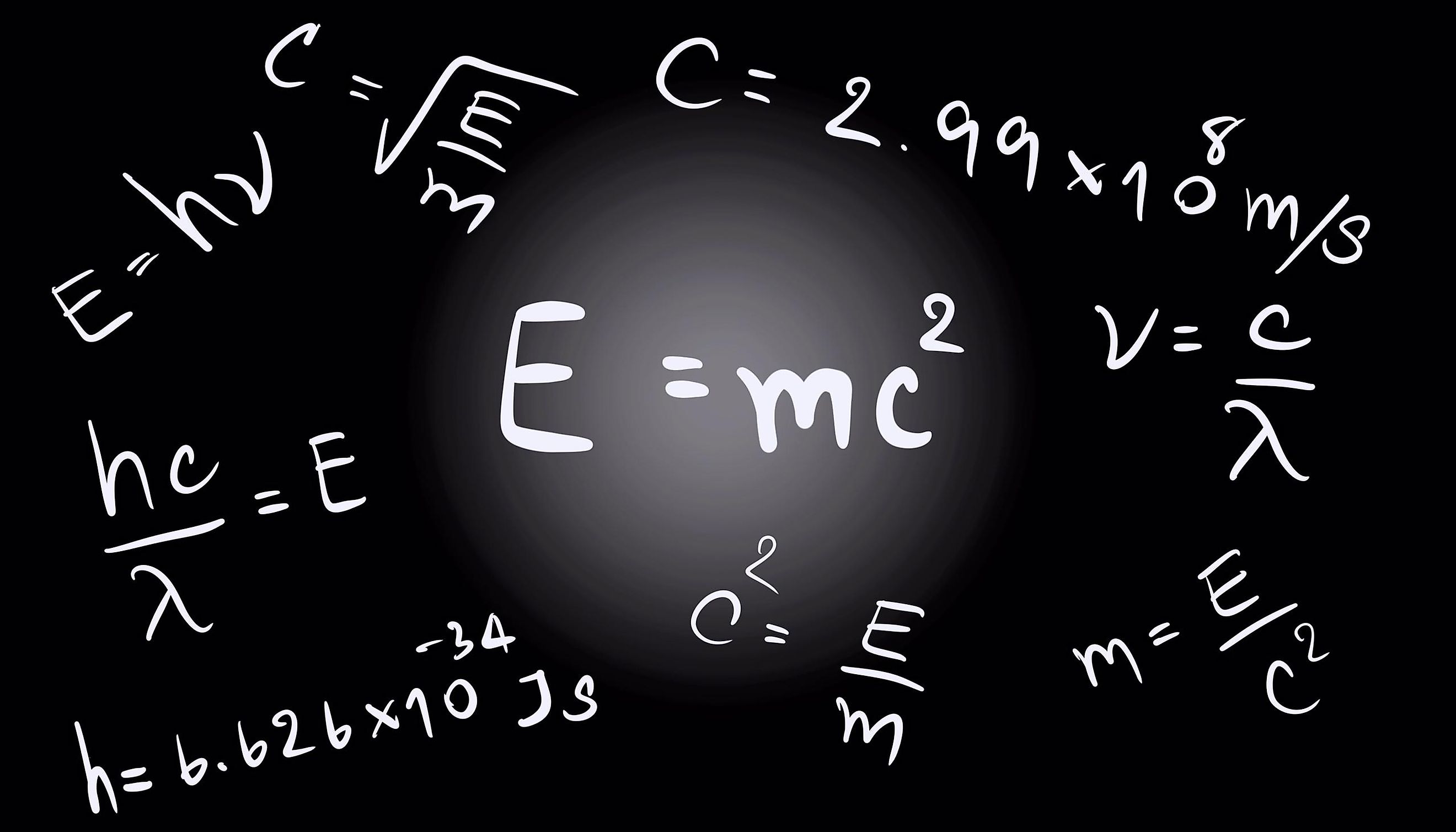
In the vast tapestry of scientific discovery, few equations resonate with the public consciousness quite like Albert Einstein’s E=mc². It’s a symbol of profound insight, a cornerstone of modern physics, and often misunderstood. The immediate question it sparks for many is: “What exactly does the ‘c’ stand for?” While the simple answer—the speed of light—is crucial, its significance extends far beyond a mere definition. For the world of technology, ‘c’ is not just a constant; it is a foundational principle that underpins our understanding of energy, information, and the very fabric of the universe, shaping everything from global communication networks to advanced energy systems.

This article delves into the technological implications of ‘c’, exploring how this cosmic constant dictates the possibilities and limits of our innovations. From the fundamental physics governing light and matter to the cutting-edge applications in computing, communication, and energy, understanding ‘c’ is essential for anyone seeking to grasp the underpinnings of our technological present and future.
The Cosmic Constant: ‘c’ as the Universal Speed Limit
At its core, ‘c’ represents a fundamental constant of the universe. It’s more than just the speed at which light travels; it embodies a universal speed limit, a concept that has profound implications for how we design, build, and interact with technology.
Defining ‘c’: More Than Just Fast
The letter ‘c’ in E=mc² stands for the speed of light in a vacuum, precisely 299,792,458 meters per second (approximately 186,282 miles per second). This value isn’t arbitrary; it’s a fixed constant, independent of the motion of its source or the observer. This invariance is a central tenet of Einstein’s special theory of relativity, which radically reshaped our understanding of space and time. Before Einstein, it was believed that light, like any other wave, would have its speed vary depending on the observer’s motion relative to its source. The revolutionary insight was that ‘c’ is an absolute, immutable speed limit for anything traveling through space.
This constant isn’t just a measure of light’s velocity; it’s a fundamental characteristic of spacetime itself. It signifies that information, causality, and interactions cannot propagate faster than light. This seemingly abstract concept has tangible consequences for the design and performance of virtually all modern technology, especially those involving the transmission of data and energy.
The Fabric of Spacetime and Information Transfer
The absolute nature of ‘c’ directly impacts how we transmit information across distances. Every electronic signal, from radio waves to electrical impulses in a circuit, travels at a speed bounded by ‘c’. While signals in optical fibers or copper wires travel slower than ‘c’ due to the medium’s refractive index, the theoretical maximum is always ‘c’.
Consider global communication. Satellite broadcasts, internet traffic via fiber optic cables, and even wireless signals are all constrained by the speed of light. This is why there’s an inherent latency in international calls or remote server interactions. A signal traveling from New York to Sydney, for instance, must cover significant geographical distance, and even at near-light speed, it takes a measurable amount of time. Engineers constantly strive to minimize these delays, designing more efficient routing protocols and laying direct, high-capacity fiber optic lines, but the ultimate physical limit imposed by ‘c’ remains. For space exploration and communication with distant probes, the delays become even more pronounced, with signals taking minutes or even hours to traverse the vast cosmic distances, a direct consequence of the universal speed limit. This understanding has led to advanced error correction protocols and autonomous systems for spacecraft that cannot rely on real-time human intervention.
E=mc²: Unlocking Immense Energy for Technological Advancement
While ‘c’ as a speed limit governs information flow, its appearance in the mass-energy equivalence equation, E=mc², unveils a far more transformative concept: the intrinsic relationship between mass and energy. This principle has not only reshaped our understanding of the universe but has also directly led to some of the most impactful technological advancements of the 20th and 21st centuries, particularly in the realm of energy.
From Theory to Power: Nuclear Energy
The equation E=mc² famously demonstrates that mass and energy are interchangeable. A small amount of mass can be converted into an enormous amount of energy, because ‘c’ squared (c²) is a staggeringly large number. This profound insight revealed the hidden energy potential within matter itself, paving the way for the development of nuclear technology.
Nuclear fission power plants, for instance, harness this principle. By splitting the nuclei of heavy atoms like uranium or plutonium, a tiny fraction of their mass is converted into a colossal amount of energy, primarily in the form of heat. This heat is then used to generate steam, which drives turbines to produce electricity. Nuclear power remains one of the most potent, carbon-free energy sources available, capable of generating massive amounts of electricity from a relatively small quantity of fuel. The technology, while complex and demanding stringent safety measures, is a direct application of Einstein’s equation, transforming fundamental physics into a practical solution for global energy demands. Furthermore, the ongoing research into nuclear fusion—the process that powers the sun—aims to unlock an even cleaner and more abundant energy source, a process that inherently relies on the mass-energy conversion described by E=mc².
Particle Accelerators and Fundamental Research
Beyond practical energy generation, E=mc² is fundamental to high-energy physics research, which utilizes advanced technological instruments to probe the very building blocks of matter. Particle accelerators like the Large Hadron Collider (LHC) at CERN are colossal machines designed to accelerate subatomic particles to speeds approaching ‘c’ and then collide them.

These experiments don’t just “smash” particles; they convert kinetic energy back into mass, creating new, heavier particles according to E=mc². By observing these newly formed particles and their decay products, scientists gain insights into the fundamental forces and constituents of the universe. The technologies involved in these accelerators are themselves at the cutting edge: superconductive magnets, ultra-high vacuum systems, precision detectors, and immense computing power for data analysis. The knowledge gleaned from these experiments contributes to a deeper understanding of matter, energy, and spacetime, potentially inspiring future technological breakthroughs in areas like quantum computing, advanced materials, and even new forms of energy.
The Quantum Realm and Information Technology’s Edge
The speed of light, ‘c’, is not only a cosmic speed limit and a key to energy generation but also an indispensable element in the quantum realm, particularly as it applies to the transmission and processing of information. Light, composed of photons, is a carrier of information, and its properties are central to many cutting-edge information technologies.
Light as a Medium: Photonics and Optoelectronics
In the digital age, the rapid and efficient transfer of data is paramount. This is where photonics—the science of harnessing light—comes to the forefront. Fiber optics, the backbone of the modern internet, transmits information by sending pulses of light through thin strands of glass or plastic. These light signals travel at speeds close to ‘c’ within the fiber, allowing for incredibly high bandwidth and low latency data transmission over vast distances. The ability to modulate light waves to encode information at such high frequencies is a direct consequence of understanding the properties of light and its speed.
Lasers, another photonic technology, are ubiquitous. From precise cutting tools in manufacturing to optical drives (CD, DVD, Blu-ray) for data storage, and from barcode scanners to advanced surgical instruments, lasers leverage the coherent and focused nature of light. The development of semiconductor lasers, in particular, miniaturized these devices, making them integral components in virtually all digital communication systems, where they convert electrical signals into light pulses and vice versa. Optoelectronic devices, which bridge the gap between electronics and photonics, are continually being refined to push the boundaries of data processing and communication speed, always with ‘c’ as the ultimate benchmark.
Beyond Bits: The Future of Computing and Quantum Mechanics
While not directly about ‘c’ itself, the principles of quantum mechanics, where light and its properties are central, are driving the next revolution in computing: quantum computing. Quantum mechanics describes the behavior of matter and energy at the atomic and subatomic levels, where particles exhibit wave-particle duality and phenomena like superposition and entanglement.
Light, as an electromagnetic wave and a stream of photons, plays a critical role in many quantum computing architectures and experiments. For example, some quantum computers use photons as qubits (quantum bits), leveraging their quantum properties for computation. The manipulation and measurement of these photons require precise control and understanding of light’s behavior, often at speeds approaching ‘c’. While quantum entanglement might seem to imply instantaneous communication, thus challenging ‘c’, it strictly refers to correlated states, not information transfer faster than light. The principles of relativity and the universal speed limit still hold, even in the quantum realm, guiding the theoretical frameworks for quantum communication and quantum cryptography. The ongoing quest to build stable and powerful quantum computers is a testament to the profound technological implications of mastering the quantum behavior of light and matter, always operating within the constraints and possibilities defined by ‘c’.
Navigating the Future: ‘c’ as a Design Principle and Limit
In the continuous pursuit of technological advancement, ‘c’ serves as both an ultimate goal and an unbreakable barrier. It defines the maximum efficiency possible for communication and energy systems, influencing every design decision, from processor architecture to global network infrastructure.
Engineering Constraints and Innovation
The universal speed limit of ‘c’ presents a fundamental constraint for engineers across various disciplines. In processor design, the speed at which signals can travel across a chip dictates its maximum clock speed and performance. Miniaturization in electronics isn’t just about making things smaller; it’s also about reducing the distances signals have to travel, thereby minimizing latency and allowing for faster operations, moving closer to the theoretical limits imposed by ‘c’.
For data networks, the goal is always to reduce latency. While we can optimize software and routing protocols, the physical distance data must travel and the speed of light within the transmission medium (fiber optic cable, air) create an unavoidable minimum delay. This understanding drives innovations in network topology, edge computing (bringing computation closer to the user), and even the development of financial trading systems where microseconds of latency can translate into millions of dollars. In space travel, the vast distances involved mean that faster-than-light travel remains firmly in the realm of science fiction, making long-duration missions and autonomous systems a necessity. Engineers are constantly pushing the boundaries within these physical limitations, striving for ever more efficient and effective technologies while always being reminded of the ultimate constant that governs their designs.
The Ethical and Philosophical Dimensions of Speed
Beyond the technical constraints, ‘c’ also influences our perception of speed and connectivity in a rapidly advancing world. The drive for instantaneous communication, real-time data analysis, and seamless global interaction reflects a societal aspiration for overcoming spatial barriers. Yet, the physical reality dictated by ‘c’ means that true instantaneous communication across vast distances is impossible.
This constant reminds us of the inherent limits of the physical universe, even as our technology strives to approach them. It encourages a philosophical consideration of what “fast enough” truly means and how we balance the pursuit of speed with other values like robustness, security, and accessibility. The relentless quest for faster processing, faster networks, and quicker data access is a testament to humanity’s ingenuity, yet it is forever anchored by the immutable speed of light. Understanding ‘c’ helps us to appreciate the incredible engineering feats required to achieve the level of connectivity and technological sophistication we enjoy today, and it grounds our future aspirations in the realm of the physically possible.
In conclusion, the ‘c’ in E=mc² is far more than a simple letter in an iconic equation. It is the speed of light, a universal constant that acts as the ultimate benchmark and undeniable limit for everything from information transfer to energy conversion. Its implications permeate every facet of technology, from the gigabits coursing through fiber optic cables to the immense power generated in nuclear reactors, and from the sophisticated tools of particle physics to the theoretical foundations of quantum computing. Understanding ‘c’ is not just about comprehending a scientific fact; it’s about grasping a fundamental principle that defines the boundaries and possibilities of our technological endeavors, guiding innovation and shaping the future of human progress.
aViewFromTheCave is a participant in the Amazon Services LLC Associates Program, an affiliate advertising program designed to provide a means for sites to earn advertising fees by advertising and linking to Amazon.com. Amazon, the Amazon logo, AmazonSupply, and the AmazonSupply logo are trademarks of Amazon.com, Inc. or its affiliates. As an Amazon Associate we earn affiliate commissions from qualifying purchases.