
At its most fundamental level, trade is the engine of human civilization. While the term is often used casually in everyday conversation, in the realms of finance and economics, trade represents a complex web of exchanges that dictates the wealth of nations, the success of businesses, and the growth of individual investment portfolios. To ask “what is trade” is to delve into the very mechanics of how value is created, distributed, and leveraged across the globe.
In the context of money and finance, trade is the voluntary exchange of goods, services, or financial instruments between parties. Whether it is a consumer purchasing a loaf of bread, a corporation importing raw materials, or an investor buying shares of a technology company, trade is the mechanism that facilitates the flow of capital. This article explores the multifaceted nature of trade, its various forms in the modern economy, and its critical role in personal and business finance.
The Fundamentals of Trade: Value, Exchange, and Liquidity
To understand trade, one must first understand the concept of value. Trade occurs because two parties have different valuations of an asset or service. If Party A has an excess of wheat but needs shoes, and Party B has extra shoes but needs wheat, a trade benefits both. This “win-win” scenario is the foundation of all economic activity.
The Evolution from Barter to Monetary Exchange
Historically, trade began as a barter system—the direct exchange of goods without a medium of exchange. However, barter systems suffer from the “double coincidence of wants,” where trade can only happen if both parties want exactly what the other has to offer. The introduction of money revolutionized trade by providing a universal medium of exchange. Money allows trade to be “decoupled,” meaning an individual can sell their labor or goods for currency and then use that currency to trade with anyone else, at any time, for any product.
The Role of Supply and Demand in Trade
In the financial world, the price at which a trade occurs is governed by the laws of supply and demand. When a particular asset is in high demand but low supply, its trade value increases. Conversely, an oversupply of a commodity or stock leads to a decrease in its trading price. Understanding these fluctuations is essential for anyone involved in business finance or personal investing, as the timing of a trade often determines its profitability.
Market Liquidity and Its Importance
Liquidity refers to how easily an asset can be traded for cash without affecting its market price. In high-frequency trading and large-scale financial markets, liquidity is the lifeblood of the system. High liquidity means there are many buyers and sellers, allowing for seamless trade. Low liquidity can lead to “slippage,” where the price of a trade changes significantly during the execution process, posing a risk to investors and financial institutions.
Types of Trade in the Modern Financial Landscape
Trade is not a monolithic concept; it manifests in several distinct ways depending on the participants and the assets involved. For the modern financier or business owner, distinguishing between these types of trade is vital for strategic planning.
International Trade: Imports and Exports
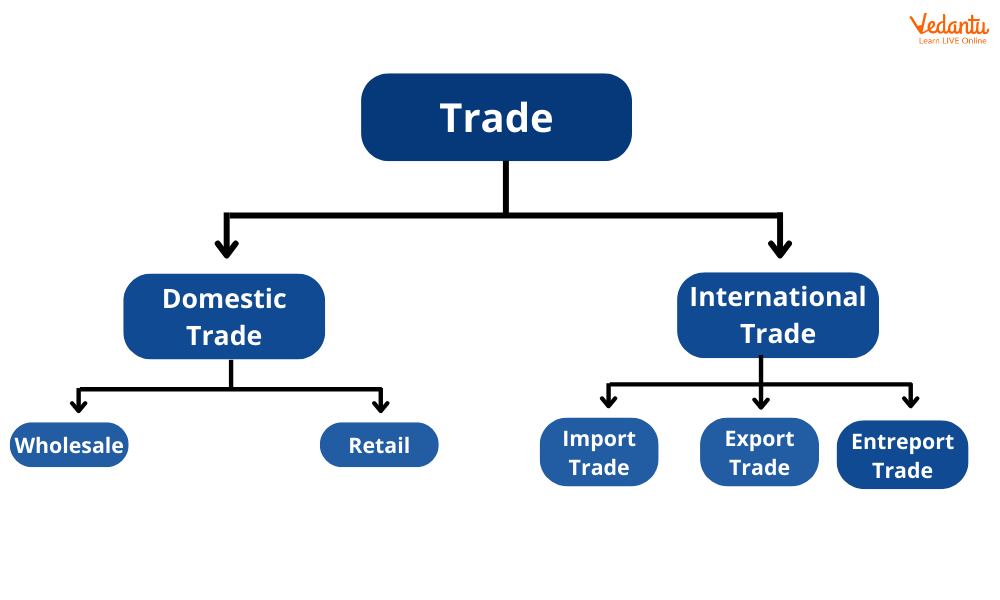
International trade involves the exchange of goods and services across national borders. This is a pillar of macroeconomics, represented by exports (goods sent out of a country) and imports (goods brought in). A country’s “Balance of Trade” is the difference between its exports and imports. A trade surplus occurs when a nation exports more than it imports, contributing to its national wealth, while a trade deficit indicates the opposite. For businesses, international trade offers access to larger markets and cheaper resources but introduces complexities like currency exchange risk and tariffs.
Retail vs. Wholesale Trade
Within a domestic economy, trade is often categorized by its scale. Wholesale trade involves the sale of goods in large quantities to retailers or professional business users. Retail trade is the final link in the supply chain, where goods are sold directly to the end consumer. From a financial perspective, the “margin” in retail trade—the difference between the wholesale cost and the retail price—is where businesses generate the profit necessary to sustain operations and provide returns to shareholders.
Domestic Trade and Economic Stability
While global markets often grab the headlines, domestic trade (trade within a single country) is the primary driver of most economies. It fosters internal competition, encourages innovation, and ensures the efficient distribution of resources within a population. Healthy domestic trade is usually a sign of a robust middle class and a stable financial environment.
Trade in the Context of Investing and Markets
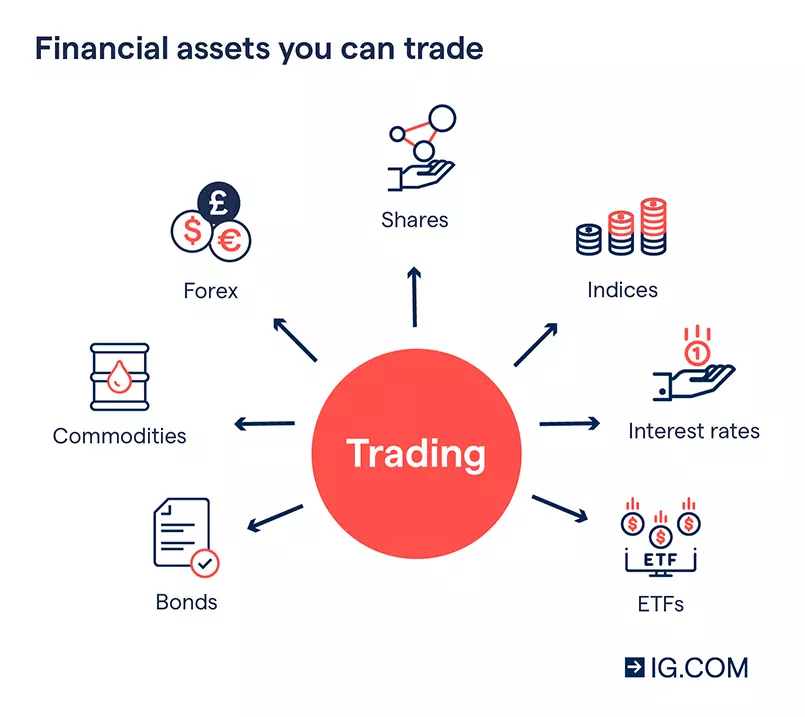
For many individuals, “trading” refers specifically to the buying and selling of financial instruments on public exchanges. This form of trade is the primary vehicle for wealth creation in the modern era.
Stock and Equity Trading
The most common form of financial trade for personal investors is the stock market. When you trade stocks, you are buying or selling ownership stakes in a corporation. The goal is typically to “buy low and sell high,” or to hold the asset to receive dividends. Equity trade is essential for corporations because it provides them with the capital needed to expand, innovate, and hire, while providing investors with a way to grow their personal net worth.
Commodities and Forex Markets
Beyond stocks, trade occurs in the commodities market (raw materials like gold, oil, and agricultural products) and the Foreign Exchange (Forex) market. Forex trade is the largest financial market in the world, where national currencies are traded against one another. Large-scale business finance often involves Forex trade to hedge against “currency risk”—the danger that the value of a company’s foreign earnings will drop due to fluctuations in exchange rates.
The Rise of Day Trading and Swing Trading
With the advent of digital financial tools, the barriers to entry for trading have collapsed. Day trading involves making dozens of trades within a single day to capitalize on small price movements. Swing trading takes a slightly longer view, holding assets for days or weeks. While these forms of trade offer high potential rewards, they also carry significant risks and require a deep understanding of technical analysis and market psychology.
The Impact of Trade on Personal and Business Finance
Trade is not just an abstract economic concept; it has tangible effects on the financial health of individuals and organizations.
Comparative Advantage and Cost Efficiency
The principle of comparative advantage, popularized by economist David Ricardo, suggests that entities should focus on trading goods or services they can produce most efficiently. For a business, this means outsourcing non-core functions (a form of trade) to specialized providers to save costs. For a country, it means focusing on industries where they have a natural or technological edge. This specialization, fueled by trade, leads to lower prices for consumers and higher profit margins for businesses.
Risk Management in Financial Trading
Every trade involves risk. In professional finance, managing this risk is as important as the trade itself. Techniques such as “hedging”—where an investor takes an offsetting position to protect against losses—are fundamental. For example, a farmer might trade in “futures contracts” to lock in a price for their crops months before the harvest, ensuring financial stability regardless of market fluctuations.
Trade Barriers and Their Economic Consequences
While free trade is generally seen as a driver of growth, governments often implement trade barriers such as tariffs, quotas, and sanctions. These are often used to protect domestic industries or for geopolitical leverage. However, from a financial perspective, trade barriers often lead to higher costs for businesses and consumers, disrupting supply chains and potentially leading to inflation.
The Future of Trade: Digital Transformation and Sustainability
As we move further into the 21st century, the nature of trade is shifting due to technological advancements and changing social values.
E-commerce and the Borderless Marketplace
The rise of digital platforms has transformed retail trade. Small businesses that once could only trade within their local community can now sell to a global audience with the click of a button. This “democratization of trade” has forced traditional brick-and-mortar businesses to rethink their financial models and invest heavily in digital infrastructure to remain competitive.
Decentralized Finance (DeFi) and Blockchain Trade
One of the most significant shifts in the “Money” niche is the emergence of blockchain technology and Decentralized Finance (DeFi). These technologies allow for “peer-to-peer” trade without the need for traditional intermediaries like banks or brokers. Smart contracts can automate complex trades, reducing the cost of transactions and increasing the speed of settlement. While still in its nascent stages, DeFi represents a potential paradigm shift in how financial trade is conducted.

The Integration of ESG in Trade Finance
Environmental, Social, and Governance (ESG) criteria are increasingly influencing trade decisions. Investors and corporations are no longer looking just at the bottom line; they are evaluating the ethical and environmental impact of their trades. “Sustainable trade” involves ensuring that supply chains are ethical and that investments are not contributing to environmental degradation. This shift is creating new financial instruments, such as “green bonds,” and is redefining what it means to be a “successful” trader in the modern world.
In conclusion, trade is the heartbeat of the financial world. From the simple exchange of currency for goods to the high-stakes world of international derivatives, it is the process through which value is realized and wealth is built. By understanding the mechanics, types, and future trends of trade, individuals and businesses can better navigate the complexities of the global economy and secure their financial future.
aViewFromTheCave is a participant in the Amazon Services LLC Associates Program, an affiliate advertising program designed to provide a means for sites to earn advertising fees by advertising and linking to Amazon.com. Amazon, the Amazon logo, AmazonSupply, and the AmazonSupply logo are trademarks of Amazon.com, Inc. or its affiliates. As an Amazon Associate we earn affiliate commissions from qualifying purchases.