
The term “amplifier” might conjure images of roaring guitar solos on stage or powerful sound systems at a concert. While these are certainly applications where amplification is crucial, the fundamental purpose of an amplifier extends far beyond the realm of audio. In the context of technology, an amplifier is a device or circuit that increases the power, amplitude, or magnitude of a signal. This might be an electrical signal, a radio wave, or even a biological signal. The core principle remains the same: taking a small input and making it significantly larger at the output, without distorting the original information or introducing excessive noise. Understanding what an amplifier does is key to appreciating how numerous modern technologies function, from the devices in our pockets to the vast networks that connect us.
The Core Function: Boosting Signals
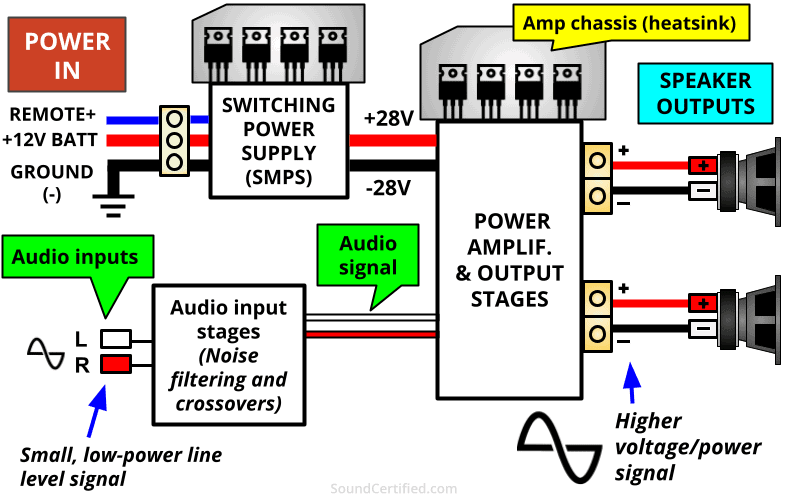
At its heart, an amplifier’s primary function is signal augmentation. It takes a weak input signal and produces a stronger, more potent output signal. This is achieved by drawing power from an external source, typically a DC power supply, and using it to increase the amplitude of the input signal. The amplification process itself can be thought of as controlling a larger flow of energy based on the pattern of a smaller input signal. This principle is universally applied across various technological domains, making amplifiers indispensable components.
Input and Output: The Signal’s Journey
The journey of a signal through an amplifier begins with the input signal. This is the original, often weak, signal that needs to be amplified. It could be a faint electrical current from a microphone, a low-power radio frequency wave from an antenna, or a subtle voltage change from a sensor. The amplifier’s job is to take this delicate input and prepare it for further processing or transmission.
The output signal is the result of this amplification. It is a faithful replica of the input signal, but with significantly increased amplitude or power. The degree to which the signal is increased is known as the gain of the amplifier. A high-gain amplifier will produce a much larger output signal from a small input, while a low-gain amplifier will offer a more modest boost. The fidelity of this output signal is paramount. Ideally, an amplifier should amplify the signal without altering its original characteristics beyond increasing its strength. Distortion, unwanted additions to the signal, and noise are detrimental to the amplifier’s performance and can significantly degrade the overall functionality of the system it’s part of.
Gain: The Measure of Amplification
Gain is the fundamental metric by which an amplifier’s effectiveness is measured. It quantifies the ratio of the output signal’s power or amplitude to that of the input signal. Gain is often expressed in decibels (dB), a logarithmic unit that is particularly useful for representing large ratios. A positive decibel value indicates amplification, while a negative value would signify attenuation (signal reduction), which is the opposite of an amplifier’s function.
For example, an amplifier with a gain of 20 dB means that the output power is 100 times greater than the input power (since 20 dB corresponds to a power ratio of $10^{20/10} = 100$). If we consider voltage, a gain of 20 dB implies the output voltage is 10 times greater than the input voltage (since 20 dB corresponds to a voltage ratio of $10^{20/20} = 10$). The ability to precisely control and set the gain is a critical feature in many amplifier designs, allowing engineers to tailor the amplification to the specific requirements of the application.
Types of Amplifiers and Their Applications
The broad utility of amplifiers has led to the development of various types, each optimized for specific tasks and signal characteristics. Understanding these distinctions is crucial for comprehending their roles in diverse technological ecosystems.
Audio Amplifiers: Powering Sound
Perhaps the most widely recognized application of amplifiers is in the realm of audio. Audio amplifiers are designed to increase the power of audio signals, allowing them to drive loudspeakers and produce audible sound. From the smallest earbuds to massive concert sound systems, audio amplifiers are the silent workhorses that bring music, speech, and sound effects to life.
Hi-Fi Systems and Home Entertainment
In high-fidelity (Hi-Fi) audio systems, amplifiers are responsible for taking the relatively weak signal from a source like a CD player, digital audio player, or streaming device and amplifying it to a level sufficient to drive speakers. The quality of the amplifier in a Hi-Fi system significantly impacts the overall sound reproduction, affecting factors like clarity, detail, and dynamic range. Home theater systems also rely heavily on sophisticated audio amplifiers, often found in AV receivers, to process multiple audio channels and deliver immersive surround sound experiences.
Musical Instruments and Live Sound
For musicians, instrument amplifiers are essential. Guitar amplifiers, for instance, take the subtle signal from an electric guitar’s pickups and amplify it, often adding tonal shaping and effects. This allows the guitar to be heard in practice sessions, rehearsals, and on stage. In live sound reinforcement, large and powerful amplifiers are used to drive the speakers that project sound to an audience, ensuring that every seat in the venue receives a clear and robust audio signal.
Radio Frequency (RF) Amplifiers: Enabling Wireless Communication
In the world of wireless communication, radio frequency (RF) amplifiers are absolutely vital. These amplifiers are designed to boost weak radio signals for transmission and reception, enabling everything from terrestrial radio broadcasting to satellite communication and mobile phone networks.
Broadcasting and Transmission
When a radio or television station broadcasts its signal, it originates as a relatively low-power signal from the transmitter. RF power amplifiers are used to boost this signal to a level strong enough to travel long distances to reach receivers. Similarly, in mobile communication, the signal from your phone, while small, needs to be amplified before being transmitted to a cell tower, and vice-versa for incoming signals.
Receivers and Signal Sensitivity
On the receiving end, RF amplifiers play an equally critical role. The faint radio waves picked up by an antenna are often extremely weak. Low-noise amplifiers (LNAs) are used in receivers to boost these weak signals with minimal addition of noise. This is crucial for detecting and decoding signals that might otherwise be lost in the noise floor, thereby improving the sensitivity and range of wireless devices.
Operational Amplifiers (Op-Amps): Versatile Building Blocks
Operational amplifiers (op-amps) are a special class of integrated circuit amplifiers renowned for their versatility and widespread use in analog electronic circuits. While they can amplify signals, their true power lies in their ability to perform a wide array of mathematical operations on these signals.
Signal Conditioning and Filtering

Op-amps are commonly used for signal conditioning. This involves tasks such as amplifying signals to match the input requirements of other components, buffering signals to isolate them from loading effects, and impedance matching. They are also fundamental to building active filters, which are circuits that can selectively pass or reject certain frequencies from a signal. This is crucial in areas like audio processing, communications, and measurement systems.
Analog Computing and Control Systems
Historically, op-amps were the core components of analog computers, capable of performing operations like integration and differentiation to solve differential equations. Today, they remain integral to control systems, where they process sensor inputs, perform calculations, and drive actuators to maintain desired system states. From regulating temperature in an industrial process to controlling the flight of an aircraft, op-amps provide the analog intelligence.
The Underlying Technology: Transistors and Semiconductors
The amplification process, regardless of the specific application, is fundamentally enabled by semiconductor devices, most notably transistors. These tiny components act as the “gates” that control the flow of a larger electrical current based on a smaller input signal.
Transistors: The Heart of Amplification
A transistor is a semiconductor device used to amplify or switch electronic signals and electrical power. It typically consists of three terminals: a control terminal (e.g., gate, base), and two terminals for the current to flow through (e.g., drain/source, collector/emitter). By applying a small voltage or current to the control terminal, a much larger current can be modulated and controlled between the other two terminals. This controlled modulation is the essence of amplification.
Bipolar Junction Transistors (BJTs) and Field-Effect Transistors (FETs)
Two primary types of transistors have dominated amplification technology: Bipolar Junction Transistors (BJTs) and Field-Effect Transistors (FETs). BJTs use both electrons and holes as charge carriers and are controlled by the current flowing into their base terminal. FETs, on the other hand, are voltage-controlled devices where the current flow between two terminals is modulated by a voltage applied to a third, insulated gate terminal. Modern integrated circuits often use MOSFETs (Metal-Oxide-Semiconductor Field-Effect Transistors), a type of FET, due to their low power consumption and scalability.
Integrated Circuits (ICs): Miniaturization and Complexity
The development of integrated circuits (ICs), or microchips, has revolutionized electronics by allowing millions or even billions of transistors and other components to be fabricated on a single piece of semiconductor material. This miniaturization has led to smaller, more powerful, and more affordable electronic devices.
Amplifier ICs: Pre-designed Solutions
Many ICs are specifically designed to perform amplification. These amplifier ICs integrate multiple transistors, resistors, and capacitors onto a single chip, providing a complete amplification solution in a compact package. Examples include operational amplifiers (like the ubiquitous LM741 or TL072), audio amplifier chips (used in smartphones and portable speakers), and RF amplifier modules used in wireless communication devices. These pre-designed solutions greatly simplify circuit design and manufacturing, accelerating the pace of technological innovation.
Beyond Basic Amplification: Advanced Concepts
While the core function of an amplifier is to boost a signal, the pursuit of higher fidelity, greater efficiency, and specialized functionalities has led to the development of more sophisticated amplifier designs and considerations.
Amplifiers and Noise: The Signal-to-Noise Ratio
A critical challenge in amplification is the introduction of noise. Noise refers to unwanted random fluctuations in an electronic signal that can obscure or degrade the original information. Amplifiers, by their very nature of processing signals, can also amplify this noise. Therefore, a key design goal for many amplifiers is to achieve a high signal-to-noise ratio (SNR).
Minimizing Distortion and Noise
Engineers employ various techniques to minimize noise and distortion. This includes careful component selection, meticulous circuit layout to prevent interference, and the use of specialized low-noise components. In sensitive applications like radio astronomy or medical imaging, amplifiers are designed to be exceptionally quiet, ensuring that faint signals are not drowned out by internal noise. The fidelity of an amplifier is often judged by how little it distorts or adds noise to the original signal.
Efficiency and Power Amplifiers
In many applications, particularly those involving battery-powered devices or high-power transmission, efficiency is a paramount concern. Power amplifiers, designed to deliver significant output power, must do so with minimal energy loss as heat.
Class of Amplifiers: Balancing Performance and Efficiency
The class of an amplifier refers to its operating point and how it handles the input signal waveform, which directly impacts its efficiency and linearity (how faithfully it reproduces the signal). For instance, Class A amplifiers are highly linear but very inefficient, dissipating significant power even with no input signal. Class B amplifiers are more efficient but introduce crossover distortion. Class AB offers a compromise, while Class D amplifiers, which operate as switches, are extremely efficient but can be more complex to design for high fidelity. The choice of amplifier class depends heavily on the specific requirements of the application, balancing the need for signal quality with power conservation.
Digital Amplification: A Modern Approach
While traditionally associated with analog signals, the concept of amplification has also entered the digital domain. Digital amplifiers process digital signals, performing amplification through mathematical operations rather than by directly manipulating analog waveforms.

Digital Signal Processing (DSP) and Amplification
In Digital Signal Processing (DSP), the input signal is digitized, and then amplification is achieved by multiplying the digital data by a gain factor. This offers several advantages, including precise control over gain, the ability to easily implement complex filtering and equalization, and immunity to many of the noise and distortion issues inherent in analog circuits. Digital amplification is increasingly found in modern audio equipment, communication systems, and various embedded systems, offering a flexible and powerful approach to signal manipulation.
aViewFromTheCave is a participant in the Amazon Services LLC Associates Program, an affiliate advertising program designed to provide a means for sites to earn advertising fees by advertising and linking to Amazon.com. Amazon, the Amazon logo, AmazonSupply, and the AmazonSupply logo are trademarks of Amazon.com, Inc. or its affiliates. As an Amazon Associate we earn affiliate commissions from qualifying purchases.