
In the hyper-competitive world of automotive luxury, few acronyms carry as much weight, prestige, and psychological impact as AMG. To the uninitiated, it is a series of letters found on the trunk lids of the most expensive Mercedes-Benz models. To the enthusiast, it is a promise of visceral performance. However, from a brand strategy perspective, AMG represents one of the most successful case studies in corporate identity evolution—a journey from a two-man independent engine shop to a global symbol of high-performance luxury.
Understanding what AMG means requires peeling back the layers of its history, its naming convention, and its strategic role within the Mercedes-Benz Group. It is a story of how a brand maintains its “soul” while being integrated into a massive corporate hierarchy.

The Three Letters: A Case Study in Heritage and Identity
To answer the literal question, AMG stands for Aufrecht, Melcher, and Großaspach.
The brand’s identity is rooted in the mid-1960s. Hans Werner Aufrecht and Erhard Melcher were engineers working at Mercedes-Benz on the 300 SE racing engine. When the company discontinued all motorsport activities, the duo continued to hone the engine in their spare time in Aufrecht’s house in Großaspach. In 1967, they left Mercedes to found the “Aufrecht Melcher Großaspach Ingenieurbüro, Konstruktion und Versuch zur Entwicklung von Rennmotoren” (Engineering firm, design and testing for the development of racing engines).
The Power of Founder-Led Identity
From a branding standpoint, the name AMG serves as a “heritage seal.” By using the founders’ names and their birthplace, the brand established an immediate sense of authenticity. This is a common tactic in luxury branding—think Ferrari, Lamborghini, or Porsche. It ties the product to human ingenuity and a personal obsession with perfection rather than a nameless corporate committee.
The Großaspach Connection
The inclusion of the “G” for Großaspach is particularly interesting for brand analysts. While Aufrecht and Melcher provided the technical prowess, the location provided the “home.” In the luxury sector, provenance is everything. Just as Champagne must come from France, the AMG brand identity was anchored in a specific German engineering culture that prioritized durability alongside high output.
The Transition from Outsider to Pillar: The Strategic Acquisition
For decades, AMG functioned as an independent tuner. They took standard Mercedes-Benz vehicles and re-engineered them for customers who found the factory output too conservative. However, the 1990s marked a pivotal shift in Mercedes-Benz’s brand strategy.
From “Tuner” to “Sub-Brand”
In 1990, a co-operation agreement was signed, allowing AMG products to be sold and maintained through Mercedes-Benz’s vast global dealership network. This was a masterstroke of market positioning. Mercedes-Benz, which was then perceived as a brand for the older, “stiff” elite, needed a shot of adrenaline. AMG provided that “cool factor” and performance credibility without Mercedes having to build a performance division from scratch.
By 1999, DaimlerChrysler AG (as it was known then) acquired a majority stake, and by 2005, AMG became a wholly-owned subsidiary. This transition is a classic example of “Brand Architecture” evolution. AMG moved from being an “Endorsed Brand” (AMG by Mercedes) to a “Sub-Brand” (Mercedes-AMG). Today, it is one of the four “Jewel” brands in the Mercedes portfolio, alongside Maybach, G-Class, and the EQ electric line.
Protecting the Niche in a Mass Market
The challenge of incorporating a boutique brand into a global conglomerate is the risk of brand dilution. Mercedes-Benz managed this by keeping AMG’s headquarters in Affalterbach, physically and culturally distinct from the main Mercedes headquarters in Stuttgart. This allowed the AMG brand to retain its “garage” spirit while leveraging the R&D budgets of a multi-billion dollar corporation.
The “One Man, One Engine” Philosophy: Humanizing the Brand

In the world of marketing, “storytelling” is often a buzzword, but AMG turned it into a tangible product feature. Their most significant branding asset is the “One Man, One Engine” philosophy.
Creating an Emotional Connection
Every AMG engine (in the “63” and “45” series) is hand-assembled by a single technician. Upon completion, the technician attaches a signed plaque to the engine cover. This is a brilliant piece of brand strategy. It transforms a mechanical component into a piece of art.
In an era of mass automation and robotics, this human touch justifies the premium price point. It creates a psychological bond between the owner and the builder. When an owner pops the hood, they aren’t just looking at a piece of hardware; they are looking at a signed masterpiece. This strategy elevates the brand from “transportation” to “collectible luxury.”
Engineering as a Brand Language
The branding extends beyond the engine plaque. AMG has meticulously crafted a sensory identity.
- The Sound: The “AMG Growl” is a registered acoustic trademark in the minds of consumers. The deep, percussive exhaust note of an AMG V8 is a deliberate branding choice designed to make the car recognizable even before it is seen.
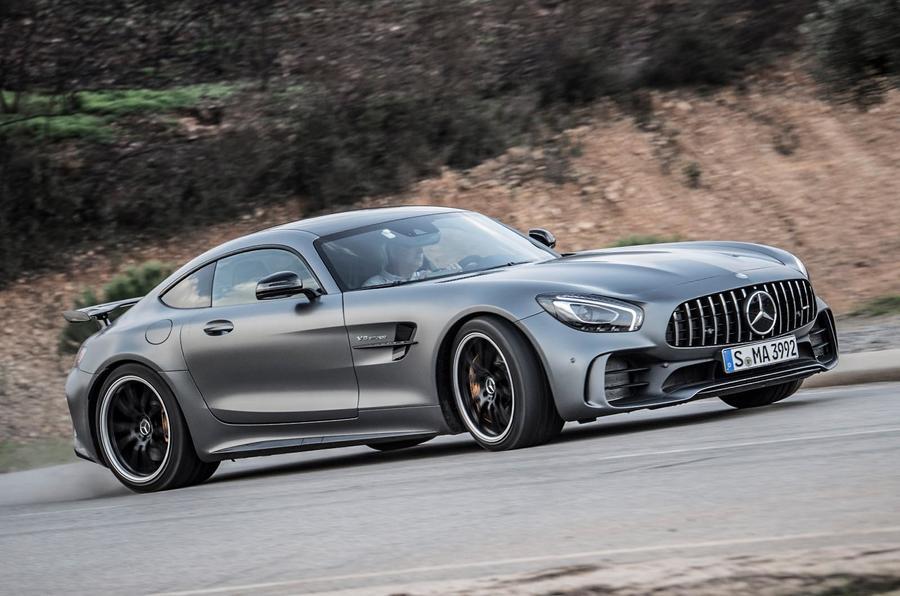
- The Visuals: The “Panamericana” grille, characterized by vertical slats, serves as a visual shorthand for AMG’s racing heritage (specifically the 1952 Carrera Panamericana race). This allows for “brand recognition at a distance,” a key requirement for luxury status symbols.
Leveraging the Halo Effect: Market Segmentation and the AMG Line
One of the most debated aspects of the modern AMG brand strategy is the introduction of the “AMG Line” and the expansion of the “43” and “53” model tiers.
The Halo Effect
In marketing, the “Halo Effect” occurs when the prestige of a top-tier product spills over to the rest of the lineup. The $200,000 AMG GT Black Series exists to make the $45,000 Mercedes-Benz A-Class with an “AMG Line” trim package more desirable.
Managing Brand Dilution
Mercedes-Benz faced a strategic dilemma: keep AMG ultra-exclusive and limit revenue, or expand the brand and risk losing its “edge.” They chose a tiered approach:
- AMG Line: Cosmetic upgrades only (wheels, bumpers, interior). This allows mass-market consumers to “buy into” the AMG aesthetic.
- AMG 35/43/53 Models: Performance-tuned vehicles that bridge the gap between standard models and the top-tier “63” models.
- The “Full” AMG (63/45/GT): The hand-built engines that represent the pinnacle of the brand identity.
While purists argue that this dilutes the brand, the financial results have been undeniable. AMG sales have skyrocketed, proving that the brand equity built by Aufrecht and Melcher was strong enough to support a much broader market presence.
Sustaining Brand Equity in the Era of Electrification
The most significant challenge for the AMG brand identity is the global shift toward electric vehicles (EVs). Much of what “AMG” means today is tied to the internal combustion engine—the vibration, the smell of gasoline, and the roar of the exhaust.
Redefining Performance
As Mercedes-Benz moves toward its “Electric Only” goal, the AMG brand is being forced to pivot. The meaning of the three letters is shifting from “Loud V8s” to “Superior Digital Performance.”
The new brand strategy for Mercedes-AMG in the EV space focuses on:
- Tactile Feedback: Using haptic motors and sophisticated soundscapes to replicate the emotional engagement of a combustion engine.
- Exclusive Platforms: Developing the AMG.EA (Electric Architecture) to ensure that an electric AMG isn’t just a faster Mercedes-EQ, but a fundamentally different driving machine.
- Formula 1 Integration: More than ever, AMG is leaning on its “E Performance” branding, directly linking its hybrid and electric road cars to the Mercedes-AMG Petronas F1 team. This leverages the ultimate pinnacle of “Tech” and “Performance” to validate the brand’s future.
The Conclusion of the Brand Journey
What does the AMG in Mercedes mean? It means a relentless pursuit of the “Extra 10%.” It represents the successful integration of an entrepreneurial, “disruptor” spirit into a traditional corporate giant. For the consumer, it is a badge of status and performance. For Mercedes-Benz, it is a high-margin marketing engine that provides the emotional “pull” that standard luxury cars often lack.
Ultimately, AMG is a masterclass in how to build and maintain a brand. It started with two engineers in a garage and grew into a global shorthand for “The Best of the Best.” Whether the power comes from a hand-built V8 or a high-output battery pack, the AMG brand identity remains rooted in the same principles that Aufrecht and Melcher established in 1967: engineering excellence, exclusivity, and a refusal to settle for the standard.
aViewFromTheCave is a participant in the Amazon Services LLC Associates Program, an affiliate advertising program designed to provide a means for sites to earn advertising fees by advertising and linking to Amazon.com. Amazon, the Amazon logo, AmazonSupply, and the AmazonSupply logo are trademarks of Amazon.com, Inc. or its affiliates. As an Amazon Associate we earn affiliate commissions from qualifying purchases.