
The question “what does tear gas smell like?” often arises from encounters or discussions surrounding law enforcement, civil unrest, or even recreational applications of less-lethal chemical agents. While a purely olfactory description might be the immediate desire, understanding the “smell” of tear gas is intrinsically linked to its technological underpinnings: its chemical formulation, the delivery systems employed, and the resulting physiological responses that are a direct consequence of its engineered properties. From a technological standpoint, tear gas is not merely an unpleasant odor; it is a carefully synthesized chemical compound designed to incapacitate through sensory disruption, and its effects are mediated by the very technology used to disperse it.
The Chemical Engineering Behind Sensory Disruption
Tear gas, more accurately termed a lachrymatory agent or riot control agent (RCA), is not a single chemical substance but rather a class of compounds. The most commonly encountered agents, such as CS gas (2-chlorobenzalmalononitrile) and OC spray (oleoresin capsicum, derived from chili peppers), represent distinct technological approaches to inducing temporary incapacitation. Their efficacy, and by extension, their perceived smell, are direct results of sophisticated chemical synthesis and formulation processes.
CS Gas: A Synthetic Sentinel
CS gas is perhaps the most widely recognized form of tear gas. Its development in the mid-20th century was a significant advancement in chemical warfare and crowd control technology. Chemically, CS is a synthetic organic compound. Its production involves precise chemical reactions and purification processes to ensure a consistent and potent product. The “smell” of CS gas is often described as pungent, acrid, and somewhat sweet, reminiscent of burning plastic or freshly cut grass, though these descriptions are subjective and can be influenced by concentration and environmental factors.
The technology here lies not only in the synthesis of the molecule but also in its formulation for dispersal. CS gas is typically aerosolized, meaning it’s dispersed as fine particles or droplets into the air. This is achieved through various technological means:
- Pyrotechnic Canisters: These devices use a chemical reaction to heat and vaporize CS powder, releasing it as a dense, white cloud. The burning of the propellant in these canisters can contribute to the overall sensory experience, sometimes adding a burnt-chemical or gunpowder-like odor to the immediate environment.
- Aerosol Sprays: Similar to aerosol cans for personal care products, these deploy a pressurized liquid containing dissolved or suspended CS. The propellant, often a non-flammable gas like nitrogen or CO2, evaporates rapidly, leaving the CS particles suspended in the air. The smell in this instance is primarily the CS itself, with a less pronounced propellant odor compared to pyrotechnic devices.
- Grenades and Launchers: More sophisticated dispersal systems involve specialized grenades or projectile launchers designed to cover larger areas. These technologies are engineered for controlled release and optimal dispersion patterns, ensuring effective incapacitation across a target zone.
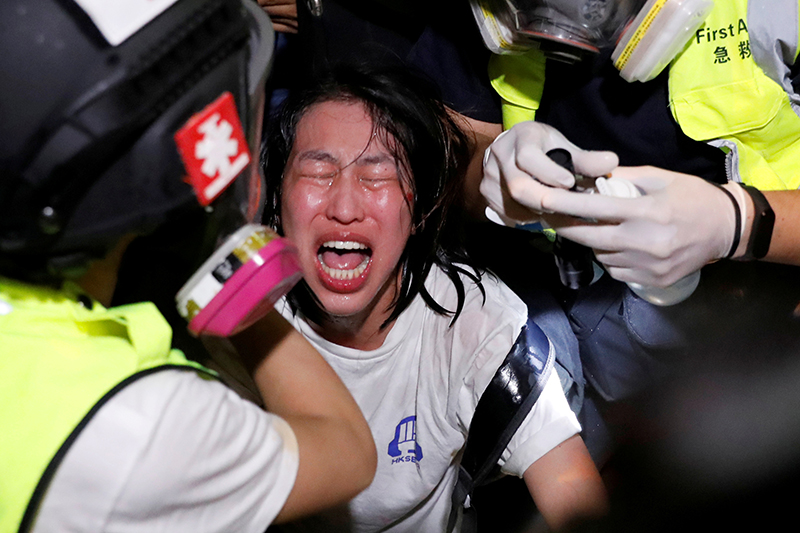
The chemical structure of CS gas is designed to interact with specific pain receptors in the eyes, nose, throat, and lungs. This interaction triggers a powerful physiological response: intense burning sensations, profuse tearing, involuntary blinking, coughing, and difficulty breathing. The “smell” is an early indicator of exposure because these receptors are also activated by airborne particles of the chemical.
OC Spray: A Natural Compound, Technologically Harnessed
Oleoresin Capsicum (OC) spray, commonly known as pepper spray, utilizes a natural compound: capsaicinoids, primarily capsaicin, the active component in chili peppers. While natural in origin, its application as a riot control agent involves significant technological processing and delivery.
The extraction of capsaicinoids from chili peppers is a sophisticated industrial process. It involves grinding the peppers and then extracting the active compounds using solvents. The resulting oleoresin is then concentrated and purified. This technological processing ensures a standardized potency, typically measured in Scoville Heat Units (SHU) or as a percentage of capsaicinoids.
The “smell” of OC spray is often described as intensely spicy, hot, and irritating, directly reflecting its origin from chili peppers. However, the formulation and dispersal methods significantly influence the overall sensory experience:
- Aerosol Propellants: Similar to CS gas, OC spray is typically delivered via aerosol. The propellant, often a mixture of inert gases, can add a faint chemical or solvent-like odor to the initial burst.
- Carrier Liquids: The oleoresin is often dissolved or suspended in a carrier liquid, which might be water-based or contain other agents to improve dispersion and adherence. These carriers can sometimes impart subtle olfactory notes, though the dominant scent remains that of capsaicin.
- Delivery Mechanisms: OC spray is most commonly delivered via handheld canisters, but larger systems for area denial also exist. The technology of the nozzle and actuator is crucial for creating a fine, atomized mist that maximizes exposure to the target.
The capsaicinoids in OC spray work by binding to TRPV1 receptors (transient receptor potential vanilloid 1), which are heat-sensing and pain receptors found throughout the body. This binding triggers a strong inflammatory response, leading to the characteristic burning, swelling, and tearing. The intense “smell” is a direct consequence of these receptors being activated in the olfactory system.
The Technological Imperative of Dispersal and Containment

Beyond the chemical composition, the “smell” of tear gas is inextricably linked to the technology used for its dispersal. The effectiveness of any RCA hinges on its ability to reach and affect individuals within a designated area. This necessitates sophisticated engineering of delivery systems.
Dispersion Technologies: From Cloud to Stream
The variety of dispersal technologies employed by law enforcement and military organizations directly impacts how tear gas is encountered and, consequently, how its “smell” is perceived.
- Area Denial Devices: For large-scale crowd control, area denial devices are crucial. These can range from large pyrotechnic canisters designed to fill a significant space with CS gas, to specialized grenades that release a cloud of OC particles. The engineering here focuses on maximizing the volume and duration of the airborne agent, ensuring widespread exposure. The sound of their deployment, the visual effect of the cloud, and the subsequent pervasive “smell” are all integrated aspects of their technological function.
- Personal Defense Sprays: For individual use, the technology is miniaturized. Handheld OC spray canisters are designed for ease of use and portability. The actuators and nozzles are engineered to produce a stream, fog, or foam pattern, each with different dispersal characteristics and effective ranges. The “smell” here is more immediate and localized to the point of deployment.
- Vehicle-Mounted Systems: For tactical situations or controlling larger perimeters, vehicle-mounted dispersal systems are employed. These can deliver significant quantities of RCAs over extended periods, often using high-pressure air or gas to propel the agents. The “smell” emanating from such systems can be intense and persistent due to the volume of agent deployed.
The technology of dispersal is not just about releasing chemicals; it’s about controlled release to achieve a specific effect. Factors like wind speed, temperature, and humidity are considered by operators, and the technology is designed to be effective under varying conditions. The “smell” is a sensory manifestation of this engineered delivery.
Containment and Mitigation Technologies
Conversely, understanding tear gas also involves technologies designed to mitigate its effects. This includes the development of personal protective equipment (PPE) and decontaminating agents.
- Respirators and Gas Masks: These are sophisticated pieces of PPE designed to filter out airborne irritants. They utilize specialized filter cartridges containing activated charcoal and other materials engineered to adsorb chemical particles and gases. The effectiveness of these masks in preventing the “smell” and physical sensations is a testament to the technological advancements in filtration and material science.
- Decontamination Solutions: The development of solutions for neutralizing RCAs is another area of technological innovation. These often involve chemical agents that react with and break down the irritant molecules, rendering them harmless. Their rapid development and deployment are critical in mitigating prolonged exposure and the lingering “smell.”
The “smell” of tear gas, therefore, is not an isolated sensory phenomenon. It is a complex interplay between the chemistry of incapacitating agents, the physics of their dispersal, and the engineering of technologies designed to both deploy and defend against them.
The Technological Trajectory of Non-Lethal Agents
The study of tear gas and its sensory impact is part of a broader technological evolution in the field of non-lethal weapons (NLWs). The drive to develop effective, yet reversible, incapacitation tools has led to continuous research and development in chemical agents, delivery systems, and counter-measures.
Evolution of Chemical Agents
The transition from early, more volatile chemical warfare agents to refined RCAs like CS and OC represents a significant leap in chemical engineering. The focus has shifted towards agents with predictable effects, lower toxicity profiles, and improved shelf-life. Research continues into novel compounds that offer enhanced incapacitation with reduced risk of permanent injury, and these developments are driven by advances in organic chemistry and toxicology. The “smell” associated with these next-generation agents will, in turn, be a product of their specific chemical structures and interactions with sensory receptors.
Advancements in Delivery Systems
The technology of dispersal is also constantly being refined. Drones are being explored for precise aerial deployment of RCAs, offering enhanced control and reach. Micro-encapsulation techniques are being investigated to control the rate of release and duration of effect of chemical agents. The goal is to maximize effectiveness while minimizing collateral damage and unintended exposure. This technological progression means that the way tear gas is experienced, including its olfactory signature, could become more nuanced and targeted in the future.

The Interplay of Perception and Technology
Ultimately, the question “what does tear gas smell like?” invites a discussion that extends beyond simple sensory description. It delves into the sophisticated technologies that create, deploy, and mitigate these chemical irritants. The “smell” is a powerful sensory signal, but it is a signal generated by engineered compounds and delivered by meticulously designed systems. Understanding this technological context provides a deeper appreciation for the science and engineering behind crowd control and personal defense, and the ongoing efforts to innovate within this complex field.
aViewFromTheCave is a participant in the Amazon Services LLC Associates Program, an affiliate advertising program designed to provide a means for sites to earn advertising fees by advertising and linking to Amazon.com. Amazon, the Amazon logo, AmazonSupply, and the AmazonSupply logo are trademarks of Amazon.com, Inc. or its affiliates. As an Amazon Associate we earn affiliate commissions from qualifying purchases.