
In the capital-intensive world of construction, the success of a project is rarely defined by the sticker price of equipment or the initial bid of a subcontractor. While developers and project managers are often hyper-focused on the “soft costs” and “hard costs” associated with the initial construction phase, the true economic viability of an asset is dictated by its Total Cost of Ownership (TCO). In the construction industry, TCO represents the comprehensive financial assessment of an asset—be it a fleet of excavators, a specialized software suite, or an entire building infrastructure—over its entire functional lifecycle. It is the definitive metric for discerning between cheap upfront expenses and long-term financial efficiency.
Deconstructing the TCO Framework
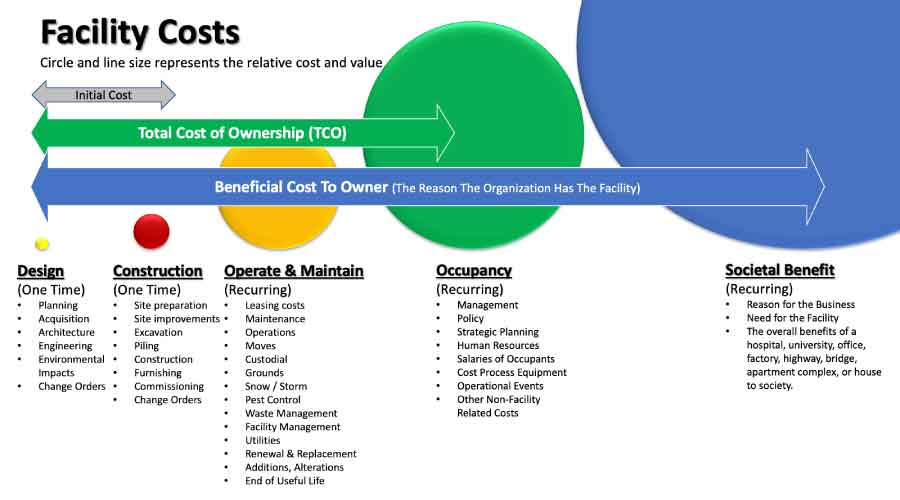
At its core, TCO is a financial tool used to calculate the full cost of an asset from acquisition to disposal. For stakeholders, TCO shifts the perspective from a short-term cash flow mindset to a long-term value-based strategy. By analyzing both visible and hidden costs, organizations can make informed decisions that optimize their balance sheets and maximize internal rates of return (IRR).
Direct and Indirect Acquisition Costs
The lifecycle begins with acquisition. While many project managers focus solely on the purchase price or the initial contract bid, TCO requires the inclusion of secondary acquisition costs. This encompasses logistics, transportation of heavy machinery to job sites, site preparation, licensing fees, and the cost of capital utilized for the procurement. When firms fail to account for these nuances, they inadvertently underestimate the barrier to entry for new equipment or technology deployments.
The Hidden Burden of Operational Expenditure (OPEX)
Once an asset is integrated into the workflow, the operational phase begins. This is where the majority of TCO accumulates. For construction equipment, this includes fuel consumption, routine maintenance, unplanned repairs, operator training, insurance premiums, and potential downtime losses. If a machine has a lower purchase price but suffers from high fuel inefficiency or a proprietary part ecosystem that inflates repair costs, its TCO will quickly surpass a more expensive but reliable alternative.
End-of-Life and Disposal Economics
The final phase of the TCO calculation involves the disposal of the asset. This includes the costs of decommissioning, site remediation, environmental compliance, and potential resale or salvage value. A crucial element often missed is the “opportunity cost” associated with maintaining an aging asset that has become less productive than newer, more efficient alternatives. Effective TCO management factors in the optimal time for divestment, balancing the residual value against the rising costs of maintenance.
The Role of TCO in Equipment Lifecycle Management
In the construction sector, the equipment fleet is often the single largest variable cost. Adopting a TCO model is essential for contractors who want to move beyond “gut-feel” procurement and toward data-driven capital budgeting.
Comparing Leasing versus Buying
One of the most frequent dilemmas for construction firms is whether to lease or purchase heavy machinery. TCO provides the granular data necessary to make this choice. Buying requires a significant capital outlay but offers long-term depreciation benefits and potential tax incentives. Leasing, conversely, shifts the maintenance and disposal risk onto the vendor, often resulting in lower TCO for firms that require high-tech, up-to-date machinery that becomes obsolete quickly. By plotting the TCO of both paths over a five-year horizon, firms can identify which route aligns better with their current cash position and operational goals.
Predictive Maintenance and Reliability
TCO analysis naturally pushes firms toward predictive maintenance schedules. When the cost of downtime—which includes idle labor, project delay penalties, and disrupted supply chains—is factored into the TCO of an asset, the ROI of routine maintenance becomes immediately clear. Predictive maintenance software, which uses telematics to monitor engine health and usage patterns, can significantly reduce the TCO by preventing catastrophic failures that are vastly more expensive to repair than the preventative measures themselves.
TCO in Building Infrastructure and Facility Management

Beyond machinery, TCO is increasingly being applied to the construction of the facilities themselves. With the rise of green building standards and sustainability mandates, developers are looking at TCO as a means to sell the long-term value of high-performance buildings to investors and tenants.
Energy Efficiency and Operating Costs
A building constructed with high-end insulation, smart HVAC systems, and renewable energy integration will invariably have a higher upfront hard cost. However, a TCO analysis will demonstrate that the reduction in energy consumption over a 20-year period creates a significantly lower total financial burden compared to a traditional structure. This “lifecycle cost analysis” is essential for securing project financing, as it demonstrates lower long-term risk and higher potential net operating income.
Maintenance and Asset Longevity
The choice of materials during the design phase has a profound impact on TCO. Specifying high-durability materials may increase initial capital expenditure, but if those materials extend the interval between major renovations or reduce the cleaning and repair requirements, the TCO profile improves. By using Building Information Modeling (BIM) software, firms can simulate the TCO of various material specifications before a single shovel hits the ground, allowing for optimized design choices that pay dividends for decades.
Strategic Financial Benefits of TCO Integration
Moving toward a TCO-based culture provides a competitive edge that is difficult for traditional firms to match. It fosters a level of financial discipline that permeates the organization, from the procurement office to the site manager.
Enhancing Profit Margins through Lean Procurement
When procurement departments are tasked with minimizing TCO rather than just securing the lowest purchase price, the entire vendor relationship changes. Instead of a transaction-based approach, the relationship becomes partnership-oriented. Firms begin to negotiate service-level agreements (SLAs) that cover performance guarantees, extended warranties, and training, effectively offloading portions of the TCO risk onto the manufacturer or supplier. This creates a more predictable cost structure for the construction firm.
Strengthening Capital Budgeting
In a volatile market, the ability to forecast cash outflows with precision is a superpower. TCO provides the data required for robust capital budgeting. By understanding the lifecycle cost curve of all assets, leadership can plan for replacements and upgrades in advance, preventing “financial shocks” caused by unexpected equipment failure or premature facility degradation. This foresight allows for better utilization of credit lines and more efficient allocation of working capital.
Sustainability as a Financial Driver
Sustainability is no longer a corporate social responsibility talking point; it is a fundamental driver of cost reduction. TCO and sustainability are inherently linked. Lower energy usage equals lower OPEX. Longer-lasting, sustainably sourced materials result in lower replacement frequency. By viewing environmental impact through the lens of TCO, construction firms can justify investments in sustainable technologies that might otherwise be rejected in a purely purchase-price-focused environment.
The Future of TCO: Digitization and AI
The calculation of TCO is becoming increasingly accurate as the construction industry undergoes digital transformation. The integration of IoT (Internet of Things) devices and AI-powered analytics is turning TCO from a retrospective historical calculation into a real-time, forward-looking predictive tool.
Sensors attached to heavy equipment now feed real-time data regarding engine hours, fuel efficiency, and mechanical strain directly into centralized TCO tracking dashboards. This enables managers to receive alerts when an asset’s efficiency drops below a predefined threshold, signaling that it has entered the “high-cost” zone of its lifecycle. Similarly, for building management, smart building systems track occupancy, temperature, and electricity usage, providing data that allows for continuous refinement of a facility’s TCO.
As data silos break down, the construction industry is moving toward a holistic financial ecosystem where the TCO of an asset is updated instantaneously based on real-world performance. Firms that master the art of TCO analysis will be the ones that survive market downturns, as they possess the clarity to cut unnecessary costs without compromising operational integrity. In the final analysis, TCO is the language of efficiency in construction—a bridge between the immediate cost of building and the long-term value of the finished asset. Understanding it, measuring it, and acting on it is the hallmark of a sophisticated construction business.
aViewFromTheCave is a participant in the Amazon Services LLC Associates Program, an affiliate advertising program designed to provide a means for sites to earn advertising fees by advertising and linking to Amazon.com. Amazon, the Amazon logo, AmazonSupply, and the AmazonSupply logo are trademarks of Amazon.com, Inc. or its affiliates. As an Amazon Associate we earn affiliate commissions from qualifying purchases.