
In the realm of hardware engineering and ballistic science, the modification of a firearm’s barrel length is more than a simple physical alteration; it is a fundamental shift in the mechanical and aerodynamic properties of the device. When exploring the question of what sawing off a shotgun actually does, we must look beyond the aesthetic and cultural tropes and examine the technical implications through the lenses of fluid dynamics, internal ballistics, and digital simulation modeling. From a technical perspective, shortening a barrel alters the pressure curves, muzzle velocity, and the algorithmic predictability of the projectile spread.

The Physics of Internal Ballistics and Pressure Dynamics
To understand the impact of shortening a shotgun barrel, one must first understand the internal ballistics—the study of what happens from the moment the primer is struck until the projectile leaves the muzzle. A shotgun functions as a combustion engine of sorts, where the propellant (gunpowder) burns to create rapidly expanding gases. These gases build pressure behind the wad and shot column, accelerating them down the barrel.
Propellant Burn Rate and Expansion Ratios
In standard-length shotgun barrels, usually ranging from 24 to 30 inches, the length is engineered to allow the propellant to burn completely or nearly completely before the projectile exits. This maximizes the energy transfer from the expanding gases to the shot. When a barrel is “sawed off”—typically reduced to lengths of 12 inches or fewer—the technical result is an incomplete expansion cycle.
From a hardware engineering standpoint, this creates a significant drop in muzzle velocity. Because the shot column exits the barrel while the gas pressure is still peaking, much of the energy that would have been used for acceleration is instead dissipated into the atmosphere as a massive muzzle blast. Using computational modeling, engineers can see that the “pressure curve” is truncated. Instead of a gradual decline in pressure as the shot reaches the end of a long barrel, the pressure is released abruptly, resulting in higher decibel levels and a more significant thermal signature.
The Role of Friction and Terminal Velocity
While a longer barrel provides more time for gas expansion, it also introduces more friction between the wad and the bore. However, in most modern shotgun configurations, the benefits of gas expansion far outweigh the costs of barrel friction. When the barrel is shortened, the reduction in friction is negligible compared to the loss of accelerating pressure. Therefore, the primary technical outcome of shortening the barrel is a reduction in the kinetic energy of the individual pellets within the shot string.
Computational Modeling of Shot Patterns and Dispersion
One of the most common misconceptions regarding the shortening of a shotgun barrel is the effect on the “spread” or dispersion of the shot. In the world of ballistic software and predictive modeling, the behavior of the shot column is determined by several variables, including the “choke,” the wad design, and the barrel’s crown.
The Removal of the Choke System
In standard hardware, the “choke” is a tapered constriction at the end of the muzzle designed to control the spread of the shot. By sawing off the end of a shotgun, a user is essentially removing the choke system entirely. From a technical perspective, this creates a “true cylinder” bore.
Ballistic simulation software reveals that without a choke, the shot column begins to expand the moment it exits the muzzle. In a longer barrel with a choke, the pellets are compressed, creating a tighter “string” that remains cohesive over longer distances. By removing this hardware component, the “algorithm” of the shot spread is reset to its most dispersive state. This makes the device highly effective for short-range applications where a wide area of effect is desired, but mathematically inefficient for targets beyond a limited distance.
Predictive Analytics for Projectile Flight
Modern ballistic apps and software tools use fluid dynamics to predict how air resistance affects the shot column. When a barrel is shortened, the pellets often exit in a more turbulent state. The abrupt release of high-pressure gases at the muzzle (the “muzzle blast”) can actually disrupt the rear of the shot column, a phenomenon known as “muzzle tip.” This turbulence introduces variables that make the shot pattern less predictable in a digital simulation. Engineers focusing on precision hardware generally view the shortening of a barrel as a move toward “entropy”—increasing the randomness of the output.
Material Science: Structural Integrity and Heat Dissipation
Modifying hardware always carries risks related to structural integrity. A barrel is not just a tube; it is a pressure vessel designed to withstand specific thresholds of force and heat. When a barrel is cut, the structural harmonics of the metal are altered.
Barrel Harmonics and Vibration
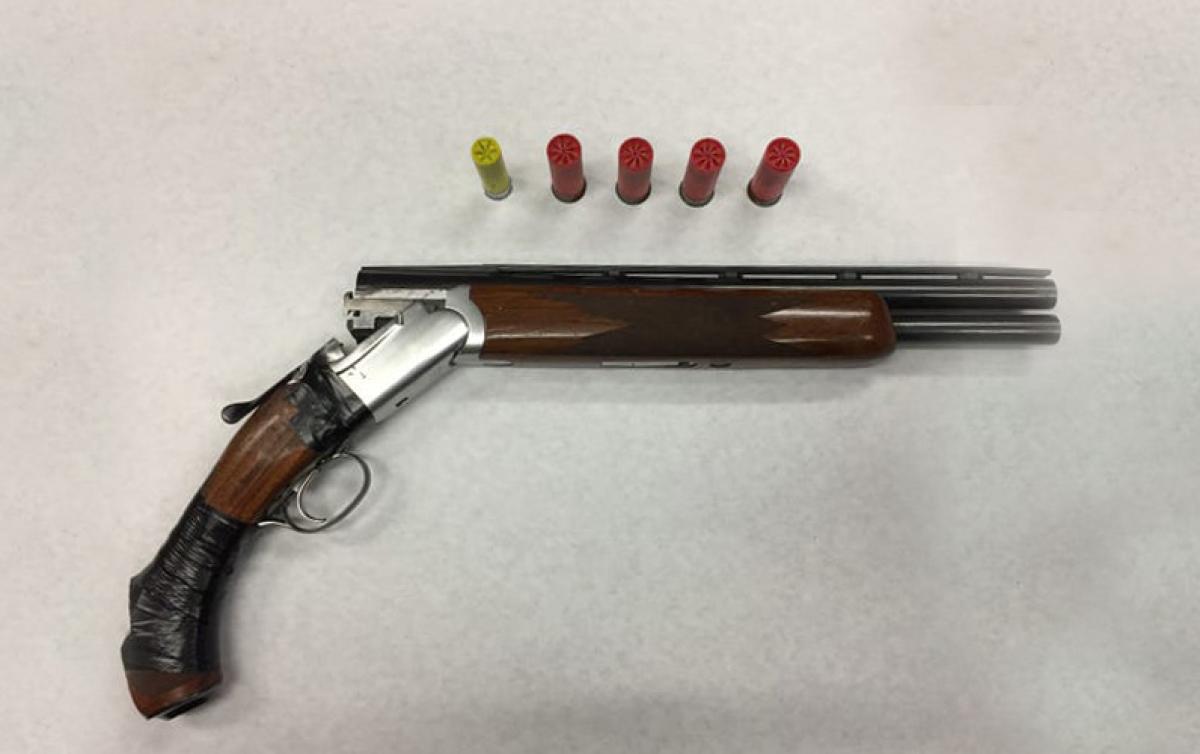
Every time a firearm is discharged, the barrel vibrates in a specific pattern known as “barrel harmonics.” In the design phase, engineers use CAD (Computer-Aided Design) software to ensure these vibrations don’t interfere with accuracy. Sawing off a shotgun changes the length and mass of the barrel, which shifts the harmonic frequency. For a shotgun, which fires multiple projectiles, this is less of a concern than it would be for a precision rifle, but it still affects the “feel” and mechanical reliability of the hardware.
Thermal Dynamics and Heat Dissipation
Shortening the barrel also changes the thermal profile of the device. A longer barrel provides more surface area for heat to dissipate. When the barrel is shortened, the heat generated by the high-pressure gas release is concentrated closer to the receiver and the user’s hands. In high-volume scenarios, this can lead to faster thermal expansion of the metal, potentially affecting the cycling of the action or the structural integrity of the remaining barrel wall, especially if the cut was not made with precision machining tools.
Forensic Technology: Analyzing Modified Ballistic Signatures
From the perspective of digital security and forensic tech, a sawed-off shotgun presents a unique “signature” that can be analyzed using specialized software. Forensic ballistics has evolved from simple visual inspections to advanced 3D scanning and acoustic analysis.
Acoustic Signature Recognition
Each firearm has a unique acoustic profile. When a shotgun is sawed off, its acoustic signature changes dramatically due to the higher pressure release at the muzzle. Modern “shotspotter” technology and acoustic sensors used in urban security can often differentiate between a standard firearm and a modified one based on the decibel level and frequency distribution of the blast. The shortened barrel creates a sharper, more “percussive” sound that digital audio processing tools can identify with high accuracy.
Tool Mark Identification and Digital Forensics
When a barrel is sawed off manually, the tools used (such as hacksaws or pipe cutters) leave microscopic “striations” or marks on the metal. Forensic technicians use digital comparison microscopes to map these marks. This creates a “hardware fingerprint.” If a modified shotgun is used, forensic software can often match the marks on the barrel to specific tools found at a secondary location, bridging the gap between physical modification and digital evidence.
Furthermore, the shot pattern itself can be reconstructed using forensic software. By analyzing the “cone of fire” and the distribution of pellets at a scene, investigators can use geometric algorithms to estimate the exact length of the barrel that fired the shot. This is a crucial aspect of digital forensics in modern law enforcement.
The Engineering Trade-offs: Portability vs. Performance
In any tech review or hardware analysis, we must weigh the pros and cons of a modification. Sawing off a shotgun is an exercise in extreme trade-offs, where performance is sacrificed for a very specific set of hardware requirements.
The Portability Factor
The primary technical “advantage” of a sawed-off shotgun is the reduction in mass and the shift in the center of gravity. By removing 12 to 18 inches of steel, the user significantly reduces the “swing weight” of the device. In the context of ergonomics and human-machine interface, this makes the hardware much easier to navigate in confined spaces. This is why, historically, such modifications were favored in “trench” warfare or for defense in cramped environments.
The Recoil and Control Algorithm
However, the reduction in mass has a negative impact on recoil management. According to Newton’s Third Law of Motion, every action has an equal and opposite reaction. In a standard shotgun, the weight of the long barrel helps to dampen the “kick” or felt recoil. When that mass is removed, the recoil energy is transmitted more directly into the user’s shoulder or wrist.
Additionally, the loss of muzzle velocity means that the “dwell time”—the amount of time the projectile spends in the barrel—is shortened. While this might seem like a benefit, it actually makes the recoil impulse feel much “snappier” and harder to control. From a technical usability standpoint, a sawed-off shotgun is a high-recoil, low-accuracy device that requires significant physical effort to master, making it a poor choice for any application requiring sustained precision.
Conclusion: The Technical Reality of Modification
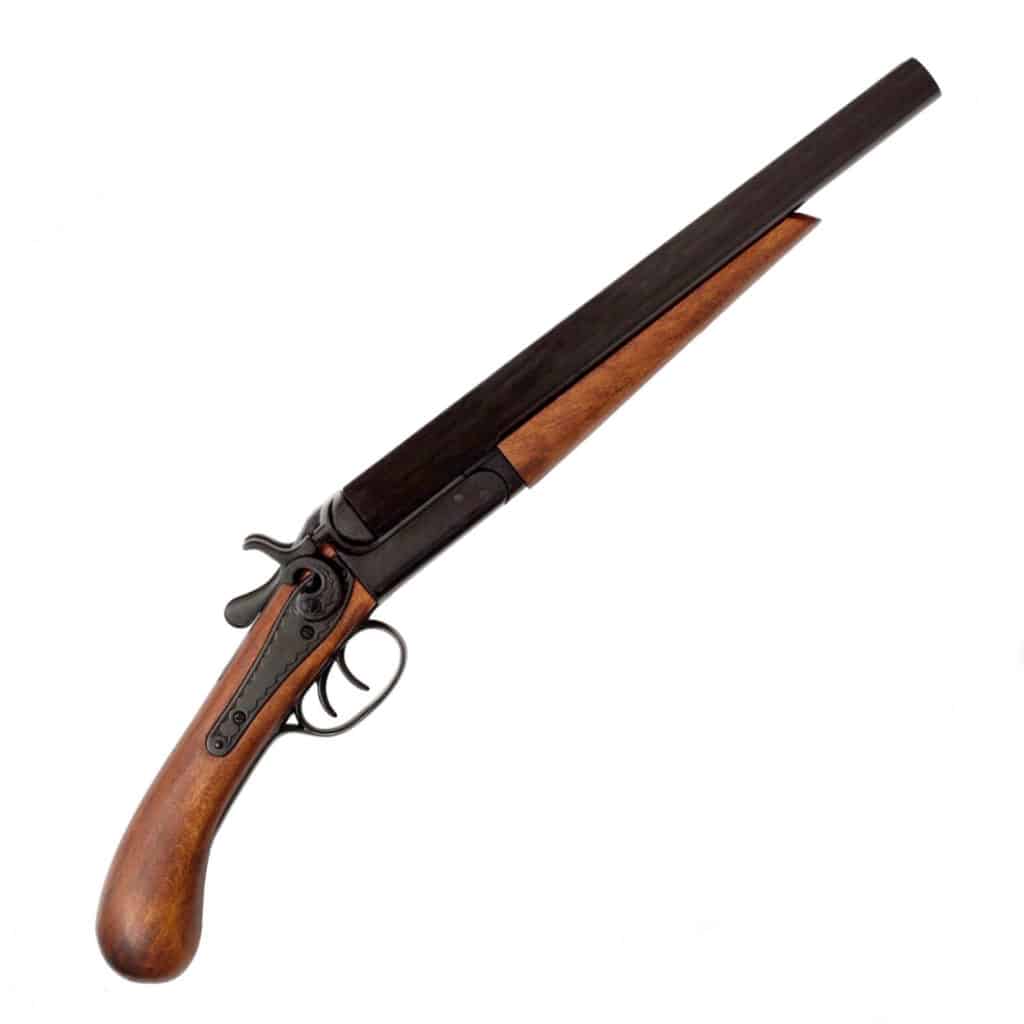
In summary, sawing off a shotgun is a drastic modification that fundamentally alters the device’s technical specifications. It truncates the pressure curve, removes the aerodynamic control of the choke, increases the entropy of the shot pattern, and changes the hardware’s acoustic and thermal signatures.
While modern simulation software allows us to predict these changes with high accuracy, the results are almost always a net loss in terms of traditional ballistic efficiency. The modification transforms a versatile, long-range tool into a specialized, short-range hardware solution with high “blast” potential but low predictability. Understanding these technical nuances is essential for anyone interested in the intersection of hardware engineering, ballistics, and digital forensic science.
aViewFromTheCave is a participant in the Amazon Services LLC Associates Program, an affiliate advertising program designed to provide a means for sites to earn advertising fees by advertising and linking to Amazon.com. Amazon, the Amazon logo, AmazonSupply, and the AmazonSupply logo are trademarks of Amazon.com, Inc. or its affiliates. As an Amazon Associate we earn affiliate commissions from qualifying purchases.