
In an increasingly connected world, where our phones serve as extensions of our personal and professional lives, the unexpected appearance of “Restricted Number,” “Private Caller,” or “No Caller ID” on our screens can evoke a range of reactions. For some, it’s a minor inconvenience; for others, a source of anxiety or suspicion. This seemingly simple phrase encapsulates a complex interplay of privacy settings, telecommunication protocols, and the evolving landscape of digital security and personal boundaries. Understanding what a restricted number truly means, both technically and contextually, is crucial for navigating modern communication effectively and safely.
At its core, “restricted number” refers to an incoming call where the caller has chosen to conceal their phone number from the recipient. This is a deliberate action, enabled by telecommunications networks and devices, designed to grant callers a degree of anonymity. While often associated with unwanted telemarketing or harassment, the functionality itself serves legitimate privacy purposes. From safeguarding personal information in sensitive situations to managing professional boundaries, the decision to restrict one’s number carries various motivations and implications. This article delves into the technical underpinnings, the myriad reasons behind caller ID restriction, strategies for managing such calls, and the broader ethical considerations in an age where digital transparency and personal privacy are constantly at odds.
Unpacking the “Restricted Number” Phenomenon
The concept of a “restricted number” is intrinsically linked to Caller ID technology, a feature that revolutionized phone communication by allowing recipients to see who was calling before answering. Before Caller ID, every call was, in essence, from an “unknown” number. The introduction of this technology, while a boon for transparency, also necessitated a mechanism for individuals to maintain their privacy when desired.
The Mechanics Behind Caller ID Blocking
When you make a phone call, your phone sends a signal to your carrier’s network, which then routes the call to the recipient’s carrier and ultimately to their device. Part of this signal typically includes your calling line identification (CLI), which is your phone number. Caller ID displays this CLI to the recipient.
However, telecommunication networks offer features that allow callers to suppress this information. When a caller opts to restrict their number, their phone or carrier inserts a specific code (like *67 in North America) before the dialing sequence, or the setting is permanently enabled on their line. This code instructs the network *not* to transmit the CLI information to the recipient’s phone.
Upon receiving such a call, the recipient’s phone or carrier interprets the absence of CLI or the specific “restricted” flag. Instead of displaying a phone number, it then shows a generic message such as:
-
Restricted Number: This is a common phrase, indicating that the caller’s number has been intentionally withheld.
-
Private Caller: Similar to “Restricted Number,” this implies the caller has activated a privacy setting.
-
Unknown: Sometimes used interchangeably, but can also denote calls where the caller ID information simply couldn’t be retrieved or wasn’t provided for technical reasons, rather than deliberate restriction.
-
No Caller ID: A very explicit message stating that no identifying number was transmitted.
While these terms are often used interchangeably by phone systems, they all fundamentally signify the same thing: the caller’s identity, specifically their phone number, has not been disclosed to you. The underlying mechanism is a deliberate choice by the caller or their service provider to activate a privacy feature within the telecommunications infrastructure.
Why Callers Choose to Restrict Their Numbers
The reasons behind a caller choosing to restrict their number are diverse, ranging from legitimate privacy concerns to more questionable intentions.
-
Privacy Concerns (Personal and Professional): This is perhaps the most common and understandable reason. Individuals might not want their personal phone number widely circulated. This is especially true for professionals who use their personal phones for work-related calls, such as healthcare providers, law enforcement, social workers, or journalists. They might need to make calls to clients, patients, or sources without revealing their direct line, thus protecting their personal space and preventing unsolicited callbacks outside of professional channels. Similarly, someone selling an item online might restrict their number when communicating with potential buyers to avoid having their personal number added to marketing lists or abused.
-
Avoiding Unsolicited Callbacks or Spam: By restricting their number, callers ensure that their number isn’t logged by the recipient’s phone or an automated system, thereby preventing their number from being added to marketing lists, getting spam calls, or receiving unwanted return calls.
-
Protecting Against Harassment or Stalking: In unfortunate circumstances, individuals might restrict their number to contact someone while protecting themselves from harassment, stalking, or other forms of abuse. This allows them to initiate contact when necessary without revealing their location or direct line.
-
Telemarketing and Sales Calls (Less Common for Legitimate Businesses): While historically some telemarketers might have used restricted numbers, most legitimate businesses and organizations today prefer to display their number. This is partly due to regulations (e.g., TCPA in the US) and also because calls from identifiable numbers are more likely to be answered. However, some less scrupulous operations or scammers might still use this method to evade call blocking and make their calls seem less suspicious at first glance.
-
Surprise Calls/Pranks: On the lighter side, some might restrict their number for a surprise call or a harmless prank, though this is less frequent.
Understanding these motivations helps in discerning how to approach calls from restricted numbers, knowing that not all such calls are inherently malicious, but warrant a degree of caution.
Navigating Calls from Restricted Numbers
Receiving a call from a “Restricted Number” can be disconcerting. The lack of identifiable information leaves recipients in a quandary: to answer or not to answer? The decision often depends on the individual’s comfort level, their expectation of important calls, and their general approach to digital security.
Identifying the Caller: Is It Possible?
For most standard users, identifying a caller who has deliberately restricted their number is exceptionally difficult, if not impossible, through conventional means. The core purpose of restriction is to prevent identification. However, there are a few limited scenarios:
-
Carrier Services (e.g., Call Trace): Some telephone companies offer a “Call Trace” service (often activated by dialing *57 in North America immediately after receiving a malicious or harassing restricted call). This service doesn’t reveal the number to *you* but logs the restricted number with the phone company. It’s typically intended for cases of repeated harassment and requires follow-up with law enforcement or the phone company to act on the traced information. It is not an instant identification tool for the end-user.
-
Third-Party Apps/Services: Many apps claim to identify restricted numbers. These often work by cross-referencing databases of known spam numbers or by using community-contributed information. However, they generally cannot “unmask” a truly restricted private call in real-time. They might identify some numbers that appear as “unknown” but are simply not in your contacts, or flag numbers that are frequently reported as spam, even if the caller technically didn’t restrict their number. Their effectiveness against truly private calls is minimal.
-
Legal Avenues for Severe Cases: In cases of severe harassment, threats, or illegal activity, law enforcement can subpoena phone companies to reveal the identity behind restricted calls. This is a last resort and requires documented evidence of criminal activity.
For the average user, the takeaway is clear: if a number is truly restricted, you will not be able to identify it on your own.
Strategies for Handling Unwanted Restricted Calls
Given the difficulty in identification, managing restricted calls often comes down to proactive strategies:
-
Ignore Them: This is the simplest and often most effective method. If the call is important, the caller will likely leave a voicemail or find an alternative way to reach you (e.g., text, email). If they don’t leave a message, it reinforces the likelihood that the call was unsolicited or not genuinely urgent.
-
Let It Go to Voicemail: Similar to ignoring, allowing restricted calls to go to voicemail provides a screening mechanism. You can then listen to the message at your convenience and decide whether to engage. This also helps differentiate legitimate, privacy-conscious callers from spammers or harassers who rarely leave coherent messages.
-
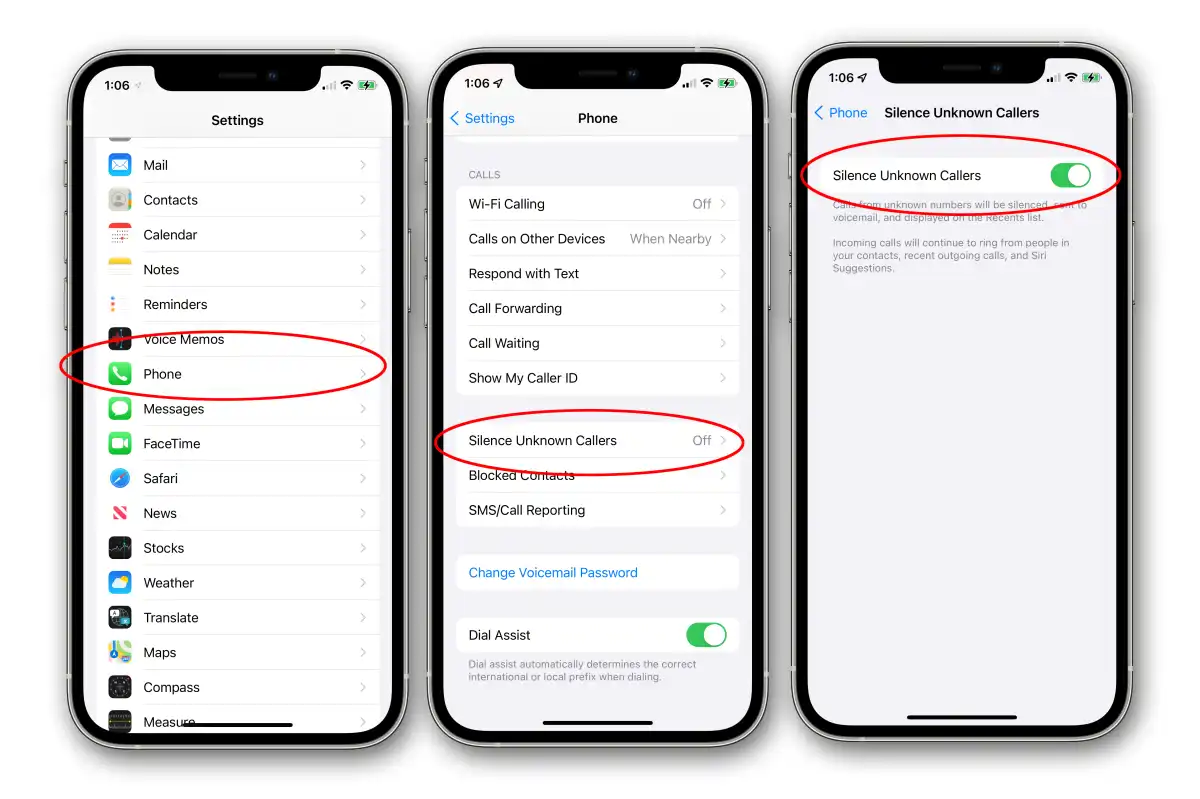
Set Your Phone to Reject Unknown Callers: Many smartphones have a built-in feature to silence or outright reject calls from numbers not in your contacts. On iOS, it’s “Silence Unknown Callers”; on Android, settings vary by manufacturer but often include an option to block calls from unknown or private numbers. While effective, this can also block legitimate calls from new contacts or businesses you might be expecting (e.g., a doctor’s office or delivery service using a main line not stored in your contacts).
-
Block After Identification (if possible): If a restricted call somehow reveals its number (e.g., the caller accidentally reveals it in a voicemail, or you use a service that unmasks some unknown calls), you can then block that specific number to prevent future calls.
-
Use Call Blocking Apps (with caution): While not foolproof for restricted numbers, some call blocking apps can identify and block known spam numbers, even if they sometimes attempt to obscure their identity. Be mindful of the permissions these apps request, as they often require access to your call logs and contacts.

The Privacy Paradox: Balancing Anonymity and Transparency
The existence of “restricted numbers” highlights a fundamental tension in digital communication: the desire for personal privacy versus the need for transparency and accountability. Both sides have valid arguments and legitimate uses, but also potential for abuse.
The Legitimate Uses of Caller ID Blocking
Caller ID blocking is not inherently malicious; it serves vital functions for certain individuals and professions:
-
Journalists and Whistleblowers: In sensitive investigative work, journalists often need to contact sources or corroborate information without revealing their direct line, protecting both their privacy and potentially the safety of their sources.
-
Law Enforcement and Government Agencies: Officers and agents frequently need to make calls without revealing their personal or direct work numbers, especially when dealing with informants, witnesses, or subjects of investigations.
-
Healthcare Professionals: Doctors, nurses, and therapists might use restricted numbers when making follow-up calls or discussing sensitive patient information from a personal device, ensuring patient privacy (e.g., HIPAA compliance) while protecting their own contact details.
-
Individuals Protecting Against Data Brokers: In an era of pervasive data collection, restricting one’s number can be a small but significant step in preventing personal information from being collected, logged, and resold by data brokers or unscrupulous entities.
-
Victims of Domestic Abuse/Stalking: For individuals trying to escape abusive situations, the ability to make necessary calls without revealing their new number or location can be a critical safety measure.
These examples underscore that the functionality itself is a valuable tool for privacy and security when used responsibly.
The Abuse of Anonymity and Its Consequences
Unfortunately, the anonymity afforded by restricted numbers can also be exploited for harmful purposes:
-
Scam Calls and Fraud: Many fraudsters and scammers use restricted numbers to prevent recipients from tracing them or blocking their numbers. This tactic often relies on creating a sense of urgency or fear, hoping the recipient answers and falls victim to a phishing attempt or social engineering scam.
-
Harassment and Cyberbullying: The ability to make anonymous calls provides a shield for harassers and cyberbullies, making it difficult for victims to identify and report them. This can lead to significant emotional distress and, in severe cases, require legal intervention.
-
Nuisance Calls: Restricted numbers are frequently used for nuisance calls, ranging from silent calls to repetitive hang-ups, purely to annoy or disrupt.
-
Erosion of Trust in Communications: The prevalence of unwanted restricted calls contributes to a general distrust of unknown callers, making people less likely to answer important calls from legitimate sources that may, for various reasons, appear restricted. This impacts effective communication across the board.
The challenge lies in preserving the legitimate uses of caller ID blocking while mitigating its potential for harm. This often involves a combination of technological solutions, public awareness, and, in severe cases, legal enforcement.
How to Manage Your Own Caller ID (and What to Consider)
Just as you might receive calls from restricted numbers, you also have the option to restrict your own number when making outgoing calls. Understanding how to do this and when it’s appropriate is an important aspect of managing your digital communication footprint.
Blocking Your Number for Outgoing Calls
There are generally two main ways to block your number for outgoing calls:
-
Per-Call Blocking: This is the most common method for temporary blocking. Before dialing a number, you enter a specific prefix (e.g., *67 in North America, 141 in the UK, #31# in some European countries). For example, dialing *67-555-123-4567 will place a call to 555-123-4567, and your number will appear as “Restricted,” “Private,” or “Unknown” to the recipient. This method applies only to that specific call.
-
Permanent Blocking (Carrier Settings/Phone Settings): Most mobile carriers and landline providers offer a service or setting that permanently restricts your outgoing caller ID for all calls. This means you won’t need to dial a prefix each time. You usually need to contact your carrier to enable or disable this feature. Some smartphones also have a setting (often under “Call settings” or “Supplementary services”) to hide your number by default, which overrides the carrier’s default setting. If you have permanent blocking enabled, you can usually temporarily unblock your number for a single call by dialing a specific prefix (e.g., *82 in North America) before the recipient’s number.
When and Why You Might Want to Restrict Your Number
Thoughtful use of caller ID restriction can be a valuable privacy tool:
-
Making Sensitive Calls: If you are contacting a business, a service, or an individual for a one-off interaction and do not wish for your personal number to be logged or potentially added to marketing lists, using *67 can be effective. This is particularly useful when calling public-facing numbers that might harvest caller IDs.
-
Avoiding Automatic Spam Filters: Some automated systems or individuals might have broad call-blocking rules for numbers they don’t recognize. While counterintuitive, sometimes appearing as “restricted” might bypass certain superficial filters, although this is becoming less common as “restricted” calls are often flagged as suspicious.
-
General Privacy and Boundary Setting: For those who are particularly cautious about their digital footprint, restricting their number can be part of a broader strategy to maintain personal privacy, especially when making calls that are not expected to result in a direct callback to that specific line.
Ethical Considerations and Best Practices
While the option to restrict your number offers valuable privacy, it comes with responsibilities and ethical considerations:
-
Transparency in Professional Contexts: If you are calling someone in a professional capacity and they are expecting to call you back, or if your identity is relevant to the call, it is generally best practice to disclose your number. Using a restricted number in such scenarios can appear unprofessional or evasive.
-
Inform Recipients If a Callback is Expected: If you restrict your number but anticipate a callback, clearly state who you are and provide an alternative, identifiable number (e.g., a work number or main office line) in your message. This avoids frustration and ensures effective communication.
-
Consider the Recipient’s Perspective: Many people are wary of restricted numbers due to the prevalence of scams and harassment. Weigh the necessity of restricting your number against the potential that the recipient might simply not answer or view your call with suspicion.
-
Prioritize Safety and Legality: Never use restricted numbers for illegal activities, harassment, or to deceive others. Misuse of telecommunication services can have severe legal consequences.

Conclusion
The phrase “restricted number” encapsulates a multifaceted aspect of modern telecommunications, touching upon privacy, security, and the ethics of digital interaction. Far from being a mere technicality, it represents a deliberate choice made by a caller to withhold their identity, often for legitimate reasons of privacy protection, but occasionally for less savory purposes.
For recipients, encountering a restricted number necessitates a balanced approach: one that acknowledges the valid reasons for anonymity while remaining vigilant against potential misuse. Employing strategies like voicemail screening, ignoring unknown calls, or using call-blocking features allows individuals to manage their communication flow without compromising their safety or peace of mind.
For callers, the ability to restrict one’s number is a powerful privacy tool, but one that should be wielded responsibly. Understanding its implications and using it judiciously, especially in professional or sensitive contexts, is paramount. As technology continues to evolve, the discourse around caller ID and privacy will undoubtedly continue, challenging us to find ever more sophisticated ways to balance the fundamental human desire for privacy with the collective need for transparency and trust in our digital interactions.
aViewFromTheCave is a participant in the Amazon Services LLC Associates Program, an affiliate advertising program designed to provide a means for sites to earn advertising fees by advertising and linking to Amazon.com. Amazon, the Amazon logo, AmazonSupply, and the AmazonSupply logo are trademarks of Amazon.com, Inc. or its affiliates. As an Amazon Associate we earn affiliate commissions from qualifying purchases.