
In an age where seamless connectivity is not just a convenience but an expectation, the magic of “wireless” is often taken for granted. From streaming high-definition content on your smart TV to making calls on the go, or even charging your smartphone without a cable, wireless technology underpins countless aspects of our daily lives. Yet, for many, the fundamental question of “how does it really work?” remains shrouded in a captivating, almost mystical, obscurity. This article aims to demystify the intricate world of wireless technology, breaking down its core principles and diverse applications, revealing the elegant science behind the invisible waves that power our connected world.
The Invisible Foundation: Electromagnetic Waves and Data Transfer
At the heart of all wireless communication lies the invisible force of electromagnetism. It’s the same force that governs light, X-rays, and even the static electricity you feel sometimes. Wireless technology harnesses a specific segment of the electromagnetic spectrum: radio waves, microwaves, and infrared light, to transmit information without the need for physical wires.
Electromagnetism: The Carrier of Information
Imagine dropping a pebble into a still pond; ripples spread outwards. Similarly, when an electric current oscillates rapidly, it generates electromagnetic waves that propagate through space, carrying energy and information. These waves consist of oscillating electric and magnetic fields that are perpendicular to each other and to the direction of wave propagation. Different wireless technologies utilize different frequencies within the electromagnetic spectrum – from the long wavelengths of AM radio to the shorter, higher-frequency waves used by Wi-Fi and 5G. The frequency of a wave determines its properties, such as how far it can travel and how much data it can carry. Higher frequencies generally allow for faster data transmission but have a shorter range and are more susceptible to obstruction. Understanding this fundamental principle is crucial to grasping how devices “talk” to each other through thin air.
Modulation and Demodulation: Encoding the Message
Raw digital data, like the ones and zeros that make up an email or a video, cannot simply be broadcast as electromagnetic waves. Instead, they must be “modulated” onto a carrier wave. Modulation is the process of altering a property of the carrier wave—its amplitude (strength), frequency (number of cycles per second), or phase (timing)—in accordance with the information being transmitted. For instance, in Amplitude Modulation (AM), the strength of the wave changes to encode data, while in Frequency Modulation (FM), it’s the frequency that varies. More advanced techniques like Phase Shift Keying (PSK) and Quadrature Amplitude Modulation (QAM) alter both phase and amplitude, allowing for a much greater amount of data to be packed into each wave cycle, which is essential for modern high-speed wireless communication. On the receiving end, devices perform “demodulation,” reversing this process to extract the original digital data from the modified carrier wave. This intricate dance of encoding and decoding ensures that your smartphone can interpret the complex signals sent by a Wi-Fi router or a cellular tower.
Diverse Applications: From Local Networks to Global Connectivity
The foundational principles of wireless communication have given rise to an astonishing array of technologies, each tailored for specific needs, ranges, and data rates. From connecting devices within a single room to providing global mobile connectivity, wireless solutions are everywhere.
Wi-Fi: Local Area Networking Powerhouse
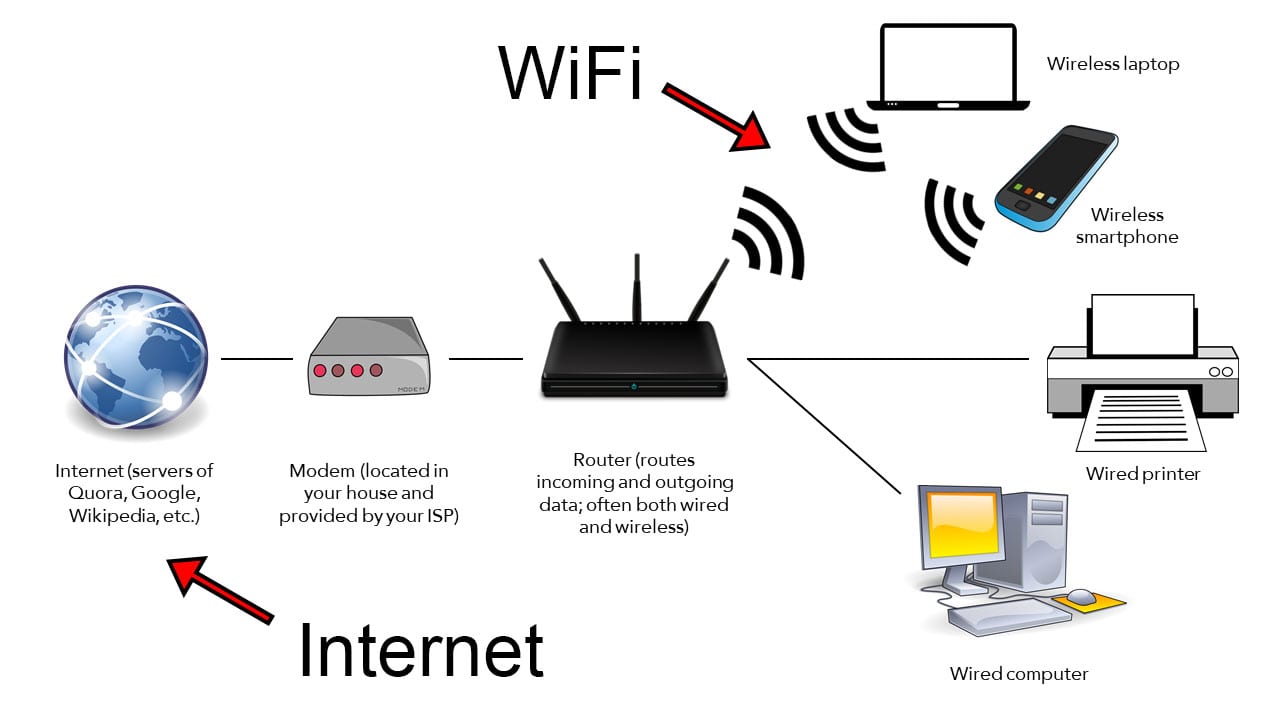
Wi-Fi, based on the IEEE 802.11 standards, has become synonymous with internet access in homes, offices, and public spaces. A Wi-Fi network operates by having a router—a central device that acts as both a transmitter and receiver—broadcast data using radio waves. Your devices, be it a laptop, smartphone, or smart speaker, pick up these signals, process them, and send their own data back to the router, which then forwards it to the internet or other devices on the local network. Wi-Fi primarily uses the 2.4 GHz and 5 GHz frequency bands, with newer standards like Wi-Fi 6E also leveraging the 6 GHz band. The 2.4 GHz band offers a wider range but lower speeds and is more prone to interference. The 5 GHz and 6 GHz bands provide faster speeds and lower latency but have a shorter range and are more easily obstructed by walls and other physical barriers. The continuous evolution of Wi-Fi standards focuses on increasing speeds, reducing latency, and supporting a greater number of connected devices, crucial for the expanding Internet of Things (IoT).
Cellular Networks: Uninterrupted Mobile Communication
Cellular networks enable mobile devices to communicate over vast geographical areas, transcending the local confines of Wi-Fi. The “cell” in cellular refers to the geographical areas covered by individual base stations (often visible as cell towers). When you make a call or access data, your device communicates with the nearest base station. As you move, your connection is seamlessly “handed off” from one base station to another, ensuring continuous service. Each generation of cellular technology (2G, 3G, 4G, and now 5G) has brought significant advancements in speed, capacity, and latency. 2G primarily handled voice and basic text; 3G introduced mobile internet; 4G brought high-speed mobile broadband; and 5G is designed for ultra-fast speeds, extremely low latency, and the capacity to connect millions of devices per square kilometer, enabling applications like autonomous vehicles, augmented reality, and massive IoT deployments. This complex network of towers, fiber optic backbones, and sophisticated switching systems is what keeps billions of people connected worldwide.
Bluetooth: Personal Area Network Solutions
Bluetooth is a short-range wireless technology designed for creating Personal Area Networks (PANs), typically connecting devices within a 10-meter radius. It operates in the 2.4 GHz unlicensed ISM (Industrial, Scientific, and Medical) band. Unlike Wi-Fi, which is designed for network access, Bluetooth is primarily used for direct device-to-device communication. Common applications include wireless headphones, connecting peripherals like keyboards and mice, linking smartphones to car infotainment systems, and facilitating communication between smartwatches and fitness trackers. Bluetooth devices “pair” with each other, establishing a secure connection that allows for data exchange. Bluetooth Low Energy (LE) is a particularly significant innovation, enabling devices to communicate with minimal power consumption, extending battery life significantly—a critical feature for small, battery-powered IoT devices and wearables.
The Magic of Wireless Power Transfer

While wireless communication has become ubiquitous, the concept of wireless power transfer still feels somewhat futuristic, even though its foundations have been around for over a century. The ability to charge devices without plugging them in promises a truly untethered experience.
Inductive Charging: The Present of Cordless Power
The most common form of wireless power transfer today is inductive charging, largely popularized by the Qi standard. This technology relies on the principle of electromagnetic induction, discovered by Michael Faraday. It involves two coils: a transmitting coil in the charging pad and a receiving coil in the device. When an alternating current flows through the transmitting coil, it creates a fluctuating magnetic field. If a receiving coil is placed within this magnetic field, an alternating current is induced in it, which can then be rectified and used to charge the device’s battery. This method is highly efficient over very short distances, typically a few millimeters, requiring direct contact or very close proximity. It’s safe, relatively simple to implement, and widely adopted in smartphones, smartwatches, and electric toothbrushes, offering convenience by eliminating wear and tear on physical ports.
Resonant Inductive Coupling: Extending the Range
Building upon the principles of inductive charging, resonant inductive coupling allows for more efficient power transfer over slightly longer distances (typically a few centimeters to a few feet). This method uses two coils that are tuned to resonate at the same frequency, much like two tuning forks vibrating at the same pitch. When the transmitting coil emits energy at its resonant frequency, the receiving coil, also tuned to that frequency, efficiently absorbs that energy. This resonance greatly enhances the efficiency of power transfer compared to simple induction, even when the coils are not in direct contact or are slightly misaligned, or even when there’s an obstruction between them. Companies are exploring resonant charging for applications like charging multiple devices simultaneously on a desktop, powering embedded sensors within furniture, or even charging electric vehicles. While more complex to implement, it offers a glimpse into a future with fewer cables.
Radio Frequency (RF) Charging: Towards Truly Untethered Power
The ultimate dream of wireless power is true over-the-air charging, where devices power up passively, much like they receive Wi-Fi signals. This is being explored through Radio Frequency (RF) charging. Here, dedicated transmitters broadcast power using radio waves, which are then captured by small antennas in receiver devices and converted back into usable DC power. This method holds the promise of charging devices at a distance, potentially across an entire room, without any direct contact. However, RF charging faces significant challenges, including efficiency, the amount of power that can be safely transmitted to a device (especially at a distance), and regulatory hurdles concerning human exposure to RF energy. Current commercial RF charging solutions typically offer very low power (sufficient for small IoT sensors or remote controls) or require a dedicated, line-of-sight setup for higher power. Research continues to advance in areas like beamforming (directing power more precisely) and increasing conversion efficiency, moving us closer to a future where battery anxiety becomes a relic of the past.
Challenges and Future Innovations in Wireless Technology
While the advancements in wireless technology have been phenomenal, the journey is far from over. Significant challenges remain, driving continuous innovation and shaping the next generation of connectivity and power solutions.
Signal Interference and Security Concerns
The electromagnetic spectrum is a shared resource, leading to potential signal interference from other wireless devices, electrical appliances, and even natural phenomena. This interference can degrade signal quality, reduce data speeds, and disrupt connections. Advanced techniques like channel bonding, beamforming, and adaptive frequency hopping are used to mitigate these issues. Security is another critical concern. Wireless signals can be intercepted, making encryption protocols (like WPA3 for Wi-Fi or end-to-end encryption in cellular networks) absolutely essential to protect data privacy and integrity. The ongoing battle against eavesdropping, jamming, and malicious attacks necessitates constant innovation in cybersecurity for wireless systems.
Bandwidth Limitations and Spectrum Management
The increasing demand for data, driven by high-resolution streaming, cloud computing, and the proliferation of connected devices, places immense pressure on the finite electromagnetic spectrum. There’s only so much “airwave” available. Efficient spectrum management, through regulatory bodies that allocate and auction frequency bands, is crucial. Technologically, innovations like Orthogonal Frequency-Division Multiplexing (OFDM), Multiple-Input Multiple-Output (MIMO) antennas, and full-duplex communication are pushing the boundaries of how much data can be transmitted simultaneously over existing frequencies, maximizing spectral efficiency and enabling higher bandwidths without requiring entirely new frequency allocations.
The Future: 6G, IoT, and Ubiquitous Connectivity
Looking ahead, the wireless landscape promises even more transformative changes. The development of 6G, the successor to 5G, envisions ultra-low latency communication (measured in microseconds), terabit-per-second data speeds, and truly ubiquitous connectivity that integrates with AI, edge computing, and even new sensory applications. This will enable applications far beyond current capabilities, such as real-time holographic communication, truly immersive virtual and augmented reality, and hyper-intelligent environments where every device and sensor is seamlessly connected and communicating. The Internet of Things (IoT) will become even more pervasive, with billions of tiny, low-power devices gathering and exchanging data, powering smart cities, intelligent healthcare systems, and fully autonomous transportation networks. The dream of a world where technology is invisibly integrated into our lives, responding to our needs with instantaneous efficiency, is rapidly becoming a reality.

Conclusion
The seemingly magical ability of wireless technology to transmit data and even power through thin air is, in fact, a testament to profound scientific principles and ingenious engineering. From the fundamental oscillations of electromagnetic waves and the clever tricks of modulation to the sophisticated networks that blanket our planet, “wireless” is a carefully orchestrated ballet of physics and digital innovation. It’s a field constantly evolving, overcoming challenges of interference, security, and limited bandwidth to deliver ever-faster, more reliable, and more ubiquitous connectivity. As we stand on the precipice of advancements like 6G and truly untethered power, understanding how wireless really works not only demystifies the technology but also deepens our appreciation for the invisible threads that weave together our increasingly connected world.
aViewFromTheCave is a participant in the Amazon Services LLC Associates Program, an affiliate advertising program designed to provide a means for sites to earn advertising fees by advertising and linking to Amazon.com. Amazon, the Amazon logo, AmazonSupply, and the AmazonSupply logo are trademarks of Amazon.com, Inc. or its affiliates. As an Amazon Associate we earn affiliate commissions from qualifying purchases.