
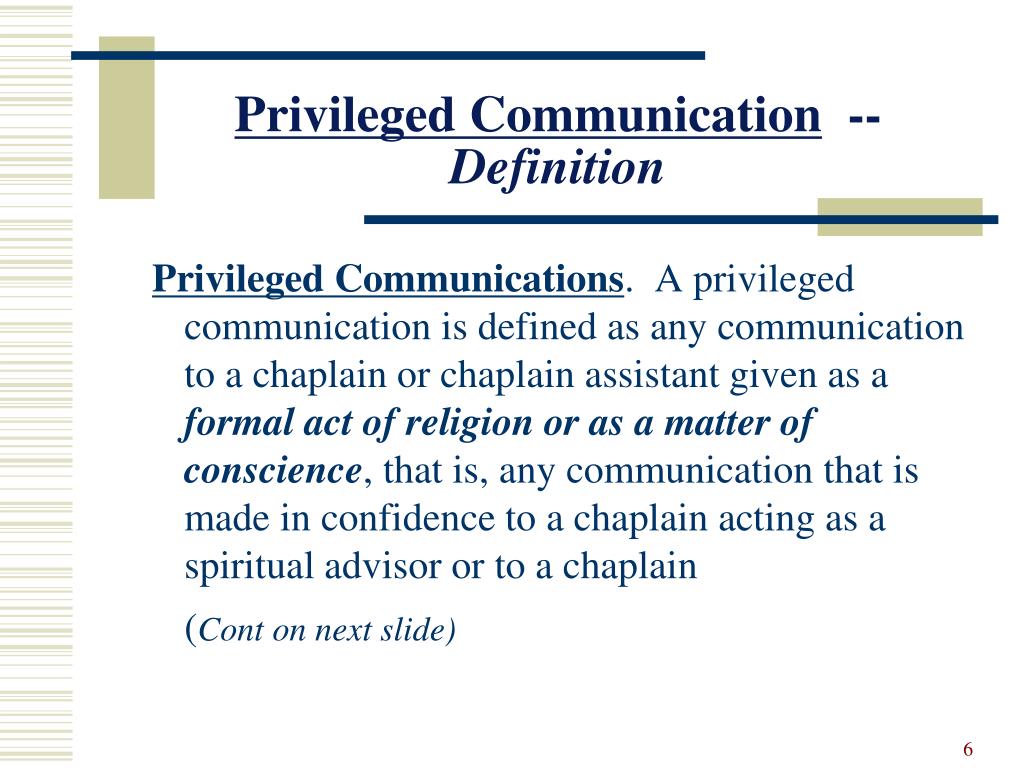
In the complex landscape of professional interactions, the concept of “privileged communication” serves as a foundational pillar for trust and operational integrity. While often discussed in legal spheres, the principle of privilege is increasingly critical in corporate environments, financial auditing, and executive decision-making. At its core, privileged communication refers to an interaction between two parties in a protected relationship where the law or professional ethics prohibit the disclosure of that communication in a legal proceeding or public forum without the consent of the client or the protected party.
Understanding this concept is essential for any professional navigating high-stakes business environments. It acts as a safeguard, ensuring that individuals can communicate candidly with their advisors—be they attorneys, financial consultants, or compliance officers—without the fear that such candidness will later be weaponized against them in litigation or regulatory audits.

The Foundations of Legal and Professional Privilege
The doctrine of privilege is not intended to shield wrongdoing, but rather to foster the free flow of information necessary for the proper functioning of professional services. Without the guarantee of confidentiality, a client might withhold critical details from their counsel or financial advisor, rendering the professional’s advice incomplete and potentially dangerous.
Attorney-Client Privilege
The most widely recognized form of privileged communication is the attorney-client privilege. This protects confidential communications between a lawyer and their client made for the purpose of obtaining or providing legal assistance. For this privilege to hold, the communication must be made in confidence and the relationship must be clearly established. If a third party is present during these discussions, the privilege is often waived, as the expectation of privacy is broken.
Accountant-Client and Financial Privilege
In the realm of finance, the concept of privilege is more nuanced. While common law does not always grant a broad accountant-client privilege, many jurisdictions have enacted specific statutes that protect communications between a taxpayer and their tax advisor. This is vital in a business context, where financial strategies, tax planning, and corporate restructuring often involve sensitive data that, if exposed prematurely, could disrupt market standing or invite unnecessary scrutiny.
The Strategic Importance of Privilege in Corporate Governance
For businesses, maintaining privilege is not just a legal requirement; it is a strategic asset. Protecting the integrity of internal investigations and consultations allows companies to identify internal vulnerabilities and rectify them before they escalate into systemic failures.
Internal Investigations and Compliance
When a corporation suspects internal misconduct, the board of directors or the executive team often initiates an internal investigation. By involving legal counsel early in the process and directing them to perform the investigation under the umbrella of attorney-client privilege, the company ensures that the gathering of facts and the subsequent legal analysis remain protected. This allows the company to conduct a thorough “post-mortem” of the incident without inadvertently creating a roadmap for plaintiffs’ attorneys to use in future litigation.
Managing Disclosures and Documentation
The “privilege log” is a critical tool in modern corporate operations. When a company is involved in litigation or a government inquiry, it is often required to produce documents during the discovery process. However, documents that fall under privileged communication are excluded. Maintaining an accurate log of these communications—identifying who sent the document, who received it, and why it is privileged—is essential to prevent the accidental waiver of these protections. A single inadvertent email copy sent to a non-essential party can, in many jurisdictions, forfeit the privilege for the entire chain of communication.
Potential Pitfalls: Waiver and the Limits of Confidentiality
The protection offered by privileged communication is powerful, but it is also fragile. Understanding the mechanics of how privilege is lost is as important as understanding how it is created.
Inadvertent Waiver
The most common way privilege is lost is through inadvertent disclosure. In the digital age, where information travels instantaneously via email and cloud collaboration tools, the risk of “leaking” privileged content is higher than ever. Forwarding a confidential legal memo to an external business consultant who is not acting as an agent of the attorney can result in a waiver of privilege. Once the genie is out of the bottle—once a privileged document is disclosed to a third party—it is often impossible to “re-privilege” it.
The Crime-Fraud Exception
It is a common misconception that privilege is absolute. The law draws a firm line at illegal activity. The “crime-fraud exception” dictates that communication is not privileged if it is made for the purpose of helping the client commit a crime or a fraud. If a client consults an attorney not to understand the legal boundaries of a financial transaction, but to devise a way to illegally conceal assets or launder money, that communication loses its protected status. Courts are generally hesitant to apply this exception, as it threatens the core of the professional relationship, but they will not hesitate to pierce the veil of privilege if the professional’s services are being used to facilitate unlawful acts.
The Role of Corporate “Upjohn” Warnings
In corporate settings, the identity of the “client” can be ambiguous. Is it the employee being interviewed, or is it the corporation as a legal entity? This is where the Upjohn warning becomes relevant. When legal counsel interviews employees during an investigation, they must clarify that they represent the corporation, not the individual. This ensures that the privilege belongs to the company, and the company—not the employee—has the right to waive that privilege later. Failure to clearly distinguish this can lead to conflicts of interest and the erosion of the corporate privilege.
Implementing Best Practices for Safeguarding Communication
Protecting the privilege of communications requires a proactive culture of documentation and clear communication protocols. Organizations that treat privilege as a standard part of their administrative hygiene are significantly better positioned to weather legal and regulatory challenges.
Establishing the “Purpose” Test
Every time a document or email is created that involves legal or sensitive financial strategy, the intent must be clearly documented. If a communication is meant to be privileged, it should explicitly state that it is a “Confidential Communication for the Purpose of Seeking Legal/Financial Advice.” While this label alone does not guarantee privilege, it creates a contemporaneous record that demonstrates the intent of the parties at the time of creation.
Limiting Distribution Lists
The “need-to-know” principle should be the golden rule for any sensitive document. Privilege is easily destroyed by an over-inclusive email thread. If a privileged communication is shared with staff members who do not have a functional necessity to be part of the legal or strategic consultation, the court may view the communication as a general business discussion rather than a protected advisory interaction. Organizations should implement strict controls on who can access and distribute documents marked as privileged.

Training and Awareness
The final layer of protection is human capital. Employees at all levels—from middle management to C-suite executives—should be trained on the basics of privileged communication. They should know that not every email is privileged, and that they must be cautious about discussing sensitive investigations or legal advice in open channels. By fostering an environment where professionals understand the sanctity and the limitations of these communications, a company effectively builds a perimeter of protection around its most sensitive intellectual and operational insights.
In summary, privileged communication is the lifeblood of the professional-client relationship. Whether in the boardroom, the accounting office, or the legal department, it provides the space necessary for honest, accurate, and prudent decision-making. By respecting the boundaries of this privilege and implementing robust internal controls, organizations can protect their strategic interests while operating within the highest standards of professional conduct.
aViewFromTheCave is a participant in the Amazon Services LLC Associates Program, an affiliate advertising program designed to provide a means for sites to earn advertising fees by advertising and linking to Amazon.com. Amazon, the Amazon logo, AmazonSupply, and the AmazonSupply logo are trademarks of Amazon.com, Inc. or its affiliates. As an Amazon Associate we earn affiliate commissions from qualifying purchases.