
In the intricate signal chain of professional audio production, the preamplifier—or “preamp”—is arguably the most critical component. While modern digital workstations and sophisticated software plugins often steal the limelight, the hardware preamp remains the gatekeeper of sonic quality. Understanding what a preamp does is essential for anyone looking to transition from amateur recording to professional-grade sound engineering. At its core, a preamp is an electronic device designed to take a “mic-level” or “instrument-level” signal and boost it to a “line-level” signal, making it robust enough for further processing, mixing, or recording.
The Fundamental Purpose: Signal Level Conversion
The primary function of a preamp is gain staging. Most microphones and musical instruments produce signals that are incredibly weak—often mere millivolts of electricity. If you were to plug a microphone directly into a power amplifier or a standard line-level input on a digital interface without a preamp, the result would be virtually silent or buried under a massive “noise floor.”

Understanding Mic-Level vs. Line-Level
To appreciate the necessity of the preamp, one must understand the hierarchy of signal levels. A microphone produces a signal that is extremely fragile. Because it is so low, it is highly susceptible to electromagnetic interference and signal degradation over long cable runs. A preamp provides the necessary “gain”—the amplification of this weak voltage—to bring it up to line-level. Line-level is the standardized operating level for professional audio equipment, such as mixing consoles, digital-to-analog converters (DACs), and signal processors.
Overcoming the Noise Floor
Beyond simple amplification, the preamp is tasked with maintaining the integrity of the signal. Every electronic component introduces a small amount of self-noise, known as the “noise floor.” A high-quality preamp is designed to amplify the intended signal while keeping its own self-noise as low as possible. When you have a preamp with a high signal-to-noise ratio, you can achieve a clean, clear recording. Conversely, cheap preamps often introduce hiss or hum as you increase the gain, which can ruin the clarity of a vocal performance or a delicate acoustic recording.
The Sonic Signature: Coloration and Character
While the technical job of a preamp is to provide “gain,” the aesthetic job is to provide “character.” Many audio engineers distinguish between “clean” (transparent) preamps and “colored” (character) preamps. Choosing between these two is a fundamental creative decision in the studio.
The Appeal of Clean Preamps
Clean preamps, often found in high-end solid-state designs, are engineered to pass the signal through with as little alteration as possible. These units provide a “wire-with-gain” approach, capturing exactly what the microphone hears without adding any harmonic artifacts. Clean preamps are the industry standard for classical music, orchestral recordings, and sources where absolute transparency is the goal. They allow the nuance of the microphone choice and the room acoustics to take center stage, ensuring that the source material remains uncolored during the initial capture.
The Magic of Harmonic Distortion
On the other end of the spectrum are colored preamps, which are highly prized for their ability to add a musical “sheen” to a recording. These often utilize vacuum tubes (valves) or specific transformer-coupled circuits. When pushed, these components introduce harmonic distortion—specifically, low-order even harmonics—that the human ear perceives as “warmth,” “thickness,” or “weight.”
When a preamp “colors” the sound, it is essentially shaving off the harsh peaks of the signal and adding subtle saturation. This makes the recorded audio feel more professional and “finished.” Many pop, rock, and jazz producers prefer colored preamps for vocals and electric guitars because the saturation helps the instruments sit better in a busy mix without requiring extensive equalization.
Circuitry and Components: Tubes, Transformers, and Transistors
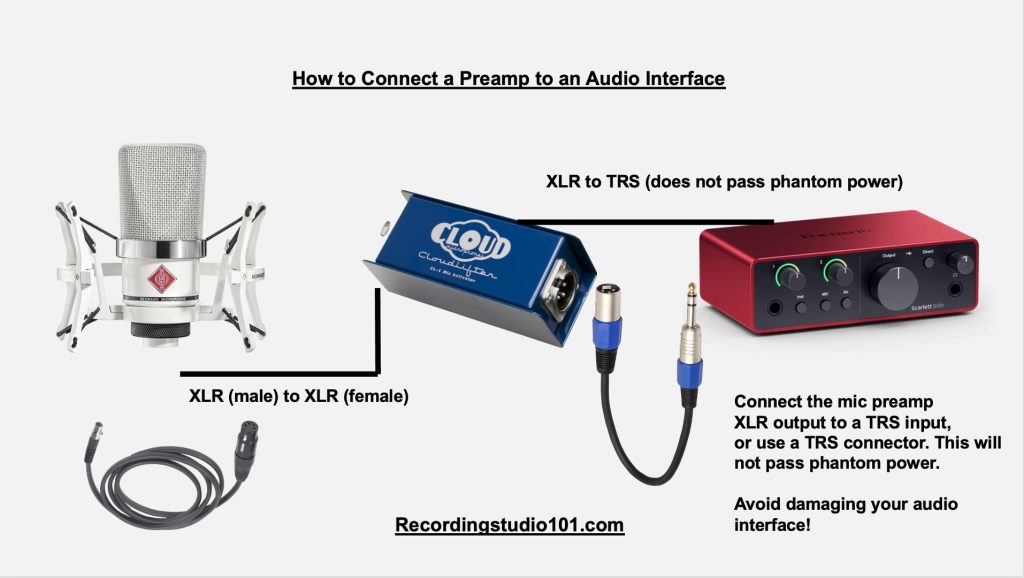
The internal architecture of a preamp dictates how it behaves under load. Understanding these differences helps engineers select the right tool for the job.
Vacuum Tube Preamps
Tube preamps are the vintage-inspired workhorses of the recording industry. They use glass vacuum tubes to amplify the signal, providing a distinct, “soft-clipping” characteristic. When a tube preamp is driven hard, it doesn’t distort in a harsh, digital way; instead, it compresses the peaks musically. This is why tube preamps are often the first choice for “thin-sounding” vocalists or sterile digital synthesizers that need a bit of organic texture.
Solid-State Transistor Preamps
Solid-state preamps rely on transistors rather than tubes. They are generally more reliable, easier to manufacture, and more consistent in their sonic output. Modern solid-state designs can be incredibly fast and transient-accurate, making them perfect for drums and percussion. If you need to capture the sharp “snap” of a snare drum, a high-speed solid-state preamp will generally outperform a slower, warmer tube design.
Transformer-Coupled Designs
Many classic preamp designs, such as those modeled after vintage consoles from the 1970s, incorporate transformers. Transformers perform a double duty: they assist in impedance matching (ensuring the microphone and the preamp “talk” to each other efficiently) and they provide natural, magnetic saturation. The saturation provided by high-quality iron or nickel-core transformers adds a “glue” to the audio signal that many digital plugins struggle to replicate perfectly.
Impedance and Input Versatility
A often overlooked aspect of the preamp is impedance matching. Every microphone has an “output impedance,” and every preamp has an “input impedance.” In the professional world, the standard rule of thumb is “bridging impedance,” where the preamp’s input impedance should be significantly higher than the microphone’s output impedance.
Variable Impedance
Some advanced preamps feature variable impedance settings. This allows the engineer to “tune” the preamp to the microphone. By changing the impedance, you can subtly alter the frequency response and the transient response of the mic. A lower impedance setting might darken the sound and increase the low-mid “punch,” while a higher setting might open up the high frequencies, making the microphone sound more airy and detailed.
Instrument Inputs (DI)
Most preamps also include a “DI” (Direct Injection) input, typically a 1/4-inch jack located on the front panel. This input is optimized for high-impedance sources like electric guitars, bass guitars, and synthesizers. When you plug a guitar into a preamp’s DI, the preamp acts as an impedance matcher, ensuring the guitar’s pickups are loaded correctly. This is vital for maintaining the high-frequency content of the guitar signal before it hits your digital interface.
Choosing the Right Preamp for Your Needs
In the current era of home studios, many users rely on the preamps built into their audio interfaces. While these are often perfectly functional, they are usually designed for maximum neutrality and cost-efficiency. If you are looking to elevate your production quality, investing in an external, dedicated preamp is the most logical next step.
Assessing Your Goals
Ask yourself what is missing from your current recordings. If your tracks sound “brittle” or “thin,” a tube-based preamp or one with a transformer output stage might add the body and character you are lacking. If you find your recordings sound “muffled” or lack detail, you might benefit from a high-speed, transparent solid-state preamp that preserves every nuance of your high-end condenser microphone.

The Role of Gain Staging in the Digital Age
Even with the best preamp in the world, the user must understand proper gain staging. With digital recording, the goal is not to get as close to “0dB” as possible. Instead, it is to find the “sweet spot” of the preamp. Drive the preamp hard if you want saturation and color; back off the gain if you want a clean, pristine capture. By learning to balance the input gain of the preamp with the output level to your digital interface, you gain full control over the sonic texture of your work.
The preamp is more than just a volume booster; it is the front-end processor that sets the stage for every stage of your production. By understanding its role in signal conversion, harmonic coloration, and impedance control, you can harness its power to transform ordinary recordings into professional, radio-ready audio.
aViewFromTheCave is a participant in the Amazon Services LLC Associates Program, an affiliate advertising program designed to provide a means for sites to earn advertising fees by advertising and linking to Amazon.com. Amazon, the Amazon logo, AmazonSupply, and the AmazonSupply logo are trademarks of Amazon.com, Inc. or its affiliates. As an Amazon Associate we earn affiliate commissions from qualifying purchases.