
In the intricate world of financial transactions, understanding the various methods available is crucial for both individuals managing personal budgets and businesses overseeing cash flow. Among the most prevalent, yet often least understood, is payment by ACH. Far from being a niche term, Automated Clearing House (ACH) transactions form the backbone of countless financial interactions, from direct deposits of salaries to automatic bill payments. For anyone navigating the modern financial landscape, grasping what ACH means is fundamental to efficient money management.
The Foundation of Electronic Funds Transfer
At its core, ACH stands for Automated Clearing House. It is an electronic network for financial transactions in the United States, allowing for the secure and efficient transfer of funds between bank accounts. Managed by NACHA (the National Automated Clearing House Association), the ACH Network acts as a central clearing facility for all ACH transactions. Its primary role is to process large volumes of debit and credit transactions in batches, significantly reducing the reliance on paper checks and promoting a faster, more streamlined financial system.
Historically, before the widespread adoption of electronic transfers, transactions largely relied on paper checks, which were slow, labor-intensive, and prone to error and fraud. The advent of the ACH Network in the 1970s revolutionized this process, introducing an electronic means to move money that was both more cost-effective and secure. Today, the ACH Network processes billions of transactions annually, representing trillions of dollars, underpinning essential financial services that many take for granted. It is not an instant payment system like a wire transfer or a credit card authorization; instead, it operates on a batch processing schedule, where transactions are collected and processed at specific intervals throughout the day. This batch-oriented approach is what makes ACH transfers incredibly efficient for routine and recurring payments.
Deconstructing the ACH Payment Process
Understanding an ACH payment involves recognizing the key players and the sequential steps that facilitate the electronic movement of funds. Unlike immediate cash or card transactions, ACH operates through a defined, multi-stage process.
The Players Involved
Several entities collaborate to ensure an ACH transaction is completed successfully:
- Originator: This is the individual or organization initiating the ACH payment. For example, an employer initiating payroll or a customer setting up an automatic bill payment.
- Originating Depository Financial Institution (ODFI): This is the bank or financial institution where the Originator holds their account. The ODFI receives the payment instruction from the Originator and submits it to the ACH Network.
- ACH Network: Comprised of the Federal Reserve (FedACH) and The Clearing House (EPN), this is the central hub that processes and routes ACH transactions between banks. It ensures the secure and orderly exchange of payment information.
- Receiving Depository Financial Institution (RDFI): This is the bank or financial institution where the Receiver holds their account. The RDFI receives the payment instruction from the ACH Network.
- Receiver: This is the individual or organization that receives the ACH payment. For instance, an employee receiving their salary or a utility company receiving a bill payment.
Step-by-Step Flow
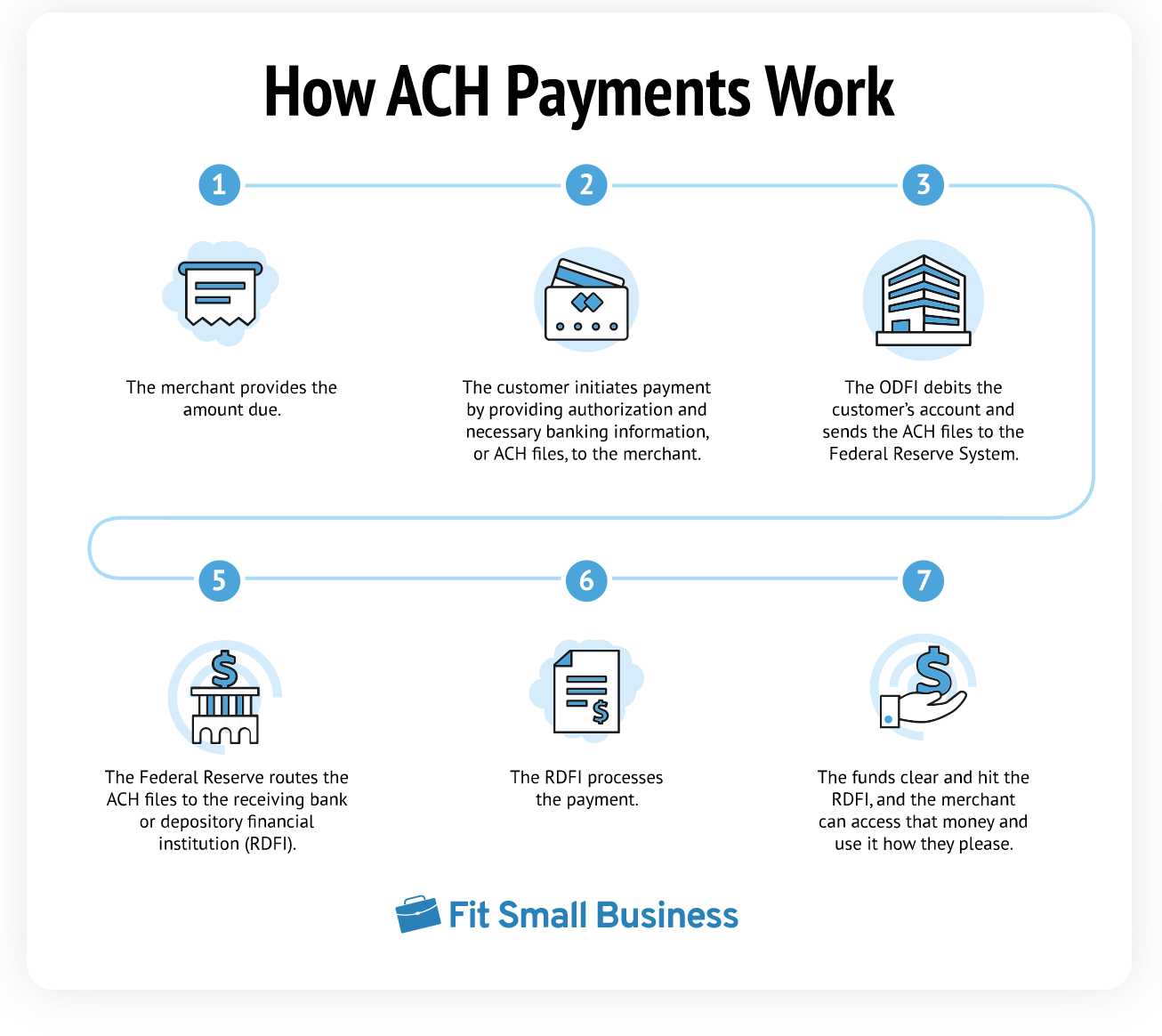
The journey of an ACH payment typically follows these stages:
- Authorization: The process begins when the Originator obtains authorization from the Receiver. This can be a one-time authorization for a single payment (e.g., paying a utility bill online) or a recurring authorization for ongoing payments (e.g., direct deposit for payroll, automatic mortgage payments). For businesses, this authorization is critical and must adhere to NACHA rules.
- Initiation: The Originator submits the payment instruction (e.g., debiting a customer’s account or crediting an employee’s account) to their ODFI. This instruction includes the amount, the Receiver’s bank account information, and the effective date.
- Batch Processing: The ODFI collects all ACH transactions received from its customers throughout the day and groups them into batches. These batches are then sent to the ACH Network at predetermined times.
- Transmission to ACH Network: The ODFI transmits the batches of transactions to the ACH Network (either FedACH or EPN). The network then sorts these transactions and forwards them to the appropriate RDFIs.
- Receipt by RDFI: The RDFI receives the batch of transactions intended for its account holders. It then posts the credits or debits to the respective Receiver’s accounts.
- Settlement: This is the final stage where the actual transfer of funds occurs between the ODFI and the RDFI through their respective accounts at the Federal Reserve. Settlement typically happens one to two business days after the transaction is initiated, though some faster options are emerging. This delayed settlement is characteristic of ACH payments, differentiating them from real-time payment systems.
Diverse Applications in Personal and Business Finance
The versatility of ACH payments makes them indispensable for a wide range of financial activities, serving both individuals and businesses with efficiency and reliability.
For Individuals
- Direct Deposit: Perhaps the most common and widely appreciated use of ACH, direct deposit allows employers to electronically transfer salaries, wages, and other payments directly into employees’ bank accounts. This eliminates the need for paper checks, offering convenience, speed, and security. Similarly, government benefits like Social Security and tax refunds are often disbursed via direct deposit.
- Recurring Bill Payments: Individuals frequently use ACH to automate recurring payments such as mortgages, rent, utility bills (electricity, water, internet), insurance premiums, and loan payments. This ensures payments are made on time, avoiding late fees and simplifying financial management.
- Person-to-Person (P2P) Transfers: While many popular P2P apps (like Venmo or PayPal) offer instant transfers, the underlying mechanism for moving funds between different banks often relies on the ACH Network for the actual settlement, especially for standard (non-expedited) transfers.
For Businesses
- Vendor Payments (B2B): Businesses leverage ACH to pay suppliers, contractors, and other vendors electronically. This streamlines accounts payable, reduces administrative costs associated with paper checks, and improves payment reconciliation.
- Customer Collections: For businesses with recurring revenue models (e.g., subscriptions, memberships, SaaS companies), ACH debits are an ideal method for collecting payments directly from customers’ bank accounts. This ensures predictable cash flow and reduces the friction of manual invoicing and payment processing.
- E-commerce Payments: While credit cards dominate online retail, some businesses, particularly those with larger average transaction values or specific service models, offer ACH as an alternative payment option. This can be attractive to customers who prefer not to use credit or debit cards, or for merchants seeking lower transaction fees.
- Payroll: Just as individuals receive direct deposits, businesses utilize ACH to disburse employee payroll, ensuring accurate and timely payments while reducing the operational burden of managing physical checks.
The Financial Advantages of ACH Transactions

The widespread adoption of ACH is largely due to its significant financial benefits, which resonate with both consumers and organizations seeking efficiency and cost-effectiveness.
Cost-Effectiveness
One of the primary advantages of ACH for businesses is its lower transaction fees compared to credit card processing or wire transfers. Credit card transactions often incur a percentage-based fee plus a small fixed fee, which can add up significantly for high-volume or high-value sales. ACH fees, on the other hand, are typically a flat, low per-transaction fee, making them a more economical choice for many types of payments, especially recurring ones. For individuals, setting up ACH payments like direct deposit or automatic bill pay is often free, saving them money on check-writing fees, stamps, and potential late payment charges.
Efficiency and Automation
ACH payments introduce a high degree of automation into financial operations. For businesses, this means reduced manual processing, less data entry, and fewer resources dedicated to handling physical checks. This automation translates into improved operational efficiency, allowing staff to focus on more strategic tasks. For individuals, automatic bill payments through ACH ensure that recurring obligations are met on time without constant manual intervention, thereby simplifying personal finance management and preventing missed due dates or late fees. This predictability also aids in better cash flow forecasting for both parties.
Security and Reliability
Compared to paper checks, ACH transactions offer enhanced security. The electronic nature of ACH reduces the risks associated with lost or stolen checks, which can be vulnerable to fraud. NACHA, the governing body, establishes strict rules and guidelines that all participants in the ACH Network must follow, ensuring the secure processing of transactions and providing a framework for dispute resolution. Data transmitted through the ACH Network is encrypted, further safeguarding sensitive financial information. The network’s reliability ensures that transactions are processed consistently and predictably, leading to a high degree of confidence in the system.
Environmental Impact
Beyond direct financial benefits, the move towards electronic payments like ACH also carries an environmental advantage. By significantly reducing the need for paper checks, envelopes, and postal services, ACH transactions contribute to a greener financial ecosystem, aligning with broader sustainability goals.
ACH in Context: Comparing Financial Tools
While ACH is a powerful tool, it’s essential to understand its place among other payment methods, recognizing its strengths and where other options might be more suitable.
ACH vs. Wire Transfers
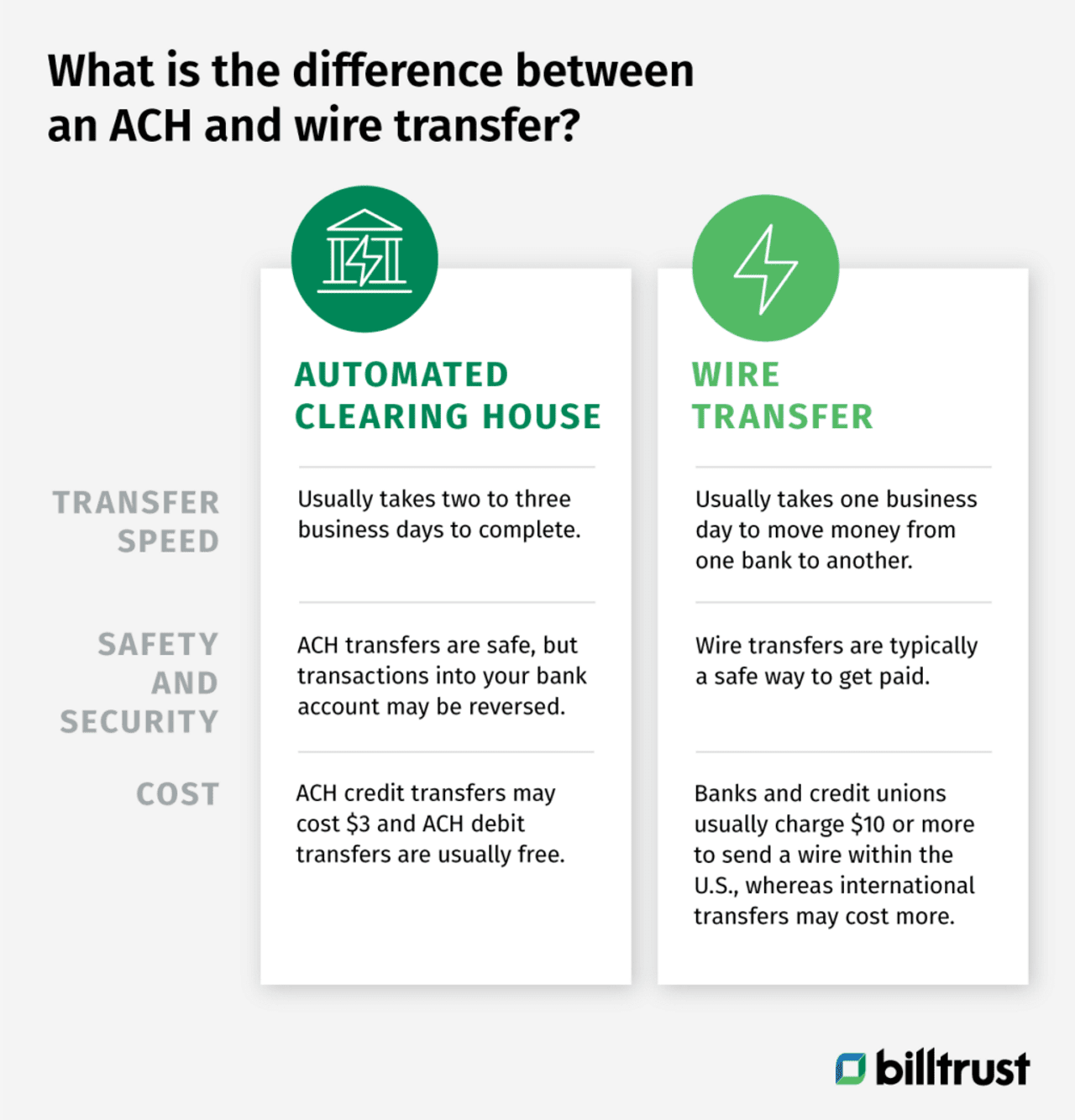
- Speed: Wire transfers are designed for urgency, offering real-time or same-day settlement, often within hours. ACH, being a batch processing system, typically takes 1-3 business days for funds to clear.
- Cost: Wire transfers are significantly more expensive, often incurring fees ranging from $15 to $50 per transaction, due to their instant nature and individual handling. ACH transfers are much cheaper, often just a few cents per transaction for businesses, and usually free for individuals.
- Use Cases: Wires are preferred for large, time-sensitive, or international transactions where immediate guaranteed funds are critical. ACH is ideal for routine, recurring payments like payroll, bill payments, and B2B transactions where a slight delay is acceptable.
ACH vs. Credit/Debit Card Payments
- Authorization & Settlement: Credit and debit card transactions provide instant authorization, meaning funds are typically reserved immediately, even if settlement (the actual transfer of funds) takes a day or two. ACH, however, has a delayed settlement process where funds are verified and moved over several business days.
- Fees for Businesses: Merchants pay significantly higher fees for credit and debit card processing (often 1.5% – 3.5% + a fixed fee) due to the instantaneous authorization, fraud protection, and interchange fees. ACH fees are substantially lower and typically flat per transaction, making them more attractive for large or recurring payments.
- Chargebacks: Credit card transactions have a more robust chargeback mechanism, which can protect consumers but also poses a risk for businesses. ACH disputes are governed by NACHA rules and can be more involved.
ACH vs. Paper Checks
- Speed: ACH is vastly faster than paper checks, which require manual processing, mailing, and physical deposit.
- Security: ACH is more secure than paper checks, which are susceptible to loss, theft, and forgery. Electronic transactions are traceable and less prone to manual error.
- Cost: For businesses, processing paper checks involves costs for check stock, postage, and staff time for reconciliation. ACH eliminates these, making it a more cost-effective solution.
The Future: Real-Time Payments (RTP) and FedNow
While ACH remains robust, the demand for immediate payment solutions is growing. Real-Time Payments (RTP) and the Federal Reserve’s FedNow Service are emerging as complementary systems designed to facilitate instant payments 24/7/365, directly addressing the speed limitations of traditional ACH. These new systems offer immediate availability of funds to the recipient, which ACH cannot. However, they are not expected to fully replace ACH. Instead, they will likely coexist, with ACH continuing to serve as the efficient, low-cost backbone for routine, batch-processed transactions, while RTP and FedNow handle urgent, real-time needs.
In conclusion, payment by ACH is a sophisticated yet user-friendly electronic funds transfer system that underpins much of the modern financial world. Understanding its mechanics, benefits, and comparative advantages empowers individuals and businesses to make informed decisions about their payment strategies, optimizing for cost, efficiency, and security in an increasingly digital economy.
aViewFromTheCave is a participant in the Amazon Services LLC Associates Program, an affiliate advertising program designed to provide a means for sites to earn advertising fees by advertising and linking to Amazon.com. Amazon, the Amazon logo, AmazonSupply, and the AmazonSupply logo are trademarks of Amazon.com, Inc. or its affiliates. As an Amazon Associate we earn affiliate commissions from qualifying purchases.