
In the rapidly evolving landscape of digital communication, language moves at the speed of a fiber-optic connection. For users of messaging apps like WhatsApp, iMessage, and Telegram, or social platforms like TikTok and X (formerly Twitter), keeping up with the shifting lexicon is a constant challenge. One of the most prominent examples of this phenomenon in recent years is the letter “P.” While it may seem like a simple character, its adoption into the digital shorthand of Gen Z and Alpha represents a significant intersection of pop culture, algorithmic influence, and the technical evolution of mobile messaging.
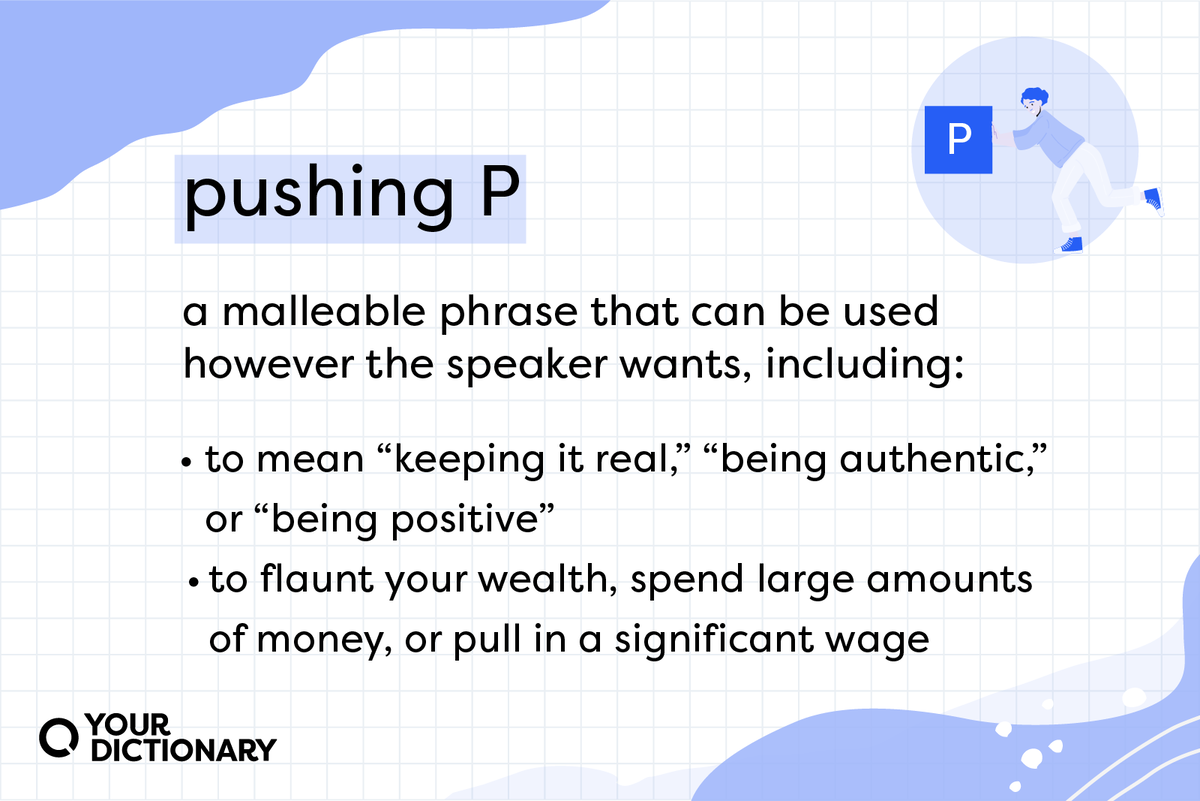
Understanding what “P” means in texting requires more than a simple dictionary definition; it requires an analysis of how social media technology facilitates the spread of “slanguage” (slang language) and how digital identity is signaled through brevity. Whether you are seeing the ️ emoji in a caption or a single “P” in a direct message, the meaning is rooted in a blend of musical influence and the functional constraints of modern tech interfaces.
The Viral Evolution: From Rap Culture to Tech-Driven Global Adoption
The primary driver behind the current use of “P” in texting and social media is the “Pushing P” trend, which originated in early 2022. While shorthand has always existed in the tech world—dating back to the 160-character limits of early SMS—this specific trend highlights how modern software algorithms can turn a localized term into a global digital standard overnight.
The Gunna Influence and the “Pushing P” Phenomenon
The term was popularized by Atlanta rapper Gunna following the release of his album DS4Ever. In his tracks and subsequent social media interactions, Gunna introduced “Pushing P” as a lifestyle philosophy. In its most basic digital translation, “P” stands for “Player” or “Pushing Positivity,” but its application is broader. To “be P” or “push P” means to act with integrity, to be successful, to handle situations with class, or to acquire “paper” (money).
From a technological standpoint, the term’s success was not just about the music; it was about its compatibility with social media metadata. The use of the ️ emoji provided a visual anchor that users could easily search for, tag, and replicate across platforms. This transformed a lyrical phrase into a functional digital asset.
How TikTok Algorithms Propel Linguistic Trends
The reason “P” became a staple of texting so quickly is due to the “For You Page” (FYP) architecture used by platforms like TikTok and Instagram. These algorithms prioritize high-engagement keywords and trending emojis. When users began incorporating “P” into their captions to signal they were part of the trend, the algorithm recognized the high interaction rates and pushed that content to millions of other users.
This creates a feedback loop where technology dictates the evolution of language. As the algorithm rewards the use of “P,” more users adopt it to increase their digital visibility, eventually cementing the term in the everyday texting habits of millions. This is a prime example of “algorithmic linguistics,” where the software we use daily shapes the very words we choose to type.
Decoding the Syntax: Meaning, Context, and Usage in Messaging Apps
In the context of a text message, “P” is rarely used as a standalone noun. Instead, it serves as a qualitative descriptor or a reaction. Understanding the nuance of its application is essential for anyone navigating modern digital spaces.
“Pushing P” vs. Traditional Texting Shorthand
Unlike traditional abbreviations like “LOL” (Laugh Out Loud) or “BRB” (Be Right Back), “P” is more abstract. In a text exchange, if someone says, “That’s P,” they are offering a high compliment. They are suggesting that the action, person, or object described is authentic, high-quality, or impressive.
Conversely, users might use the term to describe what isn’t P. If a behavior is considered “not P,” it is seen as “lame,” “fraudulent,” or “low-quality.” This binary usage allows for rapid-fire communication, fitting perfectly into the “snackable” nature of modern mobile interactions where speed and impact are prioritized over grammatical complexity.
The Visual Element: The ️ Emoji
The ️ emoji, which is technically the “Parking” sign in the Unicode Standard, has been completely repurposed by tech users. In the world of software development, emojis are assigned specific hex codes (U+1F17F for the ️ symbol), intended for maps and navigation apps. However, the “Pushing P” trend hijacked this technical function for cultural expression.
In a text message, the ️ emoji often acts as a punctuation mark of approval. It is used to “vouch” for a statement. Because mobile keyboards now suggest emojis based on predictive text AI, typing the letter “P” often prompts the parking symbol, further accelerating its use. This interaction between the user’s intent and the smartphone’s predictive algorithms is a key factor in how modern slang becomes standardized.

The Intersection of Digital Identity and Platform Culture
The use of “P” in texting is a form of digital signaling. In the tech-savvy world of modern communication, the way one types is as much a part of their identity as their profile picture.
Social Media as a Linguistic Incubator
Platforms like Discord and Snapchat act as incubators for these terms. Because these apps are designed for fast-paced, asynchronous communication, users naturally gravitate toward the shortest possible ways to convey complex emotions. “P” functions as a shorthand for an entire value system. Instead of typing out a long message of support, a single character and an emoji can convey the same sentiment, saving “digital energy” while maintaining social cohesion.
The Role of Emojis in Tech-Mediated Communication
We are currently living in an era of “Visual-First” communication. Modern smartphones are optimized for high-resolution displays and emoji integration. When a term like “P” gains traction, it is often because it translates well visually. The blue square of the ️ emoji stands out in a sea of yellow circular emojis, making it an effective tool for “scroll-stopping” on social feeds. This visual distinctness is a tactical advantage in the attention economy of digital apps.
Beyond “Pushing P”: Other Technical and Functional Meanings of “P”
While the cultural trend is the most common reason for seeing “P” in a text today, the letter has several other functional meanings within specific tech and gaming niches that predate or coexist with the viral trend.
“P” as a Metric in Gaming and App Interfaces
In the world of online gaming and mobile apps, “P” often stands for “Points” or “Power.” In multiplayer environments like Roblox or Fortnite, players might text “How much P do you have?” referring to in-game currency or experience points.
Additionally, in technical discussions among developers or hardware enthusiasts, “p” often refers to “progressive scan” (as in 1080p or 4K resolution) or “pixels.” While these are more formal uses, they frequently appear in tech-focused group chats and community forums.
Professionalism and Privacy in Digital Spaces
In more professional or “old school” digital contexts, “P” can stand for “Private.” On platforms that allow for both public and private messaging, users might text “Move to P” or “Check P,” which is shorthand for “Private Message” (more commonly known as PM or DM).
In the realm of digital security and privacy, “P” can also refer to “PGP” (Pretty Good Privacy), an encryption program that provides cryptographic privacy and authentication for data communication. While this is a niche technical term, it remains relevant in circles focused on secure digital communication.
The Future of Digital Communication: Why Brevity is the Ultimate Tech Tool
The emergence of “P” as a dominant texting term is not an isolated event; it is part of a larger trend toward the “minimalization” of digital language. As we move toward more integrated forms of technology—such as wearable tech, AR glasses, and voice-command interfaces—the need for ultra-short communication becomes even more critical.
The Efficiency of the Single-Character Message
As our interactions with technology become more frequent but shorter in duration, the single-character message is becoming a standard. We see this in the “thumbs up” reaction on iMessage or the “heart” on Instagram. “P” serves a similar function but with more cultural depth. It is a “macro” for an entire sentiment, allowing for high-efficiency data exchange between humans.

Why Understanding Digital Slang Matters for the Tech-Savvy User
For developers, marketers, and daily tech users, understanding these shifts is vital. If a software developer is building a social app, they need to know how users interact with symbols like the ️ emoji to create better UI/UX. If a marketer is targeting a younger demographic, they must understand the nuances of “Pushing P” to avoid looking out of touch.
Ultimately, “P” in texting is a testament to the power of digital culture to reshape technical tools. It shows that language is no longer just a set of rules found in a book; it is a dynamic, living system influenced by rap stars, smartphone keyboards, and social media algorithms. As technology continues to evolve, we can expect more characters to be repurposed, proving that in the digital age, even a single letter can carry the weight of an entire culture.
aViewFromTheCave is a participant in the Amazon Services LLC Associates Program, an affiliate advertising program designed to provide a means for sites to earn advertising fees by advertising and linking to Amazon.com. Amazon, the Amazon logo, AmazonSupply, and the AmazonSupply logo are trademarks of Amazon.com, Inc. or its affiliates. As an Amazon Associate we earn affiliate commissions from qualifying purchases.