
The human mind struggles with truly grasping colossal numbers. We can count to ten, visualize a hundred, perhaps even a thousand without much effort. But when we leap to a million, and then spectacularly to a billion, our intuitive understanding falters. A billion isn’t just a big number; it’s a concept that transcends everyday experience, representing an almost unfathomable scale in nearly any context. In the realm of finance, a billion dollars is the benchmark of ultra-wealth, the aspiration of entrepreneurs, and the subject of both fascination and debate. It conjures images of empires, groundbreaking innovation, and immense influence.

But what does one billion actually look like? Is it a mountain of cash, a sprawling portfolio, or perhaps an intricate web of investments and assets? This article delves into the financial anatomy of a billion, exploring its physical representation, the pathways to accumulating such wealth, the complexities of managing it, and its profound societal implications. By deconstructing this seemingly abstract figure, we aim to bring clarity to its immense power and scale, offering insights that illuminate the world of high finance and perhaps even inform our own financial aspirations, no matter how modest by comparison.
The Anatomy of a Billion: Beyond Just a Number
To truly appreciate what a billion dollars represents, we must first break free from the abstract numerical symbol and attempt to visualize its sheer magnitude. It’s a number that defies easy comparison, yet understanding its scale is fundamental to comprehending its financial implications.
Visualizing the Scale
Consider this: a thousand seconds is roughly 17 minutes. A million seconds is nearly 11 and a half days. A billion seconds, however, is approximately 31.7 years. This temporal comparison immediately highlights the exponential leap in scale. If you were paid a dollar every second, it would take you over three decades of non-stop work to earn a billion. To put it another way, if you spent $1,000 every single day, it would take you over 2,700 years to spend a billion dollars. The difference between a million and a billion is not just a factor of one thousand, but a factor of a thousand times a thousand – meaning a billion is a thousand times larger than a million. This astronomical difference often gets lost in casual conversation, yet it underpins the vast chasm between millionaire and billionaire status.
A Billion in Cash: A Physical Perspective
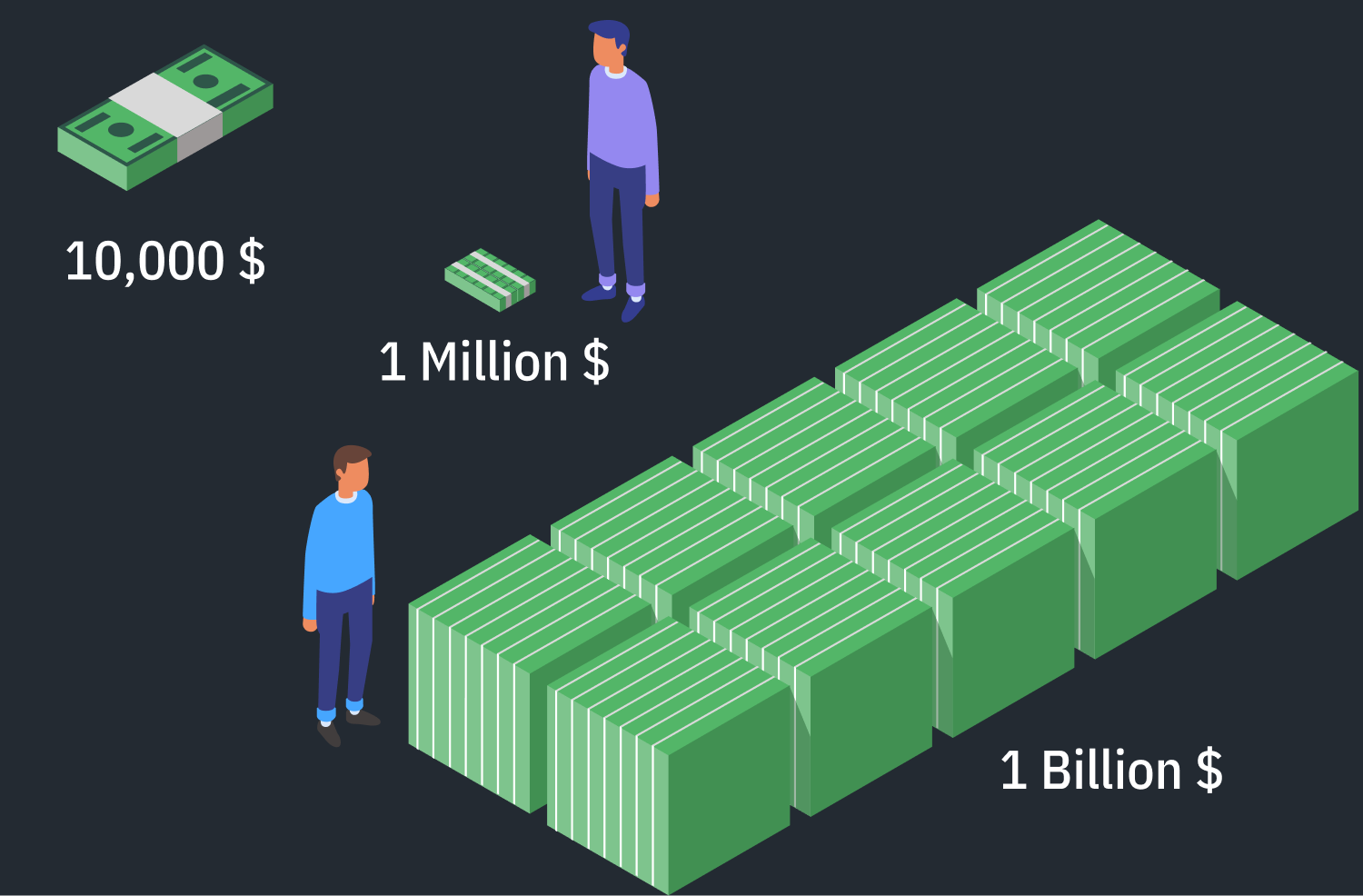
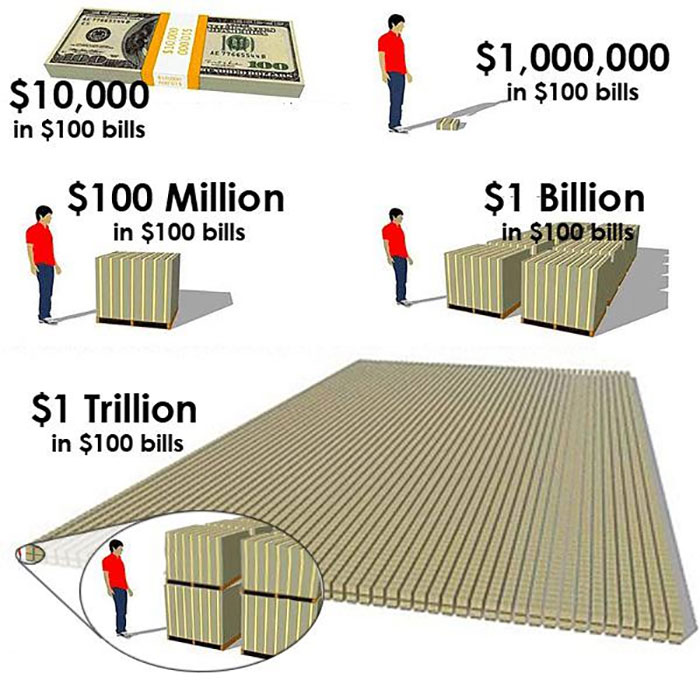
While most billionaires hold their wealth in assets rather than physical currency, visualizing a billion dollars in cold hard cash offers the most direct answer to “what does it look like.” Let’s imagine one billion dollars entirely in $100 bills, the largest denomination commonly in circulation.
A stack of one hundred $100 bills (equivalent to $10,000) is about 0.43 inches thick and weighs 0.22 pounds.
-
One million dollars ($1,000,000) in $100 bills would be 100 such stacks. This would form a stack approximately 43 inches tall and weigh 22 pounds. It’s manageable, fitting into a briefcase or two.
-
Now, scale that up to one billion dollars ($1,000,000,000). You would need a thousand of those million-dollar stacks.
-
This would mean a single stack 43,000 inches tall, or roughly 3,583 feet (over 1 kilometer!), taller than the world’s tallest buildings. This is clearly impractical.
-
In terms of weight, one billion dollars in $100 bills would weigh 22,000 pounds, or 11 tons. This is the weight of several large elephants or a fully loaded tractor-trailer.
-
Physically, a billion dollars in $100 bills would occupy roughly 400 cubic feet of space – enough to fill a standard shipping container, or more precisely, several pallets stacked high with shrink-wrapped bricks of cash. It would require significant logistical effort to transport and store, appearing as an overwhelming volume of green rectangles. This tangible representation underscores that a billion is not merely a large sum but a massive physical presence if converted into currency.
-
Earning a Billion: The Pathways to Ultra-Wealth
The journey to accumulating a billion dollars is rarely linear or easy. It typically involves a unique combination of vision, relentless execution, strategic timing, and often a significant degree of luck. While the specific paths vary, they generally coalesce around a few core strategies that leverage innovation, capital, or unique market advantages.
Entrepreneurial Vision and Disruption
The most common narrative for modern billionaires is that of the visionary entrepreneur. These individuals identify unmet needs, foresee technological shifts, or revolutionize existing industries. They build companies from the ground up, often starting with little more than an idea and a burning ambition. Their wealth is not simply earned through a salary, but by owning a significant equity stake in a company that grows to a colossal valuation.
Examples abound across sectors: software development that creates ubiquitous platforms, e-commerce ventures that redefine retail, biotechnology firms that develop life-saving treatments, or renewable energy companies addressing global challenges. The key characteristics of this path include:
-
Scalability: The business model must be capable of serving millions, if not billions, of customers or users globally.
-
Innovation: Creating a new market or dramatically improving an existing product/service.
-
Market Dominance: Achieving a significant competitive advantage that allows for high margins or rapid market share acquisition.
-
Strategic Funding: Attracting venture capital and private equity investment that fuels exponential growth and increases valuation.
Strategic Investing and Capital Growth
While entrepreneurship creates new wealth, strategic investing is about accumulating and growing existing capital at an extraordinary rate. This path often requires a substantial initial capital base, which is then deployed with exceptional foresight and discipline across various asset classes. Billionaire investors are often characterized by:
-
Deep Market Understanding: An uncanny ability to identify undervalued assets or anticipate market trends years, if not decades, in advance.
-
Long-Term Horizon: A commitment to patient, compounding growth, resisting short-term market volatility.
-
Diversified, Yet Concentrated, Portfolios: While often diversified across different asset types (stocks, bonds, real estate, private equity, venture capital), they are also willing to make highly concentrated bets when conviction is strong.
-
Access to Exclusive Opportunities: Participation in private equity deals, early-stage venture rounds, or complex financial instruments not available to the average investor.
-
Leverage and Risk Management: Skillful use of financial leverage to amplify returns, coupled with sophisticated strategies to mitigate downside risk.
Leveraging Unique Talents and Influence
A smaller, yet prominent, group of individuals achieves billionaire status by monetizing extraordinary talents or leveraging immense influence. This includes global superstars in sports, entertainment, or media, as well as authors or public figures whose brand extends into lucrative business ventures. Their wealth stems from:
-
Exceptional Skill: Being among the absolute best in their field, commanding unparalleled fees and endorsements.
-
Global Brand Power: Cultivating a personal brand that resonates with a massive international audience, opening doors to diverse income streams.
-
Strategic Entrepreneurship: Transitioning from primary talent to business ownership, such as launching their own production companies, fashion lines, or investment funds.
-
Equity Stakes: Often taking equity instead of upfront cash in projects, betting on the long-term success and growth of ventures they are involved in.
While these paths can overlap, they each highlight that reaching a billion is not merely about hard work, but about creating or commanding value on an unprecedented scale.
Managing a Billion: The Complexities of Ultra-High Net Worth
Once a billion-dollar fortune is accumulated, the challenge shifts from creation to preservation, growth, and strategic deployment. Managing ultra-high net worth (UHNW) assets is a highly specialized field, requiring expertise that extends far beyond typical personal finance.
Advanced Financial Planning and Wealth Preservation
A billion dollars isn’t simply parked in a bank account. It requires a dedicated ecosystem of professionals to manage its complexities. Wealth preservation is paramount, often involving sophisticated legal and financial structures designed to minimize tax liabilities, protect assets from litigation, and facilitate intergenerational transfer.
-
Family Offices: Many billionaires establish “family offices” – private wealth management firms dedicated solely to managing their financial affairs, investments, tax planning, estate planning, and philanthropic activities.
-
Trusts and Foundations: These legal instruments are crucial for estate planning, allowing for the controlled distribution of wealth across generations, often with specific conditions or charitable mandates. They also offer significant tax advantages.
-
Tax Optimization: Navigating international tax laws and exploiting legal frameworks to ensure wealth is managed as tax-efficiently as possible, often involving complex strategies across multiple jurisdictions.
Diversification and Global Portfolios
The investment strategies for a billion-dollar portfolio are vastly different from those for smaller sums. Diversification goes beyond a mix of stocks and bonds, venturing into illiquid and alternative assets.
-
Private Equity and Venture Capital: Direct investments in private companies, often with significant stakes, offering higher potential returns but also higher risk and longer lock-up periods.
-
Hedge Funds: Investment funds that employ complex strategies, often using leverage and derivatives, to generate returns in various market conditions.
-
Real Estate: Large-scale commercial properties, luxury residential assets, and international real estate holdings form a substantial part of many UHNW portfolios.
-
Collectibles and Tangible Assets: Art, rare cars, fine wine, and other collectibles can represent significant value, offering both investment potential and personal enjoyment.
-
Global Reach: Investing across different countries and currencies to mitigate geopolitical and economic risks, and to capitalize on growth opportunities worldwide.
Philanthropy and Impact Investing
For many billionaires, wealth management extends beyond personal gain to societal impact. Large-scale philanthropy becomes a strategic endeavor, often managed through dedicated foundations.
-
Strategic Giving: Rather than simply donating, billionaires often engage in strategic philanthropy, identifying specific causes (e.g., global health, education, climate change) and making substantial, targeted investments to achieve measurable outcomes.
-
Endowments: Creating perpetual funding sources for institutions or causes through large endowments that generate income for generations.
-
Impact Investing: A growing trend where investments are made with the dual objective of generating financial returns and creating a positive social or environmental impact. This blends traditional investing with philanthropic goals, often in areas like clean energy, sustainable agriculture, or affordable housing.
The Societal Impact of Billion-Dollar Fortunes
The existence of billion-dollar fortunes is a double-edged sword, profoundly shaping economies, driving innovation, and fueling philanthropy, yet also raising questions about inequality and power concentration.
Economic Influence and Innovation
Billionaires and their ventures are often engines of economic growth and innovation. The companies they found or significantly invest in create millions of jobs, develop groundbreaking technologies, and introduce new products and services that redefine industries.
-
Job Creation: Many of the world’s largest employers are companies founded or led by billionaires, providing livelihoods for vast numbers of people globally.
-
Technological Advancement: Billionaire-backed research and development, particularly in sectors like AI, biotechnology, and space exploration, pushes the boundaries of human knowledge and capability.
-
Market Development: Their capital and vision can catalyze entire new markets, fostering competition and consumer choice.
-
Philanthropic Catalysis: Large philanthropic donations can fund critical scientific research, educational initiatives, and public health campaigns that would otherwise lack adequate resources.
Challenges and Criticisms
While the positive impacts are undeniable, the concentration of such vast wealth also sparks considerable debate and criticism, particularly concerning wealth inequality and its implications for democratic societies.
-
Wealth Inequality: Critics argue that the existence of extreme wealth often comes at the expense of broader societal well-being, contributing to widening income gaps and limited opportunities for others.
-
Tax Fairness: Debates often arise regarding the tax structures that allow billionaires to accumulate and pass on wealth, with calls for higher wealth taxes or more progressive income taxation.
-
Political Influence: The immense financial resources of billionaires can translate into significant political influence through lobbying, campaign donations, and media ownership, raising concerns about the integrity of democratic processes.
-
Ethical Considerations: Questions are frequently posed about the ethical responsibilities that come with such extreme wealth, and whether billionaires are doing enough to address pressing global issues.
These discussions highlight that a billion-dollar fortune is not just a personal asset but a significant societal force, with repercussions that resonate far beyond the individual owner.
The Path to Financial Freedom: A Billion for the Everyday Investor?
For most individuals, a billion dollars remains an ethereal figure, an almost mythical sum. Yet, understanding the dynamics of wealth creation and management at this extreme scale offers valuable lessons applicable to personal finance at any level.
The Relatability Gap
It’s clear that the path to a billion is exclusive, requiring a confluence of rare factors. For the vast majority, this level of wealth is not a realistic financial goal. The strategies employed by billionaires—private equity, complex trusts, global arbitrage—are often inaccessible or irrelevant to the average investor. This “relatability gap” can make the financial world of billionaires feel distant and unachievable. However, it’s crucial to recognize that the principles behind their success, even if scaled differently, are universal.
Billion-Dollar Lessons for Personal Finance
While the magnitude differs, the core tenets of wealth creation and management remain consistent whether you’re building a nest egg of thousands or a fortune of billions.
-
The Power of Compound Interest: A fundamental principle, compound interest, where earnings generate further earnings, is the engine of all wealth accumulation, from modest savings accounts to multi-billion-dollar portfolios. The earlier you start, the more dramatically it works in your favor.
-
Smart Investing and Diversification: Understanding risk tolerance, investing in growth assets, and diversifying across different types of investments are critical for long-term financial health. While billionaires diversify into exotic assets, the principle of not putting all your eggs in one basket applies universally.
-
Financial Discipline and Budgeting: Even the wealthiest individuals manage their capital strategically. For the everyday person, disciplined saving, living within one’s means, and budgeting are the bedrock of financial security and growth.
-
Entrepreneurial Spirit and Value Creation: Whether it’s launching a side hustle, negotiating a raise, or investing in personal development, fostering an entrepreneurial mindset—seeking opportunities to create value and solve problems—can significantly enhance personal income and wealth.
-
Continuous Financial Education: The financial landscape is constantly evolving. Staying informed, understanding market dynamics, and seeking expert advice are crucial for making sound financial decisions at any level of wealth.
Conclusion
What does one billion look like? It looks like an almost insurmountable pile of cash, an intricate web of global assets, a testament to unparalleled entrepreneurial drive, or the result of astute, long-term investment. It looks like immense power, significant responsibility, and often, profound societal impact. A billion dollars is more than just a number; it’s a financial phenomenon that encompasses incredible scale, sophisticated management, and a complex interplay of economic, social, and ethical considerations.
While the aspiration of reaching a billion might remain a distant dream for most, the journey to understand its true nature provides invaluable lessons. It illuminates the fundamental principles of wealth creation and preservation—principles that are accessible and applicable, in scaled-down forms, to every individual’s financial journey. By demystifying this colossal figure, we gain a clearer perspective on the power of compounding, the importance of strategic planning, and the universal pursuit of financial security and prosperity, regardless of the ultimate sum.
aViewFromTheCave is a participant in the Amazon Services LLC Associates Program, an affiliate advertising program designed to provide a means for sites to earn advertising fees by advertising and linking to Amazon.com. Amazon, the Amazon logo, AmazonSupply, and the AmazonSupply logo are trademarks of Amazon.com, Inc. or its affiliates. As an Amazon Associate we earn affiliate commissions from qualifying purchases.