
In the fast-paced world of global finance, few names carry as much weight or evoke as much imagery of innovation as “Nasdaq.” For the seasoned investor, the word is synonymous with the tech giants that power our modern lives. For the novice, it is a ticker tape scrolling across a news screen or a benchmark mentioned in the same breath as the Dow Jones Industrial Average. However, understanding exactly what Nasdaq is—and more importantly, what it represents for your money—is fundamental to navigating the modern financial landscape.

Nasdaq is not just a single entity; it functions as a global electronic marketplace for buying and selling securities, as well as a series of influential stock market indices. Originally an acronym for the National Association of Securities Dealers Automated Quotations, it has evolved from a niche quotation system into the second-largest stock exchange in the world by market capitalization, trailing only the New York Stock Exchange (NYSE).
Understanding the Dual Identity of Nasdaq: The Exchange vs. The Index
To truly grasp what Nasdaq does, one must first distinguish between its two primary roles: the exchange where trading happens and the indices that measure market performance. Confusing these two is a common pitfall for those beginning their investment journey.
The Nasdaq Stock Market (The Exchange)
The Nasdaq Stock Market is a physical and digital infrastructure where public companies list their shares for investors to trade. When a company like Apple or Alphabet “lists on the Nasdaq,” it means their shares are bought and sold through this specific exchange’s systems. Unlike the NYSE, which historically relied on a physical trading floor with specialists, Nasdaq was founded in 1971 as the world’s first electronic stock market. It does not have a central trading floor; instead, it operates through a sophisticated network of computers that match buyers and sellers instantly.
Today, the exchange is home to more than 3,500 companies. It is categorized into three distinct tiers based on the size and liquidity of the companies listed:
-
The Nasdaq Global Select Market: This tier has the most stringent listing requirements and includes the world’s largest, most liquid international companies.
-
The Nasdaq Global Market: A mid-tier level for companies with significant global reach but slightly less market capitalization than the Select tier.
-
The Nasdaq Capital Market: Formerly known as the “SmallCap” market, this tier focuses on smaller companies looking to raise capital.
The Nasdaq Indices (The Benchmarks)
When news anchors report that “the Nasdaq is up 2% today,” they are referring to the performance of a Nasdaq index, most likely the Nasdaq Composite or the Nasdaq-100.
-
The Nasdaq Composite: This index includes almost all stocks listed on the Nasdaq Stock Market—over 3,000 companies. Because it is heavily weighted toward the technology and telecommunications sectors, it is often used as a barometer for the “health” of the tech industry.
-
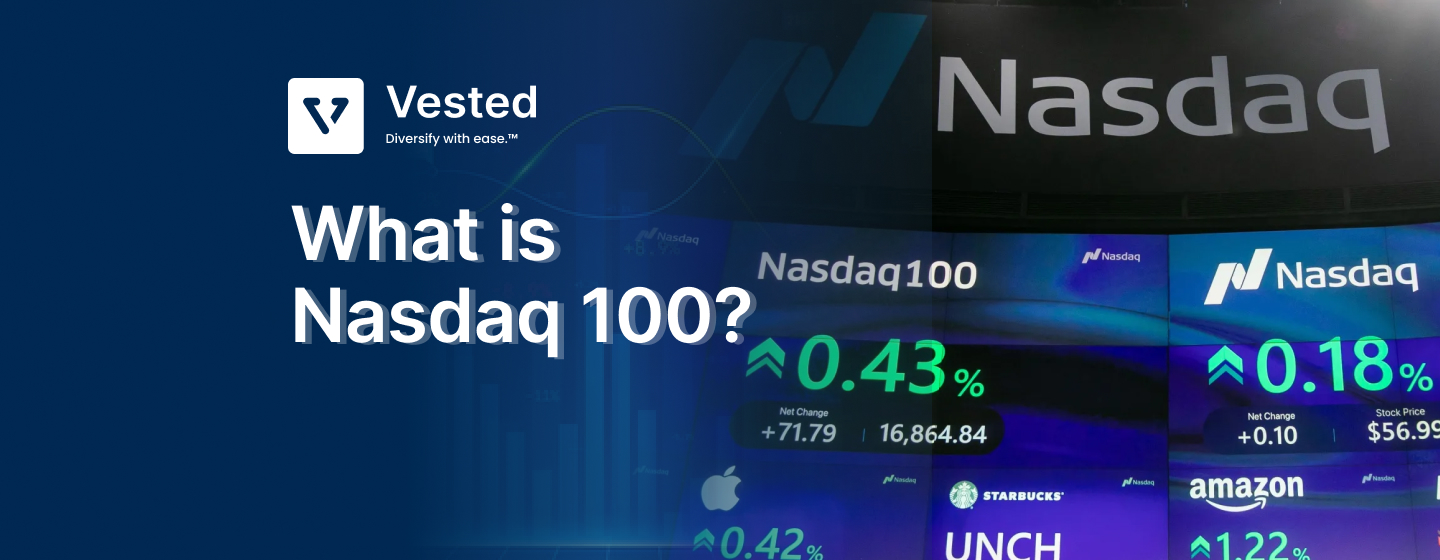
The Nasdaq-100: This is a more exclusive index, consisting of the 100 largest non-financial companies listed on the exchange. It includes domestic and international firms and is the basis for many popular investment products, such as the Invesco QQQ Trust.
How the Nasdaq Exchange Operates: A Pioneer of Electronic Trading
The mechanics of the Nasdaq are what set it apart during its inception and continue to define its efficiency today. Understanding these mechanics helps investors appreciate how price discovery occurs in a digital age.
The Transition from Over-the-Counter to Digital Domination
Before Nasdaq, stocks that weren’t listed on the major physical exchanges were traded “over-the-counter” (OTC) through a fragmented network of dealers who communicated primarily via telephone. Nasdaq revolutionized this by providing an automated system that displayed transparent, real-time bid and ask prices. This transparency reduced the “spread” (the difference between the buying and selling price), making it cheaper and more efficient for individual investors to participate in the market.
This digital-first approach made Nasdaq the natural home for the burgeoning technology sector in the 1980s and 1990s. While older, industrial companies preferred the prestige of the NYSE, the “new economy” companies found Nasdaq’s electronic model to be a better reflection of their own innovative spirits.
Market Makers and Liquidity
Unlike the NYSE’s “Auction Market” model, where buyers and sellers compete directly on a floor, Nasdaq is a “Dealer Market.” It relies on “Market Makers”—firms that are required to maintain a certain volume of shares and provide constant buy and sell quotes.
When you place an order to buy a stock on the Nasdaq, you are often buying it from a market maker who holds that stock in inventory. This system ensures “liquidity,” meaning there is almost always someone available to take the other side of your trade, preventing the wild price swings that can occur when buyers or sellers are scarce.
Nasdaq as a Benchmark for Growth and Innovation
For many investors, “Nasdaq” is shorthand for “Growth.” While the S&P 500 provides a broad look at the U.S. economy and the Dow Jones focuses on 30 industrial “blue-chip” giants, the Nasdaq indices represent the cutting edge of innovation.
Why Tech Giants Call Nasdaq Home
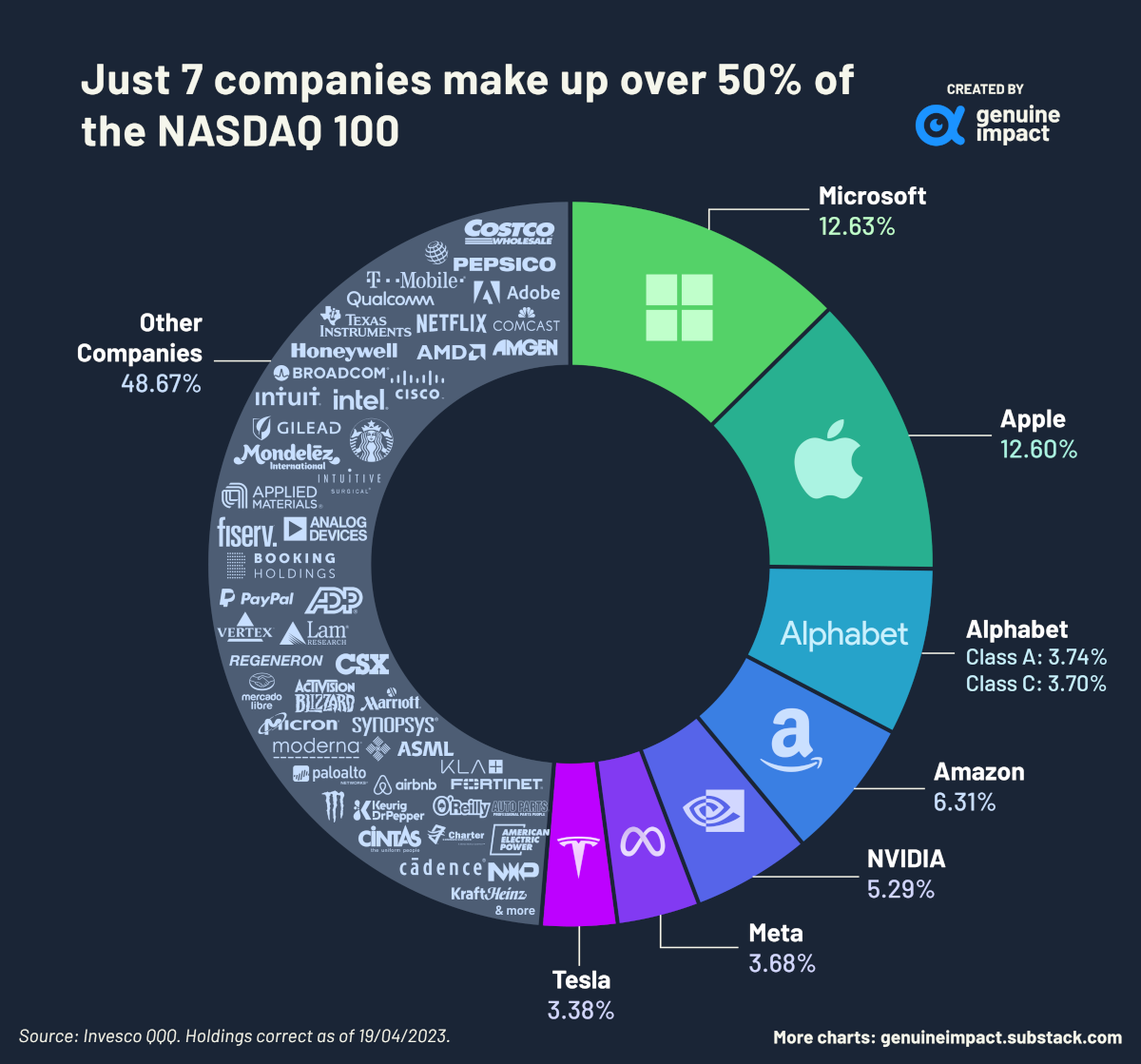
It is no coincidence that the “Magnificent Seven”—Apple, Microsoft, Alphabet, Amazon, Nvidia, Meta, and Tesla—are all listed on the Nasdaq. The exchange has cultivated an ecosystem tailored to high-growth companies that reinvest their earnings into research and development rather than paying out high dividends.
The listing requirements for Nasdaq, while rigorous, are designed to accommodate companies with high growth potential even if they aren’t yet consistently profitable. This has made it the primary destination for Initial Public Offerings (IPOs) in the biotechnology, software, and renewable energy sectors.
Analyzing Sector Weights and Volatility
Because of its concentration in technology (which often accounts for over 50% of the Nasdaq-100’s weight), the Nasdaq is inherently more volatile than other major indices. When interest rates rise, growth stocks often take a hit because their future cash flows are discounted more heavily. Conversely, during periods of rapid technological advancement or low-interest rates, the Nasdaq frequently outperforms the broader market.
Investors use the Nasdaq as a “risk-on” indicator. When the Nasdaq is leading the market higher, it suggests that investors are confident and willing to pay a premium for future growth. When it lags, it may indicate a flight to safety toward more defensive sectors like utilities or consumer staples.
Investing in the Nasdaq: Strategies for Modern Wealth Building
Knowing what Nasdaq is is the first step; the second is knowing how to use that information to build wealth. Individual investors have several ways to gain exposure to the companies and the performance of this exchange.
Index Funds and ETFs (The QQQ Factor)
The most popular way to invest in the Nasdaq is through Exchange-Traded Funds (ETFs) that track the Nasdaq-100. The Invesco QQQ Trust is one of the most traded securities in the world. By buying shares of an ETF like QQQ, an investor gets instant diversification across 100 of the world’s most innovative non-financial companies.
For those who want to focus on even more specific niches, there are sub-sector indices, such as the Nasdaq Biotechnology Index or the Nasdaq Clean Edge Green Energy Index. These allow for targeted “thematic” investing, focusing on the specific technologies an investor believes will define the future.
Dividend Growth vs. Capital Appreciation
A common misconception is that the Nasdaq doesn’t offer dividends. While it is true that many Nasdaq companies prioritize capital appreciation (stock price growth), an increasing number of mature tech companies—like Microsoft and Apple—have become significant dividend payers.
Investors looking for a balance can explore the Nasdaq Dividend Achievers Index, which tracks companies that have a consistent record of increasing their dividend payments. This highlights the maturing nature of the exchange; it is no longer just for “startups,” but for established global powerhouses that provide both growth and income.
The Future of the Nasdaq and Global Finance
As we move further into the 21st century, the Nasdaq continues to evolve. It is no longer just an exchange; it is a technology company in its own right, selling its proprietary trading software and market data to other exchanges around the world.
The Nasdaq is also at the forefront of integrating Artificial Intelligence (AI) and blockchain technology into the financial system. By utilizing AI to detect market manipulation and exploring blockchain for the clearing and settlement of trades, the Nasdaq is attempting to maintain its status as the world’s most advanced marketplace.
For the individual investor, the Nasdaq remains a vital tool. Whether you are looking to capture the explosive growth of the next AI revolution, or simply looking for a diversified benchmark to measure your portfolio’s performance, understanding the dual role of the Nasdaq is essential. It is the intersection where capital meets innovation, and where the future of the global economy is priced in real-time every single day.
aViewFromTheCave is a participant in the Amazon Services LLC Associates Program, an affiliate advertising program designed to provide a means for sites to earn advertising fees by advertising and linking to Amazon.com. Amazon, the Amazon logo, AmazonSupply, and the AmazonSupply logo are trademarks of Amazon.com, Inc. or its affiliates. As an Amazon Associate we earn affiliate commissions from qualifying purchases.