
The term “MPF” is frequently encountered in discussions related to personal finance, retirement planning, and financial well-being, particularly within the context of Hong Kong. For many, it’s a compulsory contribution system, a significant portion of their earnings, and a cornerstone of their future financial security. However, beyond the basic understanding of it being a retirement scheme, the precise meaning and implications of “MPF” can remain somewhat opaque. This article aims to demystify the Mandatory Provident Fund, exploring its origins, its operational mechanics, its investment landscape, and its crucial role in shaping individual financial futures. Understanding MPF is not just about knowing what the acronym stands for; it’s about grasping its profound impact on personal finance and the strategies individuals can employ to maximize its benefits.

The Genesis and Purpose of the Mandatory Provident Fund
The Mandatory Provident Fund (MPF) is a legally mandated, privately managed, defined contribution retirement scheme introduced in Hong Kong in December 2000. Its establishment marked a significant shift in the territory’s approach to retirement protection, moving from a system heavily reliant on employer-provided benefits or individual savings to a compulsory, structured savings framework for the working population.
Historical Context and Rationale
Before the MPF, Hong Kong had a fragmented and largely inadequate retirement protection system. Many employees relied on their employers’ goodwill for severance payments or gratuities, while others had to depend solely on personal savings, which were often insufficient to support them through their retirement years. This left a substantial portion of the population vulnerable to poverty in old age. The government recognized the urgent need for a universal, compulsory retirement savings scheme to ensure a basic level of financial security for all working individuals.
The rationale behind the MPF was multifaceted:
- Ensuring Retirement Security: The primary objective was to provide a safety net for individuals upon retirement, supplementing their savings and reducing reliance on government social welfare.
- Promoting Savings Culture: By mandating contributions, the MPF encourages a disciplined savings habit, fostering a long-term perspective on financial planning.
- Facilitating Investment: The scheme allows for pooled contributions to be invested in a diversified range of assets, aiming to generate returns that outpace inflation and grow retirement nest eggs.
- Simplifying and Standardizing Retirement Provisions: It replaced various ad-hoc employer-sponsored schemes with a standardized, regulated system, offering greater transparency and protection for employees.
Legislative Framework and Regulatory Oversight
The MPF system is governed by the Mandatory Provident Fund Schemes Ordinance (Cap. 485). This legislation outlines the obligations of employers and employees, the types of MPF schemes permitted, the requirements for scheme trustees, and the regulatory framework. The Mandatory Provident Fund Schemes Authority (MPFA) is the statutory body responsible for overseeing the MPF system. The MPFA’s mandate includes:
- Regulating MPF Schemes: Ensuring that all MPF schemes operate in compliance with the law and regulatory requirements.
- Protecting Members’ Interests: Safeguarding the rights and interests of MPF members, ensuring fair treatment and transparency.
- Promoting the MPF System: Educating the public about the MPF and encouraging wider participation and understanding.
- Enforcing the Law: Investigating and prosecuting any breaches of the MPF legislation.
The MPFA’s role is critical in maintaining the integrity and effectiveness of the MPF system, providing a layer of trust and assurance for its millions of members.
The Mechanics of MPF Contributions and Schemes
Understanding how MPF contributions are made and the different types of schemes available is fundamental to maximizing its benefits. It involves a clear division of responsibility between employers and employees, with a structured process for collection and investment.
Employer and Employee Contribution Obligations
Under the MPF system, both employers and employees are legally required to contribute a percentage of the employee’s relevant income to an MPF scheme.
- Standard Contribution Rate: The standard contribution rate is 10% of the employee’s relevant income, split equally between the employer and the employee (5% each).
- Relevant Income: This refers to the employee’s salary, wages, and other remuneration. There are minimum and maximum relevant income levels for mandatory contributions. For instance, if an employee’s monthly income is below the minimum level, no mandatory contribution is required from either party. If the income exceeds the maximum level, contributions are capped at the maximum.
- Minimum and Maximum Income Levels: These levels are periodically reviewed and adjusted by the government to reflect changes in economic conditions and wage levels. For example, as of recent updates, the minimum relevant income is typically a low amount, meaning most full-time employees are subject to mandatory contributions. The maximum relevant income level sets a cap on the amount of income subject to the 10% contribution.
- Voluntary Contributions: In addition to mandatory contributions, employees and self-employed persons can also make voluntary contributions to their MPF accounts. These voluntary contributions are tax-deductible, offering an additional incentive for individuals to save more for retirement.
Types of MPF Schemes
The MPF system offers a variety of schemes to cater to different employer needs and employee preferences. These schemes are managed by approved trustees and offer different investment options. The primary types of MPF schemes are:
- Employer Sponsored Schemes: These are established by employers for their employees. They can be either:
- Occupational Retirement Schemes Ordinance (ORSO) Schemes: Some employers may have existing ORSO schemes that are recognized as “exempt schemes” under the MPF legislation. Employees in these schemes may have the option to opt-in or opt-out of the MPF.
- MPF Schemes: Most employers will set up a standard MPF scheme for their employees.
- Small and Medium Enterprise (SME) Schemes: These are designed for employers with 10 or fewer employees. They offer simplified administration and often have features tailored to smaller businesses.
- Master Trust Schemes: These are the most common type of MPF scheme. They are trust schemes established by trustees that can accept employees from multiple employers and self-employed individuals. This allows for a wide range of investment options and competitive fees due to economies of scale.
- Whole-of-Company Schemes: These schemes are set up by a single employer for all of its employees.
Each scheme has its own set of approved trustees, fund choices, and fee structures, giving members some degree of choice within the broader MPF framework.

Navigating MPF Investments and Maximizing Returns
A crucial aspect of the MPF system is its investment component. The contributions made are invested in various funds, and the growth of these investments significantly impacts the final retirement corpus. Understanding investment principles and making informed choices is key to maximizing MPF returns.
Investment Fund Choices and Their Characteristics
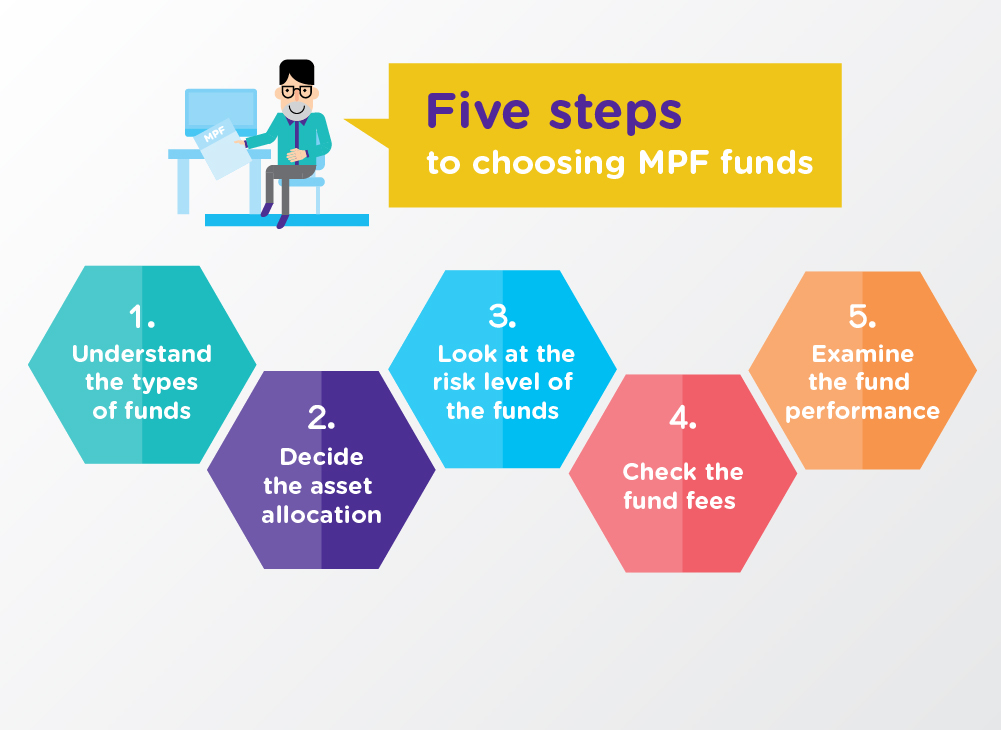
MPF schemes offer a diverse range of investment funds, allowing members to choose based on their risk tolerance, investment horizon, and financial goals. These funds generally fall into several broad categories:
- Equity Funds: These funds primarily invest in stocks and aim for capital appreciation. They typically carry higher risk but also offer the potential for higher returns. Equity funds can be further diversified into regional or global equity funds.
- Bond Funds: These funds invest in fixed-income securities like government and corporate bonds. They are generally considered lower risk than equity funds but offer more modest returns.
- Mixed Funds (Balanced Funds): These funds invest in a combination of equities and bonds, aiming to strike a balance between risk and return. The asset allocation can vary, but they typically follow a predetermined strategy.
- Money Market Funds: These funds invest in short-term, highly liquid debt instruments. They are considered the safest option but offer the lowest potential returns, often barely keeping pace with inflation.
- Guaranteed Funds: Some schemes offer guaranteed funds, which typically aim to preserve capital and offer a minimum guaranteed rate of return. These often come with restrictions on liquidity and may have lower potential upside.
The Default Investment Strategy (DIS)
For members who do not actively choose their investment funds, the MPF system mandates the Default Investment Strategy (DIS). The DIS is designed to be a low-cost, risk-controlled investment solution that automatically adjusts its asset allocation as the member approaches retirement. It comprises two constituent funds:
- Core Accumulation Fund (CAF): This fund invests in a diversified portfolio of equities and bonds.
- Age-Appropriate Account (AAA): This fund is designed to hold assets for members who are within 10 years of their retirement age. It gradually shifts towards a more conservative asset allocation to reduce investment risk as retirement approaches.
The DIS aims to provide a sensible default for members who are not comfortable making investment decisions or who do not have the time to research fund options. However, it’s crucial for members to understand that the DIS might not be the optimal strategy for everyone.
Strategies for Optimizing MPF Investments
To maximize the potential of MPF investments, individuals can adopt several strategic approaches:
- Regularly Review Fund Performance: It is advisable to periodically review the performance of your chosen MPF funds against their benchmarks and compare them with other available funds. This allows you to identify underperforming funds and consider switching.
- Understand Your Risk Tolerance: Assess your personal comfort level with investment risk. If you are young with a long time horizon until retirement, you might consider a higher allocation to equities for greater growth potential. As you approach retirement, shifting to a more conservative allocation may be prudent.
- Consider Fees and Charges: MPF schemes come with various fees, including management fees, administration fees, and trustee fees. Lower fees mean more of your contributions remain invested, leading to higher growth over time. Actively seek out low-fee funds, especially within the DIS framework if you choose to remain invested in it.
- Utilize Tax Deductible Voluntary Contributions (TVC): For those who can afford it, making voluntary contributions can be a tax-efficient way to boost retirement savings. The tax deduction effectively reduces your assessable income, lowering your overall tax liability.
- Stay Informed: The MPFA provides a wealth of information and resources online. Staying updated on MPF news, regulatory changes, and investment tips can empower you to make better decisions.
- Seek Professional Advice: If you find the investment landscape complex or are unsure about the best strategy for your personal circumstances, consider consulting a qualified financial advisor. They can help you assess your needs and create a personalized MPF investment plan.
MPF and Your Financial Future: Planning for Retirement
The Mandatory Provident Fund is not merely a savings account; it is a fundamental pillar of retirement planning in Hong Kong. Its impact extends beyond the accumulation of funds, influencing lifestyle choices and future financial security.
Understanding MPF Payout Options
Upon reaching retirement age (typically 65, although early withdrawal provisions exist under specific circumstances), MPF members have several options for how they receive their accumulated funds. Understanding these options is crucial for effective retirement income planning:
- Lump Sum Withdrawal: The simplest option is to withdraw the entire accumulated sum in one go. This provides immediate access to the funds but requires careful management to ensure the money lasts throughout retirement.
- Regular Payouts: MPF funds can be converted into regular income streams. This can be achieved through various annuity products or by withdrawing funds periodically from the MPF account itself. This approach provides a more predictable income throughout retirement.
- Deferred Withdrawal: Members can choose to defer their retirement and continue to contribute to their MPF accounts, allowing their investments to grow further. This is particularly beneficial for those who are financially able to continue working or who wish to build a larger retirement nest egg.
- Combination of Options: It is also possible to combine these options, for instance, by withdrawing a portion as a lump sum and receiving the remainder as regular income.
The choice of payout option depends on individual needs, risk appetite, and overall financial planning.
The Role of MPF in Holistic Retirement Planning
While MPF forms a significant part of retirement savings, it is essential to view it within a broader financial planning context.
- Supplementing Other Savings: For most individuals, MPF alone will likely not be sufficient to maintain their pre-retirement lifestyle. It should be supplemented by other savings, investments, property, and potentially other income sources.
- Impact on Lifestyle: The accumulated MPF balance can significantly influence post-retirement lifestyle choices, from travel and hobbies to healthcare expenses. Effective MPF management can enable a more comfortable and fulfilling retirement.
- Estate Planning: MPF funds form part of an individual’s estate. It’s important to ensure that nominations are up-to-date to facilitate the smooth transfer of funds to beneficiaries upon death.
- Financial Literacy and Engagement: The effectiveness of MPF as a retirement tool is directly linked to the financial literacy of its members. Regular engagement with MPF statements, understanding investment performance, and staying informed about retirement planning strategies are vital.
In conclusion, “MPF” stands for the Mandatory Provident Fund, a critical retirement savings scheme in Hong Kong. It represents a commitment to long-term financial security for its working population. By understanding its mechanics, actively engaging with its investment options, and integrating it into a comprehensive retirement plan, individuals can leverage the MPF to build a more secure and prosperous future. The responsibility for maximizing this valuable retirement asset ultimately rests with each member, empowering them to take control of their financial destiny in their golden years.
aViewFromTheCave is a participant in the Amazon Services LLC Associates Program, an affiliate advertising program designed to provide a means for sites to earn advertising fees by advertising and linking to Amazon.com. Amazon, the Amazon logo, AmazonSupply, and the AmazonSupply logo are trademarks of Amazon.com, Inc. or its affiliates. As an Amazon Associate we earn affiliate commissions from qualifying purchases.