
In the dynamic world of sports betting, understanding various wagering options is paramount for anyone looking to engage strategically. Among the myriad of bet types, the “money line 3 way” stands out as a fundamental yet often misunderstood market, particularly for newcomers. At its core, this bet type presents a straightforward prediction but with an added layer of complexity compared to its more common two-way counterpart. To truly grasp its implications, one must first dissect the foundational concept of moneyline betting before delving into the nuanced “3-way” distinction.
Understanding the Basics of Moneyline Betting
The moneyline bet is perhaps the most fundamental form of sports wager, offering a direct prediction on which team or individual will win an event. Unlike point spread betting, where the margin of victory or defeat is factored in, a moneyline bet simply requires the chosen side to emerge victorious, regardless of the score difference. This simplicity is what makes it a popular entry point for many bettors. However, the payout for such a win is not uniform; it is dictated by the odds assigned to each participant, reflecting their perceived probability of success.
The Core Concept of Moneyline
A traditional moneyline bet presents two outcomes: Team A wins, or Team B wins. The sportsbook assigns odds to each team, which indicate both the implied probability of that team winning and the potential payout for a successful wager. Favorites, who are expected to win, will have lower odds (e.g., -200), meaning a bettor must wager more to win a smaller profit. Underdogs, who are less likely to win, will have higher odds (e.g., +150), offering a larger profit for a smaller wager if they pull off an upset. In many North American sports (like NFL or NBA), the absence of a draw or tie outcome makes the two-way moneyline a very common and direct form of betting. The fundamental principle is clear: pick the winner. This simplicity, however, morphs when the possibility of a third outcome is introduced, which is precisely where the “3-way” element comes into play, demanding a different approach to analysis and risk assessment. The implied probabilities for each outcome are carefully calculated by oddsmakers, taking into account a vast array of factors including team form, player injuries, and home advantage. For a bettor, identifying potential value means finding discrepancies where their own assessment of an outcome’s likelihood differs from the sportsbook’s.
Odds Representation and Payouts
Odds are the language of sports betting, conveying both the likelihood of an event occurring and the financial return on a successful bet. They are typically presented in one of three formats: American, Decimal, or Fractional. While the format may differ, the underlying information remains consistent. American odds, prevalent in the United States, use positive and negative numbers. A negative number (e.g., -150) indicates the amount you need to wager to win $100 profit. A positive number (e.g., +200) indicates the profit you would win on a $100 wager. For instance, if a team is listed at -200, you would need to bet $200 to win $100. Conversely, if a team is at +150, a $100 bet would yield a $150 profit.
Decimal odds (e.g., 2.50) represent the total return (stake + profit) for every $1 wagered. Fractional odds (e.g., 5/2) indicate the profit relative to the stake. The mechanics of converting these odds into implied probabilities are crucial for advanced bettors. For example, American odds of -200 imply a probability of 66.67%, while +200 implies a probability of 33.33%. Understanding these conversions allows bettors to assess whether the offered odds represent a favorable opportunity. The payout structure directly influences a bettor’s risk-reward profile; lower odds on a favorite mean a higher probability but smaller profit, while higher odds on an underdog offer substantial profit but come with increased risk. This dynamic interplay is central to all moneyline betting, including the 3-way variant, where the addition of a third outcome significantly alters the probability landscape and, consequently, the payout potential.
Deconstructing the “3-Way” Element
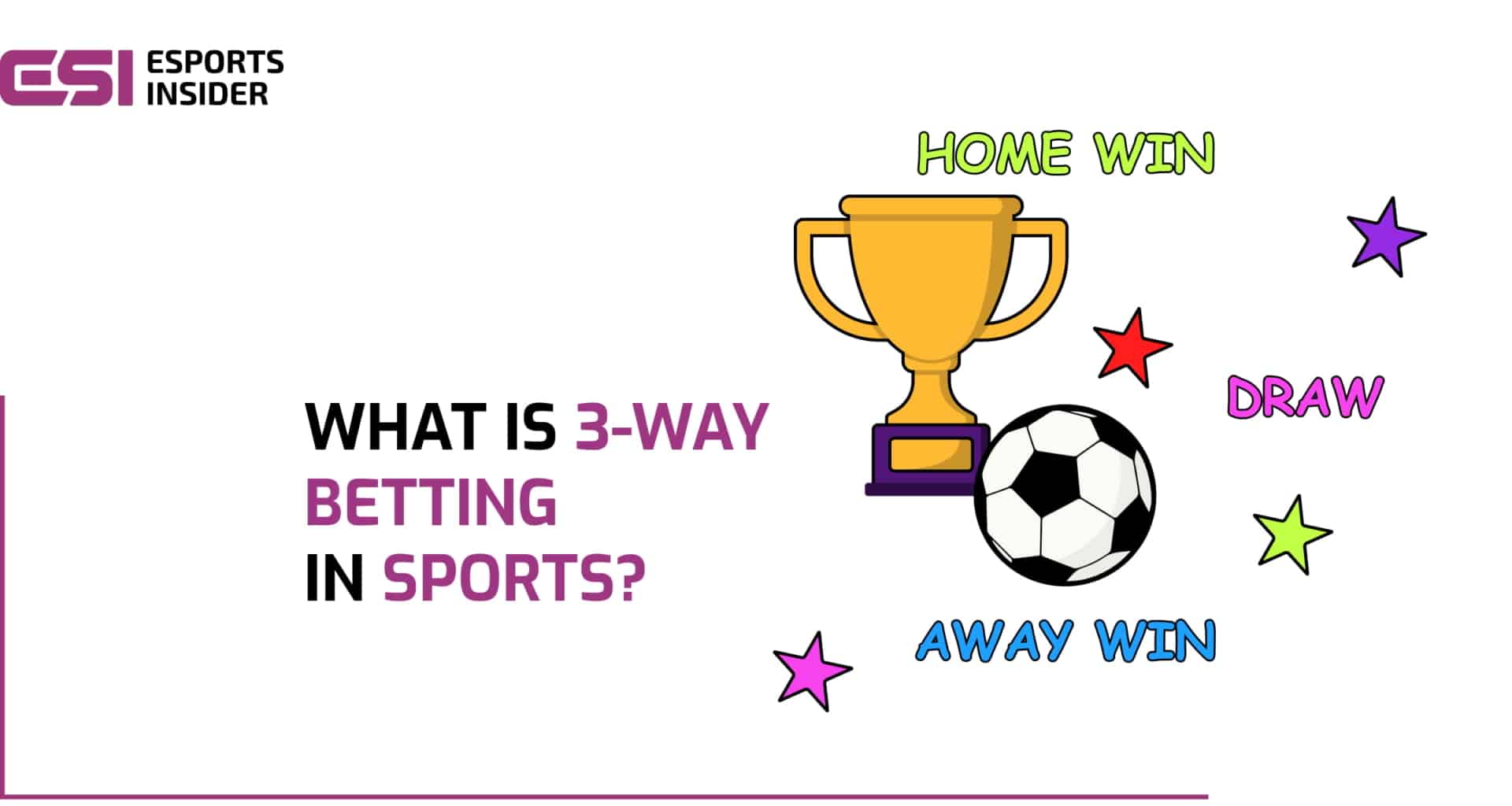
The distinguishing feature of a “3-way moneyline” compared to a standard two-way moneyline is the explicit inclusion of a draw or tie as a distinct betting outcome. In a traditional two-way moneyline, if a game ends in a tie, the bet is typically considered a “push” and the stake is returned to the bettor. However, in a 3-way moneyline, a tie is a third possible result, alongside a win for Team A or a win for Team B, and each of these three outcomes carries its own specific odds.
Beyond the Traditional Two Outcomes
When you encounter a 3-way moneyline, you are presented with three distinct choices:
- Team A to Win: Your bet is successful if Team A wins the match outright.
- Team B to Win: Your bet is successful if Team B wins the match outright.
- The Draw/Tie: Your bet is successful if the match ends with an equal score after regulation time.
This introduces a significant difference in how the probabilities and payouts are distributed. Because there are now three possible winning scenarios instead of two, the odds for each individual outcome (Team A win, Team B win, Draw) will generally be higher than they would be for a similar team in a two-way moneyline where a draw results in a push. This is because the probability of any single outcome occurring is reduced when there’s an additional outcome to consider. This distinction forces bettors to make a more precise prediction, accounting for all potential results within the specified timeframe, usually regulation time. The allure of the 3-way moneyline often lies in these potentially higher individual odds, but it simultaneously elevates the risk, as only one specific outcome out of three will render the bet a winner. This means that if a bettor picks a team to win and the game ends in a draw, the bet is lost, not pushed.
Common Sports for 3-Way Moneylines
The 3-way moneyline is most commonly found in sports where draws or ties are a regular and permissible outcome at the end of regulation play. These sports are typically popular outside of North America, where rules often allow for matches to conclude without a definitive winner.
The prime example is soccer (football). In soccer, draws are a very frequent occurrence, making the 3-way moneyline (often simply referred to as “Match Odds” or “1X2” betting – 1 for home team win, X for draw, 2 for away team win) the standard way to bet on match outcomes. Betting on a specific team to win in soccer implicitly means that if the game ends in a draw, the bet is lost. This is a critical distinction for bettors transitioning from sports like American football or basketball where ties are rare or resolved through overtime.
Other sports where 3-way moneylines are prevalent include:
- Ice Hockey: While many leagues use overtime, 3-way moneylines are often offered specifically for the outcome after regulation time. If a game goes to overtime, bets are settled based on the score at the end of the third period.
- Rugby: Similar to soccer, rugby matches can frequently end in a draw, making the 3-way moneyline a standard betting option.
- Cricket: Depending on the format (e.g., Test cricket), draws are a valid outcome, leading to 3-way betting options.
Understanding the sport’s rules regarding ties is crucial. If a sport explicitly plays to a winner (e.g., tennis), a 3-way moneyline would generally not be offered unless it specifies “outcome after X quarters/periods,” where a draw within that timeframe might be possible.
Calculating Risk and Reward in 3-Way Moneylines
Successfully navigating 3-way moneylines requires more than just picking a team; it demands a clear understanding of the implied probabilities and the ability to assess the risk and reward associated with each of the three outcomes. The presence of a third option fundamentally alters the financial landscape for bettors.
Interpreting Payouts for Each Outcome
When presented with a 3-way moneyline, you will see three distinct sets of odds, each corresponding to one of the possible results: Home Win, Draw, or Away Win. For instance, in a soccer match between Team A and Team B:
- Team A Win: +150
- Draw: +250
- Team B Win: +200
If you bet $100 on Team A to win at +150, and they secure the victory, your payout would be $150 profit + your $100 stake, totaling $250.
If you bet $100 on the Draw at +250, and the game ends tied, your payout would be $250 profit + your $100 stake, totaling $350.
Notice that the odds for the Draw are often quite attractive because a tie is generally less common than a win for either side, but not rare enough in many sports to be a huge longshot. The sum of the implied probabilities (after removing the bookmaker’s margin, or “vig”) for all three outcomes should always be less than 100%. Savvy bettors calculate these implied probabilities for each outcome to determine if they perceive any “value,” meaning their own assessment of an outcome’s likelihood is higher than the implied probability from the odds.
Strategic Considerations and Value
The key to successful 3-way moneyline betting lies in strategic assessment. Unlike a two-way market where you only need to choose who wins, here you must actively decide if a draw is a plausible enough outcome to warrant a specific wager, or if you are confident enough in one team winning to forgo the draw coverage.
Consider these strategic approaches:
- Deep Dive into Form and Matchups: Analyze recent team performance, head-to-head records, home/away form, injuries, and motivational factors. Are both teams prone to draws? Are they defensively strong or offensively weak?
- Understanding Game Flow: Some games naturally lend themselves to draws, such as defensive stalemates between evenly matched teams, or games where both teams might settle for a point late in the match.
- Bankroll Management: Given the higher risk associated with three outcomes, disciplined bankroll management is crucial. Betting smaller units on 3-way moneylines compared to higher-probability two-way bets might be a prudent approach.
Ultimately, identifying value in a 3-way moneyline means finding discrepancies between the sportsbook’s odds and your own informed assessment of the probabilities. It requires a more nuanced understanding of the sport and the specific matchup.
Advantages and Disadvantages of 3-Way Moneyline Betting
Like any betting market, the 3-way moneyline presents a unique set of pros and cons that bettors must weigh carefully before placing their wagers. Understanding these can help in deciding when and where to incorporate this bet type into a broader betting strategy.
Potential for Higher Odds
One of the most appealing aspects of 3-way moneylines, particularly for experienced bettors, is the potential for higher odds compared to their two-way counterparts. Because the draw is a distinct outcome that absorbs a portion of the overall probability, the odds for each individual team to win are often inflated.
For example, if a team is -150 to win in a two-way market (where a draw is a push), the same team might be offered at +100 or even higher in a 3-way market. This is because, in the 3-way scenario, a draw would result in a lost bet, not a returned stake. This means that if a bettor has strong conviction that a particular team will win outright and the match will not end in a draw, they can often secure a more favorable payout on that team by opting for the 3-way moneyline. This enhanced return on investment for a correct prediction is a significant draw for those seeking to maximize their potential profits, especially when they have thoroughly analyzed the match and determined that a draw is a highly improbable outcome for their chosen team.
Increased Complexity and Risk
Conversely, the primary disadvantage of the 3-way moneyline is its inherent increase in complexity and risk. The addition of a third distinct outcome means there is a lower probability of any single outcome occurring, and consequently, a higher chance of losing your bet if you only pick one team.
In a two-way moneyline, if your chosen team doesn’t win but the game is a draw, your stake is typically returned. This acts as a buffer against certain scenarios. In a 3-way moneyline, however, a draw is a losing outcome for any bet placed on either of the two teams. This means that even if your chosen team plays well and only fails to win due to a last-minute equalizer, your bet is still lost. This heightened risk requires a more precise prediction and a deeper understanding of the specific sport and matchup dynamics. It’s not enough to simply identify the stronger team; you must also accurately evaluate the likelihood of a draw. For less experienced bettors, or those who prefer simpler propositions, the added complexity of considering three outcomes can be daunting and lead to more frequent losses if not approached with careful analysis. The margin for error is significantly reduced, demanding greater accuracy in forecasting.
Integrating 3-Way Moneylines into a Broader Betting Strategy
For sophisticated bettors, 3-way moneylines are not just standalone bets but integral components of a diverse and well-researched betting portfolio. Their unique risk-reward profile means they demand a specific strategic approach, often differing from how one might approach point spread or traditional two-way moneyline wagers.
Research and Analysis as Cornerstones
The foundation of successful 3-way moneyline betting is exhaustive research and meticulous analysis. It’s insufficient to merely identify which team is perceived as “better.” Instead, bettors must delve into:
- Team Form and Momentum: Are teams in good scoring form, or are they defensively solid but struggling to score?
- Head-to-Head Records: Do certain teams historically play out draws against specific opponents?
- Motivational Factors: What are the stakes for each team? A team needing only a draw might adopt a conservative strategy.
- Player Availability and Injuries: Key player absences can significantly impact a team’s ability to control the game or prevent goals, altering draw probabilities.
- Home/Away Advantage: Some teams perform vastly different at home versus away.
By combining these data points, bettors can build a more robust predictive model, allowing them to identify situations where the sportsbook’s odds for a team win, or more importantly, for a draw, might be mispriced. This analytical rigor transforms a speculative bet into an informed financial decision within the context of sports betting.

Bankroll Management for Sustainable Engagement
Given the heightened risk and specific nature of 3-way moneylines, disciplined bankroll management is not just advisable, but essential. Bettors should:
- Allocate Specific Unit Sizes: It might be prudent to bet smaller “units” on 3-way moneylines compared to bets where the perceived edge is larger or the risk is lower.
- Diversify Bet Types: Do not rely solely on 3-way moneylines. Integrate them into a broader strategy that includes other bet types where value can be found.
- Track Performance: Meticulously record all 3-way moneyline bets, including outcomes, odds, and profit/loss. This data will reveal patterns in success rates and help refine future strategies.
- Set Loss Limits: Due to the higher potential for variance (swings in wins and losses), strict loss limits are vital to prevent significant erosion of your bankroll during cold streaks.
The goal is not just to win individual bets, but to achieve long-term profitability and sustainability. By understanding the intricacies of the “money line 3 way,” leveraging comprehensive research, and adhering to stringent bankroll management principles, bettors can effectively integrate this powerful market into a sophisticated and financially sound sports wagering strategy. It’s about making calculated decisions that balance the increased risk with the potential for enhanced reward.
aViewFromTheCave is a participant in the Amazon Services LLC Associates Program, an affiliate advertising program designed to provide a means for sites to earn advertising fees by advertising and linking to Amazon.com. Amazon, the Amazon logo, AmazonSupply, and the AmazonSupply logo are trademarks of Amazon.com, Inc. or its affiliates. As an Amazon Associate we earn affiliate commissions from qualifying purchases.