
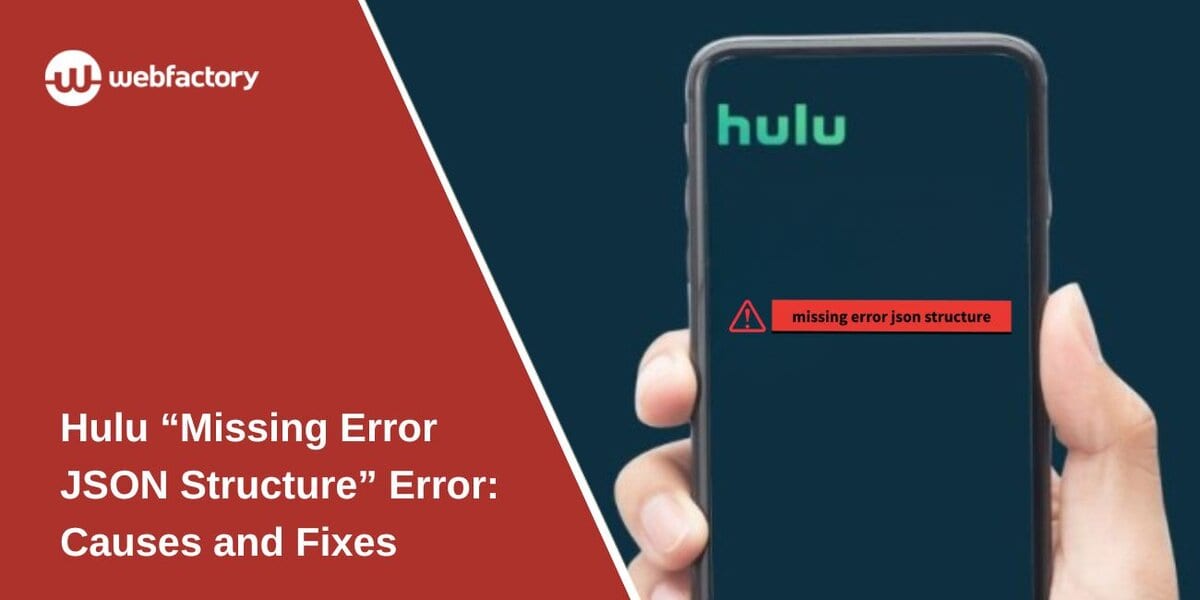
In the modern landscape of over-the-top (OTT) media services, the seamless delivery of high-definition content relies on a complex web of microservices, APIs, and data serialization formats. When a user encounters a message stating “missing error json structure” on Hulu, they are catching a rare glimpse into the underlying technical architecture that powers their streaming experience. This error is not a standard “user-facing” notification like a “Connection Lost” prompt; rather, it is a technical failure occurring at the data parsing layer.
To understand what this means, we must explore the relationship between the Hulu application (the client) and its cloud-based servers, focusing specifically on how they communicate using JSON (JavaScript Object Notation).
The Technical Anatomy of the Error
At its core, the “missing error json structure” indicates a breakdown in the communication protocol between the Hulu app on your device and the backend servers. When you click play on a show, your device sends a request to Hulu’s API. The server is expected to respond with data—either the video manifest or, if something goes wrong, a structured error message.
What is JSON and Why Does Hulu Use It?
JSON is the industry standard for data exchange. It is a lightweight, text-based format that is easy for humans to read and write, and easy for machines to parse and generate. In the context of Hulu, JSON is used to transmit everything from account details and movie titles to the technical metadata required to start a stream.
A typical successful JSON response might include the URL of the video file, while a standard error response would look something like this:
{ "status": "error", "code": 403, "message": "Subscription Expired" }.
The “structure” refers to this specific arrangement of keys and values. When the app expects this structure but receives something else—or receives nothing at all—the “missing error json structure” occurs.
Deciphering the “Missing Error” Logic
The specific phrasing “missing error json structure” suggests a meta-failure. It implies that the application encountered an error, attempted to trigger its internal error-handling routine, and then looked for a JSON object that explains what that error was.
If the server sends a malformed response (perhaps a 500 Internal Server Error page in HTML format instead of the expected JSON), the application’s parser fails. It is essentially the app saying: “I know something went wrong, but the server failed to provide the standardized error report I need to tell you why.”
Root Causes: Why the Communication Breaks Down
Understanding why this structure goes missing requires looking at the “API Contract.” Software developers use contracts to ensure that the front end and back end agree on the format of data. If the back end changes its data output without updating the front end, the contract is broken.
API Handshake Failures and Timeouts
In high-traffic environments like Hulu, requests pass through multiple layers, including load balancers, firewalls, and API gateways. If a request times out or is blocked by a security protocol before it reaches the core database, the gateway might return a generic “Request Timeout” or “Gateway Timeout.”
These generic responses often lack the specific “JSON structure” the Hulu app is programmed to look for. Consequently, the app cannot find the expected keys (like “error_code”), leading to the “missing structure” notification.
Version Mismatches and Legacy Code
Hulu operates across a vast array of devices, from 10-year-old Smart TVs to the latest iPhones. Maintaining backward compatibility is a significant technical challenge. Occasionally, a backend update may change the schema of an error object.
If an older version of the Hulu app receives a new JSON structure that it doesn’t recognize—or if a mandatory field is renamed—the app’s internal logic may fail to validate the data. From the perspective of the application’s code, the expected structure is “missing” because the data no longer fits the predefined template.
Server-Side Processing Errors
Sometimes, the issue lies deep within Hulu’s microservices. If a specific service (like the “User Entitlement Service”) crashes while attempting to generate an error message, it might send a null response. When the client-side code attempts to read the properties of a null object, it throws an exception. The “missing error json structure” serves as a catch-all for these instances where the data pipeline has essentially “leaked” or failed to produce a valid output string.
User-Side Troubleshooting and Technical Mitigation

While this is primarily a server-side or architectural issue, certain local conditions can trigger or exacerbate the failure of JSON parsing.
Cache and Cookie Corruption
Streaming applications rely heavily on local caching to speed up load times. This cache includes stored API responses and session tokens. If the local cache becomes corrupted, it can inject “noise” into the data stream.
When the app attempts to combine corrupted local data with fresh server data, the resulting string might become invalid JSON. Modern browsers and apps will reject this data immediately. Clearing the cache forces the application to request a “clean” JSON structure from the server, often resolving the issue.
Network Instability and Packet Loss
JSON is sent over the network as a string of text. If a network connection is unstable, packets can be lost or arrive out of order. While TCP (Transmission Control Protocol) is designed to prevent this, severe network congestion can lead to “truncated” responses.
If a JSON string is cut off mid-sentence (e.g., { "error": "auth_...), it is no longer a valid structure. The app’s JSON parser will fail, and since it cannot find the closing brace of the error message, it reports the structure as missing.
App Integrity and Reinstallation
On platforms like Roku or Fire Stick, the application binaries themselves can occasionally become corrupted during an update. If the internal library responsible for “deserializing” (turning JSON text into usable code) is damaged, it will fail to recognize even perfectly valid data structures. Reinstalling the app ensures that the JSON parsing engine is functioning according to the developer’s specifications.
The Role of CDNs and Load Balancers in JSON Delivery
Hulu uses Content Delivery Networks (CDNs) to cache data closer to the user. While CDNs usually cache video files (the “heavy” data), they also handle “Edge” logic for API requests to reduce latency.
Edge Computing Interruptions
Modern CDNs like Akamai or Cloudflare use “Edge Workers” to process requests. If an Edge Worker is misconfigured, it might intercept an error from Hulu’s origin server and try to “beautify” it or wrap it in a different format.
If the Edge Worker sends back an HTML error page (which is common for CDNs) instead of a JSON object, the Hulu app—which is expecting a specific JSON schema—will be unable to find the data it needs. This results in the “missing structure” error because the app is literally looking for a specific programming syntax that has been replaced by web-page code.
Latency and Asynchronous Processing
Streaming apps are highly asynchronous. They often fire off five or six API requests simultaneously (one for your profile, one for your “Keep Watching” list, one for ads, etc.). If these responses arrive out of sync or if one fails while the others succeed, the app’s state management (often handled by tools like Redux or React Context) can get confused. If the error-handling state is triggered before the error data has finished downloading, the app will report that the structure is missing.
Future-Proofing Streaming Architectures
The “missing error json structure” is ultimately a symptom of the transition toward more complex, distributed software systems. As Hulu and other streaming giants evolve, they are moving toward more robust ways of handling data.
Moving Toward Robust Error Handling
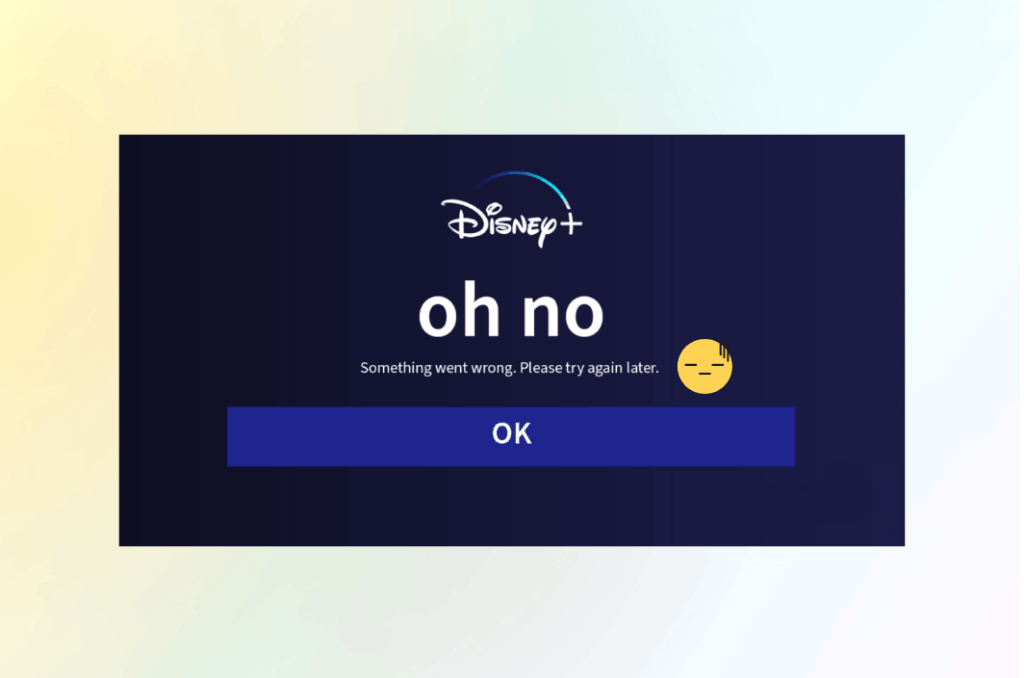
To prevent these cryptic messages, developers are implementing “Graceful Degradation.” Instead of crashing when a JSON structure is missing, newer versions of applications are being programmed with “Default Error States.” This means if the app receives a malformed response, it defaults to a generic but user-friendly message like “We’re having trouble reaching our servers,” rather than exposing the underlying JSON parsing failure.
The Shift to GraphQL and Enhanced Data Validation
Many tech companies are moving away from traditional REST APIs toward GraphQL. GraphQL allows the client (the Hulu app) to specify exactly what data it needs. This reduces the chance of “missing structures” because the schema is strictly enforced on both ends.
Additionally, the use of TypeScript and strict JSON schema validation ensures that if a server sends a “missing” or “incorrect” structure, the developers are alerted in real-time through automated monitoring tools like Sentry or Datadog, often before the user even notices the glitch.
In conclusion, while the “missing error json structure” on Hulu can be frustrating for a viewer, it represents a fascinating intersection of network protocols, data serialization, and cloud architecture. It is a reminder that behind the “Play” button is a sophisticated conversation between machines—a conversation that, on rare occasions, loses its grammar.
aViewFromTheCave is a participant in the Amazon Services LLC Associates Program, an affiliate advertising program designed to provide a means for sites to earn advertising fees by advertising and linking to Amazon.com. Amazon, the Amazon logo, AmazonSupply, and the AmazonSupply logo are trademarks of Amazon.com, Inc. or its affiliates. As an Amazon Associate we earn affiliate commissions from qualifying purchases.