
In the intricate world of finance, acronyms often serve as shorthand for complex concepts, processes, or entities. While they streamline communication for industry insiders, they can be a source of confusion for those outside the immediate circle. One such acronym, LLR, frequently surfaces in discussions related to banking, credit risk, and financial health. Far from being a singular term, LLR can represent different critical aspects within the financial sector, each bearing significant implications for institutions, investors, and even the broader economy. Understanding these meanings is essential for anyone seeking to grasp the fundamentals of financial stability, risk management, and the performance of financial assets.

This article delves into the primary interpretations of LLR, dissecting its significance, how it’s calculated, and its role in shaping financial strategies and regulatory oversight. While context is always king when deciphering acronyms, we will primarily focus on its most prevalent financial applications, particularly those concerning loan management and credit risk.
The Primary Interpretations of LLR in Finance
The acronym LLR most commonly refers to either “Loan Loss Reserve” or “Loan-to-Loss Ratio” within the financial industry. Both concepts are intimately related to credit risk – the risk of a borrower defaulting on their financial obligations – and are crucial metrics for assessing the health and stability of lending institutions.
Loan Loss Reserve (LLR): A Pillar of Bank Stability
At its core, a Loan Loss Reserve (LLR), also known as an Allowance for Loan and Lease Losses (ALLL) or Allowance for Credit Losses (ACL) under newer accounting standards like CECL, is a contra-asset account on a bank’s balance sheet. It represents an estimated amount set aside by a financial institution to cover potential losses from loans that may not be repaid by borrowers. Think of it as a financial cushion or an emergency fund specifically designed to absorb the shock of future loan defaults, impairments, or non-performing assets.
The rationale behind establishing an LLR is rooted in prudent financial management and regulatory requirements. Lending money inherently carries risk. Borrowers may encounter unforeseen financial difficulties, economic downturns can impact entire sectors, or specific credit events can render loans uncollectible. Without an adequate reserve, these unexpected losses could directly erode a bank’s capital, threaten its solvency, and ultimately jeopardize its ability to continue lending.
Banks establish their LLR by making periodic provisions for loan losses, which are charged against their current earnings. This provision is an expense on the income statement, reducing reported net income. The actual reserve (LLR) accumulates on the balance sheet. When a loan is deemed uncollectible and written off, the amount is charged against the LLR, not directly against current earnings. This process helps to smooth out earnings volatility and provides a more accurate picture of the institution’s ongoing financial performance, as potential losses are recognized prospectively rather than retrospectively.
The size and adequacy of a bank’s LLR are critical indicators for regulators, investors, and analysts. An appropriately sized reserve demonstrates a bank’s conservative approach to risk management and its capacity to withstand economic shocks. Conversely, an insufficient LLR could signal aggressive lending practices or an underestimation of credit risk, potentially leading to financial instability.
Loan-to-Loss Ratio: Gauging Asset Quality
While Loan Loss Reserve quantifies the amount set aside, the Loan-to-Loss Ratio (often just “Loss Ratio” in a credit context, or sometimes specifically referring to the ratio of LLR to total loans) provides a valuable perspective on the quality of a lender’s loan portfolio relative to its reserves. More broadly, a loss ratio can refer to the percentage of losses incurred relative to the total amount lent or insured.
In its most common interpretation related to LLR, the Loan-to-Loss Ratio could refer to:
- Net Charge-offs to Average Loans: This measures the actual losses incurred (loans written off, net of recoveries) as a percentage of the average loan portfolio over a period. It’s a backward-looking metric indicating the realized losses.
- Allowance for Loan Losses to Total Loans: This ratio compares the accumulated Loan Loss Reserve to the total outstanding loan portfolio. It’s a forward-looking metric that gauges the adequacy of the reserve relative to the overall loan book. A higher ratio here might suggest that the bank is provisioning more aggressively for potential future losses, or it might indicate a riskier loan portfolio.
When analyzing the “Allowance for Loan Losses to Total Loans” ratio, a higher percentage generally indicates a more conservative approach to risk or a perception of higher risk within the loan portfolio. Conversely, a lower percentage might suggest a lower-risk portfolio or, potentially, an insufficient reserve. Analysts often compare this ratio across different banks and over time to assess management’s provisioning strategy and the underlying quality of assets.
Understanding this ratio in conjunction with the LLR itself allows stakeholders to evaluate whether a bank’s provisions for potential losses are proportionate to the size and risk profile of its lending activities. It’s a key metric for gauging how well a lender is prepared for potential credit downturns and the financial health of its borrowers.
The Significance of LLR for Financial Institutions and Investors
The concepts encapsulated by LLR are not merely accounting entries; they represent fundamental elements of financial stability, risk management, and the overall health of the banking system. Their significance extends to regulatory bodies ensuring systemic stability, to bank management guiding strategic decisions, and to investors assessing potential returns and risks.
Risk Management and Regulatory Compliance
For financial institutions, robust risk management is paramount, and LLR plays a central role. By establishing and meticulously managing the LLR, banks actively mitigate the impact of credit risk, which is often their largest single risk exposure. This proactive approach helps protect their capital base and ensures they can continue to function even if a significant portion of their loan portfolio goes sour. Effective LLR management involves:
- Accurate Risk Assessment: Continuously evaluating the creditworthiness of borrowers and the risk characteristics of different loan types.
- Portfolio Diversification: Spreading risk across various industries, geographies, and borrower types to avoid concentration risk.
- Early Warning Systems: Identifying troubled loans or deteriorating economic conditions before they lead to widespread defaults.
Furthermore, LLR is a cornerstone of regulatory compliance. Banking regulators worldwide, such as the Federal Reserve and the Office of the Comptroller of the Currency (OCC) in the U.S., or the European Central Bank (ECB) in Europe, impose strict requirements on how banks calculate and maintain their loan loss reserves. These regulations are designed to:
- Ensure Capital Adequacy: Mandate that banks hold sufficient capital to absorb potential losses, thereby preventing bank failures and protecting depositors.
- Promote Prudent Lending: Encourage banks to lend responsibly by requiring them to set aside capital for potential defaults.
- Facilitate Stress Testing: LLR figures are crucial inputs for stress tests, which model how banks would fare under severe economic scenarios, ensuring they can withstand adverse conditions.
Compliance with these regulations is not optional; failure to maintain adequate reserves can result in fines, operational restrictions, and even the forced recapitalization of a bank, underscoring the critical importance of LLR from a regulatory perspective.
Impact on Bank Profitability and Shareholder Value
The management of LLR has a direct and significant impact on a bank’s profitability and shareholder value. While setting aside reserves is essential for safety and soundness, it also represents a drag on current earnings. The provision for loan losses reduces a bank’s reported net income, which can affect its earnings per share (EPS) and, consequently, its stock price.
There’s a delicate balance to strike:
- Too Low an LLR: Could boost current profits by understating potential losses, but this is a short-sighted strategy that exposes the bank to significant future risks. If actual losses materialize beyond the reserve, it could lead to substantial write-downs and erode capital, severely damaging profitability and investor confidence.
- Too High an LLR: While conservative and safe, an excessively high LLR ties up capital that could otherwise be used for lending, investments, or returned to shareholders. It also unnecessarily depresses current earnings, potentially making the bank appear less profitable than its peers.
Investors scrutinize LLR levels and provisioning trends closely. A bank with a consistently well-managed LLR, one that is adequate but not excessive, often signals strong management and a sustainable business model. Analysts look for consistency, transparency in methodology, and how LLR levels compare to historical loss rates and economic forecasts. Ultimately, effective LLR management contributes to a bank’s long-term stability and sustainable profitability, which are key drivers of shareholder value.
How LLR is Calculated and Managed
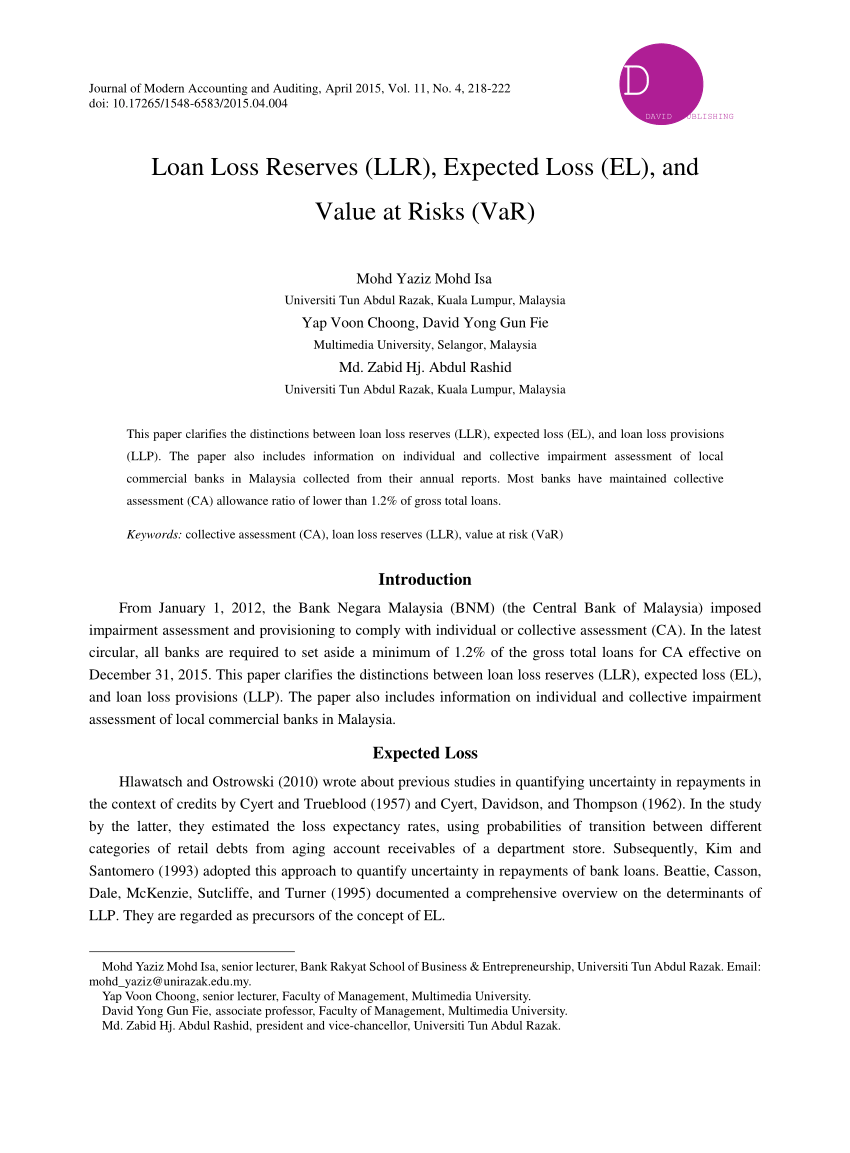
The estimation and management of LLR are complex processes that require sophisticated financial modeling, data analysis, and a deep understanding of credit risk. These processes have evolved significantly over time, particularly with the introduction of new accounting standards.
Methodologies for Estimating Loan Losses
Historically, banks primarily used an “incurred loss” model for LLR, which recognized losses only when they were “probable” and “estimable.” This reactive approach meant that reserves might not fully reflect emerging risks until losses were well underway. Modern methodologies are far more forward-looking and comprehensive:
- Historical Loss Rates: Banks analyze their past lending experience to determine average loss rates for different types of loans, borrower segments, and economic cycles. This data provides a baseline for future loss expectations.
- Economic Forecasts: Recognizing that future losses are influenced by macroeconomic conditions, banks integrate various economic scenarios (e.g., optimistic, base, pessimistic) into their LLR calculations. Factors like GDP growth, unemployment rates, interest rates, and commodity prices are critical inputs.
- Qualitative Adjustments: Beyond quantitative models, banks make qualitative adjustments based on expert judgment. These might consider:
- Changes in lending policies or underwriting standards.
- Concentration risks (e.g., heavy exposure to a single industry or geographic region).
- Specific industry trends or regulatory changes.
- The quality of internal credit review processes.
- Specific vs. General Reserves: LLR can be segmented into specific reserves (for individually identified impaired loans where a loss is probable) and general reserves (for expected losses on groups of homogeneous loans where individual impairment isn’t yet identified but losses are expected to occur).
The Role of CECL (Current Expected Credit Losses)
A significant transformation in LLR accounting came with the introduction of the Current Expected Credit Losses (CECL) standard by the Financial Accounting Standards Board (FASB) in the U.S. (IFRS 9, a similar standard, was adopted internationally). CECL fundamentally shifted from an “incurred loss” model to an “expected loss” model.
Under CECL, financial institutions are required to estimate and record lifetime expected credit losses for all financial assets, including loans, at the time they are originated or acquired. This means banks must now forecast losses over the entire contractual life of a loan, incorporating reasonable and supportable forward-looking information, even if no loss event has occurred yet.
The implications of CECL are profound:
- Earlier Recognition of Losses: Banks now recognize expected losses much earlier, potentially leading to higher LLR balances, especially during periods of economic uncertainty or growth in lending.
- Increased Volatility: LLR balances may become more volatile as economic forecasts change, requiring more frequent and detailed adjustments.
- Enhanced Disclosure: CECL requires more extensive disclosures about the methodologies, assumptions, and significant judgments used in estimating expected credit losses.
- Technological Investment: Compliance often necessitates significant investment in data infrastructure, modeling capabilities, and analytical tools to manage the complexity of lifetime loss estimations across diverse portfolios.
While challenging to implement, CECL aims to provide investors with more timely and decision-useful information about a bank’s credit risk exposure, fostering greater transparency and potentially enhancing financial stability.
Other Contexts Where LLR Appears
While Loan Loss Reserve and related ratios are the dominant financial interpretations of LLR, it’s worth noting that acronyms can be context-specific. Another common, though distinct, financial-legal interpretation exists.
Landlord-Tenant Law (LLR): Protecting Rights and Obligations
In the realm of real estate and personal finance, particularly when dealing with rental properties, LLR can stand for Landlord-Tenant Law. This body of law governs the rights and responsibilities of landlords and tenants. It’s crucial for both property owners (landlords) managing rental income and expenses, and individuals (tenants) managing their housing costs and obligations.
Key aspects of Landlord-Tenant Law typically cover:
- Lease Agreements: Defining the terms and conditions of rental, including rent amounts, duration, and responsibilities.
- Security Deposits: Rules regarding how security deposits are collected, held, and returned.
- Maintenance and Repairs: Obligations for landlords to maintain habitable conditions and for tenants to keep the property clean and undamaged.
- Eviction Procedures: The legal process landlords must follow to remove a tenant, and the defenses tenants may have.
- Rent Increases: Regulations on how and when landlords can raise rent.
Understanding LLR in this context is vital for financial planning involving housing, whether as a property investor or a renter, as disputes and legal non-compliance can have significant financial consequences.
Less Common Financial Meanings
It’s also possible for LLR to be an internal abbreviation within a specific company, a ticker symbol for a lesser-known financial instrument, or a term used in a highly niche financial sub-sector. However, these instances are typically far less common and would require specific contextual clues to decipher. When encountering LLR without context, particularly in general financial news or reports, “Loan Loss Reserve” or its related concepts remain the most probable interpretations.
The Future of Loan Loss Reserves and Credit Risk Management
The financial landscape is in constant flux, shaped by evolving economic conditions, technological advancements, and regulatory responses. The management of LLR and credit risk will continue to adapt to these changes, influencing both the stability of individual institutions and the broader financial system.
Evolving Economic Landscapes and Credit Cycles
The inherent cyclicality of economies means that periods of expansion are often followed by contractions or downturns. These credit cycles profoundly impact loan performance and, consequently, LLR requirements.
- Economic Volatility: Increased global interconnectedness and geopolitical instability can lead to more frequent and unpredictable economic shocks, making accurate long-term loss forecasting more challenging.
- Changing Borrower Demographics: Shifts in population age, income distribution, and employment patterns will alter credit risk profiles and demand for different loan products.
- Climate Risk: Emerging recognition of climate change as a systemic financial risk means that future LLR calculations may need to incorporate potential losses from climate-related events or transition risks to a green economy.
The continuous challenge for financial institutions will be to refine their LLR methodologies to remain agile and resilient in the face of these evolving economic and environmental realities.
Strategic Implications for Lenders and Policymakers
For lenders, LLR management will increasingly be a strategic imperative. It’s not just about compliance but about optimizing capital allocation, supporting responsible growth, and maintaining investor confidence.
- Data and AI: Advanced analytics, artificial intelligence (AI), and machine learning (ML) will play a greater role in enhancing the precision of credit risk modeling, allowing for more granular and dynamic LLR estimations.
- Integrated Risk Management: LLR will be increasingly viewed as part of a holistic, enterprise-wide risk management framework, integrating credit risk with market risk, operational risk, and liquidity risk.
- Regulatory Adaptations: Regulators will continue to monitor the effectiveness of standards like CECL and IFRS 9, potentially introducing further refinements or new requirements to address emerging risks and ensure systemic stability.
Policymakers will focus on striking a balance between fostering a robust lending environment that supports economic growth and ensuring that banks maintain adequate cushions against potential losses. The dialogue around LLR will remain central to debates on financial regulation, capital requirements, and the resilience of the global banking system.
In conclusion, LLR, predominantly meaning Loan Loss Reserve in financial contexts, is far more than a simple acronym. It represents a sophisticated mechanism for managing risk, ensuring stability, and reflecting the financial health of lending institutions. Its proper understanding is indispensable for anyone navigating the complexities of modern finance, from banking professionals and investors to financial regulators and those simply seeking to comprehend the underlying strength of the economy.
aViewFromTheCave is a participant in the Amazon Services LLC Associates Program, an affiliate advertising program designed to provide a means for sites to earn advertising fees by advertising and linking to Amazon.com. Amazon, the Amazon logo, AmazonSupply, and the AmazonSupply logo are trademarks of Amazon.com, Inc. or its affiliates. As an Amazon Associate we earn affiliate commissions from qualifying purchases.